Natural Rubber
CN → US| HS编码 | 关税税率 | 原产国 | 目的国 | 文档 |
|---|---|---|---|---|
| 4016993000 | 35.0% | CN | US | 官方文档 |
| 4008111000 | 35.0% | CN | US | 官方文档 |
| 4001100000 | 10.0% | CN | US | 官方文档 |
| 4001290000 | 35.0% | CN | US | 官方文档 |
| 4016993510 | 35.0% | CN | US | 官方文档 |
商品图片
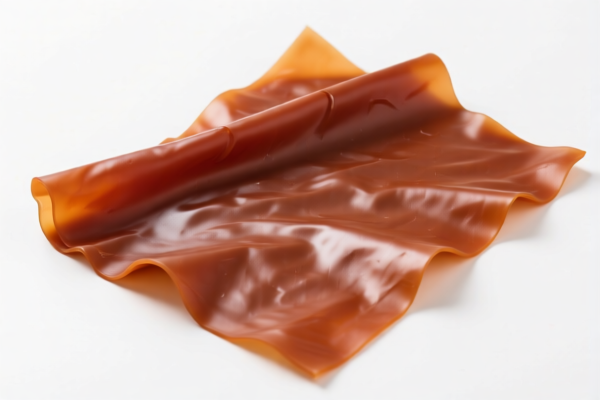

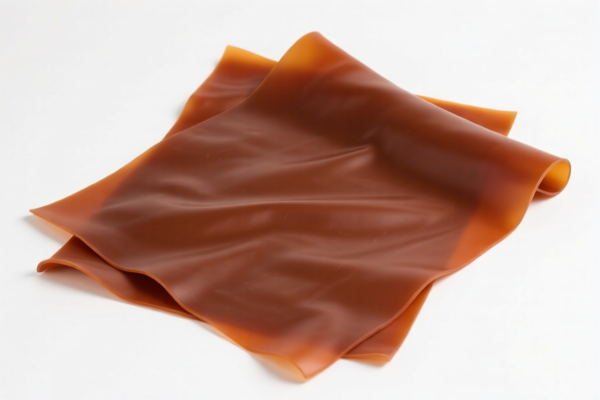

AI分析
🌳 Natural Rubber (Raw & Semi-Processed)
🌐 HS Code Reference & Customs Clearance Guide | 2026 Latest Tariff Analysis | Strategic Classification for Imports
📌 I. Product Definition & Classification: Understanding "Natural Rubber"
Natural Rubber (NR), primarily sourced from the latex of the Hevea brasiliensis tree, is a critical raw material in global manufacturing, particularly in automotive tires, medical devices, and industrial components. In international trade, its classification depends heavily on its physical form (block, film, sheet, paste) and processing state (concentrated, dried, modified).
Core Distinction Criteria: * Latex vs. Solid: Liquid latex flows; solid rubber is solid at room temperature. * Form: Is it in large blocks (Standard Indonesian Rubber/SIR), thin films, or small pieces? * Processing: Has it been coagulated, dried, or plasticized?
⚠️ Critical Classification Rule:
- If it is raw, concentrated latex → Usually 4001.10.00.00
- If it is dried rubber in primary forms (sheets, blocks, crumb) → Usually 4001.29.00.00
- If it is films or sheets (non-foam) → 4008.11.10.00 / 4008.21.00.00
- If it is prepared for specific applications (gaskets, mats) → 4016.99.30.00 / 4016.99.35.10
📦 II. HS Code Classification Matrix (2026 Tariff Schedule)
| HS Code | Product Description | Physical Form / State | Key Characteristic |
|---|---|---|---|
4001.10.00.00 |
Concentrated Natural Rubber Latex | Liquid/Paste | Primary form of latex, coagulated but not in standard solid block form. Lowest base tax. |
4001.29.00.00 |
Other Natural Rubber in Primary Forms | Sheets, Blocks, Crumb | Dried, coagulated rubber. Most common form for industrial use. High additional taxes. |
4008.11.10.00 |
Natural Rubber Films & Sheets | Thin Films | Non-foamed, flat films. Based on material preference when form is unspecified. High additional taxes. |
4008.21.00.00 |
Natural Rubber Films & Sheets | Specific Film Type | Explicitly identified as "Natural Rubber Film." High additional taxes. |
4016.99.30.00 |
Other Articles of Vulcanized Rubber | Gaskets, Mats, etc. | "Catch-all" category for vulcanized rubber goods not elsewhere specified. High additional taxes. |
4016.99.35.10 |
Other Articles of Vulcanized Rubber | Specific Vulcanized Good | Based on other catch-all rules for vulcanized rubber properties. High additional taxes. |
🔍 Key Insight:
- HS 4001 codes generally represent raw materials in their most basic state.
- HS 4008 codes represent processed sheets/films.
- HS 4016 codes represent finished or semi-finished articles (vulcanized).
- Tax Variance: Raw Latex (4001.10) enjoys a significantly lower total tax rate compared to all other forms due to specific trade provisions.
💰 III. 2026 Tariff Rate Breakdown (Detailed Tax Analysis)
✅ Applicable Country: United States (US)
✅ Country of Origin: China (CN)
✅ Effective Date: November 10, 2025 onwards
🎯 1. 4001.10.00.00 —— Concentrated Natural Rubber Latex
(The Only Low-Tax Option)
| Item | Detail |
|---|---|
| Base Duty | 0.0% (ad valorem) |
| Section 301 Duty (USITC) | 0.0% |
| IEEPA Duty (122 Clause) | 10.0% |
| Total Tax Rate | 10.0% |
| Calculation Basis | CIF Value × 10% |
| De Minimis Exemption | ❌ Not Available (deny_de_minimis) |
| Legal Basis | IEEPA:9903.01.25 → USITC:4001.10.00.00 |
📌 Explanation:
- This is the only HS code in the provided dataset with a 0% Section 301 tariff.
- The total tax burden is 10%, making it the most cost-effective classification if the product is indeed raw latex.
- Warning: Misclassifying solid rubber as latex to achieve this rate is a major compliance risk.
🎯 2. 4001.29.00.00 —— Natural Rubber in Primary Forms (Sheets/Blocks)
(Most Common Import Form)
| Item | Detail |
|---|---|
| Base Duty | 0.0% |
| Section 301 Duty (USITC) | +25.0% |
| IEEPA Duty (122 Clause) | +10.0% |
| Total Tax Rate | 35.0% |
| Calculation Basis | CIF Value × 35% |
| De Minimis Exemption | ❌ Not Available |
| Legal Basis | IEEPA:9903.01.25 → USITC:4001.29.00.00 → FOOTNOTE:9903.88.01 |
📌 Explanation:
- This is the standard classification for dried natural rubber blocks or crumb rubber.
- It bears the full brunt of the 25% Section 301 tariff plus the 10% IEEPA tariff.
- Total Cost Impact: High. Budget for 35% tariff on CIF value.
🎯 3. 4008.11.10.00 & 4008.21.00.00 —— Natural Rubber Films & Sheets
| Item | Detail |
|---|---|
| Base Duty | 0.0% |
| Section 301 Duty (USITC) | +25.0% |
| IEEPA Duty (122 Clause) | +10.0% |
| Total Tax Rate | 35.0% |
| Calculation Basis | CIF Value × 35% |
| De Minimis Exemption | ❌ Not Available |
| Legal Basis | Same as above; USITC:4008.11.10.00 / 4008.21.00.00 |
📌 Explanation:
- Whether classified under4008.11(generic film) or4008.21(specific film), the tax treatment is identical.
- Key Distinction: These codes apply when the rubber is processed into thin films or sheets, not solid blocks.
- Note:4008.11.10.00is used when the specific film type is not detailed;4008.21.00.00is for explicit film declarations.
🎯 4. 4016.99.30.00 & 4016.99.35.10 —— Other Vulcanized Rubber Articles
| Item | Detail |
|---|---|
| Base Duty | 0.0% |
| Section 301 Duty (USITC) | +25.0% |
| IEEPA Duty (122 Clause) | +10.0% |
| Total Tax Rate | 35.0% |
| Calculation Basis | CIF Value × 35% |
| De Minimis Exemption | ❌ Not Available |
| Legal Basis | USITC:4016.99.30.00 / 4016.99.35.10 |
📌 Explanation:
- These are "Catch-All" codes for vulcanized rubber products that do not fit into more specific categories (like tires or belts).
- Examples: Rubber gaskets, mats, seals, or custom-shaped rubber parts.
- Classification Risk: If the item is simply "raw rubber" but not in primary form, it might be incorrectly pushed here. Ensure the product is truly a "prepared article."
🛠️ IV. Customs Clearance Practical Advice
✅ 1. Essential Documentation Checklist
| Document | Required? | Why? |
|---|---|---|
| ✅ Material Safety Data Sheet (MSDS) | ✔️ | Confirms chemical composition (natural vs. synthetic). |
| ✅ Certificate of Origin (CO) | ✔️ | Critical for proving CN origin to apply Section 301/IEEPA taxes. |
| ✅ Product Photos | ✔️ | Crucial: Must clearly show form (Block vs. Latex vs. Film). |
| ✅ Commercial Invoice | ✔️ | Must describe goods accurately (e.g., "Natural Rubber Latex, Concentrated"). |
| ✅ Packing List | ✔️ | Details weight and volume for CIF calculation. |
| ✅ Lab Test Report | ✔️ | Optional but recommended to prove "Natural" origin (not synthetic blends). |
✅ 2. Declaration Strategy (Key Mnemonics)
🔥 "Latex is 10%, Solid is 35%. Form Defines Fate!"
| Scenario | Correct HS Code | Tax Rate | Common Mistake |
|---|---|---|---|
| Liquid Latex (Coagulated/Concentrated) | 4001.10.00.00 |
10% | Misclassified as 4001.29 → Pays 35% (Overpaid!) |
| Dried Blocks/Sheets | 4001.29.00.00 |
35% | Misclassified as 4016 → Still 35%, but wrong description |
| Rubber Films | 4008.11.10.00 / 4008.21.00.00 |
35% | Misclassified as raw rubber → Audit Risk |
| Vulcanized Parts (Gaskets/Mats) | 4016.99.30.00 / 4016.99.35.10 |
35% | Misclassified as raw material → Valuation Issue |
💡 Pro Tip:
If you are importing liquid natural rubber, ensure your invoice explicitly states "Concentrated Natural Rubber Latex" and provides evidence of its liquid/paste state. This is the only way to legally secure the 10% tax rate.
✅ 3. Special Considerations
| Situation | Advice |
|---|---|
| Mixed Shipments | If a shipment contains both latex and solid rubber, separate declarations are required. Do not lump them under one HS code. |
| Synthetic Blends | If the rubber contains synthetic polymers (e.g., SBR), it may move to Chapter 40 Section 4002. Consult a customs broker immediately. |
| USITC Footnote 9903.88.01 | This footnote triggers the 25% Section 301 tariff. It applies to almost all rubber products except raw latex (4001.10). |
🌍 V. Global Market Comparison (2026 Outlook)
| Region | Recommended HS Code | Est. Total Duty (CN Origin) | Notes |
|---|---|---|---|
| 🇺🇸 USA | 4001.10.00.00 (Latex) |
10% | Best rate for raw latex. All others 35%. |
| 🇺🇸 USA | 4001.29.00.00 (Blocks) |
35% | Standard rate for solid rubber. |
| 🇪🇺 EU | 4001.10.00 / 4001.29.00 |
0% | No Section 301 equivalent. Standard MFN rates apply (often 0% or low). |
| 🇨🇳 China | 4001.10.00 / 4001.29.00 |
0% | No import duty for natural rubber into China. |
📌 Conclusion:
- The US market is uniquely punitive for Chinese natural rubber, except for raw latex.
- EU and China offer much more favorable duty environments.
- Strategic Sourcing: If importing into the US, prioritize latex (4001.10) if feasible, or explore tariff engineering for specific applications.
📌 VI. Common Errors & Pitfalls (Lessons Learned)
❌ Error 1: Calling "Solid Rubber Blocks" "Natural Rubber Latex" to get the 10% rate.
👉 Consequence: Customs seizure, fines, and retroactive payment of 25% difference + penalties.
❌ Error 2: Misclassifying Vulcanized Gaskets as Raw Rubber (4001).
👉 Consequence: While the tax rate might be similar (35%), the description mismatch triggers an audit for undervaluation or incorrect classification.
❌ Error 3: Ignoring IEEPA 10% Surcharge.
👉 Consequence: Underestimating total landed cost. The 10% IEEPA tax applies to all HS codes in the dataset for CN origin.
✅ Correct Practice:
"Natural Rubber, Concentrated Latex, Coagulated, for Industrial Use, Model NRC-50, FOB Shanghai, CIF Los Angeles."
🎯 VII. Conclusion: Precision Saves Costs
🎯 Remember This Rule:
🔹 "Latex = 10% | Solid/Film/Article = 35%"
🔹 "Form is King: Liquid vs. Solid Dictates Tax"
🔹 "IEEPA 10% is Always On for China"
📌 Pro Tip:
If you are importing raw latex, ensure your supplier provides a Certificate of Analysis confirming it is Natural and not a synthetic blend. This documentation supports your classification under 4001.10.00.00 and helps avoid disputes.
📣 Immediate Action Plan:
📞 For Latex: Classify as
4001.10.00.00→ Pay 10% tax.
📞 For Solid Rubber: Classify as4001.29.00.00→ Pay 35% tax.
🚀 Pre-Declare: Submit an ACE (Automated Commercial Environment) pre-landing notice to confirm classification with CBP if unsure.
✨ Smart Classification, Smarter Profits!
💼 Don't let a 25% tariff gap erase your margin!
用户评价
关于 HS 编码归类
协调制度(HS)是由世界海关组织(WCO)制定的国际贸易商品分类标准。全球 200 多个国家采用 HS 系统作为海关关税、贸易统计和进出口监管的基础。
每个 HS 编码遵循以下层级结构:
- 章(2 位)——商品大类(例如:第 84 章:机器和机械设备)
- 品目(4 位)——章内的更具体分类
- 子目(6 位)——国际通用细分,所有 WCO 成员国统一使用
- 本国细分(8-10 位)——各国自行扩展的细分编码,如美国 HTSUS 10 位编码
正确的 HS 编码归类对于顺利通关、准确缴纳关税和遵守贸易法规至关重要。错误归类可能导致海关延误、多缴关税或罚款。
从CN进口到US时,适用的关税税率可能包括:
- 最惠国(MFN)税率——适用于 WTO 成员国的标准关税税率
- 普通税率——适用于无贸易协定国家
- 贸易救济关税——附加关税,如 301 条款(反倾销)、232 条款(国家安全)或反补贴税
本页内容仅供参考。如需正式归类,请咨询当地海关或持牌报关代理。