Natural Rubber Buffer Pad
CN → US| HS编码 | 关税税率 | 原产国 | 目的国 | 文档 |
|---|---|---|---|---|
| 3926909989 | 22.8% | CN | US | 官方文档 |
| 4016996050 | 37.5% | CN | US | 官方文档 |
| 4016990500 | 20.9% | CN | US | 官方文档 |
| 8484900000 | 37.5% | CN | US | 官方文档 |
| 3926904510 | 38.5% | CN | US | 官方文档 |
商品图片
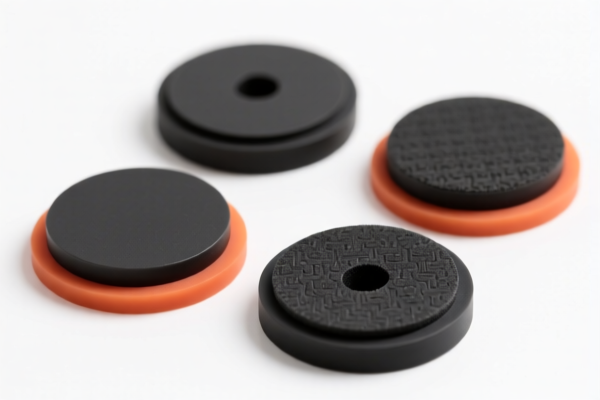
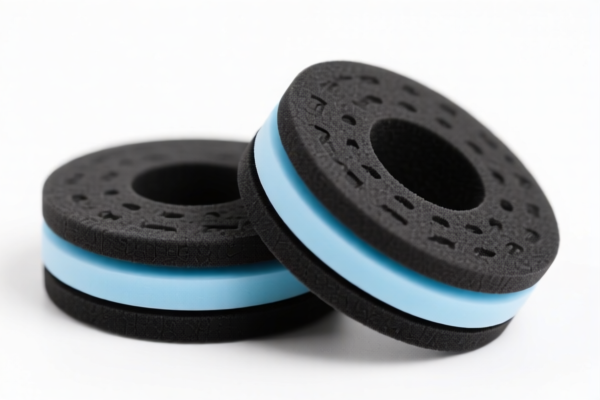
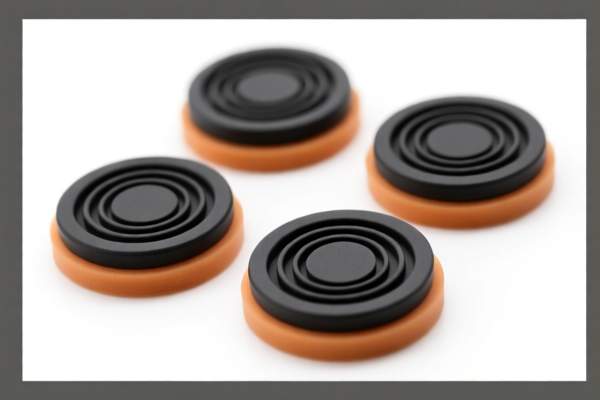
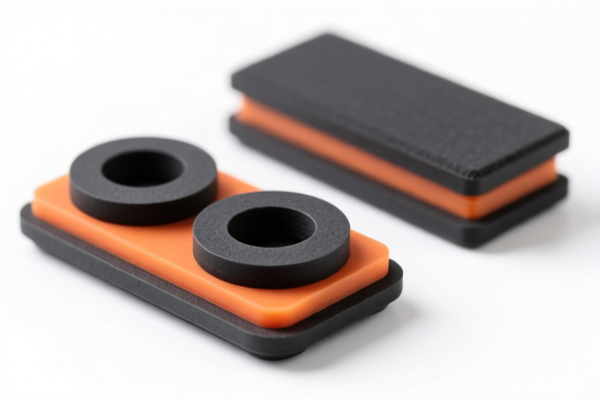
AI分析
🛠️ Natural Rubber Buffer Pad (Silicone Buffer Pad)
🌐 HS Code Classification & Tariff Guide | 2026 Updated | Expert Customs Clearance Strategy
📌 One Product, Multiple Classifications — Why So Many HS Codes?
The Natural Rubber Buffer Pad — commonly known in trade as a silicone buffer pad — is a versatile component used in electronics, industrial machinery, furniture, and consumer goods for vibration damping, shock absorption, and noise reduction.
But here’s the catch: This single product can fall under 5 different HS Codes, depending on its form, function, material composition, and intended use.
⚠️ Key Insight:
- Silicone is not rubber — it’s a synthetic polymer.
- However, in trade practice, "silicone buffer pad" is often misclassified as "rubber" due to functional similarity.
- The true classification depends on whether it's plastic, rubber, or a mechanical part.
📦 二、HS Code Classification Breakdown (2026 Latest Tariff Rules)
| HS Code | Product Description | Tax Rate | Key Classification Criteria |
|---|---|---|---|
3926.90.99.89 |
Other plastic and other material articles | 22.8% | Made from plastics, not rubber; used as buffering/damping |
4016.99.60.50 |
Other vulcanized rubber articles | 37.5% | Made from vulcanized rubber; no specific use stated |
4016.99.05.00 |
Other household articles | 20.9% | Used in home appliances or furniture (e.g., fridge feet, table legs) |
8484.90.00.00 |
Gaskets and similar rings | 37.5% | Used as seals or gaskets in machinery or equipment |
3926.90.45.10 |
Gaskets, washers, and spacers | 38.5% | Functionally acts as a spacer or seal; high tariff due to 122条款 |
🔍 Critical Distinction:
- Silicone ≠ Natural Rubber → but silicone is often treated as rubber in trade. - If the pad is shaped like a washer/gasket, even if made of silicone, it may be classified under 8484.90.00.00 or 3926.90.45.10. - If it’s used in household items, it may fall under 4016.99.05.00 — lower tariff.
💰 三、2026 Tariff Breakdown (U.S. Market | China Origin)
✅ Applicable Country: United States (US)
✅ Origin: China (CN)
✅ Effective Date: November 10, 2025 (including future imports)
🎯 1. 3926.90.99.89 — Other Plastic & Other Material Articles
| Item | Detail |
|---|---|
| Base Duty | 5.3% |
| Additional Tariff (Section 301) | 7.5% |
| Section 122 Clause Duty | 10% |
| Total Tax | 22.8% |
| Tax Calculation | CIF × 22.8% |
| De Minimis Exemption? | ❌ No (denied) |
| Legal Basis Path | Section 301: 9903.88.01 → Section 122: 9903.01.24 → HS: 3926.90.99.89 |
📌 Explanation:
- This code applies when the pad is made from plastic-like materials (e.g., silicone-based polymers) and not classified as rubber. - Lowest tax rate among all options — ideal if you can prove it’s a plastic product.
🎯 2. 4016.99.60.50 — Other Vulcanized Rubber Articles
| Item | Detail |
|---|---|
| Base Duty | 2.5% |
| Additional Tariff (Section 301) | 25.0% |
| Section 122 Clause Duty | 10% |
| Total Tax | 37.5% |
| Tax Calculation | CIF × 37.5% |
| De Minimis Exemption? | ❌ No |
| Legal Basis Path | Section 301: 9903.88.01 → Section 122: 9903.01.24 → HS: 4016.99.60.50 |
📌 Explanation:
- Applies when the pad is made from vulcanized rubber (natural or synthetic). - High risk: If the product is silicone, it should not be classified here — but customs may still apply this code if they believe it’s rubber-like. - Highest risk of misclassification.
🎯 3. 4016.99.05.00 — Other Household Articles
| Item | Detail |
|---|---|
| Base Duty | 3.4% |
| Additional Tariff (Section 301) | 7.5% |
| Section 122 Clause Duty | 10% |
| Total Tax | 20.9% |
| Tax Calculation | CIF × 20.9% |
| De Minimis Exemption? | ❌ No |
| Legal Basis Path | Section 301: 9903.88.01 → Section 122: 9903.01.24 → HS: 4016.99.05.00 |
📌 Explanation:
- Applies when the pad is used in household applications (e.g., under kitchen appliances, chairs, tables). - Lowest tariff among rubber-based codes. - Best option if the product is clearly used in homes. - Requires proof of intended use (e.g., packaging, marketing materials).
🎯 4. 8484.90.00.00 — Gaskets and Similar Rings
| Item | Detail |
|---|---|
| Base Duty | 2.5% |
| Additional Tariff (Section 301) | 25.0% |
| Section 122 Clause Duty | 10% |
| Total Tax | 37.5% |
| Tax Calculation | CIF × 37.5% |
| De Minimis Exemption? | ❌ No |
| Legal Basis Path | Section 301: 9903.88.01 → Section 122: 9903.01.24 → HS: 8484.90.00.00 |
📌 Explanation:
- Applies when the pad is used as a gasket or seal in machinery, pumps, or enclosures. - High tariff — same as rubber code. - Only valid if the pad is functionally a seal (e.g., fits into a groove, prevents leakage).
🎯 5. 3926.90.45.10 — Gaskets, Washers, Spacers
| Item | Detail |
|---|---|
| Base Duty | 3.5% |
| Additional Tariff (Section 301) | 25.0% |
| Section 122 Clause Duty | 10% |
| Total Tax | 38.5% |
| Tax Calculation | CIF × 38.5% |
| De Minimis Exemption? | ❌ No |
| Legal Basis Path | Section 301: 9903.88.01 → Section 122: 9903.01.24 → HS: 3926.90.45.10 |
📌 Explanation:
- Applies when the pad is used as a spacer, washer, or gasket. - Highest tax rate — due to 122条款 (Section 122). - Most aggressive classification — avoid unless functionally proven.
🛠️ 四、Customs Clearance Best Practices (Pro Tips to Save 15%+)
✅ 1. Documentation Checklist (MUST-HAVE)
| Document | Required? | Why It Matters |
|---|---|---|
| ✅ Product Specification Sheet | ✔️ | Shows material (silicone vs rubber), dimensions, hardness |
| ✅ 3D/2D Design Drawings | ✔️ | Proves shape and function (washer? gasket? pad?) |
| ✅ Product Photos (with labels) | ✔️ | Shows brand, model, usage context |
| ✅ Test Reports (RoHS, UL, etc.) | ✔️ | Supports material claims |
| ✅ Commercial Invoice | ✔️ | Must state "Silicone Buffer Pad for Vibration Damping" |
| ✅ Certificate of Origin (CO) | ✔️ | For tariff eligibility |
| ✅ Packing List | ✔️ | Shows if used in household or industrial context |
✅ 2.申报技巧 (Smart Declaration Strategy)
🔥 “Material First, Function Second, Use Last”
| Scenario | Correct HS Code | Why |
|---|---|---|
| Made of silicone, used for vibration damping | 3926.90.99.89 |
Plastic-based → lowest tax |
| Used under kitchen appliance or chair legs | 4016.99.05.00 |
Household use → 20.9% |
| Shaped like a washer/gasket, fits into a groove | 3926.90.45.10 |
High risk → 38.5% |
| Used in industrial machinery as a seal | 8484.90.00.00 |
37.5% — only if proven |
| Made of natural rubber | 4016.99.60.50 |
37.5% — but rarely accurate for silicone |
📌 Pro Tip:
- Never declare silicone as rubber unless you have lab proof. - Use "silicone" in the product description — not "rubber" or "elastomer".
✅ 3. Risk Mitigation & Avoiding Penalties
| Risk | Solution |
|---|---|
| Customs misclassifies silicone as rubber | Submit material test report + product photos |
| HS Code too high (e.g., 38.5%) | Prove intended use (e.g., home appliance) → switch to 4016.99.05.00 |
| No de minimis exemption | Don’t rely on it — always calculate full tax |
| Future tariff changes | Apply for Advance Ruling (Pre-Approval) before shipment |
🌍 五、Global Market Comparison (2026)
| Country | Recommended HS Code | Duty Rate | Certification Required | Notes |
|---|---|---|---|---|
| 🇺🇸 USA | 3926.90.99.89 |
22.8% | None (but proof needed) | Highest risk of misclassification |
| 🇨🇳 China | 3926.90.99.89 |
5% | CCC, RoHS | No extra tariffs |
| 🇪🇺 EU | 3926.90.99.89 |
0% (if CE) | CE, RoHS | No additional duties |
| 🇦🇺 Australia | 3926.90.99.89 |
5% | RCM | No extra tariffs |
| 🇯🇵 Japan | 3926.90.99.89 |
0% | PSE | No extra tariffs |
📌 Insight:
- Only the U.S. applies high附加 tariffs (301 + 122). - China, EU, Australia, Japan treat silicone as plastic → lower duty.
📌 六、常见错误 & Avoidance Guide (Avoid Costly Mistakes)
❌ Mistake 1: Declaring "rubber buffer pad" for a silicone product
👉 Result: Wrong HS Code → 37.5%+ tax → penalties
❌ Mistake 2: Using 3926.90.45.10 without proof of gasket/washer use
👉 Result: 38.5% tax → overpayment
❌ Mistake 3: Not providing material test report
👉 Result: Customs rejects your claim → delay, seizure, or reclassification
❌ Mistake 4: Assuming "buffer pad" = "gasket"
👉 Result: Misclassified → higher duty
✅ Correct Approach:
“Silicone Buffer Pad, 50mm Diameter, 5mm Thick, for Vibration Damping, Used in Home Appliances, Material: Silicone (Not Rubber), RoHS & UL Certified”
🎯 七、Final Verdict: Choose Wisely, Save Big!
🎯 Best HS Code for Cost Savings:
✅
3926.90.99.89— 22.8% — if made from silicone and not used as a gasket
🎯 Best for Household Use:
✅
4016.99.05.00— 20.9% — if used in home appliances or furniture
🎯 Avoid at All Costs:
❌
3926.90.45.10— 38.5% — only if functionally a washer/gasket
📣 Action Required: Protect Your Profit Margin!
📞 Contact a U.S. Customs Broker + Submit Product Photos + Request HS Code Pre-Approval
🚀 Apply for Advance Ruling (Pre-Decision) to lock in the lowest possible tariff
💼 Never assume — always verify with documentation
✨ Smart Classification = Lower Tax = Higher Profit!
💼 Your product’s HS Code isn’t just a number — it’s your bottom line.
🎯 Remember:
🔹 Silicone ≠ Rubber
🔹 Function determines code
🔹 Proof beats assumption
🔹 Pre-approval saves thousands
✅ Pro Tip: If your product is originating from Vietnam, Mexico, or Thailand, you may qualify for IEEPA exemption — 0% to 5%.
👉 Consider shifting production if you’re shipping to the U.S. regularly.
📣 Your next shipment is just one HS Code away from being 15% cheaper!
🚀 Start today — classify right, pay less, ship faster!
用户评价
关于 HS 编码归类
协调制度(HS)是由世界海关组织(WCO)制定的国际贸易商品分类标准。全球 200 多个国家采用 HS 系统作为海关关税、贸易统计和进出口监管的基础。
每个 HS 编码遵循以下层级结构:
- 章(2 位)——商品大类(例如:第 84 章:机器和机械设备)
- 品目(4 位)——章内的更具体分类
- 子目(6 位)——国际通用细分,所有 WCO 成员国统一使用
- 本国细分(8-10 位)——各国自行扩展的细分编码,如美国 HTSUS 10 位编码
正确的 HS 编码归类对于顺利通关、准确缴纳关税和遵守贸易法规至关重要。错误归类可能导致海关延误、多缴关税或罚款。
从CN进口到US时,适用的关税税率可能包括:
- 最惠国(MFN)税率——适用于 WTO 成员国的标准关税税率
- 普通税率——适用于无贸易协定国家
- 贸易救济关税——附加关税,如 301 条款(反倾销)、232 条款(国家安全)或反补贴税
本页内容仅供参考。如需正式归类,请咨询当地海关或持牌报关代理。