Natural Rubber Conductive Material
CN → US| HS编码 | 关税税率 | 原产国 | 目的国 | 文档 |
|---|---|---|---|---|
| 4002190019 | 35.0% | CN | US | 官方文档 |
| 3901909000 | 41.5% | CN | US | 官方文档 |
| 3901901000 | 35.0% | CN | US | 官方文档 |
| 4008210000 | 35.0% | CN | US | 官方文档 |
| 4008294000 | 37.9% | CN | US | 官方文档 |
商品图片
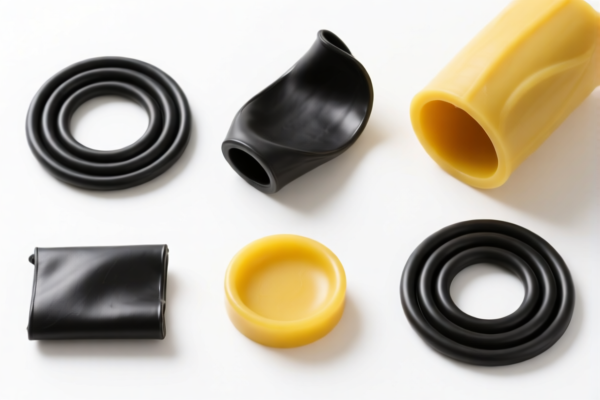
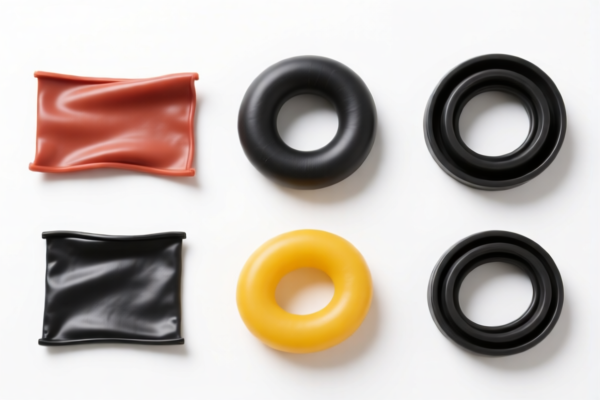
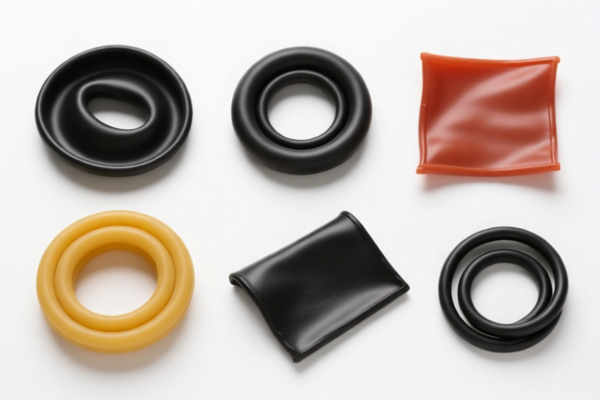
AI分析
🛢️ Natural Rubber Conductive Material (Conductive Synthetic Rubber)
🌐 HS Code Reference & Customs Clearance Guide | 2026 Latest Tariff Analysis | Professional Clearance Strategy
📌 Clarification Note: Although the user input mentions "Natural Rubber," the provided DATA explicitly categorizes the product as "Conductive Synthetic Rubber" (导电合成橡胶). In international trade, "Conductive Rubber" is almost exclusively a synthetic compound (e.g., SBR, NBR, EPDM) filled with conductive agents (carbon black, metal fibers). Pure natural rubber is rarely used for high-performance conductive applications due to stability issues. The following analysis strictly adheres to the Synthetic Rubber classification provided in the data source.
📦 1. Product Definition: What is "Conductive Synthetic Rubber"?
Conductive synthetic rubber is a specialized elastomer material designed to dissipate static electricity or conduct current. It is typically used in: * Anti-static flooring/linings; * Conductive gaskets and seals; * Industrial rollers and belts; * EMI/RFI shielding components.
Key Forms Covered in Data: * Raw/Primary Forms: Blocks, granules, compounds not yet vulcanized or shaped into final articles. * Vulcanized Forms: Plates, sheets, strips, profiles, or simple shapes after curing.
📊 2. HS Code Classification Matrix (Based on Provided DATA)
The classification depends heavily on the state of the material (raw vs. vulcanized) and the specific polymer type. Below is the authoritative breakdown based on the provided JSON data.
| HS Code | Product Description (Summary) | Material Form | State of Matter | Total Tax Rate (China→US) |
|---|---|---|---|---|
| 4002.19.00.19 | Conductive Synthetic Rubber | Synthetic Rubber | Raw / Primary Form | 35.0% |
| 3901.90.90.00 | Conductive Synthetic Rubber | Rubber (Polymer) | Synthetic Rubber (Raw/Primary) | 41.5% |
| 3901.90.10.00 | Conductive Synthetic Rubber | Ethylene Polymer Category | Raw or Semi-finished | 35.0% |
| 4008.21.00.00 | Conductive Synthetic Rubber | Vulcanized Rubber | Inferred Logical Form | 35.0% |
| 4008.29.40.00 | Conductive Synthetic Rubber | Vulcanized Rubber | Plates, Sheets, Strips | 37.9% |
⚠️ Critical Distinction:
HS 4002 / 4008 chapters refer to Rubber. * HS 3901 refers to Plastics (Polymers).
If the "rubber" is actually a plastic-polymer blend classified under plastics, it falls under Chapter 39 (higher base duty). If it is strictly elastomeric rubber, it falls under Chapter 40 (lower base duty).*
💰 3. 2026 Latest Tariff Rate Breakdown (Detailed Analysis)
✅ Applicable Region: United States (US)
✅ Origin: China (CN)
✅ Effective Date: Current 2026 Tariff Structure (Section 301 + IEEPA)
🎯 Case 1: Primary/Raw Forms (HS 4002.19.00.19 & 3901.90.10.00)
| Item | Details |
|---|---|
| Base Tariff | 0.0% |
| Section 301 Tariff | 25.0% |
| Section 122 Tariff (IEEPA) | 10.0% |
| Total Effective Rate | 35.0% |
| De Minimis Exemption | ❌ NOT APPLICABLE (High risk of seizure if shipped via low-value parcels) |
| Legal Reference | USITC Footnotes for Section 301 & IEEPA Enforcement |
📌 Explanation:
Raw synthetic rubber compounds are often viewed as foundational industrial materials. The 0% base duty makes it attractive, but the 35% total due to US trade policies significantly impacts landed cost.
🎯 Case 2: Plastic-Classification Rubbers (HS 3901.90.90.00)
| Item | Details |
|---|---|
| Base Tariff | 6.5% |
| Section 301 Tariff | 25.0% |
| Section 122 Tariff (IEEPA) | 10.0% |
| Total Effective Rate | 41.5% |
| De Minimis Exemption | ❌ NOT APPLICABLE |
| Legal Reference | USITC Chapter 39 Rules |
⚠️ Warning:
If customs classifies your conductive material as a Plastic Polymer (Chapter 39) instead of Rubber (Chapter 40), the Base Duty jumps from 0% to 6.5%, raising the total to 41.5%. This is a common audit risk!
🎯 Case 3: Vulcanized Sheets/Plates (HS 4008.29.40.00)
| Item | Details |
|---|---|
| Base Tariff | 2.9% |
| Section 301 Tariff | 25.0% |
| Section 122 Tariff (IEEPA) | 10.0% |
| Total Effective Rate | 37.9% |
| De Minimis Exemption | ❌ NOT APPLICABLE |
| Legal Reference | USITC Footnotes for Vulcanized Rubber Articles |
📌 Explanation:
Once vulcanized into basic shapes (sheets, strips), the base duty increases slightly to 2.9%. The total rate is 37.9%, which is lower than the plastic classification but higher than raw rubber.
🎯 Case 4: Inferred Vulcanized Forms (HS 4008.21.00.00)
| Item | Details |
|---|---|
| Base Tariff | 0.0% |
| Section 301 Tariff | 25.0% |
| Section 122 Tariff (IEEPA) | 10.0% |
| Total Effective Rate | 35.0% |
| De Minimis Exemption | ❌ NOT APPLICABLE |
📌 Note: This code appears to cover specific vulcanized rubber items not specified as plates/sheets. It retains the 0% base duty, making it a favorable classification if the product structure allows.
🛠️ 4. Customs Clearance Practical Advice (Avoiding Pitfalls)
✅ 1. Preparation Checklist (Non-Negotiable)
| Document | Requirement | Why It Matters |
|---|---|---|
| Material Safety Data Sheet (MSDS) | ✔️ Required | Must confirm composition: % Synthetic Rubber vs. Plastic vs. Fillers (Carbon Black). |
| Technical Specification Sheet | ✔️ Required | Must specify: Vulcanized or Raw? Shape (Sheet, Granule, Block)? Conductivity level? |
| Photo of Product | ✔️ Required | Clear view of form factor. Granules? Rolls? Sheets? |
| Certificate of Origin (CO) | ✔️ Required | Proves Chinese origin to apply correct 301/122 tariffs. |
| Commercial Invoice | ✔️ Required | Must explicitly state: "Conductive Synthetic Rubber, HS [Code], Made in China". |
✅ 2. Classification Strategy: How to Choose the Right HS Code
| Scenario | Recommended HS Code | Reasoning |
|---|---|---|
| You are selling raw compound granules/blocks | 4002.19.00.19 | Best base duty (0%). Ensure it is strictly "Synthetic Rubber" and not a plastic blend. |
| You are selling pre-cured sheets/strips for gaskets | 4008.29.40.00 | Clear description as "Vulcanized Rubber Sheets". Base duty 2.9%. |
| Your material is a Plastic-Rubber Blend | 3901.90.90.00 | If polymer analysis shows high plastic content, you must use Chapter 39. Do not risk misclassification. |
| Unclear Form (Inferred) | 4008.21.00.00 | Use only if the product is clearly rubber and vulcanized but doesn't fit standard sheet/strip definitions. |
✅ 3. Critical Warnings for Importers
- 🚫 Do NOT use De Minimis (Section 321):
All codes listed above have 0% or low base duties, making them attractive targets for US Customs. However, the Section 301 (25%) and Section 122 (10%) tariffs eliminate the $800 de minimis exemption advantage for Chinese goods. Shipments under $800 will still be flagged, taxed, or detained. - 🚫 Labeling Accuracy:
Ensure commercial invoices NEVER say "Natural Rubber" if the material is Synthetic. Use "Conductive Synthetic Rubber" or "Synthetic Elastomer Compound". Mislabeling as "Natural Rubber" (HS 4001) can lead to severe penalties for fraud. - 🔍 Carbon Black Content:
Conductive rubber often contains high levels of carbon black. Ensure the Carbon Black content does not trigger other chemical regulations or misclassification into pigment categories.
🌍 5. Global Market Comparison (2026)
| Market | Recommended HS Code | Est. Total Duty (China Origin) | Notes |
|---|---|---|---|
| 🇺🇸 United States | 4002.19.00.19 / 4008.29.40.00 | 35.0% - 37.9% | High due to Section 301 + 122. |
| 🇨🇳 China (Import) | 4002 / 4008 | ~5% - 10% | Standard MFN rates. No extra trade war tariffs. |
| 🇪🇺 European Union | 4002 / 4008 | ~0% - 6.5% | Check for EU Carbon Border Adjustment Mechanism (CBAM) impacts. |
| 🇬🇧 United Kingdom | 4002 / 4008 | ~0% - 6.5% | Post-Brexit tariffs may apply. |
📌 6. Common Mistakes & How to Avoid Them
❌ Mistake 1: Labeling as "Natural Rubber" to avoid scrutiny.
👉 Consequence: Customs lab test reveals synthetic polymers → Fraud penalty + Back taxes + Seizure.
✅ Fix: Always declare as "Synthetic Rubber".
❌ Mistake 2: Assuming "Raw" status applies to vulcanized sheets.
👉 Consequence: If you declare sheets as "Raw" (HS 4002) but they are vulcanized, they should be HS 4008. Misclassification leads to underpayment of duties.
✅ Fix: Clearly distinguish Vulcanized vs. Raw in documentation.
❌ Mistake 3: Ignoring Section 122 (10%) in cost calculations.
👉 Consequence: Profit margin erosion because the 10% IEEPA tariff was not factored into the FOB price.
✅ Fix: Always calculate landed cost using Total Tax = Base + 301 + 122.
🎯 7. Conclusion: Strategic Sourcing Advice
🎯 Key Takeaway:
"Synthetic Rubber is Cheap on Base, Expensive on Tariff!"
- Lowest Rate: 35.0% (HS 4002.19.00.19 or 4008.21.00.00) – Best for Raw or Unspecified Vulcanized forms.
- Highest Rate: 41.5% (HS 3901.90.90.00) – Avoid if possible by proving material is Rubber, not Plastic.
- Middle Ground: 37.9% (HS 4008.29.40.00) – Standard for Vulcanized Sheets/Strips.
📌 Pro Tip:
If your product can be manufactured as Raw Compounds (HS 4002) instead of finished Sheets (HS 4008), you save 2.9% in base duty. For large volumes, this adds up significantly. However, ensure the final application allows for secondary processing (vulcanization) by the end-user.
📣 Immediate Action Required:
📞 Verify Material Composition: Get a lab report confirming % Synthetic Rubber vs. Plastic.
📄 Update Invoice Description: Use "Conductive Synthetic Rubber" explicitly.
📉 Calculate Landed Cost: Include 35% - 41.5% in your pricing model. Do not assume standard duties apply.
✨ Professional Clearance, Precise Classification.
💼 One HS Code Error Can Cost You Thousands. Get It Right.
用户评价
关于 HS 编码归类
协调制度(HS)是由世界海关组织(WCO)制定的国际贸易商品分类标准。全球 200 多个国家采用 HS 系统作为海关关税、贸易统计和进出口监管的基础。
每个 HS 编码遵循以下层级结构:
- 章(2 位)——商品大类(例如:第 84 章:机器和机械设备)
- 品目(4 位)——章内的更具体分类
- 子目(6 位)——国际通用细分,所有 WCO 成员国统一使用
- 本国细分(8-10 位)——各国自行扩展的细分编码,如美国 HTSUS 10 位编码
正确的 HS 编码归类对于顺利通关、准确缴纳关税和遵守贸易法规至关重要。错误归类可能导致海关延误、多缴关税或罚款。
从CN进口到US时,适用的关税税率可能包括:
- 最惠国(MFN)税率——适用于 WTO 成员国的标准关税税率
- 普通税率——适用于无贸易协定国家
- 贸易救济关税——附加关税,如 301 条款(反倾销)、232 条款(国家安全)或反补贴税
本页内容仅供参考。如需正式归类,请咨询当地海关或持牌报关代理。