Natural Rubber Flange
CN → US| HS编码 | 关税税率 | 原产国 | 目的国 | 文档 |
|---|---|---|---|---|
| 4016931010 | 37.5% | CN | US | 官方文档 |
| 4016935010 | 37.5% | CN | US | 官方文档 |
商品图片
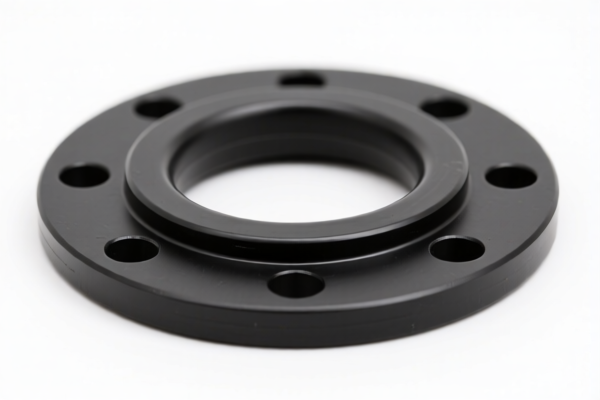
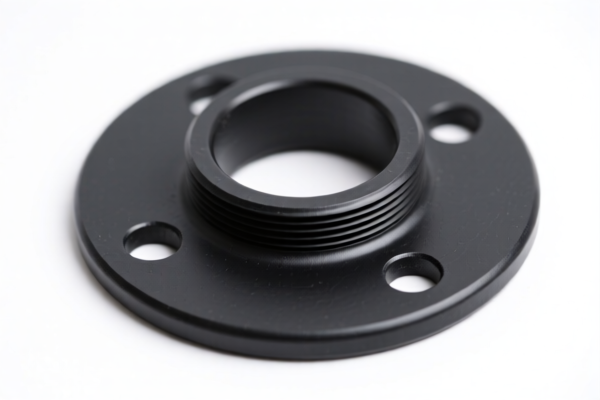
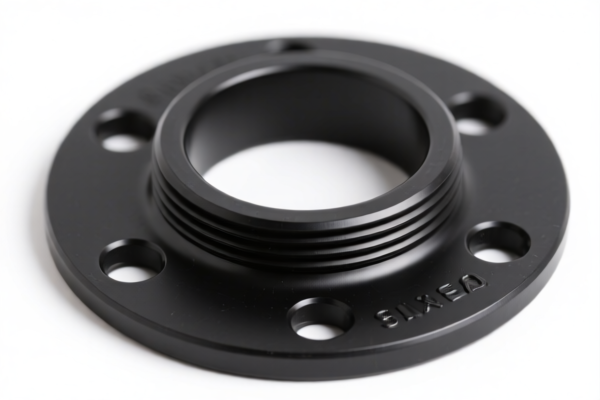
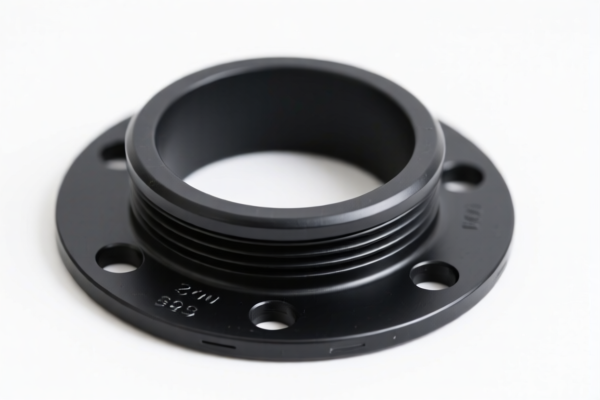
AI分析
⚙️ Natural Rubber Flange (Gaskets & Seals)
🌐 HS Code Reference & Customs Clearance Guide | 2026 Latest Tariff Analysis | Professional Clearance Strategy
📌 Part I: Product Definition and Classification: Do You Really Understand "Natural Rubber Flanges"?
A "Natural Rubber Flange" in international trade typically refers to gaskets, washers, or seals made from vulcanized natural rubber. These components are critical for fluid control, pressure sealing, and vibration dampening in automotive, industrial, and mechanical systems.
In customs classification, the key distinction lies in material composition and application. The data provided specifically addresses items under Chapter 40 (Rubber and Articles Thereof), specifically focusing on vulcanized rubber other than hard rubber.
⚠️ Key Distinction:
- If the product is a flange plate (rigid structural part used to connect pipes) made of plastic or metal, it does not belong here.
- If it is a sealing gasket/washer attached to a flange, made of vulcanized rubber, it falls under Heading 4016.
- Critical Factor: The specific HS Code depends on whether it is designed for automotive goods (Chapter 87) or for general industrial use.
📦 Part II: HS Code Classification Details (2026 Latest Tariff Authority Comparison)
Based on the provided <DATA>, the product falls under HS Code 4016.93 (Gaskets, washers and other seals). There are two specific sub-headings depending on the application:
| HS Code | Product Description | Application Scenario | Key Identification Feature |
|---|---|---|---|
4016.93.10.10 |
Gaskets, washers and other seals: Other O-Rings: Of a kind used in the automotive goods of chapter 87 | Automotive engine seals, transmission gaskets, fuel system seals | Must be demonstrably used in vehicles (cars, trucks, etc.) listed in Chapter 87. Often marked with OEM part numbers. |
4016.93.50.10 |
Gaskets, washers and other seals: Other O-Rings: Other | Industrial machinery, HVAC systems, plumbing, non-automotive equipment | General industrial use. Not specifically designated for automotive final products. |
🔍 Important Note on "Flange" vs. "O-Ring":
- While the user input says "Flange," the provided HS codes are for O-Rings/Seals.
- In customs practice, a "rubber flange gasket" or "flange seal" is often classified under these O-ring/seal categories if it functions as a sealing element.
- If the item is a full flange face gasket (large flat ring), it still falls under4016.93(Gaskets, washers...), but the sub-code4016.93.10.10vs4016.93.50.10depends strictly on the end-use industry (Automotive vs. Other).
💰 Part III: 2026 Latest Tariff Rate Breakdown (Detailed Tax Clauses)
✅ Applicable Country: United States (US)
✅ Origin: China (CN)
✅ Effective Time: Current rates apply for imports post-2025.
Both HS Codes in the provided data carry identical tax structures due to their shared category under Section XXVIII (Motor Vehicles) vs. Section XVII (Machinery), but both are subject to the same high-duty policy for Chinese origin goods.
🎯 1. 4016.93.10.10 — Automotive Gaskets/Seals (Rubber)
| Item | Content |
|---|---|
| Base Tariff Rate | 2.5% (Ad valorem) |
| Additional Tariff (Section 301) | +25.0% |
| Total Tax Rate | 27.5% |
| Tax Calculation | CIF Value × 27.5% |
| De Minimis Exemption | ❌ Not Applicable (High value item, not under $800) |
| Legal Basis | HTSUS:4016.93.10.10 + USITC Footnote 9903.03 (Section 301 List 4B) |
📌 Explanation:
- The 2.5% is the standard Most Favored Nation (MFN) rate for rubber gaskets.
- The +25% is a punitive tariff added under Section 301 of the Trade Act of 1974, targeting Chinese manufacturing goods.
- Total Impact: For every $10,000 of goods, you pay $2,750 in taxes. This significantly impacts profit margins.
🎯 2. 4016.93.50.10 — Industrial Gaskets/Seals (Rubber, Non-Automotive)
| Item | Content |
|---|---|
| Base Tariff Rate | 2.5% (Ad valorem) |
| Additional Tariff (Section 301) | +25.0% |
| Total Tax Rate | 27.5% |
| Tax Calculation | CIF Value × 27.5% |
| De Minimis Exemption | ❌ Not Applicable |
| Legal Basis | HTSUS:4016.93.50.10 + USITC Footnote 9903.03 (Section 301 List 4B) |
📌 Note:
- Even though this is for "Other" uses (not automotive), the Section 301 tariff still applies because rubber articles from China are broadly targeted.
- Do not assume "industrial" means "lower duty." The rate is the same as the automotive version in this dataset.
🛠️ Part IV: Customs Clearance Operational Advice (Practical Pitfall Guide)
✅ 1. Documentation Checklist (Essential for Smooth Clearance)
| Document | Required? | Explanation |
|---|---|---|
| ✅ Product Specification Sheet | ✔️ | Must specify material (% Natural Rubber, vulcanization process), dimensions, and hardness (Shore A). |
| ✅ Commercial Invoice | ✔️ | Clearly state "Vulcanized Rubber Gaskets/O-Rings." Avoid vague terms like "Rubber Parts." |
| ✅ Bill of Lading | ✔️ | Ensure weight and quantity match invoice. |
| ✅ Country of Origin Certificate | ✔️ | Crucial for verifying Chinese origin and applying/confirming Section 301 duties. |
| ✅ End-Use Statement | ✔️ | Critical! Explicitly state if used in Automotive (Chapter 87) or Industrial/Machinery. This determines 4016.93.10.10 vs 4016.93.50.10. |
✅ 2. Classification Strategy (Key Mnemonics)
🔥 “Automotive Get .10, Industrial Get .50, Both Pay 27.5%!”
| Scenario | Correct HS Code | Risk if Misclassified |
|---|---|---|
| Car engine gasket, OEM part | 4016.93.10.10 |
Misclassifying as "Other" (50.10) doesn’t change tax but may cause audit questions. |
| Pump seal for factory machine | 4016.93.50.10 |
Misclassifying as "Automotive" (10.10) is incorrect description, leading to delays. |
| Mixed shipment (Auto + Industrial) | Split Declaration | Do NOT bundle. Declare separately to ensure accurate description compliance. |
✅ 3. Special Handling Tips
| Situation | Advice |
|---|---|
| "Flange" vs. "Gasket" | If the item is a complete flange assembly (metal + rubber), it may be classified under the metal part. Only rubber-only sealing elements fall here. |
| Natural vs. Synthetic | The provided codes are for "Vulcanized Rubber other than hard rubber." Natural rubber is included. Ensure material is not hard rubber (ebonite), which falls under different codes. |
| Section 301 Exclusions | Check if the specific product code was removed from the tariff list (rare for rubber goods, but verify current USITC exclusions). Currently, 27.5% applies. |
🌍 Part V: Global Market Comparison (2026 Overview)
| Country/Region | Recommended HS Code | Approx. Tariff (China Origin) | Notes |
|---|---|---|---|
| 🇺🇸 USA | 4016.93.10.10 / .50.10 |
27.5% (2.5% base + 25% Sec 301) | High duty. Plan pricing accordingly. |
| 🇨🇳 China | 4016.93.10.00 / .50.00 |
Varies (0-10%) | Import duties for China may vary, but this data is for US exports. |
| 🇪🇺 EU | 4016.93.10 |
4.5% (Standard) | No Section 301 equivalent. Lower cost than US. |
| 🇯🇵 Japan | 4016.93.10 |
6.0% | Standard MFN rate. |
📌 Conclusion:
- The US market is the most expensive for natural rubber flanges/seals due to the 25% Section 301 surcharge.
- EU and Asia offer significantly lower duty burdens. Consider supply chain diversification if US margins are tight.
📌 Part VI: Common Errors & Pitfalls (Lessons Learned)
❌ Error 1: Calling it "Rubber Flange" without specifying "Gasket" or "Seal"
👉 Consequence: Customs may reject vague descriptions or assign a higher-risk code, causing delays.
✅ Fix: Use "Vulcanized Rubber Gasket for Flange Connection."
❌ Error 2: Assuming "Natural Rubber" gets a lower duty than "Synthetic Rubber"
👉 Consequence: Both fall under the same HS subheadings in Chapter 40 for this category.
✅ Fix: Duty is based on HS Code, not just material name (unless specific material exceptions exist).
❌ Error 3: Ignoring the "Automotive" distinction
👉 Consequence: Misleading customs brokers. If you sell to auto manufacturers but classify as "Industrial," you risk an audit for misdescription.
✅ Fix: Provide proof of end-use (e.g., BOM, customer PO) if audited.
🎯 Part VII: Conclusion: Precision is Profit
🎯 Remember the Mantra:
🔹 "Auto Use = .10, Industrial = .50, Both = 27.5% Total."
🔹 "Natural Rubber is Not Exempt from Section 301."
🔹 "Describe as 'Gasket/Seal,' not just 'Flange' to avoid confusion."
📌 Pro Tip:
If your products are transshipped through Vietnam or Mexico, ensure Rules of Origin are met to potentially avoid Section 301 duties. Direct shipment from China will almost certainly incur the 27.5% tariff.
📣 Immediate Action:
📞 Verify end-use with your customer.
📄 Prepare detailed specs.
🚀 Accurate Classification = Faster Clearance + Predictable Costs.
✨ Professional Clearance Starts with Exact Codes!
💼 Don’t let 27.5% eat your profits. Classify correctly!
用户评价
关于 HS 编码归类
协调制度(HS)是由世界海关组织(WCO)制定的国际贸易商品分类标准。全球 200 多个国家采用 HS 系统作为海关关税、贸易统计和进出口监管的基础。
每个 HS 编码遵循以下层级结构:
- 章(2 位)——商品大类(例如:第 84 章:机器和机械设备)
- 品目(4 位)——章内的更具体分类
- 子目(6 位)——国际通用细分,所有 WCO 成员国统一使用
- 本国细分(8-10 位)——各国自行扩展的细分编码,如美国 HTSUS 10 位编码
正确的 HS 编码归类对于顺利通关、准确缴纳关税和遵守贸易法规至关重要。错误归类可能导致海关延误、多缴关税或罚款。
从CN进口到US时,适用的关税税率可能包括:
- 最惠国(MFN)税率——适用于 WTO 成员国的标准关税税率
- 普通税率——适用于无贸易协定国家
- 贸易救济关税——附加关税,如 301 条款(反倾销)、232 条款(国家安全)或反补贴税
本页内容仅供参考。如需正式归类,请咨询当地海关或持牌报关代理。