Natural Rubber Modified Adhesive Liquid
CN → US| HS编码 | 关税税率 | 原产国 | 目的国 | 文档 |
|---|---|---|---|---|
| 4005200000 | 35.0% | CN | US | 官方文档 |
| 4001290000 | 35.0% | CN | US | 官方文档 |
| 4001220050 | 35.0% | CN | US | 官方文档 |
| 4005100000 | 35.0% | CN | US | 官方文档 |
| 4002990000 | 35.0% | CN | US | 官方文档 |
商品图片
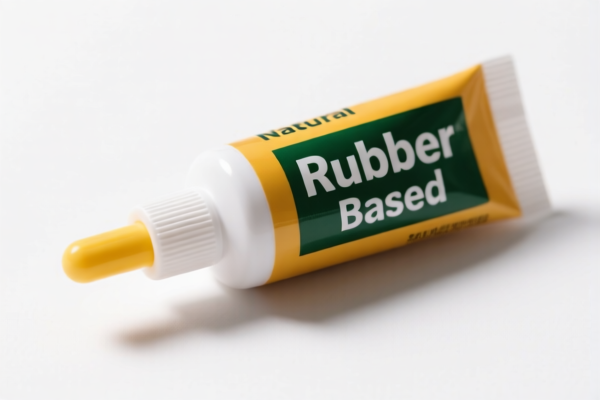
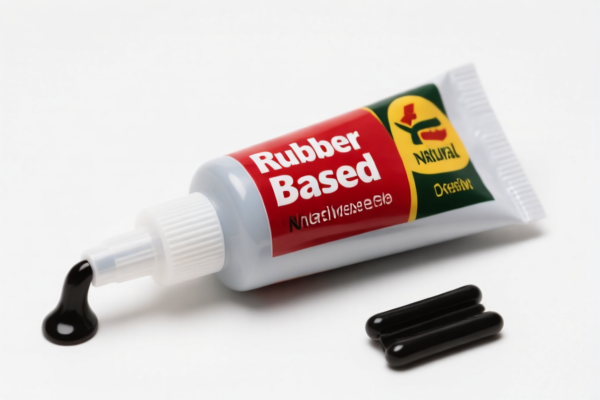
AI分析
🧪 Natural Rubber Modified Adhesive Liquid
🌐 HS Code Reference & Customs Clearance Guide | 2026 Latest Tariff Analysis | Professional-Level Strategy
📌 1. Product Definition & Classification: What is "Natural Rubber Modified Adhesive Liquid"?
"Natural Rubber Modified Adhesive Liquid" refers to a viscous fluid primarily composed of natural rubber that has been chemically or physically treated (modified) to enhance its adhesive properties, flexibility, or drying time. In international trade, the classification of this product hinges on its physical state and degree of processing.
Key Distinction: * Unvulcanized, Unmixed (Simple Latex/Fluid): If it is primarily natural rubber latex or fluid rubber without significant compounding additives (fillers, plasticizers, cross-linking agents) intended for immediate use as an adhesive, it may fall under raw material categories (Chapter 4001). * Unvulcanized, Mixed (Compounded Rubber): If it contains additives (sulfur accelerators, fillers, stabilizers) to create a specific adhesive performance but has not yet been vulcanized (cured), it is classified as "Unvulcanized rubber mixtures" (Chapter 4005). This is the most common classification for industrial adhesive liquids based on rubber.
⚠️ Critical Classification Point:
- If the product is a simple latex or fluid natural rubber without complex compounding → 4001.29.00.00 or 4001.22.00.50.
- If the product is a compounded liquid (mixed with other substances to form the adhesive base) and not vulcanized → 4005.10.00.00 or 4005.20.00.00.
- Note: "Adhesive" alone does not dictate Chapter 35 (Protein-based) or 39 (Plastics). Rubber-based adhesives stay in Chapter 40.
📦 2. HS Code Classification Details (2026 Latest Tariff Authority对照)
Based on the provided data, here are the 5 most relevant HS Codes for "Natural Rubber Modified Adhesive Liquid," ranked by classification logic:
| HS Code | Product Description | Application Scenario | Reason for Classification |
|---|---|---|---|
4005.20.00.00 |
Unvulcanized rubber mixtures containing carbon black or other reinforcing fillers | Industrial adhesives, shoe adhesives, rubber-based sealants | Matches "modified" nature (compounded) and "liquid" (unvulcanized mixture) state. Likely contains fillers for viscosity/adhesion. |
4005.10.00.00 |
Other unvulcanized rubber mixtures (not containing reinforcing fillers) | Pure rubber-based liquid adhesives, non-filled rubber compounds | Matches "modified adhesive" if it is a rubber mixture without significant carbon black/fillers. |
4001.29.00.00 |
Other natural rubber, primary forms or in primary forms (e.g., latex) | Simple rubber latex adhesives, unmodified or lightly modified | Matches "natural rubber material" and "primary/intermediate form." Used if the product is essentially liquid rubber without complex mixing. |
4001.22.00.50 |
Other natural rubber, primary forms (e.g., latex) | Specific types of natural rubber latex | Matches "natural rubber material" inferred as primary/semi-finished form. |
4002.99.00.00 |
Other synthetic rubber and similar products (if misclassified as synthetic) | Warning: Only if the product is actually synthetic rubber or a blend not primarily natural | Matches "rubber component" but incorrect if the product is primarily natural rubber. Included for comparison. |
🔍 Key Reminder:
- 4005.xxxx is the most likely category for "Modified Adhesive Liquid" because "modified" implies compounding (mixing), and "adhesive" implies it’s ready for use or further processing, not just raw latex.
- 4001.xxxx applies only if the product is unmodified or minimally processed natural rubber (e.g., pure latex).
- Do NOT use 4002.xxxx unless the product contains significant synthetic rubber (e.g., SBR, BR). If it’s "Natural Rubber Modified," it stays in 4001 or 4005.
💰 3. 2026 Latest Tariff Rate Breakdown (Including Surcharges, Policy Add-ons)
✅ Applicable Country: United States (US)
✅ Country of Origin: China (CN)
✅ Effective Date: From November 10, 2025 (including subsequent imports)
🎯 1. 4005.20.00.00 & 4005.10.00.00 – Unvulcanized Rubber Mixtures (Most Likely)
| Item | Detail |
|---|---|
| Base Tariff Rate | 0.0% (ad valorem) |
| USITC Section 301 Surcharge | +25.0% |
| IEEPA Clause 122 Surcharge | +10.0% |
| Total Tariff Rate | 35.0% |
| Tax Calculation | CIF Value × 35% |
| De Minimis Eligibility | ❌ No (deny_de_minimis) |
| Legal Basis Path | USITC:4005.20.00.00 → FOOTNOTE:301.01 → IEEPA:9903.01.25 |
📌 Explanation:
- Base Rate 0%: Rubber products typically have low base tariffs.
- Section 301 25%: Standard U.S. tariff on Chinese rubber goods under trade tensions.
- IEEPA 10%: Additional surcharge under the International Emergency Economic Powers Act for specific Chinese imports.
- Total 35%: This is a high tariff for adhesive liquids. Importers must budget accordingly.
🎯 2. 4001.29.00.00 & 4001.22.00.50 – Natural Rubber (Primary Forms/Latex)
| Item | Detail |
|---|---|
| Base Tariff Rate | 0.0% |
| USITC Section 301 Surcharge | +25.0% |
| IEEPA Clause 122 Surcharge | +10.0% |
| Total Tariff Rate | 35.0% |
| Tax Calculation | CIF Value × 35% |
| De Minimis Eligibility | ❌ No |
| Legal Basis Path | USITC:4001.29.00.00 → FOOTNOTE:301.01 → IEEPA:9903.01.25 |
📌 Note:
- Even if classified as raw latex (4001), the same 35% total tariff applies due to Section 301 and IEEPA surcharges.
- Classification as 4001 vs. 4005 may affect non-tariff barriers (e.g., FDA, EPA regulations for adhesives), but the tariff cost is identical.
🎯 3. 4002.99.00.00 – Synthetic Rubber (Incorrect if Natural)
| Item | Detail |
|---|---|
| Base Tariff Rate | 0.0% |
| USITC Section 301 Surcharge | +25.0% |
| IEEPA Clause 122 Surcharge | +10.0% |
| Total Tariff Rate | 35.0% |
| Tax Calculation | CIF Value × 35% |
📌 Warning:
- If the product is misclassified as synthetic rubber (4002) but is actually natural rubber, customs may reclassify it and impose penalties.
- Tariff rate is still 35%, but the risk of customs detention increases due to classification mismatch.
🛠️ 4. Customs Clearance Practical Advice (Battle-Tested Pitfall Guide)
✅ 1. Document Checklist (Non-negotiable)
| Document | Must Provide | Explanation |
|---|---|---|
| ✅ Product Spec Sheet | ✔️ | Must detail: Rubber type (Natural/Synthetic), viscosity, solid content, presence of fillers (carbon black), vulcanization status. |
| ✅ Formula/Composition | ✔️ | Crucial for distinguishing 4001 (unmixed) vs. 4005 (mixed). Must list all additives. |
| ✅ Product Photos | ✔️ | Show liquid state, packaging, and label. Must show "Unvulcanized" if applicable. |
| ✅ Safety Data Sheet (SDS) | ✔️ | Required for hazardous chemical classification. Adhesives often contain solvents. |
| ✅ Commercial Invoice | ✔️ | Must state: "Natural Rubber Based Adhesive Liquid, Unvulcanized, HS Code 4005.20.00.00" |
| ✅ Certificate of Origin (CO) | ✔️ | If shipped from non-China countries, may qualify for lower tariffs. |
| ✅ Packaging List | ✔️ | Detail net weight, gross weight, and container type. |
✅ 2. Declaration Tips (Key Mantras)
🔥 "Unvulcanized is Key, Mixture Determines Code, Name Must Be Precise, Tax Rate is 35%!"
| Scenario | Correct Declaration | Wrong Practice |
|---|---|---|
| Liquid Adhesive (Rubber-based) | 4005.20.00.00 (if filled) or 4005.10.00.00 (if unfilled) |
Misdeclare as 3506.91.90 (Other Adhesives) → Penalty! |
| Pure Natural Latex | 4001.29.00.00 |
Declare as 4005.20.00.00 → Over-complication, but tax same. |
| Vulcanized Rubber Sheets | 4008.19.00.00 |
Declare as 4005 (unvulcanized) → Major Error, High Penalty |
| Synthetic Rubber Adhesive | 4002.99.00.00 |
Declare as 4001 (Natural) → Customs Rejection |
✅ 3. Special Case Handling
| Scenario | Handling Advice |
|---|---|
| Contains Solvents | If solvent content >50%, may be classified under Chapter 38 (Preparations). Check MSDS! |
| FDA/REACH Compliance | Adhesives may require food contact approval (if used in food packaging) or REACH registration (if exporting to EU). |
| Hazardous Cargo | If flammable, declare as Class 3 Flammable Liquid for shipping. Customs may require additional safety docs. |
| OEM Custom Adhesive | Provide customer contract and formula (redacted if necessary) to prove classification. |
🌍 5. Global Market Clearance Comparison (2026 Latest)
| Country/Region | Recommended HS Code | Tariff (China Origin) | Certification Requirements | Notes |
|---|---|---|---|---|
| 🇺🇸 USA | 4005.20.00.00 / 4005.10.00.00 |
35% (25% Sec301 + 10% IEEPA) | SDS, FDA (if applicable) | Highest tariff. Must pre-classify. |
| 🇨🇳 China | 4005.20.00.00 |
5% (Import Duty) | CCC (if applicable) | No additional surcharges for domestic production. |
| 🇪🇺 EU | 4005.20.00.00 |
0% (Most MFN) | REACH, CLP | No 301 tariffs. Lowest cost if shipping from non-China. |
| 🇦🇺 Australia | 4005.20.00.00 |
5% | ADR (if hazardous) | Moderate tariff. |
| 🇯🇵 Japan | 4005.20.00.00 |
0% | JIS | Free trade agreement (JEEPA) may apply. |
📌 Conclusion:
- USA is the most expensive market due to 35% total tariff.
- EU, Japan, Australia offer significantly lower or zero tariffs.
- Strategy: Consider shifting supply chain to Vietnam/Mexico for US-bound goods to avoid 301 tariffs (check Rules of Origin).
📌 6. Common Mistakes & Pitfall Guide (Blood Lessons)
❌ Mistake 1: Declaring "Adhesive Liquid" as 3506.91.90 (Other Adhesives)
👉 Consequence: Customs reclassifies to 4005, but penalizes for misdeclaration. Back taxes + fines!
❌ Mistake 2: Not disclosing "Unvulcanized" status
👉 Consequence: If vulcanized, it’s 4008. If unvulcanized, it’s 4005. Misclassification leads to shipment detention.
❌ Mistake 3: Ignoring solvent content
👉 Consequence: If solvent-heavy, it’s a hazardous chemical. Failure to declare leads to safety violations.
❌ Mistake 4: Assuming "Natural Rubber" = No Tariff
👉 Consequence: Section 301 & IEEPA apply. 35% is mandatory for China-origin goods.
✅ Correct Declaration Example:
"Natural Rubber Based Adhesive Liquid, Unvulcanized, Compounded, HS Code 4005.20.00.00, Net Weight 200kg, Origin China"
🎯 7. Conclusion: Precise Classification Saves Money!
🎯 Remember the Mantra:
🔹 "Unvulcanized is Key, Mixture Determines Code!"
🔹 "35% Tax for China Origin, Don’t Get Caught in Customs!"
🔹 "If it’s Liquid Rubber + Mixers = 4005, Not 3506!"
📌 Pro Tip:
- If your adhesive is exported to the US, consider applying for an Exclusion under Section 301 if your product is not produced in the US.
- Pre-clearance Ruling: Request a Binding Tariff Information (BTI) or US CBP Ruling before shipping to avoid surprises.
- Supply Chain Diversification: For US-bound goods, Vietnam or Thailand production can reduce tariffs to 0%~5%.
📣 Immediate Action:
📞 Contact a Customs Broker + Provide Formula + Apply for Pre-Ruling
🚀 Ensure Smooth Clearance, Avoid 35% Tax Shock, Maximize Profit!
✨ Professional Customs Clearance Starts with Precise Classification!
💼 Every Dollar of Tariff is Worth Calculating Precisely!
用户评价
关于 HS 编码归类
协调制度(HS)是由世界海关组织(WCO)制定的国际贸易商品分类标准。全球 200 多个国家采用 HS 系统作为海关关税、贸易统计和进出口监管的基础。
每个 HS 编码遵循以下层级结构:
- 章(2 位)——商品大类(例如:第 84 章:机器和机械设备)
- 品目(4 位)——章内的更具体分类
- 子目(6 位)——国际通用细分,所有 WCO 成员国统一使用
- 本国细分(8-10 位)——各国自行扩展的细分编码,如美国 HTSUS 10 位编码
正确的 HS 编码归类对于顺利通关、准确缴纳关税和遵守贸易法规至关重要。错误归类可能导致海关延误、多缴关税或罚款。
从CN进口到US时,适用的关税税率可能包括:
- 最惠国(MFN)税率——适用于 WTO 成员国的标准关税税率
- 普通税率——适用于无贸易协定国家
- 贸易救济关税——附加关税,如 301 条款(反倾销)、232 条款(国家安全)或反补贴税
本页内容仅供参考。如需正式归类,请咨询当地海关或持牌报关代理。