Natural Rubber Modified Material
CN → US| HS编码 | 关税税率 | 原产国 | 目的国 | 文档 |
|---|---|---|---|---|
| 4005100000 | 35.0% | CN | US | 官方文档 |
| 4002990000 | 35.0% | CN | US | 官方文档 |
| 4002800000 | 35.0% | CN | US | 官方文档 |
| 4005200000 | 35.0% | CN | US | 官方文档 |
| 4001290000 | 35.0% | CN | US | 官方文档 |
商品图片
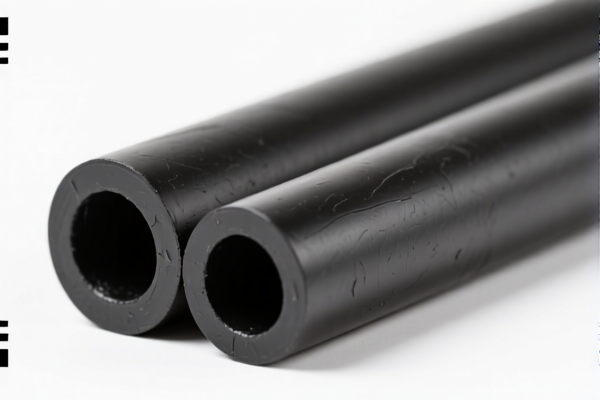
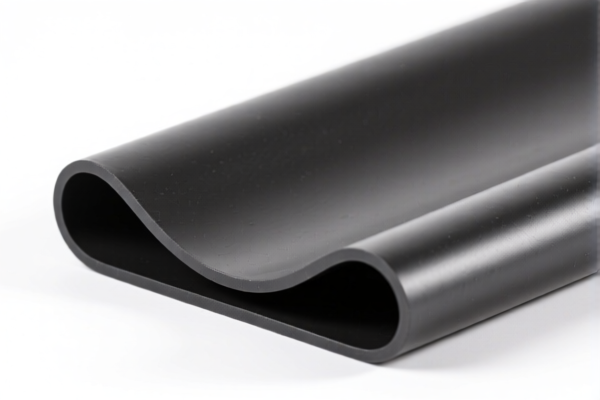
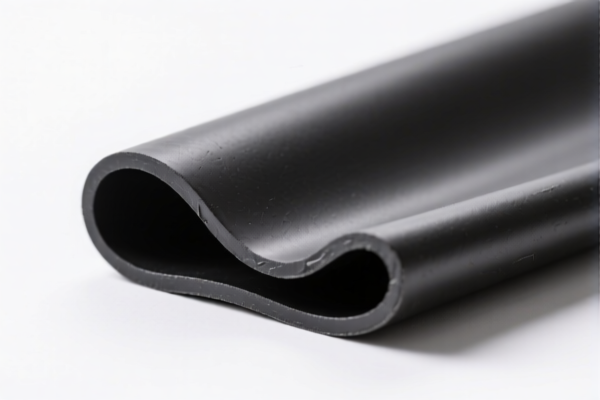
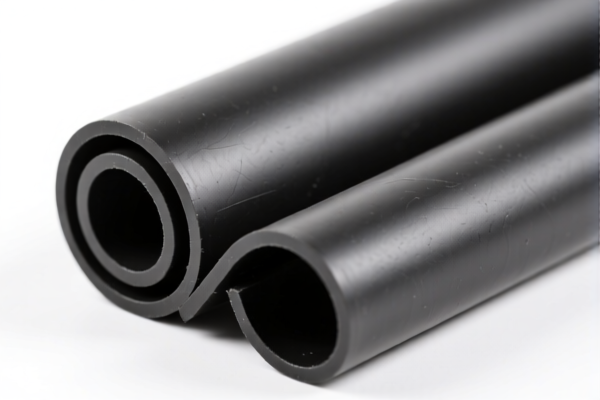
AI分析
🛢️ Natural Rubber Modified Material (天然橡胶改性材料)
🌐 HS Code Reference & Customs Clearance Guide | 2026 Latest Tariff Analysis | Professional Entry Strategy
📌 Part I: Product Definition & Classification: Do You Really Understand "Modified Rubber"?
Natural Rubber Modified Material refers to natural rubber that has been processed with compounding agents (such as fillers, plasticizers, or synthetic rubbers) to improve specific properties (such as viscosity, processability, or mechanical strength). It is typically in the form of unvulcanized compounded rubber.
In international trade, these materials are strictly classified based on their physical state (primary form vs. compounded) and composition (natural vs. mixed). Misclassification can lead to severe tariff penalties, especially given the current trade tensions involving Section 301 and Section 122 tariffs.
⚠️ Key Distinction Points:
- If the material is natural rubber mixed with compounding agents but retains the characteristics of unvulcanized compounded rubber, it generally falls under Chapter 4005.
- If the material is considered a primary form (e.g., latex, sheets, or simple mixes without complex compounding attributes), it may fall under Chapter 4001 or 4002.
- Crucial Note: For US imports from China, all these HS codes are subject to high additional tariffs due to Section 301 (25%) and Section 122 (10%).
📦 Part II: HS Code Classification Details (2026 Latest Tariff Authority Reference)
| HS Code | Product Description | Applicable Scenario | Composition Nature |
|---|---|---|---|
4005.10.00.00 |
Unvulcanized compounded natural rubber, including compound rubber | Natural rubber modified materials, matching the attributes of unvulcanized compounded rubber | ✅ Natural Rubber + Compounds |
4005.20.00.00 |
Unvulcanized compounded rubber, other (e.g., synthetic or mixed) | Natural rubber modified materials, fitting the attribute of unvulcanized compounded rubber | ✅ Natural/Synthetic Mix |
4002.99.00.00 |
Other primary forms of rubber (including synthetic and reclaimed rubber) | Modified materials containing rubber components, classified as primary forms | ✅ Primary Form Classification |
4002.80.00.00 |
Mixtures of synthetic and natural rubber in primary forms | Natural and synthetic rubber mixed modified materials, belonging to primary forms | ✅ Primary Form + Mixed |
4001.29.00.00 |
Natural rubber, natural gum, balata, gutta-percha, guayule, chicle, and similar natural gums in primary forms or in plates, sheets, or strip, other than latex | Modified materials of natural rubber and similar gums, belonging to primary forms | ✅ Primary Form (Natural Focus) |
🔍 Key Reminder:
- All listed HS codes for "Natural Rubber Modified Material" currently attract a total tax rate of 35.0% when imported from China to the US.
- The classification depends on whether the material is deemed "compounded" (4005) or "primary form" (4001/4002).
- Do not assume lower tariffs: Even if the base duty is 0%, the additional tariffs make the total burden high.
💰 Part III: 2026 Latest Tariff Rate Details (Including Additional Taxes, Policy Add-ons)
✅ Applicable Country: United States (US)
✅ Country of Origin: China (CN)
✅ Effective Time: Current rates (including subsequent imports)
🎯 1. 4005.10.00.00 —— Unvulcanized Compounded Natural Rubber
| Item | Content |
|---|---|
| Base Duty Rate | 0.0% (ad valorem) |
| Section 301 Additional Duty | +25% (From USITC Footnote 9903.88.01, applicable to Chapter 40 rubber products) |
| Section 122 Additional Duty | +10% (Targeting specific Chinese imports, including rubber derivatives) |
| Total Duty Rate | 35.0% |
| Tax Calculation | CIF Value × 35% |
| De Minimis Exemption Eligible | ❌ No (Most rubber compounds are excluded from Section 321 de minimis relief) |
| Legal Basis Path | Section 301: 4005.10.00.00 → Section 122: Rubber Products |
📌 Explanation:
- "Section 301 25%": Imposed under the Trade Act of 1974, Section 301, targeting intellectual property theft and unfair trade practices. Chapter 40 items are heavily targeted.
- "Section 122 10%": Imposed under Section 122 of the Trade Act of 1974, providing additional protection to domestic industries.
- Total 35%: This is a significant cost burden. Importers must calculate this into their landed cost immediately.
🎯 2. 4005.20.00.00 —— Other Unvulcanized Compounded Rubber
| Item | Content |
|---|---|
| Base Duty Rate | 0.0% |
| Section 301 Additional Duty | +25% |
| Section 122 Additional Duty | +10% |
| Total Duty Rate | 35.0% |
| Tax Calculation | CIF × 35% |
| De Minimis Exemption Eligible | ❌ No |
| Legal Basis Path | Section 301: 4005.20.00.00 → Section 122: Rubber Products |
📌 Note:
- Same tax structure as4005.10.00.00.
- Applies to modified rubber materials that do not fit the specific "natural rubber compounded" definition of 4005.10 but still fit "unvulcanized compounded."
🎯 3. 4002.99.00.00 —— Other Primary Forms of Rubber
| Item | Content |
|---|---|
| Base Duty Rate | 0.0% |
| Section 301 Additional Duty | +25% |
| Section 122 Additional Duty | +10% |
| Total Duty Rate | 35.0% |
| Tax Calculation | CIF × 35% |
| De Minimis Exemption Eligible | ❌ No |
| Legal Basis Path | Section 301: 4002.99.00.00 → Section 122: Rubber Products |
📌 Critical Distinction:
- If customs determines your "modified material" is actually in primary form (e.g., a simple mix of natural and synthetic rubber latex or sheets without complex compounding), it may be classified here.
- However, the tariff rate remains 35% due to Section 301 and 122. There is no tariff advantage by reclassifying as primary form if the material is truly "modified/compounded."
🎯 4. 4002.80.00.00 —— Mixtures of Synthetic and Natural Rubber (Primary Form)
| Item | Content |
|---|---|
| Base Duty Rate | 0.0% |
| Section 301 Additional Duty | +25% |
| Section 122 Additional Duty | +10% |
| Total Duty Rate | 35.0% |
| Tax Calculation | CIF × 35% |
| De Minimis Exemption Eligible | ❌ No |
| Legal Basis Path | Section 301: 4002.80.00.00 → Section 122: Rubber Products |
📌 Note:
- Applies to mixtures where the material is considered a "primary form" mixture.
- Still subject to the same 35% total tariff.
🎯 5. 4001.29.00.00 —— Natural Rubber in Primary Forms
| Item | Content |
|---|---|
| Base Duty Rate | 0.0% |
| Section 301 Additional Duty | +25% |
| Section 122 Additional Duty | +10% |
| Total Duty Rate | 35.0% |
| Tax Calculation | CIF × 35% |
| De Minimis Exemption Eligible | ❌ No |
| Legal Basis Path | Section 301: 4001.29.00.00 → Section 122: Rubber Products |
📌 Note:
- Applies to modified materials of natural rubber and similar gums (like latex or sheets) classified as primary forms.
- Again, 35% total tax.
🛠️ Part IV: Customs Clearance Practical Advice (Combat Pitfall Guide)
✅ 1. Preparation Checklist (Missing Any One May Cause Delay)
| Material | Must Provide | Explanation |
|---|---|---|
| ✅ Product Specification Sheet | ✔️ | Must detail composition (e.g., % Natural Rubber, % Synthetic, % Fillers), viscosity, and unvulcanized state. |
| ✅ Certificate of Analysis (COA) | ✔️ | Proves the material is "unvulcanized" and meets the "modified/compounded" definition. |
| ✅ Product Photos (Clear) | ✔️ | Show raw state (sheets, blocks, or liquid) to distinguish from finished rubber parts. |
| ✅ Commercial Invoice | ✔️ | Must explicitly state "Natural Rubber Modified Material" and HS Code. Avoid vague terms like "Rubber Compound." |
| ✅ Packing List | ✔️ | Detail net/gross weight. Ensure no finished articles (like tires or hoses) are included. |
| ✅ Origin Certificate | ✔️ | If claiming any exemption (rare for China), provide proof. |
✅ 2. Declaration Tips (Key Mantra)
🔥 “Unvulcanized is Key, Compounding Defines Class, 35% is the Bottom Line!”
| Situation | Correct Declaration | Incorrect Practice |
|---|---|---|
| True Compounded Rubber (e.g., with carbon black, oil) | 4005.10.00.00 or 4005.20.00.00 |
Declare as 4001 (Primary Form) → Misclassification Risk |
| Simple Mix of Natural/Synthetic Latex (Primary) | 4002.80.00.00 |
Declare as 4005 (Compounded) → Possible Duty Check, but Same Rate |
| Finished Rubber Parts (e.g., Gaskets) | 4016.93.00.00 etc. |
Declare as "Modified Material" → Higher Tariffs & Penalties |
| Raw Natural Rubber Sheets (Unmodified) | 4001.21.00.00 |
Declare as "Modified" → Underpayment of Duty (if no add-ons) or Audit Risk |
⚠️ Important:
- Do not split shipments: Do not try to declare "natural rubber" and "additives" separately to avoid compound classification. They must be declared as a single composite good.
- Labeling: Packages should be clearly labeled "Unvulcanized Rubber Compound" to prevent confusion with vulcanized finished goods.
✅ 3. Special Circumstances Handling
| Situation | Handling Advice |
|---|---|
| OEM Custom Compounds | Provide formula or MSDS. Customs may verify if it truly fits "compounded" vs. "primary form." |
| Mixed Imports (Rubber + Plastic) | If the product contains significant plastic, it might be classified elsewhere (e.g., Chapter 39). This is a high-risk area. Seek pre-classification. |
| Small Samples (De Minimis) | Most rubber compounds are excluded from Section 321 (de minimis) relief. Do not rely on $800 exemption. |
| Transshipment | Goods transshipped through third countries (e.g., Vietnam) are still subject to Section 301/122 if the origin is China. Do not attempt false origin declaration. |
🌍 Part V: Global Main Market Customs Comparison (2026 Latest)
| Country/Region | Recommended HS Code | Base Duty | Additional Tariffs (China Origin) | Total Effective Rate | Notes |
|---|---|---|---|---|---|
| 🇺🇸 USA | 4005.10.00.00 |
0% | 301: 25% + 122: 10% | 35% | Highest Barrier. Strict enforcement. |
| 🇨🇳 China | 4005.10.00.00 |
5-10% | None | ~5-10% | Export market. Lower entry cost. |
| 🇪🇺 EU | 4005.10.00.00 |
0-6.5% | None (WTO MFN) | 0-6.5% | Best Alternative Market. No trade war tariffs. |
| 🇦🇺 Australia | 4005.10.00.00 |
0-5% | None (ChAFTA) | 0% | Free Trade Agreement Benefit. Highly recommended. |
| 🇯🇵 Japan | 4005.10.00.00 |
0-3.5% | None (JCEPA) | 0-3.5% | Low Tariff. Good for diversification. |
📌 Conclusion:
- USA is the most difficult market for Chinese rubber due to 35% total tax.
- EU, Australia, and Japan offer significantly lower tariff burdens (0-6.5%) due to FTA/MFN rates.
- Strategic Recommendation: If volume allows, consider shifting export destinations to Australia or EU to maintain competitiveness.
📌 Part VI: Common Errors & Pitfall Guide (Lessons Learned)
❌ Error 1: Declaring "Natural Rubber" (4001) instead of "Compounded Rubber" (4005)
👉 Consequence: If found to be compounded, customs may demand back taxes and penalties for misdeclaration. Even though the rate is similar (0% base + add-ons), the legal risk of fraud is high.
❌ Error 2: Assuming "De Minimis" ($800) applies to rubber compounds
👉 Consequence: US Customs explicitly excludes many rubber products from Section 321. Small shipments may still face full 35% duty and administrative fees.
❌ Error 3: Failing to disclose "Modified" status
👉 Consequence: If additives (fillers, plasticizers) are not declared, it may be viewed as undeclared content. This can lead to seizure or fine.
✅ Correct Approach:
"Unvulcanized Compounded Natural Rubber, Containing Carbon Black and Processing Oils, HS Code 4005.10.00.00, Origin China"
🎯 Part VII: Conclusion: Precision Classification, Cost Optimization
🎯 Remember the Mantra:
🔹 "Unvulcanized is Key, 35% is the Reality for USA."
🔹 "Primary vs. Compounded? It matters for legality, but not always for duty rate in US."
🔹 "Diversify Markets: EU & Australia offer <6% total tax."
📌 Pro Tip:
- If your product is exclusively natural rubber (no synthetic, no complex compounding), it may fall under 4001.29.00.00. The tariff is still 35% in the US, but the legal classification is more accurate.
- Apply for Binding Ruling (ISF/Pre-classification): Before shipping, submit a request to US Customs for a binding ruling on the HS code. This provides legal protection against penalties.
📣 Immediate Action:
📞 Contact a professional customs broker + Provide MSDS + Apply for Pre-classification
🚀 Avoid the 35% shock: Know your HS Code before you ship!
✨ Professional Clearance Starts with Accurate Classification!
💼 Every Percent of Duty Counts!
用户评价
关于 HS 编码归类
协调制度(HS)是由世界海关组织(WCO)制定的国际贸易商品分类标准。全球 200 多个国家采用 HS 系统作为海关关税、贸易统计和进出口监管的基础。
每个 HS 编码遵循以下层级结构:
- 章(2 位)——商品大类(例如:第 84 章:机器和机械设备)
- 品目(4 位)——章内的更具体分类
- 子目(6 位)——国际通用细分,所有 WCO 成员国统一使用
- 本国细分(8-10 位)——各国自行扩展的细分编码,如美国 HTSUS 10 位编码
正确的 HS 编码归类对于顺利通关、准确缴纳关税和遵守贸易法规至关重要。错误归类可能导致海关延误、多缴关税或罚款。
从CN进口到US时,适用的关税税率可能包括:
- 最惠国(MFN)税率——适用于 WTO 成员国的标准关税税率
- 普通税率——适用于无贸易协定国家
- 贸易救济关税——附加关税,如 301 条款(反倾销)、232 条款(国家安全)或反补贴税
本页内容仅供参考。如需正式归类,请咨询当地海关或持牌报关代理。