Natural Rubber Modified Powder
CN → US| HS编码 | 关税税率 | 原产国 | 目的国 | 文档 |
|---|---|---|---|---|
| 4005200000 | 35.0% | CN | US | 官方文档 |
| 4001290000 | 35.0% | CN | US | 官方文档 |
| 4001220050 | 35.0% | CN | US | 官方文档 |
| 4005100000 | 35.0% | CN | US | 官方文档 |
| 4002990000 | 35.0% | CN | US | 官方文档 |
商品图片

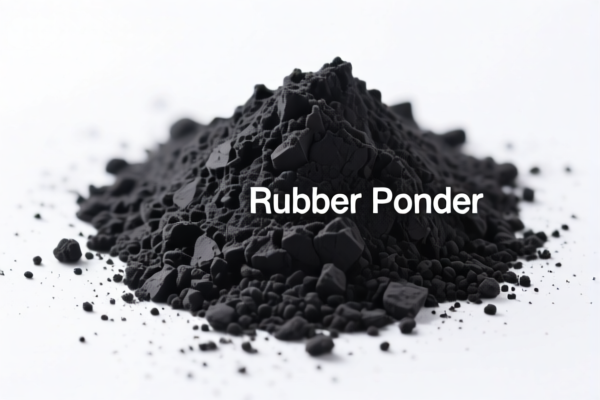

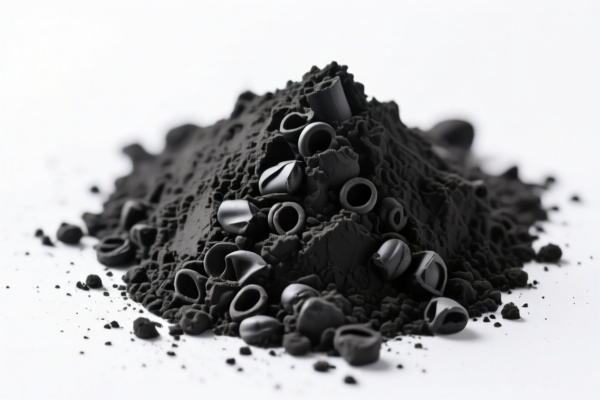
AI分析
🌿 Natural Rubber Modified Powder (Natural Rubber Latex Concentrate / Compounded Rubber)
🌐 HS Code Reference & Customs Clearance Guide | 2026 Latest Tariff Analysis | Professional Customs Strategy for High-Cost Raw Materials
📌 I. Product Definition & Classification: Do You Really Understand "Modified Rubber Powder"?
"Natural Rubber Modified Powder" is a misleading or generic term in international trade. In the Harmonized System (HS), rubber is classified by its state (raw vs. compounded), type (natural vs. synthetic), and form (latex, block, powder, sheet).
The term "Modified" usually implies compounding (adding fillers, accelerators, antioxidants, etc.) or chemical modification. However, if it is still primarily "Natural Rubber" in a primary or semi-processed form, it falls under Chapter 40.
⚠️ Key Distinction Points: - If the rubber has been compounded (mixed with other substances to change properties) and is in an unvulcanized state → It is "Compounded Rubber" (e.g., HS 4005.xx). - If it is pure natural rubber in a primary form (latex, concentrate, powder made from raw latex) → It is "Natural Rubber" (e.g., HS 4001.xx or 4002.xx). - Crucial Note: "Powder" form of natural rubber is often Latex Powder or Rubber Dust/Offcuts, which can fall under different subheadings depending on purity and processing.
📦 II. HS Code Classification Details (Based on Provided Data)
The following HS Codes are derived from your input data. All items carry a Total Tax Rate of 35.0% due to significant trade barriers (likely US-China trade war tariffs).
| HS Code | Product Description & Matching Logic | Tax Rate | Legal/Tariff Basis |
|---|---|---|---|
| 4005.20.00.00 | Compounded Unvulcanized Rubber: Matches attributes of natural rubber material and modified material properties. Fits the classification for "Compounded Rubber" (unvulcanized). | 35.0% | Base: 0%, Section 301: 25%, IEEPA: 10% |
| 4001.29.00.00 | Natural Rubber in Primary Forms: Matches natural rubber material and primary/intermediate state. Fits the category for "Other Natural Rubber" (not latex or strip). Likely for rubber powder/dust if not classified as compounded. | 35.0% | Base: 0%, Section 301: 25%, IEEPA: 10% |
| 4001.22.00.50 | Other Natural Rubber: Matches natural rubber material, inferred as primary or semi-finished. Fits "Other Forms of Natural Rubber". Suitable for specific powder grades not covered by latex or strip. | 35.0% | Base: 0%, Section 301: 25%, IEEPA: 10% |
| 4005.10.00.00 | Compounded Unvulcanized Rubber (Latex/Emulsion): Matches natural rubber material and modified material properties. Fits the classification for "Compounded Rubber" in latex/emulsion form. | 35.0% | Base: 0%, Section 301: 25%, IEEPA: 10% |
| 4002.99.00.00 | Other Synthetic Rubber & Mixtures: Matches rubber composition and modified material primary/intermediate state. Fits "Synthetic Rubber & Rubber Mixtures". Note: Only apply if the product contains significant synthetic rubber components. | 35.0% | Base: 0%, Section 301: 25%, IEEPA: 10% |
🔍 Critical Analysis: - "Modified" vs. "Compounded": In HS terminology, "modified" often leads to 4005 (Compounded Rubber) if additives are present. If it's pure natural rubber in powder form, it may still be 4001 (Natural Rubber). - Synthetic Mix: If your "natural rubber powder" contains synthetic rubber blends, 4002.99.00.00 is used. - Uniform High Cost: All provided HS codes have the same total tax rate (35%), so the financial impact is similar, but compliance documentation varies.
💰 III. 2026 Latest Tariff Rate Details (Detailed Breakdown)
✅ Applicable Country: United States (US)
✅ Origin: China (CN) (Assumed based on tariff structure)
✅ Effective Date: Post-2025 Trade Restrictions
🎯 1. Common Tax Structure for All Provided HS Codes
| Item | Detail | Value |
|---|---|---|
| Base Tariff (MFN) | Most Favored Nation Rate | 0.0% |
| Section 301 Tariff | Additional Duties on Chinese Goods | +25.0% |
| IEEPA / 122 Clause Tariff | Additional Duties under IEEPA/122 Provisions | +10.0% |
| Total Effective Rate | Combined Duty Rate | 35.0% |
| Calculation Basis | Based on CIF (Cost, Insurance, and Freight) value | CIF × 35% |
| De Minimis Exemption | ❌ Not Eligible | Gifts/small shipments do NOT apply; commercial shipments are fully taxed. |
📌 Explanation of Tariffs: - "Section 301 Tariff (25%)": Imposed under the U.S. Trade Act of 1974, Section 301, targeting specific Chinese imports. Rubber products are often included in List 3 or 4. - "IEEPA / 122 Clause (10%)": Refers to tariffs under the International Emergency Economic Powers Act (IEEPA) or specific Section 122 provisions. This is an additional layer on top of Section 301. - No Base Tariff: Natural rubber and certain rubber products often have a 0% MFN base rate, but the additive tariffs make them expensive.
🛠️ IV. Customs Clearance Practical Advice (Avoid Pitfalls)
✅ 1. Required Documentation Checklist
| Document | Mandatory? | Purpose |
|---|---|---|
| Product Specification Sheet | ✔️ | Must clearly state: Natural Rubber Content %, Additives (if any), Form (Powder), Processing Method. |
| Formula/Composition List | ✔️ | Critical to distinguish between 4001 (Natural) and 4005 (Compounded). If additives > rubber, it’s compounded. |
| Commercial Invoice | ✔️ | Must specify "Natural Rubber Modified Powder" and HS Code. Avoid vague terms like "Rubber Material". |
| Bill of Lading / Air Waybill | ✔️ | Standard shipping documents. |
| Certificate of Origin | ✔️ | To confirm Chinese origin (triggering tariffs). |
| Material Safety Data Sheet (MSDS) | ✔️ | Required for powder handling and chemical safety clearance. |
| Import License (if applicable) | ✔️ | Check if specific rubber import licenses are needed in the destination country. |
✅ 2. Declaration Tips
🔥 Golden Rule:
"Declare Based on Composition, Not Just Name!"
| Scenario | Correct HS Code | Risk of Wrong Declaration |
|---|---|---|
| Pure Natural Rubber Powder (no additives) | 4001.29.00.00 or 4001.22.00.50 | Misdeclaring as "Compounded" (4005) may raise flags if no additives found. |
| Natural Rubber + Fillers/Antioxidants | 4005.20.00.00 or 4005.10.00.00 | Must provide formula. Customs may test for composition. |
| Mixture with Synthetic Rubber | 4002.99.00.00 | Must prove synthetic content. If misdeclared, penalties apply. |
⚠️ Warning:
- Do NOT use "Natural Rubber Powder" if it is actually compounded. Customs labs will analyze it. If additives are found, it must be 4005. - Do NOT assume "Powder" automatically means 4001. If it’s rubber dust/offcuts, it might still be 4001. If it’s a prepared mix, it’s 4005.
✅ 3. Special Handling for "Modified" Products
| Situation | Advice |
|---|---|
| OEM Custom Mix | Provide the exact formula to customs broker. "Modified" is subjective; "Compounded" is the legal term in HS 4005. |
| High Synthetic Content | If >50% synthetic, consider 4002. If <50% but still a mixture, it may still be 4005. |
| Latex Powder | If the powder is derived from coagulated latex, it may fall under 4005.10 (Latex type) or 4001 (if pure). Clarify with supplier. |
🌍 V. Global Market Comparison (2026)
| Country/Region | Recommended HS Code | Total Tariff | Notes |
|---|---|---|---|
| 🇺🇸 USA | 4005.20.00.00 or 4001.29.00.00 | 35.0% | High tariffs due to Section 301 + IEEPA. |
| 🇨🇳 China | 4005 or 4001 | Varies (0-5%) | No additional trade war tariffs. |
| 🇪🇺 EU | 4005 or 4001 | 0% | Most MFN rates are 0%. No Section 301 equivalent. |
| 🇬🇧 UK | 4005 or 4001 | 0% | Post-Brexit, MFN rates apply. |
| 🇦🇺 Australia | 4005 or 4001 | 5% | Low tariffs, no major additional duties. |
📌 Conclusion:
- The USA is the most expensive market due to 35% total tariffs. - EU, UK, Australia are significantly cheaper (0-5%). Consider supply chain diversification if targeting US markets.
📌 VI. Common Errors & Pitfalls (Lessons Learned)
❌ Error 1: Declaring "Natural Rubber Powder" as 4005 without justification for "compounding".
👉 Consequence: Customs may reject or request additional testing, delaying clearance by weeks.
❌ Error 2: Ignoring the "Modified" aspect and claiming 0% base tariff only.
👉 Consequence: Underpayment of duties → Penalties + Back Taxes (up to 35% of value).
❌ Error 3: Using vague descriptions like "Rubber Material" on invoices.
👉 Consequence: Customs may assign a worst-case HS code or hold the shipment for inspection.
❌ Error 4: Assuming "Powder" means it’s not subject to trade tariffs.
👉 Consequence: All rubber products are subject to Section 301 tariffs if of Chinese origin.
✅ Correct Practice:
"Natural Rubber Compounded Powder, Unvulcanized, Contains Carbon Black & Stearic Acid, HS 4005.20.00.00, Origin: China"
🎯 VII. Conclusion: Precision is Key to Cost Control
🎯 Remember the Formula:
🔹 "Pure = 4001, Mixed = 4005, Synthetic Blend = 4002"
🔹 "All carry 35% in the US (25% + 10%) – No Escape!"
📌 Pro Tip:
- If your product is pure natural rubber, use 4001.29.00.00 or 4001.22.00.50.
- If it’s compounded, use 4005.20.00.00 or 4005.10.00.00.
- Always provide the full formula to your customs broker to avoid misclassification.
📣 Immediate Action:
📞 Contact a Customs Broker: Provide the exact chemical composition.
📄 Apply for an Advance Ruling: Get a binding decision on the correct HS Code before shipping.
🚀 Optimize Supply Chain: Consider transshipment or origin modification (if legal) to reduce tariffs in the US market.
✨ Professional Clearance Starts with Accurate Classification!
💼 Every percentage point matters – protect your margins!
用户评价
关于 HS 编码归类
协调制度(HS)是由世界海关组织(WCO)制定的国际贸易商品分类标准。全球 200 多个国家采用 HS 系统作为海关关税、贸易统计和进出口监管的基础。
每个 HS 编码遵循以下层级结构:
- 章(2 位)——商品大类(例如:第 84 章:机器和机械设备)
- 品目(4 位)——章内的更具体分类
- 子目(6 位)——国际通用细分,所有 WCO 成员国统一使用
- 本国细分(8-10 位)——各国自行扩展的细分编码,如美国 HTSUS 10 位编码
正确的 HS 编码归类对于顺利通关、准确缴纳关税和遵守贸易法规至关重要。错误归类可能导致海关延误、多缴关税或罚款。
从CN进口到US时,适用的关税税率可能包括:
- 最惠国(MFN)税率——适用于 WTO 成员国的标准关税税率
- 普通税率——适用于无贸易协定国家
- 贸易救济关税——附加关税,如 301 条款(反倾销)、232 条款(国家安全)或反补贴税
本页内容仅供参考。如需正式归类,请咨询当地海关或持牌报关代理。