Natural Rubber O Ring (Other Forms)
CN → US| HS编码 | 关税税率 | 原产国 | 目的国 | 文档 |
|---|---|---|---|---|
| 4016931010 | 37.5% | CN | US | 官方文档 |
| 4016935010 | 37.5% | CN | US | 官方文档 |
商品图片
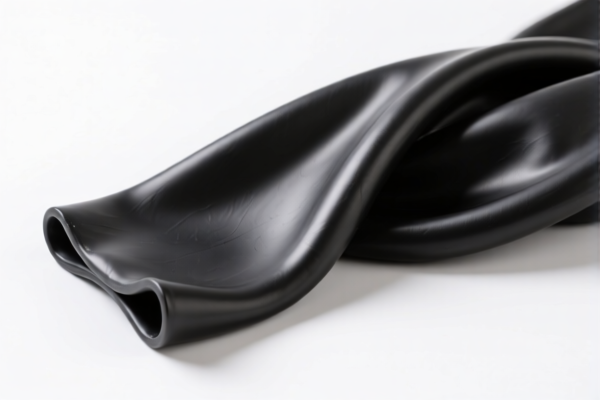
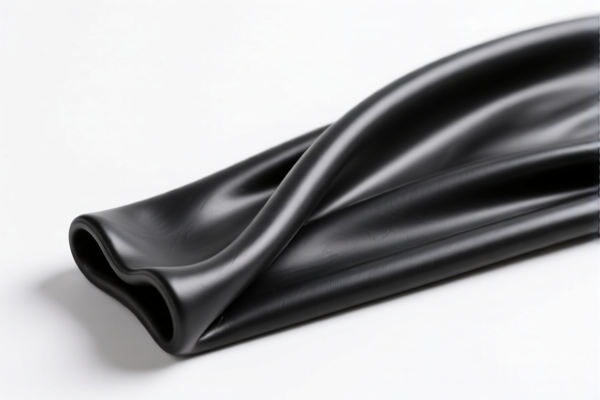
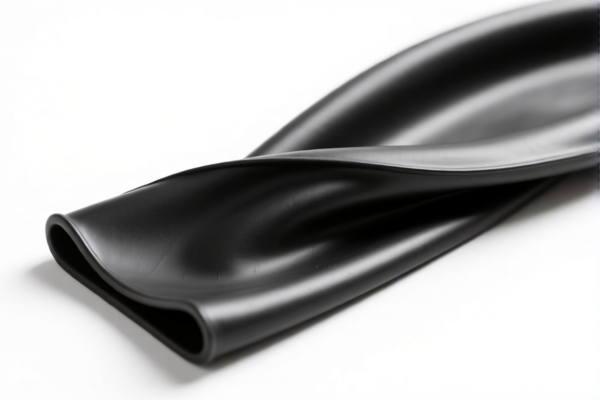
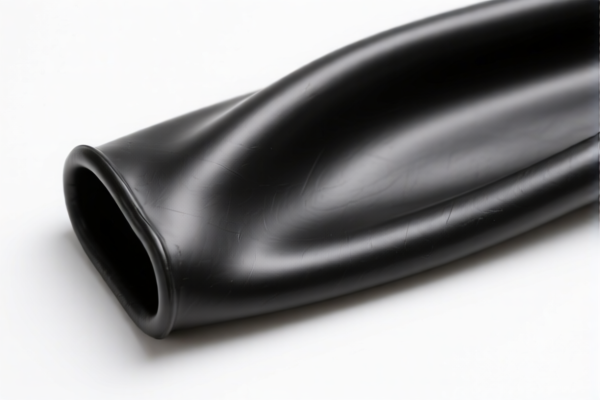
AI分析
🛡️ O-Rings of Vulcanized Rubber (Other Forms)
🌐 HS Code Reference & Customs Clearance Guide | 2026 Latest Tariff Analysis | Professional-Level Clearance Strategy 📌 I. Product Definition & Classification: Do You Truly Understand "O-Rings"?
O-Rings (Other Forms of Vulcanized Rubber), also known as Sealing Rings, are elastic rings of circular cross-section used as mechanical seals. In international trade, they are classified under Chapter 40 (Rubber and Articles Thereof).
The key distinction lies in their application: * Automotive O-Rings: Specifically designed for use in vehicles of Chapter 87 (e.g., engines, transmissions, brake systems). * General/Industrial O-Rings: Used in HVAC, plumbing, machinery, aerospace, or consumer goods.
⚠️ Critical Classification Point: - If the O-Ring is specifically identifiable as being used in automotive goods (Chapter 87) →归入 4016.93.10.10 - If the O-Ring is general purpose or for other machinery →归入 4016.93.50.10
📦 II. HS Code Classification Details (2026 Latest Tariff Authority Comparison)
| HS Code | Product Description | Application Scenario | Tariff Category |
|---|---|---|---|
4016.93.10.10 |
Gaskets, washers and other seals: Other O-Rings | Of a kind used in the automotive goods of chapter 87 | Automotive Grade |
4016.93.50.10 |
Gaskets, washers and other seals: Other O-Rings | Other (General industrial, HVAC, household, non-auto machinery) | General/Industrial Grade |
🔍 Key Reminder: - Both codes fall under 4016.93 (Other articles of vulcanized rubber other than hard rubber: Gaskets, washers and other seals). - The differentiation is purely based on end-use: Automotive vs. Non-Automotive. - If you cannot prove the O-Ring is specifically for automotive use, it defaults to the "Other" category.
💰 III. 2026 Latest Tariff Rate Breakdown (Including Surcharge Policies)
✅ Applicable Country: United States (US) ✅ Country of Origin: China (CN) ✅ Effective Date: From November 10, 2025 (including subsequent imports)
🎯 1. 4016.93.10.10 — Automotive O-Rings
| Item | Content |
|---|---|
| Base Tariff | 2.5% (Ad Valorem) |
| Section 301 Surcharge | +25.0% |
| Total Tariff Rate | 27.5% |
| Tax Calculation | CIF Value × 27.5% |
| De Minimis Eligibility | ❌ Not Eligible (Subject to high tariffs, not qualifying for low-value exemption) |
| Legal Basis Path | USITC:4016.93.10.10 → FOOTNOTE:9903.88.01 (Section 301 List 3) |
📌 Explanation: - The 2.5% is the standard Most Favored Nation (MFN) rate for vulcanized rubber seals. - The +25% is the Section 301 tariff imposed on specific Chinese-origin rubber articles. - Total 27.5% is a significant cost factor. This applies strictly to O-rings classified for automotive use.
🎯 2. 4016.93.50.10 — Other (Non-Automotive) O-Rings
| Item | Content |
|---|---|
| Base Tariff | 2.5% (Ad Valorem) |
| Section 301 Surcharge | +25.0% |
| Total Tariff Rate | 27.5% |
| Tax Calculation | CIF Value × 27.5% |
| De Minimis Eligibility | ❌ Not Eligible |
| Legal Basis Path | USITC:4016.93.50.10 → FOOTNOTE:9903.88.01 (Section 301 List 3) |
📌 Note: - The tariff rate is identical to the automotive O-Rings. - Whether it's for an air conditioner, a water pipe, or industrial machinery, as long as it’s a vulcanized rubber O-ring from China, the 27.5% total rate applies. - There is no tariff advantage for choosing the "Other" code over the "Automotive" code in terms of rate, but correct classification is crucial for customs compliance and duty drawback possibilities (if exported further).
🛠️ IV. Customs Clearance Practical Advice (Battle-Tested Pitfall Avoidance)
✅ 1. Required Documentation Checklist (Non-negotiable)
| Document | Must Provide | Description |
|---|---|---|
| ✅ Product Specification Sheet | ✔️ | Material (NBR, FKM, EPDM, etc.), Hardness (Shore A), Dimensions, Pressure/Temperature Rating |
| ✅ Material Safety Data Sheet (MSDS) | ✔️ | For chemical compliance |
| ✅ Product Photos (Clear) | ✔️ | Showing cross-section, size, and any packaging markings |
| ✅ Commercial Invoice | ✔️ | Must clearly state: "Vulcanized Rubber O-Ring, HS Code 4016.93.XX.XX, Origin: China" |
| ✅ Packing List | ✔️ | Net/Gross weight, number of pieces |
| ✅ End-Use Declaration | ✔️ | Crucial: Explicitly state if used in Automotive (Ch. 87) or General Industry. This determines the subheading (.10 vs .50). |
| ✅ Bill of Lading / Air Waybill | ✔️ | Standard transport documents |
✅ 2. Declaration Tips (Key Mantra)
🔥 "Material First, End-Use Defines Code, Origin is Key!"
| Scenario | Correct Declaration | Wrong Practice |
|---|---|---|
| O-Rings for Car Engines/Transmissions | 4016.93.10.10 |
Misdeclaring as general seals → Audit Risk |
| O-Rings for Air Conditioners/Pumps | 4016.93.50.10 |
Misdeclaring as automotive → Wrong Duty Drawback potential |
| Mixed Batch (Auto + Non-Auto) | Split HS Codes | Combining into one code → Customs Rejection/Fines |
| Hard Rubber O-Rings | Do Not Use 4016.93 | Hard rubber (ebonite) goes to 4016.10 → Different Tariff |
✅ 3. Special Situation Handling
| Situation | Handling Advice |
|---|---|
| O-Ring Material is Not Vulcanized Rubber | If it’s Silicone, Teflon, or Metal, it does not belong in Chapter 40. Check Chapter 39 (Plastics) or 73/76 (Metal). |
| O-Rings as Parts of a Machine | If shipped inside a larger machine, declare as Parts of the Machine (if identifiable) or O-Rings separately. Do not hide O-rings in the machine description. |
| Duty Drawback Potential | If these O-Rings are imported into the US and then re-exported (e.g., to Canada/Mexico under USMCA), proper HS classification allows for 100% duty drawback. Misclassification kills this benefit. |
| USMCA (Mexico/Canada) Origin | If O-Rings are manufactured in Mexico (not just transshipped), they may qualify for 0% tariff under USMCA. Ensure the Rule of Tariff Shift (RTS) is met. |
🌍 V. Global Major Market Comparison (2026 Latest)
| Country/Region | Recommended HS Code | Tariff (China Origin) | Certification Requirements | Notes |
|---|---|---|---|---|
| 🇺🇸 USA | 4016.93.10.10 / .50.10 |
27.5% | None specific (General) | High Section 301 tariff applies |
| 🇨🇳 China | 4016.93.99 |
3.0% | None | Export to China is cheap |
| 🇪🇺 EU | 4016.93.89 |
6.5% | REACH Compliance | No Section 301, but strict chemical regs |
| 🇨🇦 Canada | 4016.93.10.00 |
0% (USMCA) | None | Free if USMCA Origin |
| 🇲🇽 Mexico | 4016.93.10.00 |
0% (USMCA) | NOM | Free if USMCA Origin |
📌 Conclusion: - The US market is the most expensive for Chinese O-Rings due to the 27.5% total duty. - If your supply chain includes Mexico or Canada, consider USMCA origin rules. If O-Rings are substantially transformed in Mexico/Canada, you can avoid the 27.5% US tariff. - EU tariffs are moderate (6.5%) but require strict REACH chemical registration.
📌 VI. Common Errors & Pitfalls (Lessons Learned)
❌ Error 1: Declaring "Rubber Parts" without specifying O-Ring 👉 Consequence: Customs may classify under a higher duty or general "Other" category, leading to audit flags.
❌ Error 2: Confusing Hard Rubber (Ebonite) with Vulcanized Soft Rubber 👉 Consequence: Hard rubber goes to 4016.10. If you declare soft rubber O-rings as hard rubber, or vice versa, it’s a material misclassification.
❌ Error 3: Ignoring the Section 301 List 👉 Consequence: Assuming 2.5% base rate only. Ignoring the 25% surcharge leads to seizure or penalties at US ports.
❌ Error 4: Combining Automotive and Non-Automotive O-Rings in one line item 👉 Consequence: If audited, customs may reject the "Automotive" classification for the whole batch, forcing the higher administrative burden or denying duty drawbacks.
✅ Correct Practice:
"Vulcanized Rubber O-Ring, Nitrile (NBR), Size 20x3mm, For Automotive Engine Sealing, HS 4016.93.10.10, Made in China"
🎯 VII. Conclusion: Precise Classification, Cost Control!
🎯 Remember the Mantra:
🔹 "O-Rings are Simple, But Classification is Complex!" 🔹 "Auto vs. General Determines the Subheading!" 🔹 "27.5% is the US Reality for Chinese Rubber!" 🔹 "Check USMCA for a 0% Loophole!"
📌 Pro Tip: If your volume is high, apply for an Advance Ruling (Prelinary Ruling) from US Customs (CBP) to lock in the HS code classification. This provides legal certainty and protects you from sudden audits.
📣 Take Action Now:
📞 Consult a licensed Customs Broker 📄 Prepare detailed Material & End-Use Documentation 🚀 Clear Customs Smoothly, Save 27.5% in Potential Penalties!
✨ Professional Clearance Starts with Accurate Classification! 💼 Every Cent Counts in Global Trade!
用户评价
关于 HS 编码归类
协调制度(HS)是由世界海关组织(WCO)制定的国际贸易商品分类标准。全球 200 多个国家采用 HS 系统作为海关关税、贸易统计和进出口监管的基础。
每个 HS 编码遵循以下层级结构:
- 章(2 位)——商品大类(例如:第 84 章:机器和机械设备)
- 品目(4 位)——章内的更具体分类
- 子目(6 位)——国际通用细分,所有 WCO 成员国统一使用
- 本国细分(8-10 位)——各国自行扩展的细分编码,如美国 HTSUS 10 位编码
正确的 HS 编码归类对于顺利通关、准确缴纳关税和遵守贸易法规至关重要。错误归类可能导致海关延误、多缴关税或罚款。
从CN进口到US时,适用的关税税率可能包括:
- 最惠国(MFN)税率——适用于 WTO 成员国的标准关税税率
- 普通税率——适用于无贸易协定国家
- 贸易救济关税——附加关税,如 301 条款(反倾销)、232 条款(国家安全)或反补贴税
本页内容仅供参考。如需正式归类,请咨询当地海关或持牌报关代理。