Natural Rubber Raw Material
CN → US| HS编码 | 关税税率 | 原产国 | 目的国 | 文档 |
|---|---|---|---|---|
| 4002800000 | 35.0% | CN | US | 官方文档 |
| 4001290000 | 35.0% | CN | US | 官方文档 |
| 4001220050 | 35.0% | CN | US | 官方文档 |
| 4005990000 | 35.0% | CN | US | 官方文档 |
| 4005910000 | 35.0% | CN | US | 官方文档 |
商品图片
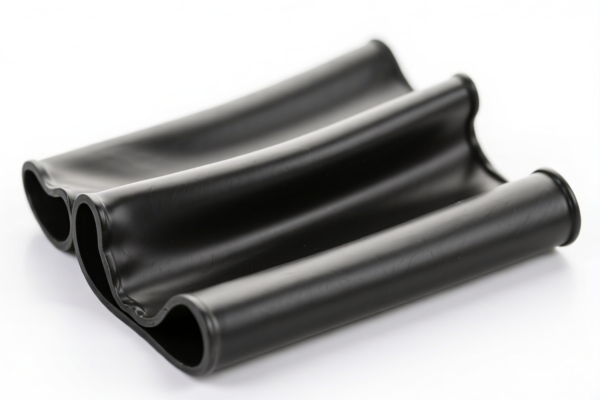
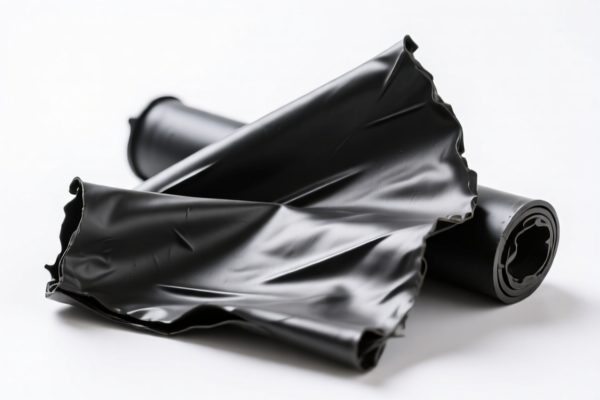
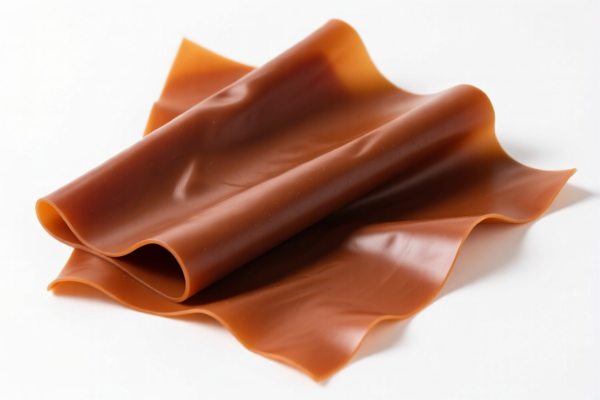
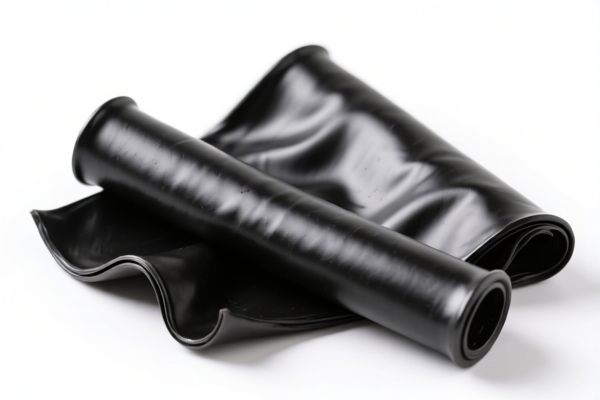
AI分析
🌿 Natural Rubber Raw Material (天然橡胶原料)
🌐 HS Code Reference & Customs Clearance Guide | 2026 Latest Tariff Breakdown | Professional Clearance Strategy
📌 I. Product Definition & Classification: What Exactly Is "Natural Rubber"?
Natural Rubber is a polymeric hydrocarbon resin primarily derived from the latex of Hevea brasiliensis (rubber trees). In international trade, it is not a single monolithic product but is classified based on its physical state, processing level, and composition.
It is critical to distinguish between: 1. Primary Forms (Latex & Solid Sheets): Raw material directly extracted or lightly processed from the tree. 2. Compounds & Mixtures: Natural rubber blended with synthetic rubber or compounded with additives (sulfur, accelerators, etc.), falling under "Rubber Compound" categories.
⚠️ Key Distinction Point:
- If the rubber is unvulcanized but compounded (mixed with other substances for specific properties) → It falls under Chapter 40.05 or 40.02.
- If the rubber is in its raw, primary state (latex, sheets, crumb rubber) without synthetic mixing → It falls under Chapter 40.01.
- Do not confuse "Natural Rubber Compound" (40.05) with "Pure Natural Rubber" (40.01). The tax implications differ significantly based on composition.
📦 II. HS Code Classification Details (2026 Latest Tariff Authority Reference)
| HS Code | Product Description | Application Scenario | Composition Type |
|---|---|---|---|
4002.80.00.00 |
Natural Rubber Compounds, mixtures of natural and synthetic rubber | Blended rubbers for high-performance tires, industrial hoses | ✅ Mixed (Natural + Synthetic) |
4001.29.00.00 |
Natural Rubber in primary forms, other (e.g., sheets, crumb) | Standard raw material for general rubber manufacturing | ✅ Pure Natural (Primary) |
4001.22.00.50 |
Natural Rubber in intermediate forms (e.g., stabilized latex, compacted) | Semi-processed latex, compacted rubber for specific industries | ✅ Pure Natural (Intermediate) |
4005.99.00.00 |
Rubber Compounds, other (e.g., milled rubber, non-sulfurized) | Milled rubber sheets, non-vulcanized rubber ready for further processing | ✅ Compounded (Natural-based) |
4005.91.00.00 |
Rubber Compounds, in primary forms or shapes (unvulcanized) | Unvulcanized rubber blocks, sheets, or shapes for molding | ✅ Unvulcanized Compound |
🔍 Important Note:
- Chapter 40.01 covers raw natural rubber in its basic forms (latex, sheets, crumbs).
- Chapter 40.02 covers synthetic rubber and mixtures of natural and synthetic rubber.
- Chapter 40.05 covers compounds of rubber (natural or synthetic) with additives, but not vulcanized.
- Misclassification between "Primary Form" (4001) and "Compound" (4005) can lead to customs delays or incorrect duty assessments.
💰 III. 2026 Latest Tariff Rate Breakdown (Including Additional Taxes & Policy Surcharges)
✅ Applicable Country: United States (US)
✅ Country of Origin: China (CN)
✅ Effective Date: November 10, 2025 (and subsequent imports)
🎯 1. 4002.80.00.00 —— Natural Rubber Compounds (Mixtures of Natural & Synthetic)
| Item | Detail |
|---|---|
| Base Tariff Rate | 0% (ad valorem) |
| USITC Additional Duty | +25% (Under USITC Footnote for Section 301) |
| IEEPA Additional Duty | +10% (Under International Emergency Economic Powers Act, targeting China/HK goods) |
| Total Tariff Rate | 35% |
| Tax Calculation | CIF Value × 35% |
| De Minimis Exemption Eligible? | ❌ No (deny_de_minimis applies) |
| Legal Authority Path | IEEPA:9903.01.25 → IEEPA:9903.01.24 → USITC:4002.80.00.00 → FOOTNOTE:301/122 |
📌 Explanation:
- "25% USITC Additional Duty": Result of Section 301 tariffs on Chinese goods.
- "10% IEEPA Additional Duty": Specific surcharge under the International Emergency Economic Powers Act for rubber-related imports from China.
- Total 35%: This is a high tariff, requiring precise classification to avoid penalties.
- 122 Clause: Refers to specific administrative provisions often linked to agricultural or raw material imports, adding complexity.
🎯 2. 4001.29.00.00 —— Natural Rubber, Primary Forms (Other)
| Item | Detail |
|---|---|
| Base Tariff Rate | 0% |
| USITC Additional Duty | +25% |
| IEEPA Additional Duty | +10% |
| Total Tariff Rate | 35% |
| Tax Calculation | CIF × 35% |
| De Minimis Exemption Eligible? | ❌ No |
| Legal Authority Path | IEEPA:9901.25 → IEEPA:9903.01.24 → USITC:4001.29.00.00 → FOOTNOTE:301/122 |
📌 Note:
- Includes standard smoked sheets, technical specifications (TSRs), and crumb rubber.
- Even though it is "raw," the trade tensions lead to the same 35% effective rate.
🎯 3. 4001.22.00.50 —— Natural Rubber, Intermediate Forms
| Item | Detail |
|---|---|
| Base Tariff Rate | 0% |
| USITC Additional Duty | +25% |
| IEEPA Additional Duty | +10% |
| Total Tariff Rate | 35% |
| Tax Calculation | CIF × 35% |
| De Minimis Exemption Eligible? | ❌ No |
| Legal Authority Path | IEEPA:9901.25 → IEEPA:9903.01.24 → USITC:4001.22.00.50 → FOOTNOTE:301/122 |
📌 Note:
- Applies to stabilized latex or compacted rubber that is not in final primary shape but not yet compounded.
🎯 4. 4005.99.00.00 —— Rubber Compounds (Other, e.g., Milled Rubber)
| Item | Detail |
|---|---|
| Base Tariff Rate | 0% |
| USITC Additional Duty | +25% |
| IEEPA Additional Duty | +10% |
| Total Tariff Rate | 35% |
| Tax Calculation | CIF × 35% |
| De Minimis Exemption Eligible? | ❌ No |
| Legal Authority Path | IEEPA:9903.01.25 → IEEPA:9903.01.24 → USITC:4005.99.00.00 → FOOTNOTE:301/122 |
📌 Note:
- Milled rubber (rubber processed through rollers to break down structure) is considered a "compound" in some contexts due to processing additives.
🎯 5. 4005.91.00.00 —— Rubber Compounds, Primary Forms (Unvulcanized)
| Item | Detail |
|---|---|
| Base Tariff Rate | 0% |
| USITC Additional Duty | +25% |
| IEEPA Additional Duty | +10% |
| Total Tariff Rate | 35% |
| Tax Calculation | CIF × 35% |
| De Minimis Exemption Eligible? | ❌ No |
| Legal Authority Path | IEEPA:9901.25 → IEEPA:9903.01.24 → USITC:4005.91.00.00 → FOOTNOTE:301/122 |
📌 Note:
- Includes unvulcanized rubber in blocks, sheets, or shapes, but not pure primary latex/sheets (which go to 40.01).
- Often contains plasticizers or processing oils.
🛠️ IV. Customs Clearance Practical Advice (Real-World Pitfall Guide)
✅ 1. Required Documentation Checklist (Essential)
| Document | Must Provide | Explanation |
|---|---|---|
| ✅ Product Specification Sheet | ✔️ | Detail the type of rubber (e.g., TSR 20, Latex 60%), viscosity, protein content. |
| ✅ Material Safety Data Sheet (MSDS) | ✔️ | Required for chemical handling and customs hazard assessment. |
| ✅ Certificate of Origin (CO) | ✔️ | Critical for proving origin; if from China, 35% duty applies. If from Thailand/Vietnam, potential 0% under USMCA/FTAs (check eligibility). |
| ✅ Commercial Invoice | ✔️ | Must clearly state "Natural Rubber" and HS Code. Avoid vague terms like "Rubber Sheets." |
| ✅ Packing List | ✔️ | Detail gross/net weight, number of packages, and palletization. |
| ✅ Bill of Lading/Air Waybill | ✔️ | Standard transport document. |
| ✅ Testing Report | ✔️ | Proof of composition (e.g., ASTM D129 for rubber compounds) to justify HS Code. |
✅ 2. Declaration Tips (Key Mnemonics)
🔥 “Pure is 4001, Mixed is 4002, Compounded is 4005. Don’t Mix ‘Em, or You’ll Pay 35% Plus Fines!”
| Scenario | Correct Declaration | Wrong Practice |
|---|---|---|
| Raw Latex / Smoked Sheets | 4001.29.00.00 |
Declare as "Compound" → 4005 may require more documentation. |
| Rubber Mixed with Synthetic | 4002.80.00.00 |
Declare as "Natural Rubber" → Misclassification Risk. |
| Milled Rubber with Additives | 4005.99.00.00 |
Declare as "Primary Form" → Customs may reject due to additives. |
| Unvulcanized Blocks for Molding | 4005.91.00.00 |
Declare as "Raw Material" → Ambiguous; specify "Unvulcanized Compound." |
✅ 3. Special Handling for "122 Clause" & "IEEPA"
- 122 Clause: Refers to specific administrative provisions in US Customs regulations. For rubber, this often involves anti-dumping duties (AD) or countervailing duties (CVD) checks. While the provided data shows a flat 35% (25% + 10%), always verify if Section 201 or AD/CVD orders apply to specific types of natural rubber.
- IEEPA 10%: This is a specific surcharge. Ensure your Certificate of Origin is accurate. If the rubber is processed in a third country (e.g., Vietnam) with substantial transformation, you may qualify for exemption, but natural rubber is often considered "directly originating" to the tree country.
🌍 V. Global Market Comparison (2026 Latest)
| Country/Region | Recommended HS Code | Tariff (China Origin) | Certification | Notes |
|---|---|---|---|---|
| 🇺🇸 USA | 4001.29.00.00 / 4005.99.00.00 |
35% (25% + 10%) | None Specific | High tariff; avoid de minimis. |
| 🇨🇳 China | 4001.29.00.00 |
0% - 5% (Varies) | CCC (if applicable) | Low entry barrier. |
| 🇪🇺 EU | 4001.29.00.00 |
0% (GSP) | REACH | May qualify for 0% under GSP if from eligible countries. |
| 🇦🇺 Australia | 4001.29.00.00 |
0% (ChAFTA) | None | Free trade agreement benefits. |
| 🇯🇵 Japan | 4001.29.00.00 |
0% (JTEPA) | None | Free trade agreement benefits. |
📌 Conclusion:
- USA is the most expensive market for Chinese natural rubber due to the 35% effective tariff.
- EU, Australia, and Japan offer 0% tariffs under Free Trade Agreements (FTAs), provided the origin criteria are met.
- Strategy: If exporting to the US, consider supply chain diversification (e.g., sourcing from Thailand, Indonesia, or Vietnam) to mitigate the 35% cost.
📌 VI. Common Mistakes & Pitfall Guide (Lessons Learned)
❌ Mistake 1: Declaring "Compound Rubber" as "Raw Natural Rubber" (4001)
👉 Consequence: Customs may reclassify to 4005, adding complexity and potential penalties for misdeclaration.
👉 Fix: Provide ASTM test reports showing composition.
❌ Mistake 2: Assuming "De Minimis" applies to rubber shipments under $800
👉 Consequence: Denied. Rubber is explicitly excluded from de minimis exemptions for Chinese goods under current trade policies.
👉 Fix: Pay full 35% duty on all shipments, regardless of value.
❌ Mistake 3: Ignoring the "122 Clause"
👉 Consequence: Customs may hold the shipment for additional review, leading to storage fees and delays.
👉 Fix: Pre-clear with a customs broker and provide all origin and composition documentation.
✅ Correct Practice:
"TSR 20 Natural Rubber, Unvulcanized, in Bales, Origin: China, HS Code: 4001.29.00.00, CIF: $X, Duty: 35%"
🎯 VII. Conclusion: Precision in Classification Saves Money
🎯 Key Takeaway:
🔹 "Pure is 4001, Mixed is 4002, Compounded is 4005. All 35% in the US!"
🔹 "De Minimis is Dead for Rubber; Plan for Full Duty."
🔹 "Origin is Key: Consider Southeast Asia for US Market to Avoid Tariffs."
📌 Pro Tip:
If your natural rubber is sourced from Thailand, Indonesia, or Vietnam, you may be eligible for 0% tariffs under USMCA or other FTAs, or at least avoid the IEEPA surcharge if substantial transformation occurs.
Recommendation: Apply for an Advance Ruling from U.S. Customs and Border Protection (CBP) to confirm the correct HS Code and duty rate before shipment.
📣 Immediate Action:
📞 Contact a Licensed Customs Broker + Provide Test Reports + Apply for HS Code Advance Ruling
🚀 Ensure your Natural Rubber flows smoothly, compliantly, and cost-effectively!
✨ Professional Customs Clearance Starts with Accurate Classification!
💼 Every Dollar of Duty Saved is Pure Profit!
用户评价
关于 HS 编码归类
协调制度(HS)是由世界海关组织(WCO)制定的国际贸易商品分类标准。全球 200 多个国家采用 HS 系统作为海关关税、贸易统计和进出口监管的基础。
每个 HS 编码遵循以下层级结构:
- 章(2 位)——商品大类(例如:第 84 章:机器和机械设备)
- 品目(4 位)——章内的更具体分类
- 子目(6 位)——国际通用细分,所有 WCO 成员国统一使用
- 本国细分(8-10 位)——各国自行扩展的细分编码,如美国 HTSUS 10 位编码
正确的 HS 编码归类对于顺利通关、准确缴纳关税和遵守贸易法规至关重要。错误归类可能导致海关延误、多缴关税或罚款。
从CN进口到US时,适用的关税税率可能包括:
- 最惠国(MFN)税率——适用于 WTO 成员国的标准关税税率
- 普通税率——适用于无贸易协定国家
- 贸易救济关税——附加关税,如 301 条款(反倾销)、232 条款(国家安全)或反补贴税
本页内容仅供参考。如需正式归类,请咨询当地海关或持牌报关代理。