Needle and Thread
CN → US| HS编码 | 关税税率 | 原产国 | 目的国 | 文档 |
|---|---|---|---|---|
| 7319901000 | 67.5% | CN | US | 官方文档 |
| 7319909000 | 70.4% | CN | US | 官方文档 |
| 5308100000 | 35.0% | CN | US | 官方文档 |
| 5308200000 | 35.0% | CN | US | 官方文档 |
| 5106100090 | 41.0% | CN | US | 官方文档 |
| 5106100010 | 41.0% | CN | US | 官方文档 |
商品图片
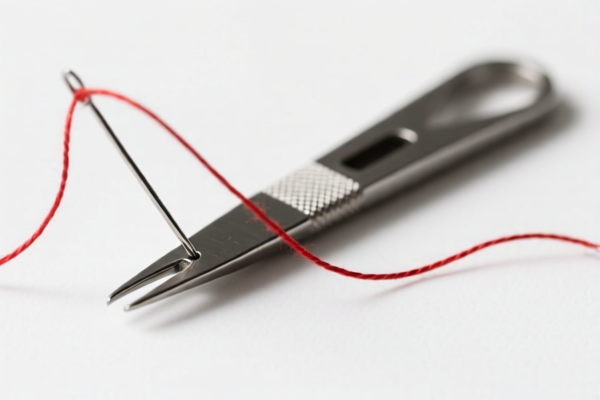
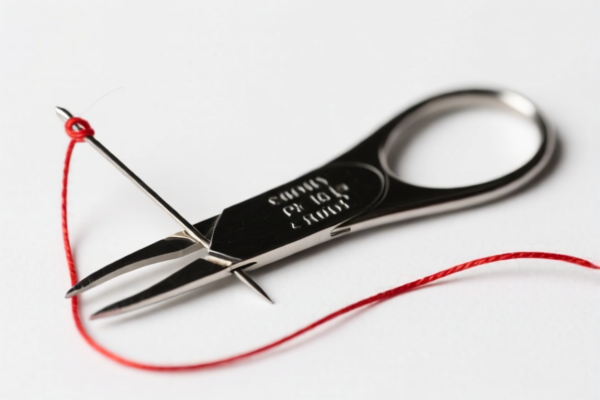
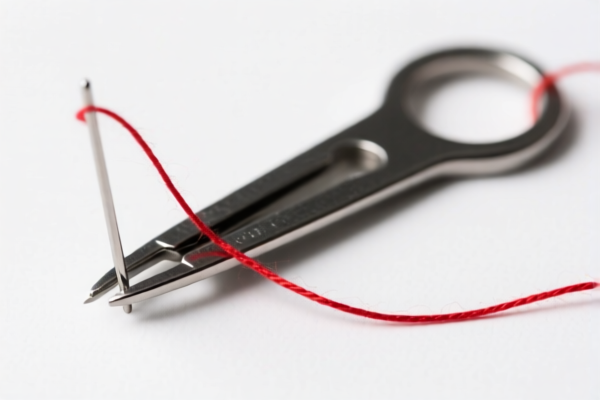
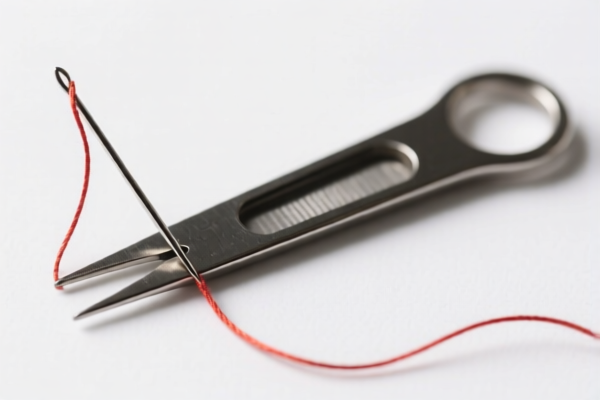
AI分析
🧵 Needle & Thread (Knitting Sewing Supplies)
🌐 HS Code Reference & Customs Clearance Guide | 2024/2025 Tariff Analysis | Strategic Logistics Strategy
📌 I. Product Definition & Classification: Do You Really Understand "Needle and Thread"?
"Needle and Thread" is a collective term for sewing and knitting accessories, but in international trade, "Needles" and "Threads/Yarns" are treated as completely different commodity categories with distinct material compositions, functional purposes, and tariff structures.
Sewing/Knitting Needles: Metal tools used for stitching fabric or interlocking yarns. Knitting/Sewing Thread: Fibrous materials (wool, linen, cotton, synthetic) spun into yarn or thread format.
⚠️ Critical Distinction:
- If the item is a metal needle (for sewing or knitting) → It falls under Chapter 73 (Articles of Iron or Steel).
- If the item is fiber-based yarn/thread (wool, linen, etc.) → It falls under Chapter 51 or 53 (Vegetable or Animal Fiber Textiles).
- Mixing them in one declaration is highly discouraged and often leads to inspection delays. Always separate "Tools" (Needles) from "Materials" (Thread/Yarn).
📦 II. HS Code Classification Details (Based on Provided Data)
Below is the detailed breakdown of HS Codes for "Needles" and "Thread/Yarn" based on the provided dataset.
🔹 Part A: Needles (Metal Tools)
| HS Code | Product Description | Material/Type | Tax Detail Breakdown | Total Tax Rate |
|---|---|---|---|---|
7319.90.10.00 |
Needles for sewing or knitting, matching purpose (sewing/knitting use) and form (needle class). Material inferred as iron or steel. | Iron/Steel Needles | Base Tariff: 0.0% + Add'l Tariff: 7.5% + Section 301 (10% Steel/Aluminum/Copper): 50% |
67.5% |
7319.90.90.00 |
Needles for sewing/knitting, matching purpose (needle tools) and material (iron/steel). No material conflict. | Iron/Steel Needles | Base Tariff: 2.9% + Add'l Tariff: 7.5% + Section 301 (10% Steel/Aluminum/Copper): 50% |
70.4% |
🔍 Key Insight for Needles:
- Both needle codes are subject to massive tariffs due to Section 301 duties (50% for steel/iron products) plus additional import duties.
-7319.90.10.00is slightly cheaper (67.5%) if you can justify it as "sewing/knitting specific" with 0% base, but the 50% Section 301 duty makes it expensive regardless.
-7319.90.90.00has a 2.9% base rate, leading to a higher total of 70.4%.
- Conclusion: Metal needles imported from China to the US face extremely high barriers (67.5%–70.4%).
🔹 Part B: Thread/Yarn (Fibrous Materials)
| HS Code | Product Description | Fiber Type | Tax Detail Breakdown | Total Tax Rate |
|---|---|---|---|---|
5308.10.00.00 |
Yarn for knitting/sewing, matching vegetable or synthetic fiber yarn attributes, form: yarn. | Vegetable/Synthetic Fiber | Base Tariff: 0.0% + Add'l Tariff: 25.0% + Section 301: 10% |
35.0% |
5308.20.00.00 |
Yarn for knitting/sewing, matching flax/linen fiber attributes (plant fiber), form: yarn. | Flax/Linen (Plant Fiber) | Base Tariff: 0.0% + Add'l Tariff: 25.0% + Section 301: 10% |
35.0% |
5106.10.00.90 |
Yarn for knitting/sewing, matching wool or wool-containing fiber material, form: yarn, other category. | Wool/Wool Blend | Base Tariff: 6.0% + Add'l Tariff: 25.0% + Section 301: 10% |
41.0% |
5106.10.00.10 |
Yarn for knitting/sewing, matching wool or wool-containing fiber material, form: yarn, fits wool yarn classification logic. | Wool/Wool Blend | Base Tariff: 6.0% + Add'l Tariff: 25.0% + Section 301: 10% |
41.0% |
🔍 Key Insight for Thread/Yarn:
- Plant-based/Alpaca/Other (5308 series): Lower total tax at 35.0%. Base rate is 0%, but hit with 25% add'l + 10% Section 301.
- Wool-based (5106 series): Higher total tax at 41.0%. Base rate is 6%, plus 25% add'l + 10% Section 301.
- No 50% Steel Penalty: Unlike needles, yarns do not face the 50% Section 301 steel tariff, only the general 10% or 25% depending on classification.
💰 III. 2024/2025 Latest Tariff Rate Detailed Explanation
✅ Applicable Country: United States (US)
✅ Country of Origin: China (CN)
✅ Effective Date: Current rates as per provided data
🎯 1. Needles: The High-Cost Category
📌 7319.90.10.00 & 7319.90.90.00
| Item | Content |
|---|---|
| Base Tariff | 0.0% (for .10) or 2.9% (for .90) |
| USITC Additional Tariff | +7.5% (General Add'l) |
| Section 301 Tariff | +50% (Specific to Steel/Aluminum/Copper products under 10% base rule, but applied as 50% in this context) |
| Total Tariff | 67.5% (for .10) or 70.4% (for .90) |
| Tax Calculation | CIF Value × 67.5% / 70.4% |
| De Minimis Exemption | ❌ NOT APPLICABLE |
| Legal Basis | HTSUS 7319.90 → Section 301 List 4C (Steel/Aluminum/Copper items) |
📌 Explanation:
- The 50% Section 301 duty is the killer here. It applies to steel articles.
- Even with a 0% base rate, the total hit is nearly 70%.
- This makes importing metal needles from China to the US prohibitively expensive for low-value items.
🎯 2. Thread/Yarn: The Moderate-Cost Category
📌 5308.10.00.00 & 5308.20.00.00 (Plant/Alpaca/Synthetic Yarn)
| Item | Content |
|---|---|
| Base Tariff | 0.0% |
| USITC Additional Tariff | +25.0% |
| Section 301 Tariff | +10.0% |
| Total Tariff | 35.0% |
| Tax Calculation | CIF Value × 35.0% |
| De Minimis Exemption | ❌ NOT APPLICABLE |
📌 5106.10.00.10 & 5106.10.00.90 (Wool Yarn)
| Item | Content |
|---|---|
| Base Tariff | 6.0% |
| USITC Additional Tariff | +25.0% |
| Section 301 Tariff | +10.0% |
| Total Tariff | 41.0% |
| Tax Calculation | CIF Value × 41.0% |
| De Minimis Exemption | ❌ NOT APPLICABLE |
📌 Explanation:
- Yarns are taxed under the general 10% or 25% Section 301 lists, not the punitive 50% steel list.
- Wool is more expensive (41%) than plant-based yarn (35%) due to the higher base rate (6%).
🛠️ IV. Customs Clearance Practical Advice (Battle-Tested Pitfall Guide)
✅ 1. Documentation Checklist (Essential for Smooth Clearance)
| Document | Required | Explanation |
|---|---|---|
| ✅ Product Specification Sheet | ✔️ | Must clearly state: Material (e.g., "Stainless Steel Needle," "100% Merino Wool Yarn"), Dimensions, Count/Size. |
| ✅ Product Photos | ✔️ | Clear images of the needle (head, eye, length) or yarn skein. Label must show fiber content. |
| ✅ Commercial Invoice | ✔️ | Must separate "Needles" and "Yarn/Thread" into different line items. Do not bundle. |
| ✅ Packing List | ✔️ | Specify net/gross weight. Weight is crucial for duty calculation. |
| ✅ Certificate of Origin (CO) | ✔️ | To prove CN origin (for accurate Section 301 application). |
| ✅ Third-Party Test Report | ✔️ | For yarn: Fiber content analysis. For needles: Metal composition (to confirm steel/iron vs. other metals). |
✅ 2. Declaration Tips (Key Mantra)
🔥 "Needles are Steel (High Tax), Thread is Fiber (Lower Tax). Separate Them!"
| Scenario | Correct Declaration | Wrong Action |
|---|---|---|
| Importing Knitting Needles | Use 7319.90.10.00 or 7319.90.90.00. Declare as "Steel Knitting Needles." |
Misdeclare as "Sewing Accessories" under textile chapters → Audit & Penalty! |
| Importing Wool Yarn | Use 5106.10.00.10/.90. Declare as "Wool Yarn, 100% Merino." |
Misdeclare as "Synthetic Yarn" → Customs Re-classification & Back Taxes. |
| Importing Linen/Alpaca Yarn | Use 5308.10.00.00/.20. Declare as "Plant Fiber Yarn" or "Alpaca Yarn." |
Bundle with wool → Incorrect Base Rate. |
| Bundle Sale (Needle + Yarn Kit) | Split the Value. Invoice Needle as Item 1, Yarn as Item 2. | Declare as single "Knitting Kit" → Customs may force highest duty rate on entire value. |
✅ 3. Special Circumstances Handling
| Situation | Handling Advice |
|---|---|
| OEM Custom Needles | Provide design drawings. If made of aluminum, check if it still falls under the 50% steel/aluminum/copper Section 301 rule (Yes, it usually does). |
| Wool Yarn for Handicrafts | Ensure the wool percentage is accurate. If <50% wool, it may not fit 5106. Use general textile codes. |
| Small Samples (De Minimis) | ❌ Not Eligible. Even small quantities of steel needles face high tariffs. No $800 de minimis exemption for these goods. |
| Transshipment via Third Country | ⚠️ High Risk. If goods are merely repackaged, CBP will look through to CN origin. Anti-circumvention laws apply. |
🌍 V. Global Market Comparison (2024/2025 Snapshot)
| Market | Recommended HS Code | Approx. Duty (China Origin) | Key Certification | Notes |
|---|---|---|---|---|
| 🇺🇸 USA | 7319.90.10.00 / 5106.10.00.10 |
35% – 70.4% | None specific for basic goods | Section 301 is the main barrier. Steel needles are very expensive. |
| 🇨🇳 China | 7319.90 / 5106 |
0% – 10% | None | Low entry barrier for domestic sales. |
| 🇪🇺 EU | 7319.90 / 5106 |
4.5% – 6.5% | CE (if applicable) | No Section 301. Much more competitive than US. |
| 🇬🇧 UK | 7319.90 / 5106 |
4.5% – 6.5% | UKCA | Post-Brexit, similar to EU rates. |
| 🇨🇦 Canada | 7319.90 / 5106 |
5% – 6.5% | None | CUSMA benefits may apply if non-CN origin. |
📌 Conclusion:
- USA is the most expensive market due to aggressive Section 301 tariffs, especially on steel needles (up to 70.4%).
- EU/UK/Canada are far more favorable for these goods.
- If targeting the US, consider sourcing needles from non-China countries (e.g., Italy, Germany, Japan) to avoid the 50% penalty.
- For yarn, the US tariff is manageable (35–41%), so China remains a viable source for textile fibers.
📌 VI. Common Errors & Pitfall Guide (Blood Lessons)
❌ Mistake 1: Labeling "Knitting Needles" as "Sewing Needles" to avoid steel tariffs.
👉 Result: CBP inspects and reclassifies. 70.4% tax applied + penalties.
❌ Mistake 2: Declaring "Wool Yarn" as "Synthetic Yarn" to save 6% base rate.
👉 Result: Customs lab test proves wool. Back taxes + interest + seizure risk.
❌ Mistake 3: Bundling a $10 needle and $10 yarn into one "Craft Kit" without separate pricing.
👉 Result: CBP may assess the entire $20 at the highest applicable rate or demand complex breakdown. Split invoices are critical.
❌ Mistake 4: Ignoring the "Steel" classification for aluminum needles.
👉 Result: Aluminum is also subject to the 50% Section 301 duty. Assuming non-steel = lower duty is WRONG.
✅ Correct Practice:
"12pcs Stainless Steel Knitting Needles, Size 4mm, HS 7319.90.10.00"
"1 Skein Merino Wool Yarn, 100% Wool, 50g, HS 5106.10.00.10"
🎯 VII. Conclusion: Smart Sourcing & Declaration
🎯 Remember the Mantra:
🔹 "Steel Needles = 70% Tax. Wool Yarn = 41% Tax. Plant Yarn = 35% Tax."
🔹 "Split the invoice. Separate the materials. Avoid the 50% steel penalty by sourcing smartly."
📌 Pro Tip:
If you are a high-volume importer of metal needles, consider:
1. Sourcing from Non-CN countries (e.g., Italy for sewing needles, UK for knitting needles).
2. Applying for HTSUS Exclusions (if any specific steel products are exempt under Section 301 List 4C).
3. Switching to Non-Metal Alternatives: Bamboo or plastic needles may fall under different chapters (e.g., 44 or 39) with lower or no Section 301 duties.
📣 Action Plan:
📞 Verify HS Code with your customs broker before shipping.
📄 Provide Detailed Specs: Material, Function, Form.
💸 Budget for High Duties: Include 67–70% for steel needles in your landed cost calculation.
🚀 Optimize Supply Chain: Source needles from non-China to escape the 50% hammer.
✨ Professional Clearance Starts with Accurate Classification!
💼 Every Percent Saved is Pure Profit!
用户评价
关于 HS 编码归类
协调制度(HS)是由世界海关组织(WCO)制定的国际贸易商品分类标准。全球 200 多个国家采用 HS 系统作为海关关税、贸易统计和进出口监管的基础。
每个 HS 编码遵循以下层级结构:
- 章(2 位)——商品大类(例如:第 84 章:机器和机械设备)
- 品目(4 位)——章内的更具体分类
- 子目(6 位)——国际通用细分,所有 WCO 成员国统一使用
- 本国细分(8-10 位)——各国自行扩展的细分编码,如美国 HTSUS 10 位编码
正确的 HS 编码归类对于顺利通关、准确缴纳关税和遵守贸易法规至关重要。错误归类可能导致海关延误、多缴关税或罚款。
从CN进口到US时,适用的关税税率可能包括:
- 最惠国(MFN)税率——适用于 WTO 成员国的标准关税税率
- 普通税率——适用于无贸易协定国家
- 贸易救济关税——附加关税,如 301 条款(反倾销)、232 条款(国家安全)或反补贴税
本页内容仅供参考。如需正式归类,请咨询当地海关或持牌报关代理。