Neon Lamp Gas
CN → US商品图片
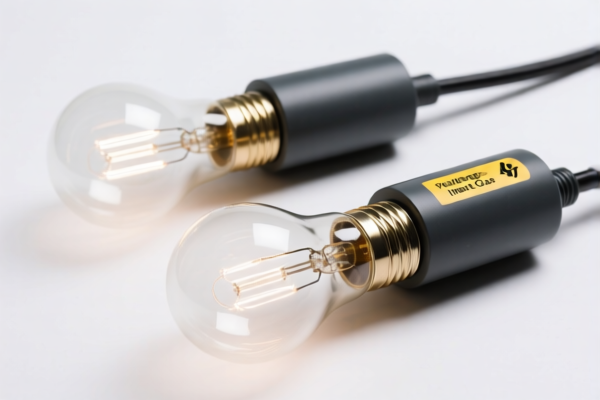



AI分析
💡 Neon Lamp Gas (Neon & Rare Gases for Lighting)
🌐 HS Code Reference & Clearance Guide | 2026 Latest Tariff Analysis | Professional Clearance Strategy
📌 I. Product Definition & Classification: Do You Really Understand "Neon Lamp Gas"?
Neon lamp gas is not just one single chemical; it is a category of rare gases and noble gases used specifically for illumination, signage, and industrial applications. In international trade, these are strictly classified under Section VII (Plastics and Articles Thereof; Rubber and Articles Thereof) is incorrect. They belong to Chapter 28 (Inorganic Chemicals; Organic or Inorganic Compounds of Precious Metals, of Rare-Earth Metals or of Radioactive Elements).
Specifically, they fall under Heading 2804.
⚠️ Critical Distinction:
- Pure Neon (Ne): Used for classic red-orange neon signs.
- Argon (Ar): The most common gas for lighting (mixed with other gases), used in incandescent, fluorescent, and LED packaging.
- Mixtures: Commercial "neon gas" is often a mixture of Argon, Neon, Helium, etc.
- Liquefied vs. Compressed: Gas sold in cylinders is typically compressed or liquefied. The physical state matters for some specific subheadings, but the chemical identity is paramount.
📦 II. HS Code Classification Details (2026 Latest Tariff Authority Comparison)
| HS Code | Product Description | Application Scenario | Purity/State |
|---|---|---|---|
2804.40.00.00 |
Neon (Ne) | Classic neon signs, high-voltage indicators, laser tubes | Pure gas, compressed/liquefied |
2804.21.00.00 |
Argon (Ar) - Liquefied | General lighting (fluorescent, incandescent), welding shield | Liquefied gas |
2804.29.00.00 |
Argon (Ar) - Other (Compressed) | General lighting, industrial inerting | Compressed gas |
2804.30.00.00 |
Helium (He) | High-end signage, cryogenics, leak detection | Compressed gas |
2804.61.00.00 |
Xenon (Xe) | High-intensity discharge (HID) lamps, automotive HID | Liquefied or compressed |
2804.69.00.00 |
Krypton (Kr) | Energy-efficient lighting, specialized optics | Compressed gas |
2804.40.10.00 |
Neon mixtures (if classified as such) | Custom signage color variations | Mixture |
🔍 Key Reminder:
- If you are shipping "Neon Gas" for signs, it is almost certainly Neon (2804.40.00.00) or an Argon-Neon mixture.
- Argon is the most common carrier gas. If the label says "Neon Sign Gas" but the safety data sheet (SDS) shows 90% Argon / 10% Neon, it may be classified as Argon depending on the primary constituent rule.
- Do NOT classify as "Lamps" (9405) or "Glass Tubes" (7013). These are raw materials for the signs, not the signs themselves.
💰 III. 2026 Latest Tariff Rate Details (Including Surcharges)
✅ Applicable Country: United States (US)
✅ Origin: China (CN)
✅ Effective Date: November 10, 2025 onwards (post-Section 301)
🎯 1. 2804.40.00.00 —— Neon (Ne)
| Item | Content |
|---|---|
| Base Rate | 0% (ad valorem) |
| USITC Supplementary Rate | +25% (under USITC Footnote 9903.88.01 for certain rare gases from China) |
| IEEPA Supplementary Rate | +10% (against Chinese/HK products, effective Nov 10, 2025) |
| Total Rate | 35% |
| Tax Calculation | CIF Value × 35% |
| De Minimis Eligibility | ❌ No (High-risk category for low-value shipments) |
| Legal Basis Path | IEEPA:9903.01.25 → USITC:2804.40.00.00 → FOOTNOTE:9903.88.01 |
📌 Explanation:
- Although the base tariff for rare gases is low, Section 301 tariffs heavily impact Chinese-origin industrial gases.
- Neon is considered a critical material for high-tech and specialized lighting, attracting higher scrutiny.
- Total 35% makes shipping pure Neon from China to the US very expensive. Many buyers source from Russia, India, or Europe to avoid these specific surcharges.
🎯 2. 2804.21.00.00 / 2804.29.00.00 —— Argon (Ar)
| Item | Content |
|---|---|
| Base Rate | 0% (ad valorem) |
| USITC Supplementary Rate | +25% (for Argon from China, under same footnote as Neon) |
| IEEPA Supplementary Rate | +10% (against Chinese/HK products) |
| Total Rate | 35% |
| Tax Calculation | CIF Value × 35% |
| De Minimis Eligibility | ❌ No |
📌 Note:
- Even though Argon is abundant, its classification as a controlled industrial gas from China triggers the same high tariffs as Neon.
- Mixtures: If the gas is a mixture (e.g., Argon + Neon), it may still be classified under the principal constituent. If Argon is >50%, it may fall under Argon codes (2804.2x), but tariff impact remains similar (~35%).
🛠️ IV. Practical Clearance Advice (Real-World Pitfall Guide)
✅ 1. Required Documentation Checklist (Non-negotiable)
| Document | Must Provide | Explanation |
|---|---|---|
| ✅ Safety Data Sheet (SDS) | ✔️ | Must identify exact gas composition, purity, and hazard class (Class 2.2 Non-flammable Gas). |
| ✅ Commercial Invoice | ✔️ | Must specify "Rare Gas," "Neon," "Argon," and HS Code explicitly. |
| ✅ Packing List | ✔️ | Detail cylinder count, tare weight, gross weight, and gas volume (liters/cubic meters). |
| ✅ UN Certification | ✔️ | Cylinders must be UN-certified for gas transport (e.g., UN 1049 for Argon, UN 1057 for Neon). |
| ✅ Certificate of Analysis (COA) | ✔️ | Proves purity (e.g., 99.999% Neon). Critical for customs verification. |
| ✅ Importer Security Filing (ISF) | ✔️ | Must file 24 hours before loading for US imports. |
✅ 2. Declaration Tips (Key Mantra)
🔥 "State the Gas, Not the Tube. Classify by Element, Not by Application."
| Situation | Correct Declaration | Wrong Practice |
|---|---|---|
| Pure Neon Gas | 2804.40.00.00 "Neon Gas, 99.99% Purity" |
"Sign Lighting Gas" → Ambiguous, leads to audit |
| Argon-CO2 Mix (Welding) | 2804.40.00.00 or 3814.00.40 (depending on mix) |
"Welding Gas" → Incorrect if it's pure Argon |
| Liquefied Gas in Cylinder | 2804.21.00.00 "Argon, Liquefied" |
2804.29.00.00 "Argon, Compressed" → Wrong state |
| Gas in Light Bulbs | 2804.40.00.00 (Gas) + 9405.40 (Lamp) |
Combine into one HS Code → Seizure Risk |
✅ 3. Special Scenarios
| Situation | Handling Advice |
|---|---|
| OEM Gas Mixtures | Provide precise percentage composition. Customs may reclassify if ratios differ from standard. |
| Reclaimed Gas | If gas is recycled/reclaimed, declare as "Reclaimed Industrial Gas." May require additional environmental permits. |
| Samples | Small samples (<500g) still require full SDS and proper UN packaging. No de minimis exemption for hazardous goods. |
| Transshipment | If shipped via a third country (e.g., Malaysia), ensure the Certificate of Origin still reflects China if gas was originally sourced there. Avoid false transshipment claims. |
🌍 V. Global Market Clearance Comparison (2026 Latest)
| Country/Region | Recommended HS Code | Tariff Rate (China Origin) | Certification Requirements | Notes |
|---|---|---|---|---|
| 🇺🇸 USA | 2804.40.00.00 |
35% (25% + 10%) | UN Packing, DOT Compliance | High tariff barrier; consider sourcing from non-China origins. |
| 🇨🇳 China | 2804.40.00.00 |
0% | GB Standards for Cylinders | Domestic production is abundant; low cost. |
| 🇪🇺 EU | 2804.40.00.00 |
0% (WTO Rate) | REACH Registration, ADR Transport | No extra tariffs, but strict environmental compliance. |
| 🇯🇵 Japan | 2804.40.00.00 |
0% | JIS Standards, Gas Safety Law | Strict quality control on purity levels. |
| 🇦🇺 Australia | 2804.40.00.00 |
5% | GHS Labeling, AS/NZS Standards | Moderate tariff, low barrier otherwise. |
📌 Conclusion:
- USA imposes the highest effective tariff (35%) on Chinese-origin rare gases due to Section 301.
- EU and Japan offer 0% duty, making them more attractive for high-value, high-purity gas imports.
- Supply Chain Tip: If your end-market is the US, consider sourcing Neon/Argon from India, Russia, or Europe to mitigate the 35% tariff burden.
📌 VI. Common Errors & Pitfall Guide (Blood Lessons)
❌ Mistake 1: Classifying gas-filled bulbs as "Gas" only
👉 Consequence: Customs will classify the entire assembly as a Lamp (9405), which has different duty rates and stricter safety rules (UL/CE).
✅ Fix: Declare gas and bulbs separately.
❌ Mistake 2: Ignoring the State of Matter (Liquefied vs. Compressed)
👉 Consequence: Misclassification leads to incorrect UN packaging requirements, resulting in shipment rejection or fines.
✅ Fix: Check the cylinder pressure and temperature. If below critical temperature and pressurized, it's liquefied.
❌ Mistake 3: Omitting Purity Levels on Invoice
👉 Consequence: Customs cannot verify if it's "Industrial Grade" or "Electronic Grade," leading to detention.
✅ Fix: Always include "Purity: 99.999%" on the commercial invoice.
❌ Mistake 4: Underestimating Hazmat Fees
👉 Consequence: Air freight carriers charge high Hazmat Surcharge for Class 2.2 gases.
✅ Fix: Budget for hazmat fees; they are non-negotiable for air transport.
✅ Correct Declaration Example:
"NEON GAS, 99.99% Pure, UN1057, Class 2.2, 10 Cylinders, CIF Value $5,000, HS Code 2804.40.00.00"
🎯 VII. Conclusion: Professional Declaration, Cost Control, Risk Reduction
🎯 Remember the Mantra:
🔹 "Gas is Chemical, Not Glass. Classify by Element."
🔹 "35% Tariff Hits Hard, Source Smart to Save Cost."
🔹 "SDS and UN Code are Your Best Friends in Hazmat."
📌 Pro Tip:
If you are importing Argon for general lighting, consider sourcing from Southeast Asia or India to potentially avoid the steepest surcharges if trade policies evolve. For Neon, due to its rarity, most high-purity supply still comes from Russia or China, making the 35% US tariff a significant cost driver. Evaluate whether local US/EU suppliers or Asian hubs (with re-export) make more sense for your margin.
📣 Immediate Action:
📞 Consult a Hazmat-Specialized Freight Forwarder
📄 Request SDS and Certificate of Analysis from supplier
🚀 Calculate Total Landed Cost including 35% tariff + Hazmat fees
💼 Optimize Your Supply Chain to minimize duty exposure!
✨ Precision in Classification, Safety in Transport, Efficiency in Cost!
💼 Every liter of gas counts—don't let customs errors drain your profit!
用户评价
关于 HS 编码归类
协调制度(HS)是由世界海关组织(WCO)制定的国际贸易商品分类标准。全球 200 多个国家采用 HS 系统作为海关关税、贸易统计和进出口监管的基础。
每个 HS 编码遵循以下层级结构:
- 章(2 位)——商品大类(例如:第 84 章:机器和机械设备)
- 品目(4 位)——章内的更具体分类
- 子目(6 位)——国际通用细分,所有 WCO 成员国统一使用
- 本国细分(8-10 位)——各国自行扩展的细分编码,如美国 HTSUS 10 位编码
正确的 HS 编码归类对于顺利通关、准确缴纳关税和遵守贸易法规至关重要。错误归类可能导致海关延误、多缴关税或罚款。
从CN进口到US时,适用的关税税率可能包括:
- 最惠国(MFN)税率——适用于 WTO 成员国的标准关税税率
- 普通税率——适用于无贸易协定国家
- 贸易救济关税——附加关税,如 301 条款(反倾销)、232 条款(国家安全)或反补贴税
本页内容仅供参考。如需正式归类,请咨询当地海关或持牌报关代理。