Neoprene Rubber Additive
CN → US| HS编码 | 关税税率 | 原产国 | 目的国 | 文档 |
|---|---|---|---|---|
| 4002410000 | 35.0% | CN | US | 官方文档 |
| 4002490000 | 35.0% | CN | US | 官方文档 |
| 4008210000 | 35.0% | CN | US | 官方文档 |
| 4008292000 | 37.9% | CN | US | 官方文档 |
| 4002410000 | 35.0% | CN | US | 官方文档 |
商品图片
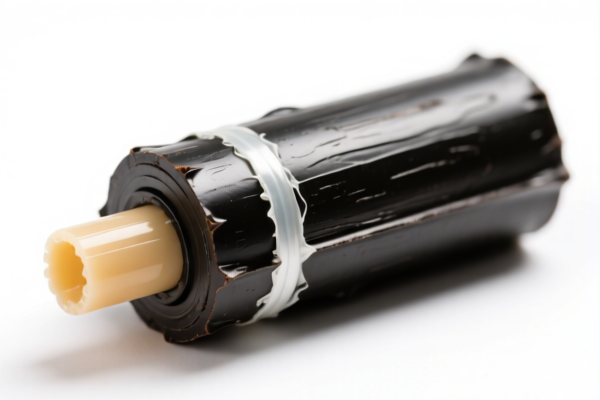
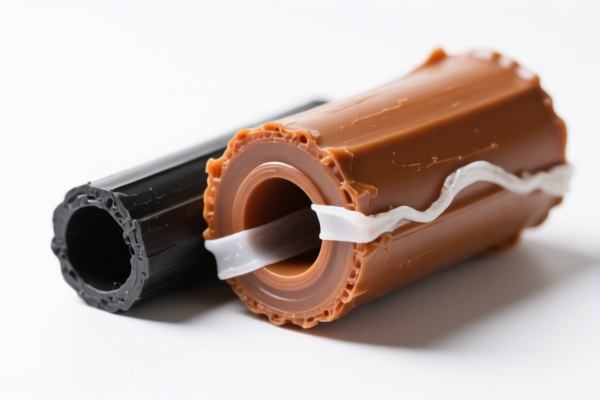
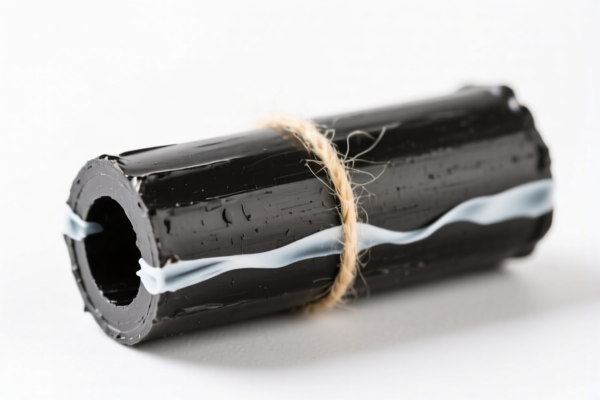
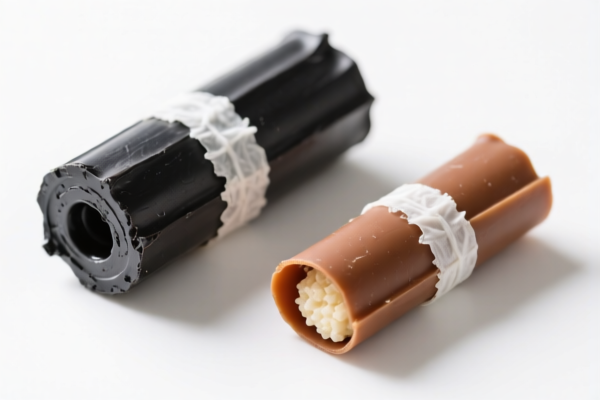
AI分析
🧪 Neoprene Rubber Additive (Chloroprene Rubber)
🌐 HS Code Reference & Customs Clearance Guide | 2026 Latest Tariff Analysis | Professional Entry Strategy
📌 I. Product Definition & Classification: What is "Neoprene"?
Neoprene, chemically known as Chloroprene Rubber (CR), is a family of synthetic rubbers produced by the polymerization of chloroprene. In international trade, it is primarily classified under Chapter 40 (Rubber and Articles Thereof).
The classification depends heavily on the physical state (unvulcanized gum vs. vulcanized forms) and the specific application (industrial raw material vs. finished profile/plate). For import purposes into the US, the following HS Codes are critical for Neoprene Rubbers used in industrial applications.
📦 II. HS Code Classification Details (2026 Latest Tariff Authority对照)
Based on the provided data, here are the four primary HS Codes for Neoprene Rubber Additives/Raw Materials, categorized by their physical form and processing stage.
| HS Code | Product Description (Summary) | Physical State / Form | Key Classification Criteria |
|---|---|---|---|
4002.41.00.00 |
Neoprene Rubber (Industrial Use) | Unvulcanized (Primary Form) | Primary form of synthetic rubber; suitable for further processing. |
4002.49.00.00 |
Neoprene Rubber (Industrial Use) | Unvulcanized (Other Forms) | Primary form of synthetic rubber; other specified forms not covered in .41. |
4008.21.00.00 |
Vulcanized Neoprene Rubber | Vulcanized Plates/Sheets/Strips | Non-foamed rubber plates, sheets, or strip form; industrial use. |
4008.29.20.00 |
Vulcanized Neoprene Rubber | Vulcanized Profiles/Other Shapes | Other profiles, plates, or sheet forms of vulcanized rubber (excluding foamed). |
🔍 Key Distinction:
- HS 4002 refers to Unvulcanized rubber (raw material/gum). These are typically sold in blocks, crepes, or powder for further manufacturing.
- HS 4008 refers to Vulcanized rubber (processed). These are ready-to-use shapes like plates, strips, or profiles.
- ⚠️ Critical Check: Ensure your product is clearly labeled as "Unvulcanized" or "Vulcanized." Misclassification here leads to significant duty discrepancies.
💰 III. 2026 Latest Tariff Rate Breakdown (Detailed Tax Clauses)
✅ Applicable Country: United States (US)
✅ Country of Origin: China (CN)
✅ Effective Date: Post-2025 Trade Policy Updates (Section 301 & IEEPA)
🎯 1. 4002.41.00.00 & 4002.49.00.00 — Unvulcanized Neoprene Rubber (Raw Material)
These codes represent the primary form of synthetic rubber before it is vulcanized into final products.
| Item | Detail |
|---|---|
| Base Tariff Rate | 0.0% (Ad Valorem) |
| Section 301 Additional Tariff | +25.0% (Under USITC Footnote 9903.88.01 / 301 Lists) |
| Section 122 / IEEPA Additional Tariff | +10.0% (Targeted Chinese imports under International Emergency Economic Powers Act) |
| Total Effective Duty Rate | 35.0% |
| Duty Calculation | CIF Value × 35% |
| De Minimis Exemption? | ❌ NO (Not eligible for de minimis exemption under current trade rules) |
| Legal Basis Path | Base Rate 0% → Section 301: +25% → IEEPA/Sec 122: +10% |
📌 Explanation:
- The 25% tariff is the standard Section 301 levy on Chinese synthetic rubbers.
- The 10% tariff is an additional layer imposed under specific emergency economic powers (often referred to as "Section 122" in some trade summaries or IEEPA provisions).
- Total 35% is a high barrier. Importers must account for this in their landed cost models.
🎯 2. 4008.21.00.00 — Vulcanized Neoprene Plates/Sheets (Non-Foamed)
This code applies to processed, vulcanized rubber in sheet or strip form, commonly used for gaskets, seals, or insulation.
| Item | Detail |
|---|---|
| Base Tariff Rate | 0.0% (Ad Valorem) |
| Section 301 Additional Tariff | +25.0% |
| Section 122 / IEEPA Additional Tariff | +10.0% |
| Total Effective Duty Rate | 35.0% |
| Duty Calculation | CIF Value × 35% |
| De Minimis Exemption? | ❌ NO |
| Legal Basis Path | Base Rate 0% → Section 301: +25% → IEEPA/Sec 122: +10% |
📌 Note:
- Despite being a "finished" shape (plates/sheets), if it is still considered a primary industrial form (not a manufactured article like a tire), it retains the same duty structure as raw rubber.
- Ensure it is Non-Foamed. Foamed rubber has different subheadings.
🎯 3. 4008.29.20.00 — Vulcanized Neoprene Other Profiles/Shapes
This code covers other vulcanized rubber forms (profiles, strips, etc.) not specifically listed under plates/sheets.
| Item | Detail |
|---|---|
| Base Tariff Rate | 2.9% (Ad Valorem) |
| Section 301 Additional Tariff | +25.0% |
| Section 122 / IEEPA Additional Tariff | +10.0% |
| Total Effective Duty Rate | 37.9% |
| Duty Calculation | CIF Value × 37.9% |
| De Minimis Exemption? | ❌ NO |
| Legal Basis Path | Base Rate 2.9% → Section 301: +25% → IEEPA/Sec 122: +10% |
📌 Caution:
- This is the most expensive classification at 37.9%.
- The difference lies in the 2.9% Base Tariff.
- If your product can be classified under4008.21(Plates/Sheets) instead of4008.29(Other), you save 2.9% on the base duty, resulting in a total of 35% instead of 37.9%.
- Strategy: Consult with a customs broker to see if your specific profile can be described as a "strip" or "sheet" to qualify for the lower base rate.
🛠️ IV. Customs Clearance Practical Advice (Proven Pitfall Avoidance)
✅ 1. Required Documentation Checklist (Mandatory)
| Document | Required? | Notes |
|---|---|---|
| ✅ Commercial Invoice | ✔️ | Must clearly state "Neoprene Rubber," "Chloroprene Rubber," and physical form (Unvulcanized/Vulcanized). |
| ✅ Certificate of Origin (CO) | ✔️ | Essential for confirming China origin and applying correct additional tariffs. |
| ✅ Product Specification Sheet | ✔️ | Must detail: Polymer type (Chloroprene), Vulcanization status, Density, and Form (Blocks/Sheets/Profiles). |
| ✅ Manufacturing Process Description | ✔️ | Explains whether it is unvulcanized gum or vulcanized finished good. Critical for distinguishing HS 4002 vs. 4008. |
| ✅ Packing List | ✔️ | Must match invoice details exactly. |
| ✅ SDS (Safety Data Sheet) | ✔️ | Often required for chemical/rubber imports to verify hazardous material status (Neoprene is generally non-hazardous but check locally). |
✅ 2. Declaration Tips (Key Mantra)
🔥 "Form Determines Code, Origin Determines Duty!"
| Scenario | Correct Declaration | Common Mistake |
|---|---|---|
| Raw Neoprene Gum (Blocks) | 4002.41.00.00 or 4002.49.00.00 |
Misdeclaring as "finished parts" → Higher duty. |
| Neoprene Sheets (Vulcanized) | 4008.21.00.00 |
Declaring as "Other Profiles" (4008.29) → +2.9% extra duty. |
| Neoprene Profiles (Vulcanized) | 4008.29.20.00 |
Declaring as "Sheets" → Risk of misclassification penalty. |
| Foamed Neoprene | Different HS Code (Not in current data) | Do NOT use 4008 codes for foam → High Penalty Risk. |
✅ 3. Special Considerations
| Situation | Handling Advice |
|---|---|
| OEM Custom Shapes | If you supply custom vulcanized profiles, use 4008.29.20.00 (37.9%). Try to standardize to "strips" or "sheets" if possible to use 4008.21 (35%). |
| Blends | If Neoprene is blended with other synthetics, ensure the predominant material is Neoprene. Otherwise, it may fall under different subheadings. |
| De Minimis (Section 321) | ❌ NOT APPLICABLE. Under current US trade policy, Section 301 and IEEPA tariffs are not exempt from de minimis thresholds for Chinese goods. Even small shipments ($800+) will face 35-37.9% duty. |
🌍 V. Global Market Comparison (2026 Outlook)
| Country/Region | Recommended HS Code | Total Duty Rate (China Origin) | Certification Requirements | Notes |
|---|---|---|---|---|
| 🇺🇸 USA | 4002.41/49 or 4008.21/29 |
35.0% – 37.9% | None specific for rubber, but FDA may apply if food contact | High Tariff Zone. Plan carefully. |
| 🇨🇳 China | 4002.41 or 4008.21 |
5% – 8% (Import Duty) | CCC (if applicable) | Low barrier for export from China. |
| 🇪🇺 EU | 4002.41 or 4008.21 |
3.5% – 6.5% | REACH Compliance | No major retaliatory tariffs vs US. |
| 🇯🇵 Japan | 4002.41 or 4008.21 |
3.2% – 6.0% | PSE (if electrical) | Stable trade relations. |
📌 Conclusion:
- The US market is the most challenging due to the叠加 (stacking) of Section 301 (25%) and IEEPA/Sec 122 (10%) tariffs.
- Total duties of 35-38% significantly impact profit margins.
- Recommendation: Consider alternative origins (e.g., Indonesia, Thailand) for US-bound Neoprene to avoid Section 301, if supply chain allows.
📌 VI. Common Errors & Pitfall Guide (Lessons Learned)
❌ Error 1: Declaring Vulcanized Sheets as "Other Profiles" (4008.29)
👉 Consequence: Paying 37.9% instead of 35.0%.
👉 Fix: Accurately describe as "Plates, Sheets, or Strip" for 4008.21.00.00.
❌ Error 2: Using De Minimis ($800) for Small Shipments
👉 Consequence: Package seized or duty charged retroactively because Section 301 goods are excluded from de minimis exemption.
👉 Fix: Always declare and pay duties for shipments under $800 if originating from China.
❌ Error 3: Confusing Unvulcanized vs. Vulcanized
👉 Consequence: Misclassification under HS 4002 vs. 4008. While rates are similar, penalties for false declaration are severe.
👉 Fix: Clearly state "Unvulcanized" or "Vulcanized" in the commercial invoice.
✅ Correct Declaration Example:
"Chloroprene Rubber (Neoprene), Unvulcanized, Primary Form, for Industrial Use, Model CR-100, Origin: China"
→ HS:4002.41.00.00→ Duty: 35%
🎯 VII. Conclusion: Strategic Sourcing for Neoprene Rubber
🎯 Key Takeaways:
🔹 Total Duty Range: 35.0% to 37.9% for China-origin Neoprene.
🔹 Savings Strategy: Classify vulcanized products as "Plates/Sheets" (4008.21) rather than "Other Profiles" (4008.29) to save 2.9% on base duty.
🔹 No De Minimis: Small shipments are not exempt. Factor duty into even LCL (Less than Container Load) shipments.
🔹 Documentation: Detailed specs on vulcanization status are non-negotiable.
📣 Immediate Action Plan:
1. Verify Physical Form: Is it raw gum, sheets, or profiles?
2. Select Correct HS Code: Use 4002 for raw, 4008.21 for sheets, 4008.29 for other vulcanized.
3. Calculate Landed Cost: CIF + 35-37.9% Duty.
4. Consult Customs Broker: Request a Pre-Ruling if unsure about "Sheet" vs. "Profile" classification.
✨ Professional Clearance Starts with Precise Classification!
💼 Your Cost Efficiency Depends on Accurate HS Code Selection!
用户评价
关于 HS 编码归类
协调制度(HS)是由世界海关组织(WCO)制定的国际贸易商品分类标准。全球 200 多个国家采用 HS 系统作为海关关税、贸易统计和进出口监管的基础。
每个 HS 编码遵循以下层级结构:
- 章(2 位)——商品大类(例如:第 84 章:机器和机械设备)
- 品目(4 位)——章内的更具体分类
- 子目(6 位)——国际通用细分,所有 WCO 成员国统一使用
- 本国细分(8-10 位)——各国自行扩展的细分编码,如美国 HTSUS 10 位编码
正确的 HS 编码归类对于顺利通关、准确缴纳关税和遵守贸易法规至关重要。错误归类可能导致海关延误、多缴关税或罚款。
从CN进口到US时,适用的关税税率可能包括:
- 最惠国(MFN)税率——适用于 WTO 成员国的标准关税税率
- 普通税率——适用于无贸易协定国家
- 贸易救济关税——附加关税,如 301 条款(反倾销)、232 条款(国家安全)或反补贴税
本页内容仅供参考。如需正式归类,请咨询当地海关或持牌报关代理。