Newspaper Newsprint Paper Sheets
CN → US| HS编码 | 关税税率 | 原产国 | 目的国 | 文档 |
|---|---|---|---|---|
| 4801000120 | 35.0% | CN | US | 官方文档 |
| 4801000140 | 35.0% | CN | US | 官方文档 |
| 4901100020 | 17.5% | CN | US | 官方文档 |
| 4901100040 | 17.5% | CN | US | 官方文档 |
| 4802541000 | 35.0% | CN | US | 官方文档 |
商品图片
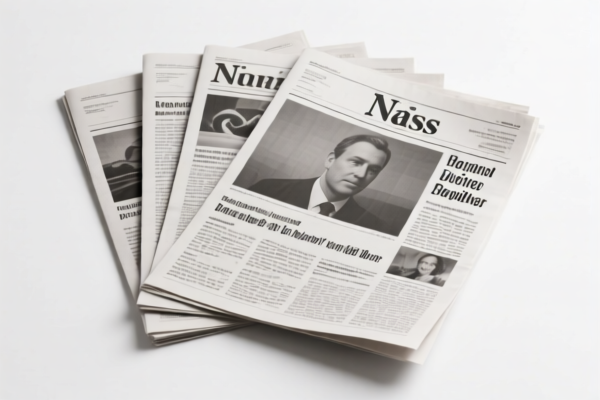
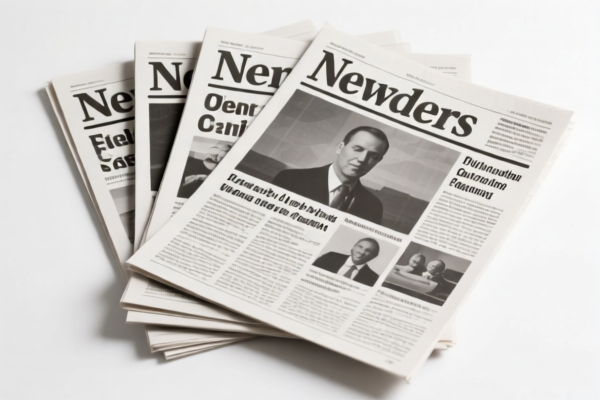
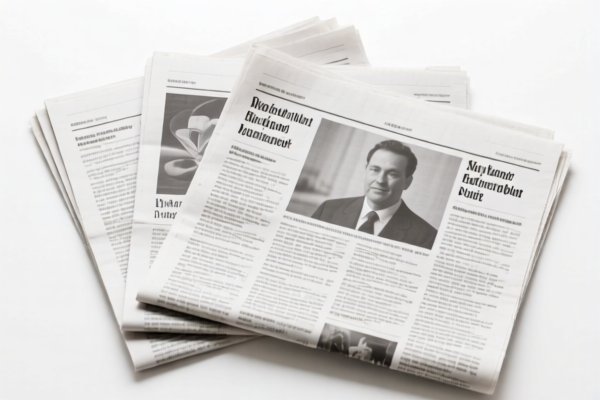

AI分析
📰 Newspaper Newsprint Paper Sheets
🌐 HS Code Reference & Customs Clearance Guide | 2026 Latest Tariff Analysis | Professional-Level Strategy
📌 I. Product Definition & Classification: What Exactly is "Newsprint Paper Sheets"?
"Newsprint Paper Sheets" refer to flat, unrolled, or cut sheets made primarily of wood pulp, designed for high-speed printing of newspapers, magazines, and other mass-media publications. In international trade, distinguishing between raw newsprint sheets and printed newsprint products is critical, as they fall under completely different HS Code chapters with drastically different tariff structures.
⚠️ Key Distinction Point:
- If the product is unprinted paper, merely cut into sheets for further processing → Classified under Chapter 48 (Paper/Paperboard).
- If the product is printed (text/images applied) and constitutes a single sheet (not a book/magazine) → Classified under Chapter 49 (Printed Books/Newspapers).
📦 II. HS Code Classification Details (2026 Latest Tariff Authority Comparison)
Based on the provided data, here are the specific HS Codes for Newsprint Paper Sheets:
| HS Code | Product Description | Application Scenario | Printed Status |
|---|---|---|---|
4801.00.01.20 |
Newsprint sheets, sheet form, material is newsprint | Raw/unprinted newsprint sheets, cut to size | ❌ Unprinted |
4801.00.01.40 |
Newsprint sheets, sheet form, material falls under newsprint category | Generic raw newsprint sheets | ❌ Unprinted |
4802.54.10.00 |
Offset newsprint sheets, sheet form, material is uncoated newsprint | Uncoated offset newsprint, raw state | ❌ Unprinted |
4901.10.00.20 |
Newsprint sheets, single-page form, fits single-page printed item classification | Printed newspaper pages, flyers, single sheets | ✅ Printed |
4901.10.00.40 |
Newsprint sheets, single-page printed item, material is paper | Printed paper sheets (newspaper/periodical pages) | ✅ Printed |
🔍 Critical Reminder:
- Unprinted sheets go to 48xx codes.
- Printed single sheets go to 4901.10.00 codes.
- Misclassification leads to severe penalties because the tariff rates differ significantly (35% vs. 17.5%).
💰 III. 2026 Latest Tariff Rate Details (Including Additional Taxes & Policy Add-ons)
✅ Applicable Country: United States (US)
✅ Origin: China (CN)
✅ Effective Date: Subject to current trade restrictions (Section 301 & IEEPA)
🎯 1. 4801.00.01.20 & 4801.00.01.40 & 4802.54.10.00 —— Raw/Unprinted Newsprint Sheets
These codes apply to unprinted newsprint sheets. The tax burden is higher due to stricter trade policies on raw materials.
| Item | Detail |
|---|---|
| Base Tariff | 0.0% (Ad Valorem) |
| Additional Tariff (Section 301) | +25.0% |
| Section 122 Tariff | +10.0% |
| Total Effective Tax Rate | 35.0% |
| Tax Calculation | CIF Value × 35% |
| De Minimis Exemption | ❌ Not Eligible (High-risk category for low-value shipments) |
| Legal Basis Path | Section 301: 9903.01.25 → Section 122 → HS: 4801/4802 |
📌 Explanation:
- The 25% comes from USITC Footnotes related to Section 301 tariffs on Chinese goods.
- The 10% is attributed to Section 122 tariffs (often related to national security or specific trade remedies).
- Total: 35%. This is a significant cost driver. Importers must factor this into their landed cost calculations.
🎯 2. 4901.10.00.20 & 4901.10.00.40 —— Printed Newsprint Single Sheets
These codes apply to printed newsprint sheets (e.g., pre-printed newspaper pages, flyers). The tax burden is lower compared to raw unprinted sheets.
| Item | Detail |
|---|---|
| Base Tariff | 0.0% (Ad Valorem) |
| Additional Tariff (Section 301) | +7.5% |
| Section 122 Tariff | +10.0% |
| Total Effective Tax Rate | 17.5% |
| Tax Calculation | CIF Value × 17.5% |
| De Minimis Exemption | ❌ Not Eligible |
| Legal Basis Path | Section 301: 9903.01.24 → Section 122 → HS: 4901.10.00 |
📌 Note:
- Even though it is "printed," it is still subject to Section 301 and Section 122 tariffs.
- However, the Section 301 rate is reduced to 7.5% (vs. 25% for unprinted), making it more cost-effective if the printing occurs outside the US or if the product structure allows for this classification.
- Total: 17.5%. Still high, but half the cost of raw unprinted newsprint.
🛠️ IV. Customs Clearance Practical Advice (Real-World Pitfall Avoidance Guide)
✅ 1. Document Checklist (Missing Items = Delay/Seizure)
| Document | Mandatory? | Description |
|---|---|---|
| ✅ Product Specification Sheet | ✔️ | Must specify: Material (wood pulp content), GSM (weight), Sheet Size, Coated/Uncoated status. |
| ✅ Commercial Invoice | ✔️ | Must clearly state "Printed" or "Unprinted". Ambiguity leads to reclassification. |
| ✅ Packing List | ✔️ | Clearly label contents as "Newsprint Sheets" with quantity and weight. |
| ✅ Bill of Lading | ✔️ | Ensure HS Codes match the invoice exactly. |
| ✅ Certificate of Origin | ✔️ | Essential for verifying China origin (triggers Section 301/122). |
| ✅ Print Sample (if applicable) | ✔️ | If claiming 4901 codes, provide a sample showing printed content to prove it is not raw paper. |
✅ 2. Declaration Tips (Key Mantras)
🔥 “Unprinted is 35%, Printed is 17.5%! Describe the STATE clearly!”
| Scenario | Correct Declaration | Wrong Practice |
|---|---|---|
| Raw, blank sheets for printing | 4801.00.01.20 / 4802.54.10.00 |
Misdeclaring as "Printed" → Risk of fraud penalties |
| Pre-printed newspaper pages | 4901.10.00.20 / 4901.10.00.40 |
Misdeclaring as "Raw Paper" → Underpayment of 17.5% |
| Rolls vs. Sheets | Must specify "Sheets" | If rolls, different HS Code applies (4801.00.01.xx for rolls) |
📌 Warning:
- Do NOT split shipments to declare some as "printed" to save tax if they are unprinted. Customs can inspect and reclassify, charging back taxes + fines.
- If importing rolls, ensure the HS Code reflects "Rolls" not "Sheets." Using sheet codes for rolls is a common error.
✅ 3. Special Case Handling
| Scenario | Handling Advice |
|---|---|
| Mixed Shipment (Printed & Unprinted) | Do not mix in one BL. Ship separately or declare with precise line-item details. Mixed declarations cause customs holds. |
| Coated vs. Uncoated | 4802.54.10.00 is for Uncoated. If coated, check other 4802 codes. Mislabeling coated as uncoated leads to 35% tax on a product that might have different duties. |
| Sample Kits | Even small samples are subject to 17.5%-35% tax. No de minimis exemption. Factor this into sample costs. |
🌍 V. Global Market Comparison (2026 Latest)
| Country/Region | Recommended HS Code | Tariff Rate | Notes |
|---|---|---|---|
| 🇺🇸 USA | 4801.00.01.20 (Unprinted) |
35% | High Section 301 + Section 122 |
| 🇺🇸 USA | 4901.10.00.20 (Printed) |
17.5% | Lower Section 301, but still high |
| 🇨🇳 China | 4801.00.01.20 |
~10-13% | Import tax on raw paper |
| 🇪🇺 EU | 4801.00.00 |
~10% | No Section 122, but standard tariffs apply |
| 🇯🇵 Japan | 4801.00.00 |
~5% | Generally lower tariffs on paper |
📌 Conclusion:
- USA is the highest-tariff market for Chinese newsprint due to Section 301 (25% or 7.5%) and Section 122 (10%).
- Importers must calculate the 35% vs. 17.5% differential carefully. If possible, structure supply chains to minimize unprinted imports.
📌 VI. Common Errors & Pitfalls (Lessons Learned)
❌ Error 1: Declaring Printed Sheets as Unprinted Paper
👉 Consequence: Underpayment of 17.5%. Customs audits will recover taxes + 20-50% penalty.
✅ Fix: Ensure invoice clearly says "Printed Newsprint Sheets."
❌ Error 2: Declaring Unprinted Sheets as Printed Items
👉 Consequence: Overpayment of 17.5% (you pay less than you should? No, you pay 17.5% instead of 35%). Wait, if you declare printed (17.5%) but it's unprinted (35%), you are underpaying.
👉 Correction: If you declare printed (17.5%) but it's unprinted, you are underpaying 17.5%. Customs will catch this.
✅ Fix: Accurately declare unprinted sheets at 35%. Do not attempt to "downgrade" tax burden falsely.
❌ Error 3: Ignoring Section 122
👉 Consequence: Missing the 10% charge leads to immediate bill from CBP after release.
✅ Fix: Always include "Section 122 Tariff: 10%" in cost models.
❌ Error 4: Confusing Rolls with Sheets
👉 Consequence: HS Code mismatch. Rolls have different duty rates.
✅ Fix: Verify packaging. If in rolls, use HS Code for "Newsprint in Rolls."
🎯 VII. Conclusion: Precise Declaration Saves Costs!
🎯 Remember the Mantra:
🔹 "Unprinted = 35%, Printed = 17.5%!"
🔹 "Describe the state: Printed or Unprinted!"
🔹 "Section 122 is always +10%!"
📌 Pro Tip:
If you are importing large volumes, consider Advance Rulings from CBP to confirm HS Code classification before shipment.
For Section 122 and Section 301 complexities, work with a customs broker who specializes in paper products.
📣 Immediate Action:
📞 Contact your customs broker today with:
1. Product Photos (Show if printed)
2. Material Specification
3. Packaging Type (Sheets vs. Rolls)
🚀 Optimize your landed cost with accurate HS Codes!
✨ Professional clearance starts with precise classification!
💼 Every percentage point matters in paper trade!
用户评价
关于 HS 编码归类
协调制度(HS)是由世界海关组织(WCO)制定的国际贸易商品分类标准。全球 200 多个国家采用 HS 系统作为海关关税、贸易统计和进出口监管的基础。
每个 HS 编码遵循以下层级结构:
- 章(2 位)——商品大类(例如:第 84 章:机器和机械设备)
- 品目(4 位)——章内的更具体分类
- 子目(6 位)——国际通用细分,所有 WCO 成员国统一使用
- 本国细分(8-10 位)——各国自行扩展的细分编码,如美国 HTSUS 10 位编码
正确的 HS 编码归类对于顺利通关、准确缴纳关税和遵守贸易法规至关重要。错误归类可能导致海关延误、多缴关税或罚款。
从CN进口到US时,适用的关税税率可能包括:
- 最惠国(MFN)税率——适用于 WTO 成员国的标准关税税率
- 普通税率——适用于无贸易协定国家
- 贸易救济关税——附加关税,如 301 条款(反倾销)、232 条款(国家安全)或反补贴税
本页内容仅供参考。如需正式归类,请咨询当地海关或持牌报关代理。