Nickel Metal Hydride Battery
CN → US| HS编码 | 关税税率 | 原产国 | 目的国 | 文档 |
|---|---|---|---|---|
| 8507500000 | 38.4% | CN | US | 官方文档 |
| 8507808200 | 38.4% | CN | US | 官方文档 |
| 8548000000 | 35.0% | CN | US | 官方文档 |
| 3824993910 | 35.0% | CN | US | 官方文档 |
商品图片
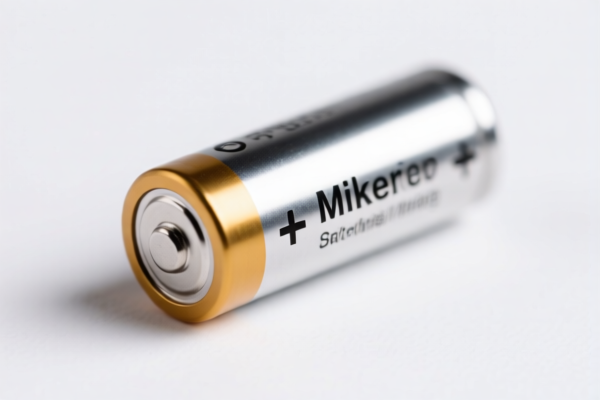
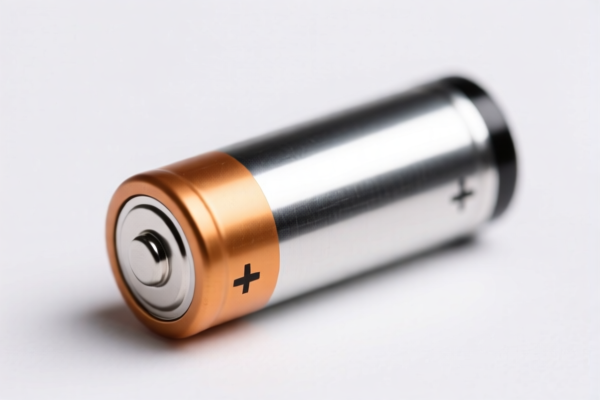
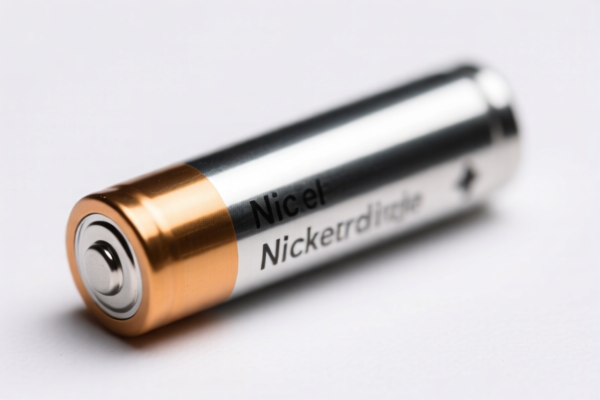
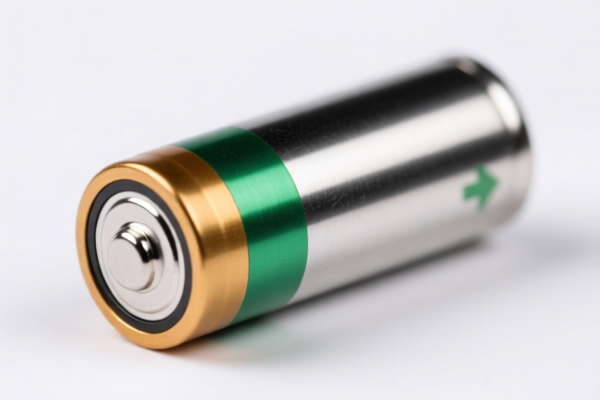
AI分析
🔋 Nickel Metal Hydride (NiMH) Batteries
🌐 HS Code Reference & Customs Clearance Guide | 2026 Latest Tariff Analysis | Strategic Classification for NiMH Cells
📌 I. Product Definition & Classification: What Exactly is a "NiMH Battery"?
Nickel Metal Hydride (NiMH) batteries are rechargeable secondary cells widely used in consumer electronics, hybrid electric vehicles (HEVs), and industrial applications. Unlike Lithium-ion batteries, NiMH batteries use a hydrogen-absorbing alloy instead of lithium for the negative electrode.
In international trade, their classification is critical because the physical form and intended use dictate the HS Code. Misclassification can lead to significant tariff penalties (up to 38.4%) due to US-China trade measures.
⚠️ Key Distinction Points:
- Primary Classification: Are they standalone rechargeable cells/batteries (Chapter 85)?
- Alternative Classification: Are they treated as "electrical parts of motors" (8548) or "miscellaneous chemical mixtures" (3824)?
- Origin Sensitivity: All entries below assume Origin: China subject to Section 301 (25%) and Section 122 (10%) tariffs.
📦 II. HS Code Classification Details (2026 Latest Tariff Authority)
Based on the provided data, NiMH batteries fall into four distinct categories depending on how they are declared and their physical characteristics.
| HS Code | Product Description | Applicable Scenario | Total Tax Rate |
|---|---|---|---|
8507.50.00.00 |
Nickel-Metal Hydride Batteries (Primary Class) | Standalone NiMH rechargeable cells or packs. Classified specifically as "Nickel metal hydride type secondary batteries." | 38.4% |
8507.80.82.00 |
Other Electric Storage Batteries (Secondary Class) | NiMH batteries classified under "Other" types of electric storage batteries if not meeting the specific 8507.50 criteria. | 38.4% |
8548.00.00.00 |
Parts of Machines or Appliances | NiMH cells treated as electrical parts of motors or devices (e.g., battery packs integrated into a tool, declared as a part). | 35.0% |
3824.99.39.10 |
Miscellaneous Chemical Products | NiMH batteries classified based on their core material composition (Nickel + Hydrogen alloys) as inorganic compound mixtures. | 35.0% |
🔍 Critical Insight:
- 8507 Codes are the most standard for standalone NiMH batteries.
- 8548 & 3824 Codes represent alternative classifications that may apply if the battery is declared as a "part" or based on "chemical composition," potentially offering a 3.4% lower total tax compared to the primary 8507 classification.
💰 III. 2026 Latest Tariff Rate Breakdown (Detailed Tax Analysis)
✅ Applicable Country: United States (US)
✅ Origin: China (CN)
✅ Effective Time: Current Trade Measures Active
🎯 1. Primary Classification: 8507.50.00.00 & 8507.80.82.00
These are the standard classifications for NiMH rechargeable batteries.
| Item | Details |
|---|---|
| Base Tariff (MFN) | 3.4% (Ad Valorem) |
| Section 301 Surcharge | +25.0% (Retaliatory Tariff on Chinese Goods) |
| Section 122 Surcharge | +10.0% (Additional Tariff on Specific Chinese Products) |
| Total Tax Rate | 38.4% |
| Tax Calculation | CIF Value × 38.4% |
| De Minimis Exemption | ❌ Not Applicable (Section 321 de minimis does not apply to Section 301/122 goods) |
| Legal Basis Path | USITC:8507.50.00.00 → HTSUS Footnote 301 → IEEPA:9903.01.24 |
📌 Explanation:
- The 38.4% rate is high. It is composed of the low base MFN rate (3.4%) plus aggressive trade war tariffs (25% + 10%).
- This applies to most standalone NiMH battery imports from China.
🎯 2. Alternative Classification: 8548.00.00.00 (Parts)
If the NiMH battery is declared as a component/parts of a larger machine or device (not as a standalone consumer good), it may fall here.
| Item | Details |
|---|---|
| Base Tariff (MFN) | 0.0% |
| Section 301 Surcharge | +25.0% |
| Section 122 Surcharge | +10.0% |
| Total Tax Rate | 35.0% |
| Tax Calculation | CIF Value × 35.0% |
| De Minimis Exemption | ❌ Not Applicable |
| Legal Basis Path | USITC:8548.00.00.00 → HTSUS Footnote 301 → IEEPA:9903.01.24 |
📌 Explanation:
- Savings: 3.4% lower than the primary 8507 classification.
- Risk: Requires strong documentation proving the battery is a "part" and not a standalone consumer product. Misdeclaration here can lead to audits.
🎯 3. Alternative Classification: 3824.99.39.10 (Chemical Mixture)
This is a niche classification based on the material composition (Nickel-Hydrogen alloy mixtures).
| Item | Details |
|---|---|
| Base Tariff (MFN) | 0.0% |
| Section 301 Surcharge | +25.0% |
| Section 122 Surcharge | +10.0% |
| Total Tax Rate | 35.0% |
| Tax Calculation | CIF Value × 35.0% |
| De Minimis Exemption | ❌ Not Applicable |
| Legal Basis Path | USITC:3824.99.39.10 → HTSUS Footnote 301 → IEEPA:9903.01.24 |
📌 Explanation:
- Similar savings to8548.
- Used when the battery is viewed primarily as a "miscellaneous chemical product" due to its alloy composition. Less common for standard retail batteries.
🛠️ IV. Customs Clearance Practical Advice (Real-World Pitfall Guide)
✅ 1. Documentation Checklist (Essential for Clearance)
| Document | Required? | Notes |
|---|---|---|
| ✅ Product Specification Sheet | ✔️ | Must clearly state: Chemistry (NiMH), Voltage, Capacity (mAh), Dimensions, Weight. |
| ✅ Circuit Diagram/Structure | ✔️ | Crucial to prove if it’s a "standalone battery" (8507) or a "part" (8548). |
| ✅ Commercial Invoice | ✔️ | Clearly describe goods: "Nickel Metal Hydride Rechargeable Battery, Model XYZ" OR "Battery Pack for Motor, Model XYZ". |
| ✅ Certificate of Origin (CO) | ✔️ | Required to determine if Section 301/122 tariffs apply. |
| ✅ Third-Party Test Report | ✔️ | UN38.3 (Transport Safety), UL/CE certification recommended. |
✅ 2. Declaration Strategy (Key Mantra)
🔥 "Classify by Function, Not Just Material. Standalone = 8507 (38.4%), Part/Chemical = 8548/3824 (35.0%)."
| Scenario | Recommended HS Code | Tax Rate | Risk Level |
|---|---|---|---|
| Standalone Retail Battery | 8507.50.00.00 |
38.4% | ✅ Low (Standard) |
| Battery Pack integrated into a Tool | 8548.00.00.00 |
35.0% | ⚠️ Medium (Needs proof of integration) |
| Bulk NiMH Alloys/Materials | 3824.99.39.10 |
35.0% | ⚠️ High (Only for raw materials) |
| Misclassified as "Lithium Battery" | 8507.60.00.00 |
❌ Penalty | 🚨 Critical (Wrong chemistry) |
📌 Warning:
- Do NOT declare NiMH as Lithium-Ion (8507.60). The chemistry is different, and lithium batteries face different regulations (more dangerous goods constraints).
- If declaring as8548(Part), ensure the battery is not sold separately. If it can function independently, Customs will likely reject this and backdate to8507.
✅ 3. Special Case Handling
| Situation | Handling Advice |
|---|---|
| OEM Custom Packs | Provide end-product design drawings. Show that the battery is integral to the device’s function. |
| Hybrid Vehicle (HEV) Batteries | Typically large NiMH/NiCd packs. Consider 8507.50 but check for specific automotive exemptions. |
| Small Consumer AA/AAA NiMH | Standard 8507.50.00.00. High volume, low unit price. 38.4% applies. |
| Duty Drawback | If the final product is re-exported, you may claim Duty Drawback on the 38.4% paid. |
🌍 V. Global Market Comparison (2026 Update)
| Market | HS Code (Typical) | Base Tariff | US-Specific Surcharges | Total (China Origin) |
|---|---|---|---|---|
| 🇺🇸 USA | 8507.50.00.00 |
3.4% | +35% (301+122) | 38.4% |
| 🇨🇳 China | 8507.50.00.00 |
5.0% | None | 5.0% |
| 🇪🇺 EU | 8507.50.00 |
3.7% | Carbon Border Adjustment (Future) | ~3.7% + CBAM |
| 🇬🇧 UK | 8507.50.00 |
4.0% | None | 4.0% |
| 🇦🇺 Australia | 8507.50.00 |
5.0% | None | 5.0% |
📌 Conclusion:
- The US market is uniquely expensive for NiMH batteries due to the 35% additional tariffs.
- For non-US markets, the cost is minimal (<5%).
- Strategy: If targeting the US, consider supply chain diversification (Vietnam, Malaysia) to avoid Section 301/122 tariffs, or negotiate price adjustments with buyers.
📌 VI. Common Errors & Pitfalls (Blood Lessons)
❌ Error 1: Declaring NiMH as Lithium (8507.60)
👉 Consequence: Wrong chemistry declaration. High risk of rejection, fines, and safety audits (Lithium is Class 9 Dangerous Goods).
👉 Correct: Use 8507.50 for NiMH.
❌ Error 2: Declaring Standalone Batteries as "Parts" (8548)
👉 Consequence: Customs will challenge the "part" status if the battery is sold separately. Result: Backdated taxes + penalties.
👉 Correct: Use 8507 for standalone items.
❌ Error 3: Ignoring Section 122 (10%)
👉 Consequence: Underpayment. Many traders only account for the 25% Section 301.
👉 Correct: Always add 35% (25+10) to the base rate for China-origin goods.
✅ Correct Declaration Example:
"Nickel Metal Hydride Rechargeable Battery, 1.2V, 2000mAh, No Housing, Model ABC, Origin China"
🎯 VII. Conclusion: Professional Declaration, Cost Efficiency
🎯 Remember the Mantra:
🔹 "NiMH is 8507 (38.4%), Part is 8548 (35.0%), Chemical is 3824 (35.0%)."
🔹 "Do not confuse with Lithium. Do not ignore Section 122."
📌 Pro Tip:
If you are importing large volumes, consider Applying for an Exclusion (if available) or Pre-Ruling with US Customs (CBP) to confirm if your specific pack qualifies for the lower 8548 rate. Also, evaluate Duty Drawback claims if the final product is exported.
📣 Immediate Action:
📞 Contact a Licensed Customs Broker
📄 Prepare Product Specs & Circuit Diagrams
🚀 Classify Correctly to Avoid 38.4% Shock!
✨ Professional Customs Clearance Starts with Accurate Classification!
💼 Every Percentage Point of Tariff Matters in the Age of Trade Wars!
用户评价
关于 HS 编码归类
协调制度(HS)是由世界海关组织(WCO)制定的国际贸易商品分类标准。全球 200 多个国家采用 HS 系统作为海关关税、贸易统计和进出口监管的基础。
每个 HS 编码遵循以下层级结构:
- 章(2 位)——商品大类(例如:第 84 章:机器和机械设备)
- 品目(4 位)——章内的更具体分类
- 子目(6 位)——国际通用细分,所有 WCO 成员国统一使用
- 本国细分(8-10 位)——各国自行扩展的细分编码,如美国 HTSUS 10 位编码
正确的 HS 编码归类对于顺利通关、准确缴纳关税和遵守贸易法规至关重要。错误归类可能导致海关延误、多缴关税或罚款。
从CN进口到US时,适用的关税税率可能包括:
- 最惠国(MFN)税率——适用于 WTO 成员国的标准关税税率
- 普通税率——适用于无贸易协定国家
- 贸易救济关税——附加关税,如 301 条款(反倾销)、232 条款(国家安全)或反补贴税
本页内容仅供参考。如需正式归类,请咨询当地海关或持牌报关代理。