Nickel loaded refined catalyst
CN → US| HS编码 | 关税税率 | 原产国 | 目的国 | 文档 |
|---|---|---|---|---|
| 2822000090 | 35.1% | CN | US | 官方文档 |
| 2822000010 | 35.1% | CN | US | 官方文档 |
| 3815110000 | 35.0% | CN | US | 官方文档 |
| 3815190000 | 35.0% | CN | US | 官方文档 |
| 2841905000 | 38.7% | CN | US | 官方文档 |
商品图片
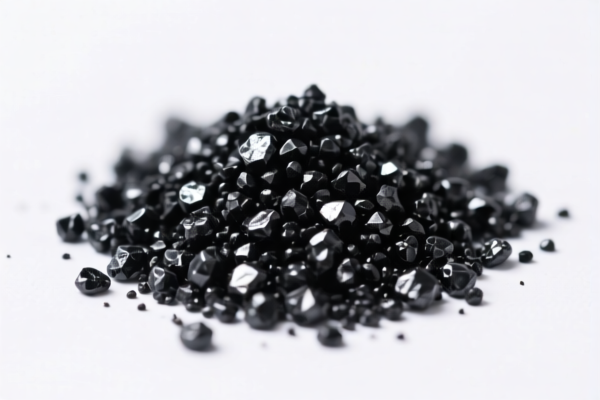
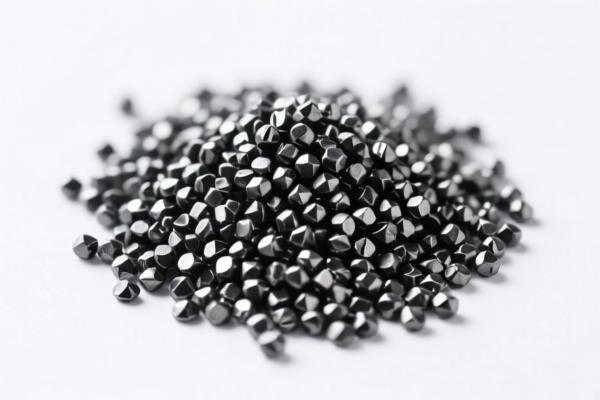
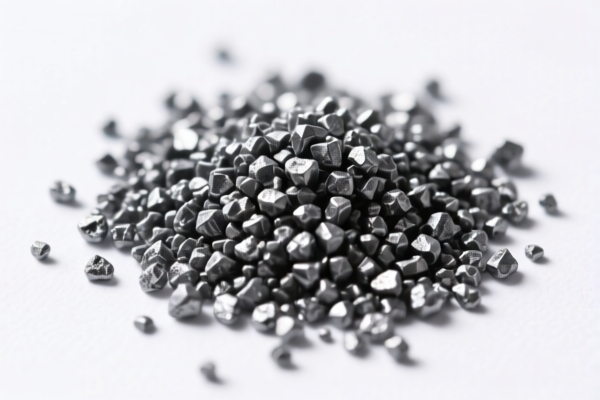
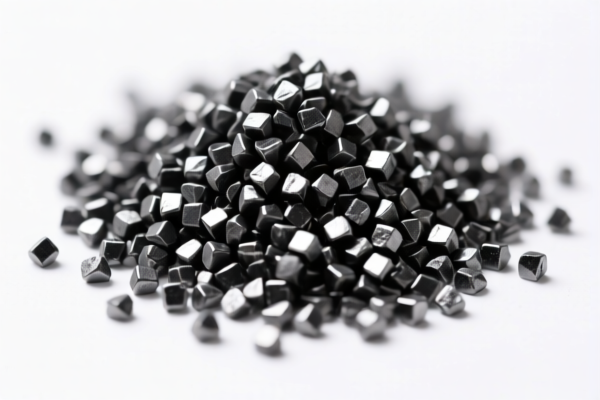
AI分析
🧪 Nickel Loaded Refined Catalyst
🌐 HS Code Reference & Customs Clearance Guide | 2026 Latest Tariff Breakdown | Professional-Level Customs Strategy
📌 I. Product Definition & Classification: What Exactly is "Nickel Loaded Refined Catalyst"?
A "Nickel Loaded Refined Catalyst" typically refers to a catalyst formulation where nickel or nickel compounds serve as the active component, supported on a carrier (such as alumina, silica, or carbon), and often used in refining processes (e.g., hydrogenation, desulfurization).
In international trade classification, this product sits at the intersection of chemicals and catalysts. The key to correct classification lies in distinguishing between: 1. Preparations of catalysts (HS Chapter 38) – If the nickel is mixed with supports/additives to form a functional catalyst. 2. Metal oxides/compounds (HS Chapter 28) – If the product is primarily pure nickel oxide or a basic chemical intermediate before final catalyst formulation.
⚠️ Critical Distinction:
- If the product is a finished catalyst (active material + support + binders) intended for industrial use → HS 3815.
- If the product is a raw chemical substance (e.g., pure nickel oxide, regardless of use) → HS 2822 or HS 2841.
- Misclassification Risk: Declaring a finished catalyst as a raw chemical may trigger audits for undervalued duties or incorrect regulatory compliance.
📦 II. HS Code Classification Details (Based on Provided Data)
| HS Code | Product Description | Applicable Scenario | Total Tax Rate |
|---|---|---|---|
2822.00.00.90 |
Cobalt Oxides and Similar Oxides (Other Metal Oxides) | Nickel oxide classified under residual "other metal oxides" | 35.1% |
2822.00.00.10 |
Cobalt Oxides and Similar Oxides (Cobalt Oxides) | General metal oxide classification (nickel oxide inferred as metal oxide) | 35.1% |
3815.11.00.00 |
Supported Catalysts (Active Material: Nickel or Nickel Compounds) | Finished catalyst with nickel as the active substance | 35.0% |
3815.19.00.00 |
Other Supported Catalysts (Other) | General catalyst preparation; nickel oxide falls under "catalyst preparations" | 35.0% |
2841.90.50.00 |
Other Salts of Oxygen Acids of Metals (Miscellaneous) | Classified as "other" metal oxygen acid salt due to lack of specific conflict | 38.7% |
🔍 Key Insight:
- HS 3815 is generally the most accurate classification for finished catalysts because it captures the function (catalysis) and composition (nickel compound).
- HS 2822 is used if the product is considered a chemical raw material (metal oxide) rather than a formulated catalyst.
- HS 2841 is a fallback "other" category with the highest tax burden (38.7%) and should be avoided unless no other fit exists.
💰 III. 2026 Latest Tariff Rate Breakdown (Including Additional Duties & Policy Surcharges)
✅ Applicable Country: United States (US)
✅ Country of Origin: China (CN)
✅ Effective Date: From November 10, 2025 (and subsequent imports)
🎯 1. 2822.00.00.90 & 2822.00.00.10 —— Metal Oxides (Nickel Oxide)
| Item | Content |
|---|---|
| Base Duty Rate | 0.1% (ad valorem) |
| USITC Additional Duty (Section 301) | +25% |
| IEEPA Additional Duty (China-specific) | +10% |
| Total Duty Rate | 35.1% |
| Tax Calculation | CIF Value × 35.1% |
| De Minimis Eligibility | ❌ No (deny_de_minimis) |
| Legal Basis Path | IEEPA:9903.01.25 → IEEPA:9903.01.24 → USITC:2822.00.00.90/10 |
📌 Explanation:
- These HS codes classify the product as a chemical substance (metal oxide).
- The 0.1% base rate is nearly negligible; the bulk of the cost comes from the 35% combined additional duties.
- Caution: This classification may invite scrutiny if the product is clearly a formulated catalyst, as it might be deemed a "misdeclaration" of a higher-value functional product.
🎯 2. 3815.11.00.00 & 3815.19.00.00 —— Catalyst Preparations (Nickel-Based)
| Item | Content |
|---|---|
| Base Duty Rate | 0.0% (ad valorem) |
| USITC Additional Duty (Section 301) | +25% |
| IEEPA Additional Duty (China-specific) | +10% |
| Total Duty Rate | 35.0% |
| Tax Calculation | CIF Value × 35.0% |
| De Minimis Eligibility | ❌ No (deny_de_minimis) |
| Legal Basis Path | IEEPA:9903.01.25 → IEEPA:9903.01.24 → USITC:3815.11.00.00/19 |
📌 Explanation:
- HS 3815 is the most technically accurate classification for "Nickel Loaded Refined Catalyst."
- The base duty is 0%, making it slightly cheaper than the oxide classifications (35.1% vs. 35.0%).
- Advantage: Reflects the industrial function of the product, reducing the risk of customs disputes regarding product nature.
- Recommendation: Use HS 3815 for finished catalysts to ensure compliance and optimal tax efficiency.
🎯 3. 2841.90.50.00 —— Other Salts of Oxygen Acids (Miscellaneous)
| Item | Content |
|---|---|
| Base Duty Rate | 3.7% (ad valorem) |
| USITC Additional Duty (Section 301) | +25% |
| IEEPA Additional Duty (China-specific) | +10% |
| Total Duty Rate | 38.7% |
| Tax Calculation | CIF Value × 38.7% |
| De Minimis Eligibility | ❌ No (deny_de_minimis) |
| Legal Basis Path | IEEPA:9903.01.25 → IEEPA:9903.01.24 → USITC:2841.90.50.00 |
📌 Explanation:
- This is a penalty-rate classification. It applies only when no specific category fits, leading to the "other" bucket.
- Avoid this code if possible, as it adds 3.7% more cost than HS 3815 and may raise red flags during customs audits for poor classification.
🛠️ IV. Customs Clearance Practical Advice (Combat-Ready Pitfall Avoidance Guide)
✅ 1. Document Checklist (All Required)
| Document | Mandatory? | Description |
|---|---|---|
| ✅ Product Specification Sheet | ✔️ | Must detail: Nickel content %, support material (e.g., Al₂O₃, SiO₂), physical form (pellets, powder), and intended industrial use. |
| ✅ Formula/Composition Report | ✔️ | Clear breakdown of active ingredients (Nickel compounds) vs. inert supports. Crucial for distinguishing HS 3815 from HS 2822. |
| ✅ Product Photos (Label & Packaging) | ✔️ | Show model number, hazard symbols, and "Catalyst" labeling. |
| ✅ Third-Party Test Report | ✔️ | SGS/BV analysis confirming nickel oxide content and catalyst activity. |
| ✅ Commercial Invoice | ✔️ | Must explicitly state: "Nickel-based Supported Catalyst, for Industrial Refining Processes" – DO NOT use vague terms like "Chemical Powder." |
| ✅ Certificate of Origin (CO) | ✔️ | If not from China, apply for preferential tariffs. |
| ✅ Packing List | ✔️ | Separate catalyst from accessories if bundled. |
✅ 2. Declaration Tips (Key Mantras)
🔥 “Catalyst by Function, Oxide by Substance, Name it Right, Save the Bite!”
| Scenario | Correct Declaration | Wrong Practice |
|---|---|---|
| Finished Catalyst (Nickel + Support) | HS 3815.11.00.00 Declare: "Supported Catalyst, Active Material: Nickel Oxide" |
Declaring as "Nickel Oxide" (HS 2822) → Risk of audit for misclassification |
| Raw Nickel Oxide Powder (No Support) | HS 2822.00.00.90 Declare: "Nickel Oxide, Chemical Grade" |
Declaring as "Catalyst" → May fail functional inspection |
| Mixed Salts/Complex Compounds | HS 2841.90.50.00 | Avoid if possible; triggers 38.7% tax + scrutiny |
| Partially Processed Catalyst | HS 3815.19.00.00 | Declare as "Other Supported Catalyst" |
✅ 3. Special Cases Handling
| Situation | Handling Advice |
|---|---|
| OEM Custom Catalyst | Provide customer orders + technical data sheets to prove "catalyst" status. Prevents reclassification to "chemicals." |
| High Nickel Content (>50%) | Still qualifies for HS 3815 if functionalized as a catalyst. Pure metal salts may fall to HS 2841. |
| Catalyst with Hazardous Properties | Provide MSDS (Material Safety Data Sheet). Some nickel compounds are toxic; ensure proper UN packaging and labeling. |
| Used/Recycled Catalyst | Do not declare as new catalyst. May require different HS code or be subject to waste import regulations. |
🌍 V. Global Market Clearance Comparison (2026 Latest)
| Country/Region | Recommended HS Code | Tariff Rate | Certification Requirements | Notes |
|---|---|---|---|---|
| 🇺🇸 USA | 3815.11.00.00 |
35.0% (CN Origin) | SDS, EPA Compliance | Avoid HS 2841 (38.7%) |
| 🇨🇳 China | 3815.11.00.00 |
~5-8% | CCC (if applicable) | No Section 301 tariffs |
| 🇪🇺 EU | 3815.11.00.00 |
0% (if REACH compliant) | REACH Registration, CLP | Nickel compounds are SVHC; ensure compliance |
| 🇦🇺 Australia | 3815.11.00.00 |
5% | RCM, WorkSafe | Standard import duty |
| 🇯🇵 Japan | 3815.11.00.00 |
0-3% | JIS Standards | Low tariff; focus on quality certs |
📌 Conclusion:
- The USA imposes a heavy 35% burden on catalysts due to trade policies.
- EU and Asia are far more tariff-friendly, but REACH (EU) and chemical safety regulations are stringent.
- Optimal Strategy: Use HS 3815 to ensure accuracy and minimize risk, even if the base duty is similar.
📌 VI. Common Errors & Pitfall Guide (Lessons from Blood and Tears)
❌ Error 1: Declaring a finished catalyst as "Nickel Oxide" (HS 2822)
👉 Consequence: Customs may argue the product is a "preparation," leading to reclassification penalties or delays.
👉 Fix: Provide technical data showing the support structure and catalytic function.
❌ Error 2: Using "Other Chemicals" for vague declarations
👉 Consequence: Triggers HS 2841.90.50.00 → 38.7% Tax + High Audit Risk.
👉 Fix: Always specify the active ingredient and form.
❌ Error 3: Ignoring Nickel Toxicity Regulations
👉 Consequence: Shipments detained for lacking proper SDS/UN packaging.
👉 Fix: Include SDS with every shipment; classify under proper UN hazard class if applicable.
❌ Error 4: Failing to distinguish Raw Oxide vs. Catalyst
👉 Consequence: Tax mismatch (35.1% vs. 35.0%) + compliance issues.
👉 Fix: If supports/binders are present, it’s a Catalyst (3815). If pure, it’s an Oxide (2822).
✅ Correct Declaration Example:
"Nickel-Loaded Alumina Supported Catalyst, for Hydrodesulfurization, HS 3815.11.00.00, Contains 10% NiO by Weight, Non-Hazardous if Properly Sealed."
🎯 VII. Conclusion: Precision Classification Saves Money!
🎯 Remember the Mantra:
🔹 "Catalyst by Function, Not Just Composition!"
🔹 "HS 3815 for Finished Catalysts (35.0%), HS 2822 for Raw Oxides (35.1%)."
🔹 "Avoid HS 2841 at All Costs (38.7% Penalty Rate)!"
🔹 "Documentation is Key: Prove the Function, Not Just the Chemistry!"
📌 Pro Tip:
If your catalyst is originally from Vietnam, Thailand, or Malaysia, you may qualify for lower tariffs or IEEPA exemptions.
👉 Action: Apply for an Advance Ruling from U.S. Customs (CBP) to lock in the HS 3815 classification and avoid surprises at the border.
📣 Immediate Action:
📞 Engage a licensed customs broker + Provide Product Specs + Request HS Code Pre-Ruling
🚀 Ensure your Nickel Loaded Refined Catalyst clears customs smoothly, compliantly, and cost-effectively!
✨ Professional Clearance Starts with Accurate Classification!
💼 Every Percentage Point of Tariff Matters – Don’t Leave Money on the Table!
用户评价
关于 HS 编码归类
协调制度(HS)是由世界海关组织(WCO)制定的国际贸易商品分类标准。全球 200 多个国家采用 HS 系统作为海关关税、贸易统计和进出口监管的基础。
每个 HS 编码遵循以下层级结构:
- 章(2 位)——商品大类(例如:第 84 章:机器和机械设备)
- 品目(4 位)——章内的更具体分类
- 子目(6 位)——国际通用细分,所有 WCO 成员国统一使用
- 本国细分(8-10 位)——各国自行扩展的细分编码,如美国 HTSUS 10 位编码
正确的 HS 编码归类对于顺利通关、准确缴纳关税和遵守贸易法规至关重要。错误归类可能导致海关延误、多缴关税或罚款。
从CN进口到US时,适用的关税税率可能包括:
- 最惠国(MFN)税率——适用于 WTO 成员国的标准关税税率
- 普通税率——适用于无贸易协定国家
- 贸易救济关税——附加关税,如 301 条款(反倾销)、232 条款(国家安全)或反补贴税
本页内容仅供参考。如需正式归类,请咨询当地海关或持牌报关代理。