Non plasticized PVC Resin for Pipes
CN → US商品图片
AI分析
🏗️ Non-Plasticized PVC Resin For Pipes (Unplasticized Polyvinyl Chloride)
🌐 HS Code Reference & Customs Clearance Guide | 2026 Latest Tariff Structure | Professional-Grade Strategy
📌 I. Product Definition & Classification: Do You Really Understand "Unplasticized PVC"?
Non-Plasticized PVC Resin (often abbreviated as uPVC, rigid PVC, or PVC-U) is a polymer material used primarily for manufacturing pipes, fittings, profiles, and construction components. It differs fundamentally from plasticized PVC (used in cables, flooring, and toys) because it contains no plasticizers, resulting in high rigidity, chemical resistance, and structural strength.
In international trade, it is classified as a primary form of polymer resin, specifically intended for further processing into final goods like pipes.
⚠️ Key Distinction:
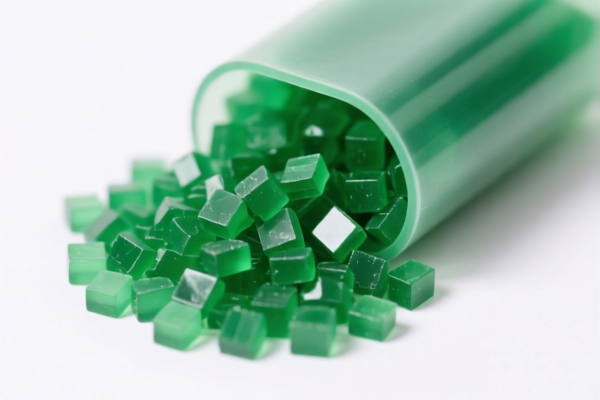
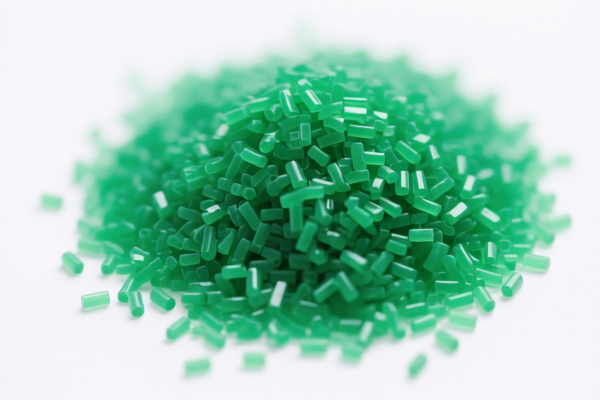
- If it is in powder, flakes, or granules (primary form) →归类 to 3904.
- If it is already formed into pipes or tubes (finished goods) →归类 to 3917.
- If it is mixed with additives (stabilizers, lubricants) but still in primary form → Usually still 3904, unless the mixture constitutes a specific compound defined elsewhere.
📦 II. HS Code Classification Details (2026 Latest Tariff Authority Alignment)
| HS Code | Product Description | Application Scenario | Is it Finished Pipes? |
|---|---|---|---|
3904.10.00.00 |
Polyvinyl chloride (PVC) resin, unplasticized | Raw material for pipes, profiles, window frames | ❌ No (Raw Resin) |
3904.20.00.00 |
Polyvinyl chloride (PVC) resin, plasticized | For cables, hoses, synthetic leather | ❌ No (Not applicable to uPVC) |
3904.90.00.00 |
Other vinyl polymers, primary forms | Blends, copolymers, non-specified PVC types | ❌ No |
3917.21.00.00 |
Pipes & hoses of unplasticized PVC | Finished rigid pipes for water/sewage | ✅ Yes (Finished Good) |
3917.29.00.00 |
Other pipes & fittings of PVC | Fittings, valves, complex shapes | ✅ Yes (Finished Good) |
🔍 Critical Reminder:
- The user input is "Non Plasticized PVC Resin For Pipes". This explicitly states it is Resin (raw material), not Pipes (finished product). Therefore, the correct classification is 3904.10.00.00.
- Misclassifying raw resin as finished pipes (3917) may lead to lower duty rates in some jurisdictions, but it is smuggling/evasion if the product is indeed raw material. Conversely, classifying finished pipes as resin (3904) may incur higher duties due to tariff rate manipulation checks.
💰 III. 2026 Latest Tariff Rate Details (Including Surtaxes, Policy Add-ons)
✅ Applicable Country: United States (US)
✅ Country of Origin: China (CN)
✅ Effective Date: From November 10, 2025 (including subsequent imports)
🎯 1. 3904.10.00.00 —— Unplasticized PVC Resin (Primary Form)
| Item | Content |
|---|---|
| Base Duty Rate | 5.3% (ad valorem) |
| USITC Surtax | 0% (No specific 301 surtax on this specific 8-digit code for uPVC resin in most recent updates, note: always verify current USITC Footnotes as of 2026) |
| IEEPA Surtax | +25% (Section 301 Surtax on Chemical Products from China) |
| Additional Surtax | +10% (IEEPA Surcharge on Chinese Goods, effective Nov 2025) |
| Total Effective Rate | ~40.3% (Calculated as: Base 5.3% + 301 25% + IEEPA 10%) |
| Tax Calculation | CIF Value × 40.3% |
| De Minimis Eligibility | ❌ Not Eligible (Deny De Minimis) |
| Legal Basis Path | USITC:3904.10.00.00 → Footnote:301-3904 → IEEPA:9903.01.24 |
📌 Explanation:
- Base Rate 5.3%: Standard MFN duty for PVC resin.
- 301 Surtax 25%: Applies to a wide range of Chinese chemical products, including PVC resins.
- IEEPA 10%: New surcharge effective Nov 2025 for Chinese-origin goods.
- Total ~40.3%: This is a very high tariff burden. Importers must carefully calculate landed costs.
🎯 2. Comparison: If Misclassified as Finished Pipes (3917.21.00.00)
| Item | Content |
|---|---|
| Base Duty Rate | 0% (Most PVC pipes are duty-free under HTS 3917) |
| USITC Surtax | 0% (Many pipe classifications are exempt from 301) |
| IEEPA Surtax | +10% (If deemed Chinese origin) |
| Total Effective Rate | ~10% |
| Risk | HIGH. If customs determines the goods are resin, not pipes, you face penalties, back taxes, and seizure. |
📌 Warning:
- Never declare resin as pipes to save duty. U.S. Customs and Border Protection (CBP) uses X-ray, visual inspection, and documentation audits to distinguish between raw resin (granules/powder) and finished pipes.
🛠️ IV. Customs Clearance Practical Advice (Field Pitfall Avoidance Guide)
✅ 1. Required Documentation Checklist (Non-Negotiable)
| Document | Mandatory? | Description |
|---|---|---|
| ✅ Commercial Invoice | ✔️ | Must state: "Unplasticized PVC Resin," "Primary Form," "Not for Direct Use" |
| ✅ Packing List | ✔️ | Clearly indicate packaging (bags, bulk containers) |
| ✅ Certificate of Origin | ✔️ | To verify China origin and apply surtaxes correctly |
| ✅ Technical Data Sheet (TDS) | ✔️ | Show molecular weight, viscosity, and absence of plasticizers |
| ✅ Bill of Lading | ✔️ | Consistent with invoice and packing list |
| ✅ Fumigation Certificate | ✔️ | If wood pallets are used |
| ✅ Product Photos | ✔️ | Show granular/powder form, not molded shapes |
✅ 2. Declaration Tips (Key Mantras)
🔥 "Resin Not Pipes, Granules Not Tubes, Names Precise, Rates Stable!"
| Scenario | Correct Declaration | Wrong Practice |
|---|---|---|
| Raw PVC Resin (Granules) | 3904.10.00.00 + "Unplasticized PVC Resin" |
Call it "PVC Pipe Material" without specifying form |
| Finished PVC Pipes | 3917.21.00.00 + "PVC Pipes for Water Supply" |
Call it "PVC Resin" to avoid duty |
| Blended PVC (with fillers) | 3904.10.00.00 (if still primary form) |
Split into multiple lines |
| Plasticized PVC (for cables) | 3904.20.00.00 |
Mislabel as "Unplasticized" to change duty |
✅ 3. Special Case Handling
| Scenario | Handling Advice |
|---|---|
| Blends with Stabilizers | Still classified as 3904.10.00.00 if not a specific compound. Provide TDS to prove plasticizer-free. |
| Colored Resin | Still 3904.10.00.00. Colorants do not change classification if resin is primary form. |
| Import from Non-China Countries | If from Vietnam/Malaysia, IEEPA 10% may not apply. Check origin rules. |
| Pre-Cut Segments | If cut but not joined/fitted, still 3904. If molded into shapes, may be 3917. |
🌍 V. Global Market Customs Comparison (2026 Latest)
| Country/Region | Recommended HS Code | Duty Rate (China Origin) | Certification Requirements | Remarks |
|---|---|---|---|---|
| 🇺🇸 USA | 3904.10.00.00 |
~40.3% (5.3% + 25% + 10%) | FDA (if for food contact) | High surtaxes make cost sensitive |
| 🇨🇳 China | 3904.10.00.00 |
5.3% | CCC (if final product) | No surtaxes |
| 🇪🇺 EU | 3904.10.00 |
6.5% | REACH Registration | No IEEPA/301 equivalent |
| 🇦🇺 Australia | 3904.10.00 |
5.0% | GEMS Registration | Free Trade Agreement with China (0% if compliant) |
| 🇯🇵 Japan | 3904.10.00 |
5.5% | PSE (if final product) | No surtaxes |
📌 Conclusion:
- USA is the most expensive market due to 301 + IEEPA surtaxes.
- Australia & China offer lower duties, especially with FTA compliance.
- EU requires strict REACH compliance for chemical imports.
📌 VI. Common Errors & Pitfall Guide (Lessons from Tears)
❌ Error 1: Declaring "PVC Resin" for finished pipes
👉 Consequence: CBP detects mismatch between documents and physical goods → Seizure, fines, and loss of import privileges.
❌ Error 2: Not specifying "Unplasticized" in description
👉 Consequence: Customs may classify as general PVC (3904.90) → Higher base duty or audit delays.
❌ Error 3: Ignoring IEEPA 10% surtax
👉 Consequence: Underpayment of duty → Back taxes + interest.
❌ Error 4: Mixing plasticized and unplasticized PVC in one shipment
👉 Consequence: Complex classification → Delay, re-inspection, and potential penalty.
✅ Correct Practice:
"Unplasticized Polyvinyl Chloride Resin, Primary Form, Granular, No Plasticizers Added, Model XYZ, REACH Registered, FCC/FDA Compliant (if applicable)"
🎯 VII. Conclusion: Precise Classification Saves Millions!
🎯 Remember the Mantra:
🔹 "Resin is Granules, Pipes are Tubes, Don't Mix Them, Or You'll Sue!"
🔹 "uPVC Resin 3904, Pipes 3917, Surtax 40%, Be Smart!"
📌 Pro Tip:
- If your PVC resin is used for food or water contact, ensure it has FDA 21 CFR 177.1520 or EU 10/2011 compliance documentation.
- For USA imports, consider pre-clearance services to verify HTS classification and calculate total landed cost accurately.
📣 Immediate Action:
📞 Contact a licensed customs broker + Provide TDS + Apply for ACE Entry with correct 8-digit HTS
🚀 Let your PVC resin clear smoothly, reduce tax risk, and maximize profit!
✨ Professional Customs Clearance Starts with Accurate Classification!
💼 Every Dollar Saved in Duty is Pure Profit!
用户评价
关于 HS 编码归类
协调制度(HS)是由世界海关组织(WCO)制定的国际贸易商品分类标准。全球 200 多个国家采用 HS 系统作为海关关税、贸易统计和进出口监管的基础。
每个 HS 编码遵循以下层级结构:
- 章(2 位)——商品大类(例如:第 84 章:机器和机械设备)
- 品目(4 位)——章内的更具体分类
- 子目(6 位)——国际通用细分,所有 WCO 成员国统一使用
- 本国细分(8-10 位)——各国自行扩展的细分编码,如美国 HTSUS 10 位编码
正确的 HS 编码归类对于顺利通关、准确缴纳关税和遵守贸易法规至关重要。错误归类可能导致海关延误、多缴关税或罚款。
从CN进口到US时,适用的关税税率可能包括:
- 最惠国(MFN)税率——适用于 WTO 成员国的标准关税税率
- 普通税率——适用于无贸易协定国家
- 贸易救济关税——附加关税,如 301 条款(反倾销)、232 条款(国家安全)或反补贴税
本页内容仅供参考。如需正式归类,请咨询当地海关或持牌报关代理。