Non woven or Felt Manufacturing Machine
CN → US| HS编码 | 关税税率 | 原产国 | 目的国 | 文档 |
|---|---|---|---|---|
| 8479820080 | 35.0% | CN | US | 官方文档 |
| 8448399000 | 17.5% | CN | US | 官方文档 |
| 8449001000 | 20.1% | CN | US | 官方文档 |
| 8449005000 | 17.5% | CN | US | 官方文档 |
| 8477590100 | 38.1% | CN | US | 官方文档 |
商品图片
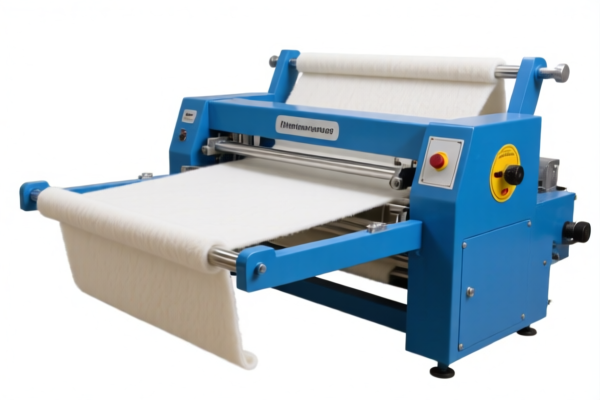
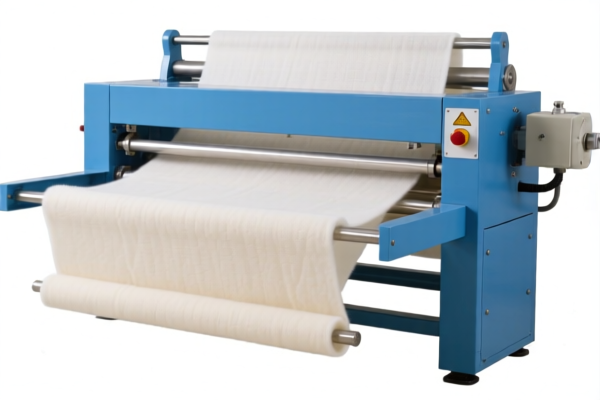
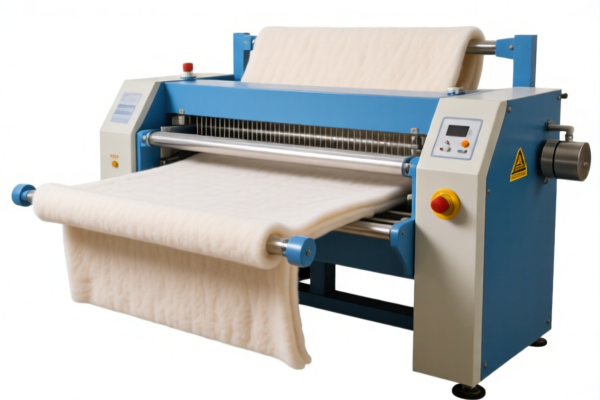
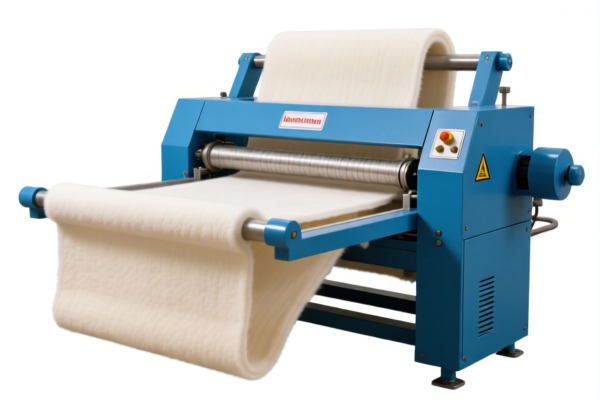
AI分析
🧶 Non-Woven & Felt Manufacturing Machinery
🌐 HS Code Reference & Customs Clearance Guide | 2026 Latest Tariff Analysis | Professional Clearance Strategy
📌 I. Product Definition & Classification: What Exactly Are You Shipping?
Felt and non-woven manufacturing machinery encompasses a broad range of industrial equipment used to produce fibrous sheets without weaving. In international trade, these machines are classified based on their primary mechanical function and specific application stage. Misclassification is common because these machines often bridge textile processing and general mechanical forming.
Key Distinctions:
- General Mechanical Forming: Machines that perform physical compaction or shaping of fibers using general mechanical principles → Chapter 84 (General Machinery).
- Textile Specific: Machines explicitly designed for textile fabric formation or finishing → Chapter 84 (Textile Machinery).
- Felt/Non-Woven Specific: Specialized machines for felt mat formation → Chapter 84 (Textile Machinery, Specific Subheadings).
⚠️ Critical Differentiation Point:
- If the machine is a general-purpose forming press for non-rubber/non-plastic materials → It falls under 8479 (Machinery for making particle board or other building materials).
- If the machine is specifically designed for textile fiber processing (including non-wovens/felt) → It falls under 8448 (Auxiliary machinery) or 8449 (Felt/non-woven machinery).
- If the machine is a specialized compaction press for non-textile, non-rubber, non-plastic materials → It may fall under 8477 (Machinery for working rubber or plastics or other plastics).
📦 II. HS Code Classification Details (2026 Latest Tariff Authority Comparison)
| HS Code | Product Description | Application Scenario | Duty Rate (China Origin to US) |
|---|---|---|---|
8479.82.00.80 |
Machines for manufacturing felt or non-wovens (general mechanical processing category) | General industrial felt forming, non-specific textile auxiliary equipment | 35.0% |
8448.39.90.00 |
Auxiliary parts for textile machinery (for felt/non-woven production) | Auxiliary devices, feeders, or auxiliary mechanisms for textile lines | 17.5% |
8449.00.10.00 |
Felt-forming machines for felt or non-woven fabric manufacturing or finishing | Specific felt matting machines, needle punch finishing lines | 20.1% |
8449.00.50.00 |
Felt-forming machines for sheet or shaped felt manufacturing | Precision felt shaping, die-cutting forming for felt sheets | 17.5% |
8477.59.01.00 |
Molding machinery for non-rubber/non-plastic materials | General compaction presses for loose fibers not classified as textile machinery | 38.1% |
🔍 Key Insight:
-8449Series: Specifically targets felt and non-woven production. This is the most accurate classification for dedicated felt/non-woven lines.
-8479.82.00.80: A broader category for "machines for making particle board or other building materials," which sometimes includes felt forming if not specifically classified under textile machinery.
-8448Series: Only for auxiliary parts or secondary functions, not the main forming machine.
-8477.59.01.00: Often used if the machine is deemed a general molding press for non-textile materials, but this incurs the highest tariff.
💰 III. 2026 Latest Tariff Rate Breakdown (Including Additional Duties & Policy Surcharges)
✅ Applicable Country: United States (US)
✅ Origin: China (CN)
✅ Effective Date: November 10, 2025 (and subsequent imports)
🎯 1. 8479.82.00.80 — General Machinery for Felt/Non-Woven
| Item | Details |
|---|---|
| Base Tariff | 0% (ad valorem) |
| USITC Additional Duty | +25% (Section 301) |
| IEEPA Additional Duty | +10% (China/Hong Kong products) |
| Total Rate | 35.0% |
| Calculation | CIF Value × 35% |
| De Minimis Exemption | ❌ Not Eligible (deny_de_minimis) |
| Legal Basis Path | IEEPA:9903.01.25 → USITC:8479.82.00.80 |
📌 Explanation:
- Base 0%: No standard MFN duty.
- 25% Section 301: Applied to most Chinese industrial machinery.
- 10% IEEPA: Additional surcharge for Chinese origin.
- Total 35%: Significant cost impact. Ensure the product description matches "general mechanical processing" to avoid higher 38.1% rates.
🎯 2. 8448.39.90.00 — Auxiliary Textile Machinery Parts
| Item | Details |
|---|---|
| Base Tariff | 0% |
| USITC Additional Duty | +7.5% |
| IEEPA Additional Duty | +10% |
| Total Rate | 17.5% |
| Calculation | CIF Value × 17.5% |
| De Minimis Exemption | ❌ Not Eligible |
| Legal Basis Path | IEEPA:9903.01.24 → USITC:8448.39.90.00 |
📌 Note:
- This rate applies only if the item is classified as auxiliary machinery or parts, not the main forming machine.
- Ideal for feeders, tensioners, or auxiliary units in a non-woven line.
- Lower than 35% → Optimize supply chain to ship main machines under 8449 if possible, and auxiliary parts under 8448.
🎯 3. 8449.00.10.00 — Felt-Forming Machines (General Felt/Non-Woven)
| Item | Details |
|---|---|
| Base Tariff | 2.6% |
| USITC Additional Duty | +7.5% |
| IEEPA Additional Duty | +10% |
| Total Rate | 20.1% |
| Calculation | CIF Value × 20.1% |
| De Minimis Exemption | ❌ Not Eligible |
| Legal Basis Path | IEEPA:9903.01.24 → USITC:8449.00.10.00 |
📌 Explanation:
- Base 2.6%: Textile machinery often has a small base duty.
- 7.5% Section 301: Lower than general machinery (25%) due to specific textile machine exemptions or partial reductions.
- Total 20.1%: Best balance for dedicated felt/non-woven machines.
- Use Case: Needle punch machines, hydroentanglement lines, or standard felt forming presses.
🎯 4. 8449.00.50.00 — Felt-Forming Machines (Sheet/Shaped Felt)
| Item | Details |
|---|---|
| Base Tariff | 0% |
| USITC Additional Duty | +7.5% |
| IEEPA Additional Duty | +10% |
| Total Rate | 17.5% |
| Calculation | CIF Value × 17.5% |
| De Minimis Exemption | ❌ Not Eligible |
| Legal Basis Path | IEEPA:9903.01.24 → USITC:8449.00.50.00 |
📌 Note:
- Lowest Rate (17.5%) among main machines.
- Applies specifically to machines for sheet or shaped felt (e.g., industrial felts, gaskets, acoustic felt).
- Recommendation: If your machine is for shaped felt, always classify under 8449.00.50.00 to minimize duties.
🎯 5. 8477.59.01.00 — Molding Machinery (Non-Rubber/Non-Plastic)
| Item | Details |
|---|---|
| Base Tariff | 3.1% |
| USITC Additional Duty | +25% |
| IEEPA Additional Duty | +10% |
| Total Rate | 38.1% |
| Calculation | CIF Value × 38.1% |
| De Minimis Exemption | ❌ Not Eligible |
| Legal Basis Path | IEEPA:9903.01.25 → USITC:8477.59.01.00 |
📌 Warning:
- Highest Rate (38.1%).
- Only apply if the machine is not considered textile machinery and is instead a general molding press for loose fibers.
- Avoid this classification if possible by proving textile-specific function.
🛠️ IV. Customs Clearance Practical Advice (Battle-Tested Pitfall Guide)
✅ 1. Preparation Checklist (Mandatory)
| Document | Required | Notes |
|---|---|---|
| ✅ Product Specification Sheet | ✔️ | Must detail: fiber type, processing method (needle punch, spunlace, etc.), machine capacity |
| ✅ Flowchart/Process Diagram | ✔️ | Show how fibers are converted to felt/non-woven. Prove textile-specific function. |
| ✅ Product Photos (with Nameplate) | ✔️ | Clear view of model number, brand, and key functional components. |
| ✅ Third-Party Test Report | ✔️ | If applicable: CE, ISO, or safety certifications. |
| ✅ Commercial Invoice | ✔️ | Description must match HS Code. Avoid vague terms like "Molding Machine." Use "Felt Forming Machine" or "Non-Woven Manufacturing Line." |
| ✅ Packing List | ✔️ | Separate main machine from auxiliary parts. Do not combine if different HS Codes apply. |
| ✅ Certificate of Origin (CO) | ✔️ | Required for origin determination. |
✅ 2. Declaration Strategy (Key Mantras)
🔥 "Dedicated Felt/Non-Woven = 8449. Auxiliary = 8448. General Molding = 8479/8477."
| Scenario | Correct Declaration | Wrong Declaration | Risk |
|---|---|---|---|
| Main Needle Punch Machine | 8449.00.10.00 or 8449.00.50.00 |
8479.82.00.80 |
Higher duty (35% vs 17.5-20.1%) |
| Auxiliary Feeder/Tensioner | 8448.39.90.00 |
8479.82.00.80 |
Over-declaring duty |
| General Compaction Press | 8477.59.01.00 or 8479.82.00.80 |
8449.00.50.00 |
Penalty for misclassification |
| Mixed Container (Machine + Parts) | Split declaration | Combine under one HS Code | Audit risk, potential fines |
✅ 3. Special Handling Cases
| Situation | Advice |
|---|---|
| OEM Custom Machine | Provide client orders + design specs to prove specific function. Avoid generic "Industrial Machine." |
| Machine with Integrated Control Panel | Still classified under 8449 or 8479. Control panels do not shift classification to Chapter 85. |
| Hybrid Machine (Textile + Plastic) | If primary function is textile, use 8449. If plastic molding, use 8477. Document primary function clearly. |
| Used/Refurbished Machine | Provide maintenance records. Age does not affect HS Code, but may affect inspection scrutiny. |
🌍 V. Global Customs Comparison (2026 Latest)
| Country/Region | Recommended HS Code | Tariff (China Origin) | Certification Required | Notes |
|---|---|---|---|---|
| 🇺🇸 USA | 8449.00.50.00 |
17.5% | N/A | Best rate for shaped felt. 8477 is 38.1%. |
| 🇨🇳 China | 8449.00.50.00 |
0-5% | CCC (if applicable) | Low domestic duty. |
| 🇪🇺 EU | 8449.00 |
0% | CE | No additional tariffs for textile machinery. |
| 🇬🇧 UK | 8449.00 |
0% | UKCA | Post-Brexit alignment with EU standards. |
| 🇦🇺 Australia | 8449.00 |
0-5% | RCM | No additional surcharges. |
📌 Conclusion:
- USA is the most costly market due to Section 301 and IEEPA tariffs.
- EU/UK/Australia are tariff-friendly for textile machinery.
- Optimize for USA: Use 8449.00.50.00 (17.5%) for shaped felt machines. Avoid 8477 (38.1%).
📌 VI. Common Mistakes & Pitfalls (Blood-Learned Lessons)
❌ Mistake 1: Classifying a dedicated felt machine under 8479 (General Machinery)
👉 Consequence: Pay 35% instead of 17.5-20.1%.
❌ Mistake 2: Classifying a general molding press under 8449 (Textile Machinery)
👉 Consequence: Customs may reject, requiring reclassification to 8477 (38.1%) or penalties.
❌ Mistake 3: Combining main machine and auxiliary parts under one HS Code
👉 Consequence: Audit flag. Parts should be declared separately under 8448 (17.5%) if applicable.
❌ Mistake 4: Using vague descriptions like "Molding Machine"
👉 Consequence: Customs applies 38.1% by default. Always specify "Felt Forming" or "Non-Woven Manufacturing."
✅ Correct Practice:
"Non-Woven Fabric Manufacturing Machine, Needle Punch Type, Model XYZ, Capacity 50m/min, with Integrated Control System, CE Certified"
🎯 VII. Conclusion: Precision Classification Saves Money!
🎯 Remember the Mantra:
🔹 "Felt/Non-Woven Specific = 8449 (17.5-20.1%). Auxiliary = 8448 (17.5%). General Molding = 8477/8479 (35-38.1%)."
🔹 "HS Code Decides Tariff, 20% vs 38% is a Huge Difference, Declare Precisely, Save Thousands!"
📌 Pro Tip:
If your machine is originally from Vietnam, Mexico, or Thailand, you may apply for IEEPA Exemption, reducing tariffs to 0-5%.
Recommend Advance Ruling from US Customs (CBP) before shipment to avoid clearance delays.
📣 Act Now:
📞 Contact a Professional Customs Broker + Provide Product Photos + Apply for HS Code Advance Ruling
🚀 Ensure Smooth Clearance, Efficient Export, and Maximized Profit!
✨ Professional Customs Clearance Starts with Accurate Classification!
💼 Every Dollar Saved in Tariffs is Pure Profit!
用户评价
关于 HS 编码归类
协调制度(HS)是由世界海关组织(WCO)制定的国际贸易商品分类标准。全球 200 多个国家采用 HS 系统作为海关关税、贸易统计和进出口监管的基础。
每个 HS 编码遵循以下层级结构:
- 章(2 位)——商品大类(例如:第 84 章:机器和机械设备)
- 品目(4 位)——章内的更具体分类
- 子目(6 位)——国际通用细分,所有 WCO 成员国统一使用
- 本国细分(8-10 位)——各国自行扩展的细分编码,如美国 HTSUS 10 位编码
正确的 HS 编码归类对于顺利通关、准确缴纳关税和遵守贸易法规至关重要。错误归类可能导致海关延误、多缴关税或罚款。
从CN进口到US时,适用的关税税率可能包括:
- 最惠国(MFN)税率——适用于 WTO 成员国的标准关税税率
- 普通税率——适用于无贸易协定国家
- 贸易救济关税——附加关税,如 301 条款(反倾销)、232 条款(国家安全)或反补贴税
本页内容仅供参考。如需正式归类,请咨询当地海关或持牌报关代理。