Noodle Machine
CN → US| HS编码 | 关税税率 | 原产国 | 目的国 | 文档 |
|---|---|---|---|---|
| 8438100010 | 17.5% | CN | US | 官方文档 |
| 8438100090 | 17.5% | CN | US | 官方文档 |
| 8509400025 | 14.2% | CN | US | 官方文档 |
| 8509400015 | 14.2% | CN | US | 官方文档 |
| 8479820040 | 35.0% | CN | US | 官方文档 |
商品图片
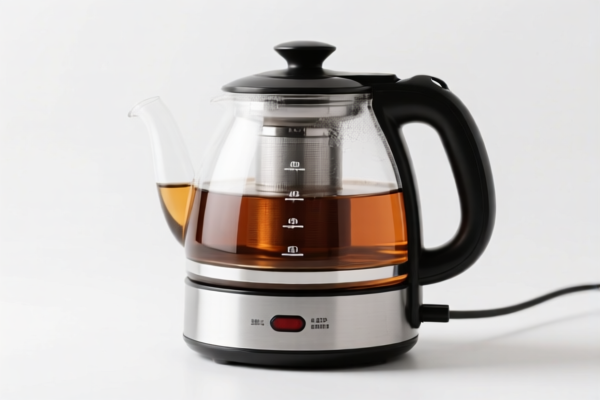
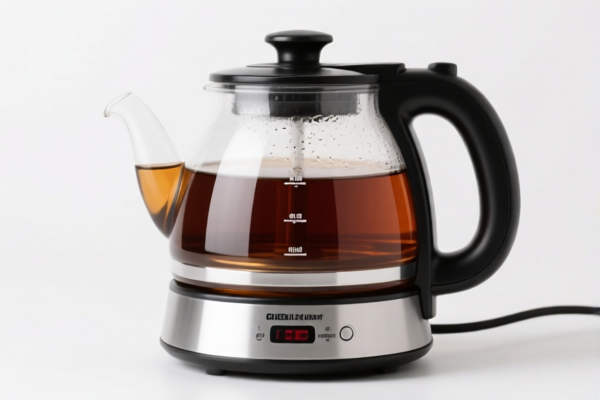
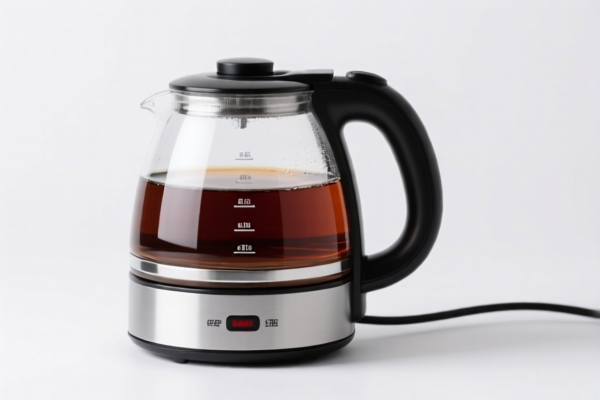

AI分析
🍜 Noodle Machine: HS Code Classification & US Customs Clearance Guide
🌐 HS Code Reference & Clearance Strategy | 2026 Latest Tariff Analysis | Professional Compliance Protocol
📌 I. Product Definition & Classification: What Exactly is a "Noodle Machine"?
In international trade, "Noodle Machine" is a broad term that covers various stages of food processing. It is not a single, unified commodity but rather a functional category spanning from industrial dough mixing to household food preparation. Accurate classification depends entirely on the mechanical function, automation level, and intended use (industrial vs. domestic).
⚠️ Key Distinction:
- If the machine is for industrial dough kneading/mixing before shaping → It falls under Food Manufacturing Machinery (Chapter 84).
- If the machine is for home kitchen stirring/blending → It falls under Household Electrical Appliances (Chapter 85).
- If the machine performs complex mixing/kneading that doesn't fit specific food categories → It may fall under General Purpose Mechanical Appliances (Chapter 84).
📦 II. HS Code Classification Details (Based on Provided Data)
| HS Code | Product Description | Application Scenario | Key Functional Characteristic |
|---|---|---|---|
8438.10.00.10 |
Food manufacturing machinery for bread production, specifically Dough Mixers | Industrial bakeries, large-scale noodle factories | Primary function is kneading dough for bread/noodle bases. |
8438.10.00.90 |
Machinery for preliminary processing of flour-based products | Commercial noodle plants, pasta manufacturers | Used for initial dough preparation/pre-mixing in flour product lines. |
8509.40.00.25 |
Food搅拌/Processing Equipment: Food mixers/blenders (other than household) | Commercial kitchens, small food prep units | Falls under "Other Food Stirring/Processing Equipment"; not strictly for dough kneading. |
8509.40.00.15 |
Household Electrical Appliances with stirring functions | Home kitchens, residential use | Classified as a household item (e.g., home stand mixer). |
8479.82.00.40 |
Mixing/Kneading/Blending Machines (General Purpose Mechanical Appliances) | Industrial sites where specific food machinery classification is ambiguous | General purpose mixing/kneading equipment not specific to food processing chapters. |
🔍 Critical Insight:
- Industrial vs. Home: The biggest tariff difference lies between Chapter 84 (Industrial) and Chapter 85 (Home).
- Function Matters: If it only mixes dough,8438is preferred. If it’s a general stirrer/blender,8509or8479might apply.
💰 III. 2026 US Tariff Rate Breakdown (Including Additional Duties)
✅ Applicable Country: United States (US)
✅ Origin: China (CN)
✅ Effective Time: Current US Trade Policy (Section 301 + IEEPA)
🎯 1. 8438.10.00.10 & 8438.10.00.90 —— Industrial Dough Mixers
These codes are classified under Food Manufacturing Machinery. Due to US-China trade tensions, these industrial goods face significant additional tariffs.
| Item | Content |
|---|---|
| Base Tariff | 0.0% (Ad Valorem) |
| Section 301 Surcharge | +7.5% |
| Section 122 Tariff | +10% |
| Total Tariff Rate | 17.5% |
| Calculation Base | CIF Value × 17.5% |
| De Minimis Exemption | ❌ Not Available (Section 301 goods are excluded) |
| Legal Basis | USITC Subheading 8438.10.00 + Section 301 List + Section 122 Authority |
📌 Explanation:
- Base 0%: Standard MFN rate for many food machinery parts is low or zero.
- Section 301 (7.5%): This is the primary "trade war" tariff on Chinese industrial machinery.
- Section 122 (10%): Additional tariff under Section 232/122 provisions for national security/economic reasons.
- Total 17.5%: This is the landed cost impact for industrial-grade noodle/dough mixers.
🎯 2. 8509.40.00.25 & 8509.40.00.15 —— Food Stirrers & Household Appliances
These codes fall under Chapter 85 (Electrical Machinery and Equipment), specifically household or light commercial appliances. They face lower additional tariffs compared to industrial machinery.
| Item | Content |
|---|---|
| Base Tariff | 4.2% |
| Section 301 Surcharge | 0.0% (Note: Some household appliances may be exempt or have lower rates depending on specific HTS exclusions, but based on provided data: 0%) |
| Section 122 Tariff | +10% |
| Total Tariff Rate | 14.2% |
| Calculation Base | CIF Value × 14.2% |
| De Minimis Exemption | ❌ Not Available for Section 122 goods |
| Legal Basis | USITC Subheading 8509.40 + Section 122 Authority |
📌 Explanation:
- Base 4.2%: Standard duty for electrical household appliances.
- No Section 301?: According to the provided data, the Section 301 surcharge is 0% for these specific subheadings. This is a critical cost-saving opportunity.
- Section 122 (10%): Still applies as a general security tariff.
- Total 14.2%: Lower than industrial mixers due to the absence of the 7.5% Section 301 surcharge in this specific classification.
🎯 3. 8479.82.00.40 —— General Mixing/Kneading Machines
This is a "catch-all" for mechanical mixing equipment not specifically classified elsewhere. It carries the highest tariff burden due to aggressive Section 301 application.
| Item | Content |
|---|---|
| Base Tariff | 0.0% |
| Section 301 Surcharge | +25.0% |
| Section 122 Tariff | +10% |
| Total Tariff Rate | 35.0% |
| Calculation Base | CIF Value × 35.0% |
| De Minimis Exemption | ❌ Not Available |
| Legal Basis | USITC Subheading 8479.82 + Section 301 List (High Tariff Item) |
📌 Explanation:
- Base 0%: No standard duty.
- Section 301 (25%): This is the maximum tariff tier for many Chinese mechanical goods.
- Section 122 (10%): Adds further cost.
- Total 35.0%: This is a penalty classification. Avoid this code if possible by providing better technical specifications to qualify for8438or8509.
🛠️ IV. Customs Clearance Practical Advice
✅ 1. Documentation Checklist
| Document | Required? | Purpose |
|---|---|---|
| Product Technical Manual | ✔️ | Proves function (e.g., "Dough Kneading" vs. "Liquid Mixing"). |
| Commercial Invoice | ✔️ | Must clearly state "Noodle Production Machinery" or "Food Mixer". |
| Packing List | ✔️ | Details items to prevent accidental split-line filing. |
| Certificate of Origin (CO) | ✔️ | To confirm Chinese origin for tariff calculation. |
| FCC Certification (if Electric) | ✔️ | Required for 8509 codes (electrical appliances). |
| Third-Party Inspection Report | ✔️ | Confirms capacity, power, and intended use. |
✅ 2. Classification Strategy & Cost Optimization
| Scenario | Recommended HS Code | Total Tariff | Strategy |
|---|---|---|---|
| Industrial Dough Mixer | 8438.10.00.10 / .90 |
17.5% | Best for heavy-duty, industrial use. Lower than general mixers. |
| Home/Kitchen Stand Mixer | 8509.40.00.15 |
14.2% | Best Value. If the machine is small/home-use, this is the cheapest option. |
| Commercial Food Blender/Stirrer | 8509.40.00.25 |
14.2% | Lower than industrial machinery. Use if function is "stirring" not "kneading". |
| Ambiguous Mechanical Mixer | 8479.82.00.40 |
35.0% | AVOID. Only use if no other code fits. High penalty. |
🔥 Pro Tip:
- If your machine can be used in both home and commercial settings, market it as a "Commercial Food Mixer" and classify under8438(17.5%) rather than8479(35%).
- Never classify a clear food-processing machine as "General Mechanical Equipment" (8479) unless absolutely necessary. The 35% tariff is punitive.
✅ 3. Common Pitfalls
❌ Pitfall 1: Calling all "Noodle Machines" by one name.
👉 Result: Customs may assign the highest default rate (35%) if function is unclear.
✅ Fix: Specify "Automatic Noodle Making Line" (complex) vs. "Dough Kneader" (specific).
❌ Pitfall 2: Mixing home-use and industrial parts in one shipment.
👉 Result: Entire shipment may be audited, leading to delays and potential higher rates.
✅ Fix: Ship separately or clearly distinguish on invoice.
❌ Pitfall 3: Ignoring FCC/UL requirements for 8509 codes.
👉 Result: Seizure or refusal of entry for electrical appliances.
✅ Fix: Ensure all electrical components have proper US certifications.
🌍 V. Global Market Comparison (Summary)
| Market | Recommended HS Code | Est. Duty (China Origin) | Notes |
|---|---|---|---|
| 🇺🇸 USA | 8438.10.00.10 (Industrial) |
17.5% | Includes Section 301 + 122. |
| 🇺🇸 USA | 8509.40.00.15 (Home) |
14.2% | Lower Section 301 impact. |
| 🇪🇺 EU | Varies (Ch 84/85) | ~4.2% - 6.5% | No Section 301 tariffs. |
| 🇨🇳 China | Varies | 5% - 10% | Import duty for re-export. |
📌 Conclusion:
For US Imports from China, the functional specification is your biggest lever for cost control.
- Industrial Dough Mixers: ~17.5%
- Home/Commercial Stirrers: ~14.2%
- General Mixers: ~35.0% (Avoid)
📌 VI. Final Recommendation
- For Industrial Noodle Factories: Use
8438.10.00.10or8438.10.00.90. Ensure your technical documents explicitly state "Dough Kneading for Bread/Noodle Production." - For Home/Small Business Use: Use
8509.40.00.15. Highlight "Household Electrical Appliance" and ensure FCC compliance. - Avoid
8479.82.00.40unless you have no other option. The 35% tariff is unsustainable for competitive trading.
📞 Immediate Action:
📄 Provide detailed technical specifications to your customs broker.
🔍 Request an Advance Ruling from US CBP if the product is ambiguous.
💡 Save 17.5% - 20.8% by choosing the correct HS Code!
✨ Precision in Classification = Profit in Your Pocket
💼 Don't let tariffs eat your margins. Classify smart.
用户评价
关于 HS 编码归类
协调制度(HS)是由世界海关组织(WCO)制定的国际贸易商品分类标准。全球 200 多个国家采用 HS 系统作为海关关税、贸易统计和进出口监管的基础。
每个 HS 编码遵循以下层级结构:
- 章(2 位)——商品大类(例如:第 84 章:机器和机械设备)
- 品目(4 位)——章内的更具体分类
- 子目(6 位)——国际通用细分,所有 WCO 成员国统一使用
- 本国细分(8-10 位)——各国自行扩展的细分编码,如美国 HTSUS 10 位编码
正确的 HS 编码归类对于顺利通关、准确缴纳关税和遵守贸易法规至关重要。错误归类可能导致海关延误、多缴关税或罚款。
从CN进口到US时,适用的关税税率可能包括:
- 最惠国(MFN)税率——适用于 WTO 成员国的标准关税税率
- 普通税率——适用于无贸易协定国家
- 贸易救济关税——附加关税,如 301 条款(反倾销)、232 条款(国家安全)或反补贴税
本页内容仅供参考。如需正式归类,请咨询当地海关或持牌报关代理。