Nuclear Reactors
CN → US| HS编码 | 关税税率 | 原产国 | 目的国 | 文档 |
|---|---|---|---|---|
| 8401100000 | 38.3% | CN | US | 官方文档 |
| 8401400000 | 38.3% | CN | US | 官方文档 |
商品图片
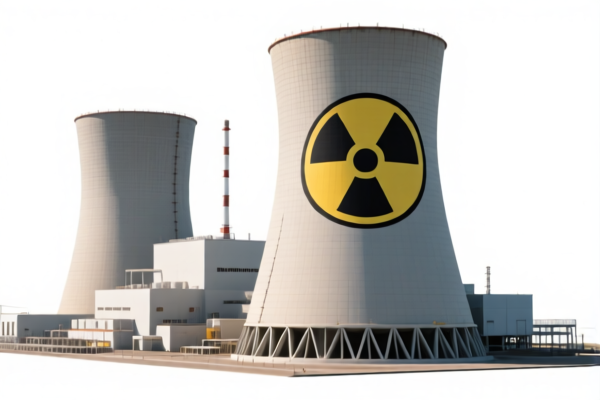
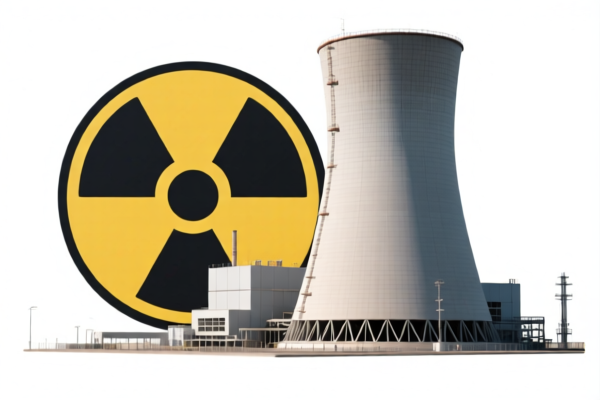
AI分析
☢️ Nuclear Reactors (and Their Parts)
🌐 HS Code Reference & Customs Clearance Guide | 2026 Latest Tariff Analysis | Professional Clearance Strategy
📌 I. Product Definition & Classification: Do You Truly Understand "Nuclear Equipment"?
Nuclear reactors represent the pinnacle of high-energy physics and industrial engineering. In international trade, they are strictly categorized into two distinct groups based on their assembly status and function:
Nuclear Reactors (The Core System): The complete assembly designed to sustain a controlled nuclear fission chain reaction. This includes the pressure vessel, core support structures, and primary containment systems.
Parts of Nuclear Reactors (Component Level): Individual components manufactured specifically for nuclear reactors, such as control rods, fuel assemblies, steam generators, or specific pressure vessels, which are not yet assembled into a complete reactor unit.
⚠️ Key Distinction Point:
- If the item is a complete, assembled system capable of sustaining a chain reaction (even if not yet fueled) → Classified under 8401.10.00.00.
- If the item is a specific component (e.g., a control rod assembly, a specific vessel part) intended for use in a nuclear reactor → Classified under 8401.40.00.00.
- Note: General industrial parts not specific to nuclear applications do not fall under this heading.
📦 II. HS Code Classification Details (2026 Latest Tariff Authority Comparison)
| HS Code | Product Description | Application Scenario | Assembly Status |
|---|---|---|---|
8401.10.00.00 |
Nuclear reactors | Complete reactor units, pressurized water reactors (PWR), boiling water reactors (BWR), research reactors | ✅ Complete System |
8401.40.00.00 |
Parts of nuclear reactors | Control rods, fuel assemblies, steam generators, reactor vessel components | ✅ Specific Component |
🔍 Critical Reminder:
- "Nuclear Reactors" (8401.10.00.00) applies to the whole machine. It is the primary classification for the core energy generation unit.
- "Parts of Nuclear Reactors" (8401.40.00.00) applies to spare parts or sub-assemblies exclusively designed for nuclear reactors.
- Misclassification is high-risk: Declaring a complete reactor as "parts" or vice versa can lead to severe customs penalties, delays, or seizure due to national security and non-proliferation regulations.
💰 III. 2026 Latest Tariff Rate Details (Including Surcharges & Policy Add-ons)
✅ Applicable Country: United States (US)
✅ Country of Origin: China (CN)
✅ Effective Date: 2025 November 10 onwards (including subsequent imports)
🎯 1. 8401.10.00.00 —— Nuclear Reactors
| Item | Content |
|---|---|
| Basic Tariff Rate | 0.0% (ad valorem) |
| Section 301 Surcharge | 0.0% |
| IEEPA Surcharge | 0.0% |
| Total Tax Rate | 0.0% |
| Tax Calculation | CIF Value × 0.0% = $0 |
| De Minimis Eligibility | ❌ Not Applicable (High-value capital goods do not qualify) |
| Legal Basis Path | HTSUS:8401.10.00.00 |
📌 Explanation:
- Unlike consumer electronics or steel products, nuclear reactors are classified under a specific chapter that currently enjoys a 0% total tariff rate for US imports from China.
- This includes both the Basic Tariff (0%) and any additional surcharges (0%).
- Zero Duty Advantage: While the tax is zero, the regulatory burden is extremely high. See Section IV for critical clearance advice.
🎯 2. 8401.40.00.00 —— Parts of Nuclear Reactors
| Item | Content |
|---|---|
| Basic Tariff Rate | 0.0% (ad valorem) |
| Section 301 Surcharge | 0.0% |
| IEEPA Surcharge | 0.0% |
| Total Tax Rate | 0.0% |
| Tax Calculation | CIF Value × 0.0% = $0 |
| De Minimis Eligibility | ❌ Not Applicable |
| Legal Basis Path | HTSUS:8401.40.00.00 |
📌 Explanation:
- Similar to the main reactor units, specific parts designated for nuclear reactors also carry a 0% total tariff rate.
- This is a strategic classification designed to facilitate the maintenance and construction of nuclear energy infrastructure.
- Zero Duty Advantage: Despite the zero tax, strict documentation is required to prove the "nuclear-specific" nature of the parts.
🛠️ IV. Customs Clearance Practical Advice (Battle-Tested Pitfall Avoidance Guide)
✅ 1. Required Documentation Checklist (None Can Be Omitted)
| Document | Mandatory | Notes |
|---|---|---|
| ✅ Detailed Product Specification | ✔️ | Must include technical parameters, energy output, type (e.g., PWR, BWR), and manufacturer details. |
| ✅ Certificate of End-Use | ✔️ | Crucial for nuclear goods. Must declare the final user and purpose (civilian/medical/research). |
| ✅ Export License/Import Permit | ✔️ | Nuclear goods are subject to strict international control (NRC, DOS, BIS). Ensure all licenses are attached. |
| ✅ Technical Drawings/Schematics | ✔️ | To prove the item is specifically a "part of a nuclear reactor" and not a generic industrial vessel. |
| ✅ Commercial Invoice | ✔️ | Must clearly state "Nuclear Reactor" or "Parts of Nuclear Reactors" and HS Code. |
| ✅ Non-Proliferation Statement | ✔️ | Certificate confirming the goods are for peaceful purposes only. |
| ✅ Packing List | ✔️ | Detailed itemization to match the invoice and specifications. |
✅ 2. Declaration Tips (Key Mantras)
🔥 "Precision in Description, Proof in Documents, Nuclear is Not Ordinary!"
| Scenario | Correct Declaration Method | Wrong Practice |
|---|---|---|
| Complete Reactor Unit | 8401.10.00.00 - "Nuclear Reactor, Model XYZ, for Power Generation" |
Vague terms like "Power Generator" or "Industrial Boiler" |
| Specific Component (e.g., Control Rod) | 8401.40.00.00 - "Parts of Nuclear Reactors: Control Rod Assembly" |
Generic terms like "Metal Rod" or "Industrial Part" |
| Generic Industrial Vessel | 8402.90.00.00 or similar |
Misdeclaring non-nuclear parts as nuclear parts to attract scrutiny or errors |
📌 Warning:
- Do not use generic terms like "Power Plant Component" without specifying "Nuclear."
- Do not attempt to split a complete reactor into "parts" to avoid licensing. This will result in immediate seizure.
- Do not forget to attach End-Use Certificates. Customs and the Department of Commerce will verify these rigorously.
✅ 3. Special Situations & Handling
| Situation | Handling Advice |
|---|---|
| Dual-Use Goods | If a part can be used in both nuclear and non-nuclear contexts, provide clear documentation that it is exclusively for nuclear use. |
| Used/Refurbished Reactors | Additional inspections and environmental certifications may be required. Declare condition clearly. |
| Research Reactors | Still classified under 8401.10.00.00. Ensure the research purpose is documented to avoid military scrutiny. |
| Transportation Hazards | Nuclear materials are dangerous goods. Ensure proper IAEA-compliant packaging and transport documentation. |
🌍 V. Global Major Market Clearance Comparison (2026 Latest)
| Country/Region | Recommended HS Code | Tariff | Certification/Approval | Notes |
|---|---|---|---|---|
| 🇺🇸 USA | 8401.10.00.00 / 8401.40.00.00 |
0% | NRC License, BIS Check, DOS License | Zero tax, but HIGH regulatory barrier. |
| 🇨🇳 China | 8401.10.00.00 / 8401.40.00.00 |
0% - 5% | CAEA (China Atomic Energy Authority) Approval | Strict import control, license required. |
| 🇪🇺 EU | 8401.10.00.00 |
Varies (0-5%) | Euratom Supply Agency, Safety Certs | Complex safety and environmental reviews. |
| 🇯🇵 Japan | 8401.10.00.00 |
0% | METI Approval, Safety Standards | High safety standards, strict inspections. |
| 🇷🇺 Russia | 8401.10.00.00 |
Varies | Rosatom License | State-controlled nuclear exports/imports. |
📌 Conclusion:
- Tariff is NOT the main challenge. The 0% tariff is a benefit.
- Regulatory Compliance is the real barrier. Nuclear goods are among the most heavily regulated items in global trade.
- USA/China/EU all have zero or low tariffs for these specific HS codes, but the licensing process is lengthy and complex.
📌 VI. Common Mistakes & Pitfall Guide (Lessons Learned)
❌ Mistake 1: Declaring a "Nuclear Reactor" as a "Industrial Boiler" or "Steam Generator"
👉 Consequence: Customs will flag it for security review. Seizure, fines, and blacklisting from future imports.
❌ Mistake 2: Omitting the End-Use Certificate
👉 Consequence: Shipment held indefinitely. Delays of months. Possible deportation.
❌ Mistake 3: Using generic part names for 8401.40.00.00
👉 Consequence: Customs cannot verify the "nuclear" nature. Rejection of declaration. Requires detailed technical proof.
❌ Mistake 4: Ignoring Dual-Use Regulations
👉 Consequence: Violation of IEEPA and BIS regulations. Criminal liability for exporters/importers.
✅ Correct Approach:
"Nuclear Reactor, Model ABC, 100 MW, Pressurized Water Type, for Commercial Power Generation, with NRC License #XYZ, End-Use Certificate Attached."
🎯 VII. Conclusion: Precision in Classification, Safety in Clearance!
🎯 Remember the Mantra:
🔹 "Zero Tax, Zero Risk? NO. Nuclear is Zero Tax, Max Scrutiny!"
🔹 "HS Code 8401 is Key, Licenses are Mandatory, Safety is Non-Negotiable!"
📌 Pro Tip:
- Always engage a customs broker with experience in high-tech/dual-use goods.
- Apply for Pre-Rulings if available in your jurisdiction to confirm classification.
- Ensure all export controls (BIS, DOS, NRC) are cleared before shipping.
📣 Immediate Action Required:
📞 Contact Nuclear Compliance Experts + Secure End-Use Certificates + Verify HS Code with Customs Broker
🚀 Ensure your nuclear equipment clears security checks smoothly, avoids delays, and reaches its destination safely and legally.
✨ Professional Clearance, from Precise Classification to Secure Delivery!
💼 In Nuclear Trade, Compliance is the Ultimate Currency.
用户评价
关于 HS 编码归类
协调制度(HS)是由世界海关组织(WCO)制定的国际贸易商品分类标准。全球 200 多个国家采用 HS 系统作为海关关税、贸易统计和进出口监管的基础。
每个 HS 编码遵循以下层级结构:
- 章(2 位)——商品大类(例如:第 84 章:机器和机械设备)
- 品目(4 位)——章内的更具体分类
- 子目(6 位)——国际通用细分,所有 WCO 成员国统一使用
- 本国细分(8-10 位)——各国自行扩展的细分编码,如美国 HTSUS 10 位编码
正确的 HS 编码归类对于顺利通关、准确缴纳关税和遵守贸易法规至关重要。错误归类可能导致海关延误、多缴关税或罚款。
从CN进口到US时,适用的关税税率可能包括:
- 最惠国(MFN)税率——适用于 WTO 成员国的标准关税税率
- 普通税率——适用于无贸易协定国家
- 贸易救济关税——附加关税,如 301 条款(反倾销)、232 条款(国家安全)或反补贴税
本页内容仅供参考。如需正式归类,请咨询当地海关或持牌报关代理。