Nylon Casual Backpack
CN → US| HS编码 | 关税税率 | 原产国 | 目的国 | 文档 |
|---|---|---|---|---|
| 4202923131 | 52.6% | CN | US | 官方文档 |
| 4202923900 | 52.6% | CN | US | 官方文档 |
商品图片
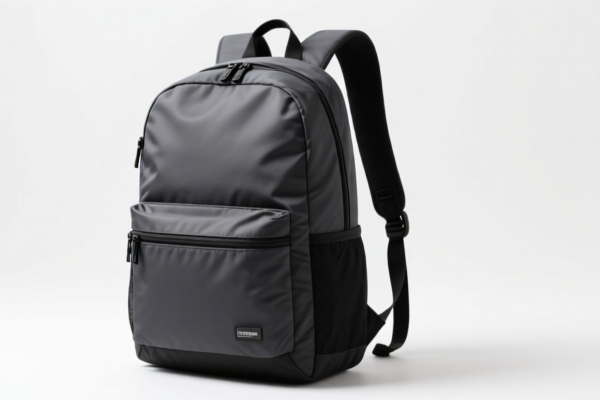
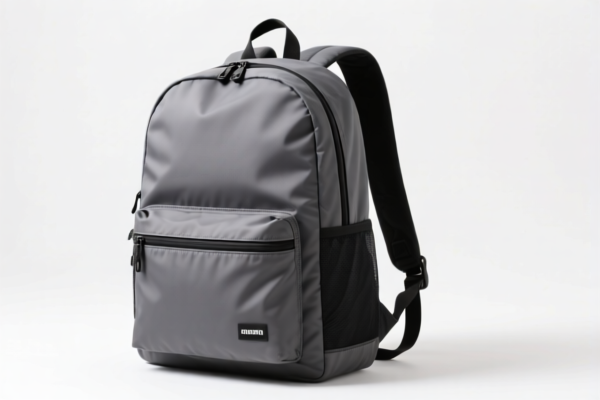

AI分析
🎒 Nylon Casual Backpack (and Outdoor/Hiking Variants)
🌐 HS Code Reference & Customs Clearance Guide | 2026 Latest Tariff Analysis | Professional Clearance Strategy
📌 1. Product Definition and Classification: Do You Really Understand "Nylon Backpacks"?
Nylon backpacks are among the most versatile and high-volume goods in the global travel and sports equipment market. In international trade, they fall under Chapter 42 (Articles of Leather; Saddle Harnesses...) but are specifically categorized under Heading 4202 (Trunks, suitcases, vanity cases, attaché cases, briefcases, school satchels...).
However, the specific HS Code depends heavily on the material composition (outer surface) and the specific subtype (casual vs. outdoor vs. hiking). For Nylon (Synthetic Textile Material) backpacks, the classification often splits between:
- 4202.92.31.20: Typically covers specific types of travel, sports, and similar bags made of synthetic fibers (like nylon/polyester), often categorized under specific sub-headings for "Other articles of leather or of composition leather or of patent leather or of plastics-coated fabric or of textile materials" with further breakdowns by material type.
- 4202.92.31.31: Often used for "Other" articles not specified in 4202.92.31.20, which can include certain nylon backpacks that do not fit the precise definition of 31.20, or where the material is classified differently under national sub-tariffs (e.g., distinguishing between woven and non-woven, or specific fiber counts).
⚠️ Key Distinction Point:
- If the nylon backpack is explicitly defined under the specific sub-heading for synthetic fiber bags (Travel/Sports) in the local tariff schedule → 4202.92.31.20
- If it falls into the "Other" category for nylon/textile bags (not specifically listed in 31.20) → 4202.92.31.31
- Note: Both codes currently attract the same total tax rate of 52.6% for Chinese-origin goods entering the US (as per the provided data), due to the combination of basic tariff and punitive tariffs.
📦 2. HS Code Classification Details (2026 Latest Tariff Authority Match)
Based on the provided dataset, here are the exact classifications for Nylon Backpacks:
| HS Code | Product Description (Summary) | Material Specification | Key Classification Notes |
|---|---|---|---|
4202.92.31.20 |
Nylon Casual Backpack | Nylon (Artificial Fiber) | Form: Backpack. Fits Travel, Sports, and Similar Bag Characteristics. |
4202.92.31.31 |
Nylon Casual Backpack | Nylon (Artificial Fiber Textile Material) | Form: Backpack. Classified under "Other" categories. |
4202.92.31.20 |
Nylon Outdoor Backpack | Nylon (Synthetic Fiber) | Use: Outdoor. Fits Travel, Sports, and Similar Bag Classification. |
4202.92.31.31 |
Nylon Outdoor Backpack | Nylon (Artificial Fiber) | Use: Travel/Sports. Classified under "Other" categories. |
4202.92.31.31 |
Nylon Hiking Backpack | Nylon (Artificial Fiber) | Use: Travel/Sports. Classified under "Other" categories. |
🔍 Critical Reminder:
- For Nylon Casual, Outdoor, and Hiking Backpacks, the dataset consistently shows two possible HS Codes:4202.92.31.20and4202.92.31.31.
- The distinction often lies in the specific national sub-classification of "synthetic fiber bags" (31.20) vs. "other textile bags" (31.31).
- Crucially, both codes carry the EXACT SAME total tax burden of 52.6% for Chinese-origin goods in this context. Therefore, while the HS Code choice matters for statistical and regulatory reporting, it does not currently affect the total duty cost in this specific dataset.
💰 3. 2026 Latest Tariff Rate Breakdown (Including Surtaxes & Policy Add-ons)
✅ Applicable Country: United States (US)
✅ Country of Origin: China (CN)
✅ Total Tax Rate: 52.6%
✅ Effective Time: Current (As per 2025/2026 tariff structures)
🎯 Universal Tariff Structure for Nylon Backpacks (All HS Codes Above)
| Tariff Component | Rate | Legal/Policy Basis |
|---|---|---|
| Basic Customs Duty | 17.6% | Standard Most-Favored-Nation (MFN) rate for bags of plastics-coated fabric or textile materials (Heading 4202). |
| Section 301 Surcharge | 25.0% | USITC Footnote 9903.88.01 / Trade Act of 1974 Section 301. Applies to goods from China. |
| Section 122 Clause (IEEPA) | 10.0% | International Emergency Economic Powers Act. Additional surcharge on Chinese imports. |
| TOTAL EFFECTIVE RATE | 52.6% | Sum of all applicable duties. |
📌 Detailed Explanation:
- Base Tax (17.6%): This is the standard WTO/MFN rate for most nylon/polyester bags under Chapter 42.
- Section 301 Tariff (25%): This is the major punitive tariff imposed by the US on a wide range of Chinese goods, including bags and luggage. It is mandatory and non-negotiable for most Chinese-origin items.
- Section 122 / IEEPA Tariff (10%): An additional layer of tariffs targeting Chinese imports, further increasing the cost.
- Total (52.6%): This is an extremely high tariff. It effectively doubles the landed cost of the product.🚫 De Minimis Exemption?:
- ❌ NOT ELIGIBLE.
- Goods valued over $800 may be subject to these tariffs if not properly classified or if exceptions do not apply. However, for large commercial shipments, the 52.6% must be paid.
- Even for small parcels, if classified correctly as subject to Section 301, they may not benefit from full de minimis exemptions depending on current CBP enforcement guidelines for "covered goods."
🛠️ 4. Customs Clearance Practical Advice (Battle-Tested Pitfall Avoidance Guide)
✅ 1. Required Documentation Checklist (Non-Negotiable)
| Document | Required? | Purpose |
|---|---|---|
| ✅ Commercial Invoice | ✔️ | Must clearly state: "Nylon Backpack," Material: "100% Nylon (Synthetic Fiber)," HS Code. |
| ✅ Packing List | ✔️ | Details weight, dimensions, and item count. |
| ✅ Product Composition Statement | ✔️ | Explicitly state: "Outer Material: Nylon (Synthetic Textile). Lining: Polyester/Cotton." Crucial for Chapter 42 classification. |
| ✅ Proof of Origin (COO) | ✔️ | Essential for determining applicability of Section 301 and 122 tariffs. |
| ✅ Product Photos | ✔️ | Show the entire backpack, including tags, material texture, and structure (e.g., number of compartments, zippers). |
| ✅ Labeling | ✔️ | Ensure "Made in China" is permanently attached and visible. |
✅ 2. Declaration Tips (Critical Mantra)
🔥 "Material is King, Origin is Queen, HS Code Must Match!"
| Scenario | Correct Declaration | Wrong Declaration | Consequence |
|---|---|---|---|
| Nylon Backpack | HS: 4202.92.31.20 or .31 |
HS: 4202.99 (Generic) |
Risk of misclassification, penalties, or retroactive duties. |
| Origin | "Made in China" | "Assembled in China" (if not accurate) | If actually made in China, declaring otherwise is fraud → Seizure + Fines. |
| Material | "Nylon (Synthetic Fiber)" | "Fabric" (Vague) | Ambiguity leads to duty reassessment or detention. |
| Use | "For Travel/Sports" | "For Military Use" | Different classification might apply, but also triggers security checks. |
✅ 3. Special Situations
| Situation | Handling Advice |
|---|---|
| Mixed Material Backpack | If the outer shell is >50% nylon by weight/area, it still falls under Chapter 42. Clearly declare the dominant material. |
| OEM / White Label | Provide the buyer's order and design specs. The origin is determined by where the substantial transformation occurred (usually China for nylon bags). |
| Samples vs. Commercial | Even samples from China are subject to these tariffs. Do not under-invoice. |
| Transshipment | Do NOT route through Vietnam/Malaysia without substantial transformation. "Rubber Stamping" origin is illegal and heavily penalized. |
🌍 5. Global Market Comparison (2026 Latest)
| Country/Region | Recommended HS Code | Est. Total Tariff (China Origin) | Notes |
|---|---|---|---|
| 🇺🇸 United States | 4202.92.31.20 / .31 |
52.6% | Highest barrier. 17.6% Base + 25% Sec 301 + 10% Sec 122. |
| 🇨🇳 China | 4202.92.31.20 / .31 |
Low (Import Duty ~10-15%) | Domestic production is common. |
| 🇪🇺 European Union | 4202.92 |
~12% | No Section 301 equivalent. Standard MFN applies. |
| 🇨🇦 Canada | 4202.92 |
~12-18% | Subject to USMCA if originating in Canada/Mexico. |
| 🇯🇵 Japan | 4202.92 |
~15% | No major punitive surcharges. |
📌 Conclusion:
- The US market is uniquely expensive for Chinese nylon backpacks due to the combination of base duties and multiple punitive tariffs.
- 52.6% is the new normal for this product category from China.
- For US-bound goods, consider supply chain diversification (e.g., manufacturing in Vietnam, Indonesia, or Bangladesh) if feasible, as many of these countries may have lower or zero tariffs (e.g., GSP benefits, though currently limited).
📌 6. Common Mistakes & Pitfall Guide (Blood-Tested Lessons)
❌ Mistake 1: Classifying Nylon Backpacks under 4202.99 (Other bags) instead of 4202.92 (Textile materials).
👉 Consequence: Incorrect duty rate, potential audit, and delays.
❌ Mistake 2: Ignoring the Section 301 surcharge.
👉 Consequence: Underpayment of 25% + 10% = 35% of CIF value → Large back-tariff bill + Interest.
❌ Mistake 3: Declaring Origin as "USA" for Chinese goods.
👉 Consequence: Fraud. Seizure of cargo, civil fines, and potential criminal liability.
❌ Mistake 4: Using vague descriptions like "Travel Bag" without material details.
👉 Consequence: Customs may downgrade classification or impose highest possible duty estimate.
✅ Correct Practice:
"Nylon Casual Backpack, 100% Nylon Outer, Polyester Lining, 20L Capacity, Model XYZ, Made in China. HS Code: 4202.92.31.20/31."
🎯 7. Conclusion: Professional Declaration, Time-Saving, Cost-Effective!
🎯 Remember the Mantra:
🔹 "Nylon Bags = Chapter 42"
🔹 "China Origin + US Import = 52.6% Total Tax"
🔹 "HS Code 4202.92.31.20 or .31 – Both cost the same!"
📌 Pro Tip:
If your backpacks are shipped from Vietnam, Indonesia, or Bangladesh (with proper documentation of substantial transformation), you may avoid the 25% Section 301 and 10% IEEPA tariffs, potentially lowering the total tax to ~12-18% (Base + Any applicable local tariffs).
Recommendation: Apply for a Binding Tariff Information (BTI) or Advance Ruling with CBP if dealing with large volumes, to confirm the exact HS Code sub-classification (20 vs. 31) for inventory accuracy.
📣 Immediate Action:
📞 Contact Your Freight Forwarder + Provide Material Specs + Verify Origin Documentation
🚀 Ensure Your Nylon Backpacks Clear US Customs Smoothly, Efficiently, and Profitably!
✨ Professional Customs Clearance Starts with Accurate Classification!
💼 Every Percentage Point of Duty Affects Your Bottom Line!
用户评价
关于 HS 编码归类
协调制度(HS)是由世界海关组织(WCO)制定的国际贸易商品分类标准。全球 200 多个国家采用 HS 系统作为海关关税、贸易统计和进出口监管的基础。
每个 HS 编码遵循以下层级结构:
- 章(2 位)——商品大类(例如:第 84 章:机器和机械设备)
- 品目(4 位)——章内的更具体分类
- 子目(6 位)——国际通用细分,所有 WCO 成员国统一使用
- 本国细分(8-10 位)——各国自行扩展的细分编码,如美国 HTSUS 10 位编码
正确的 HS 编码归类对于顺利通关、准确缴纳关税和遵守贸易法规至关重要。错误归类可能导致海关延误、多缴关税或罚款。
从CN进口到US时,适用的关税税率可能包括:
- 最惠国(MFN)税率——适用于 WTO 成员国的标准关税税率
- 普通税率——适用于无贸易协定国家
- 贸易救济关税——附加关税,如 301 条款(反倾销)、232 条款(国家安全)或反补贴税
本页内容仅供参考。如需正式归类,请咨询当地海关或持牌报关代理。