Nylon Sport Backpack
CN → US| HS编码 | 关税税率 | 原产国 | 目的国 | 文档 |
|---|---|---|---|---|
| 4202923120 | 52.6% | CN | US | 官方文档 |
| 4202923131 | 52.6% | CN | US | 官方文档 |
| 6305330080 | 25.9% | CN | US | 官方文档 |
| 3926903300 | 16.5% | CN | US | 官方文档 |
| 6305390000 | 25.9% | CN | US | 官方文档 |
商品图片
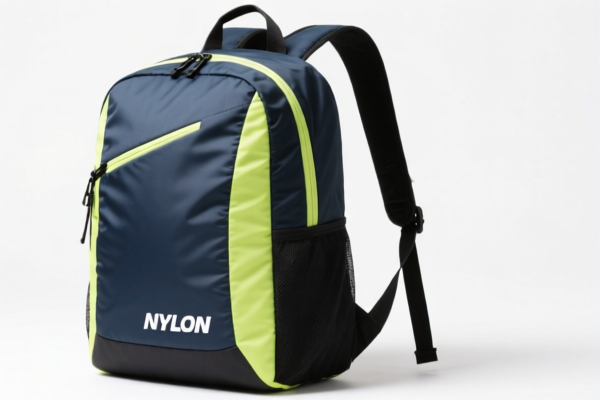
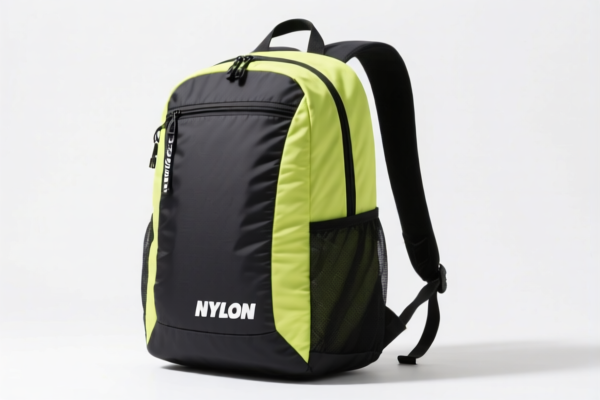
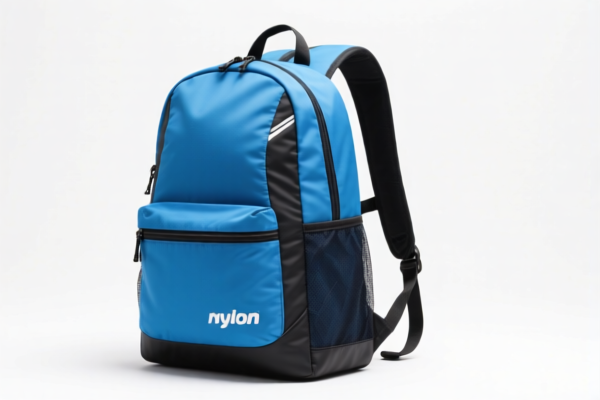
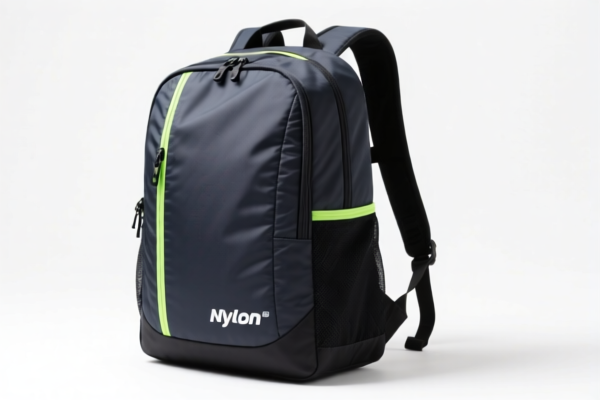
AI分析
🎒 Nylon Sport Backpack
🌐 HS Code Reference & Customs Clearance Guide | 2026 Latest Tariff Analysis | Professional Clearance Strategy
📌 I. Product Definition & Classification: What Exactly is a "Nylon Sport Backpack"?
A Nylon Sport Backpack is a versatile bag designed for outdoor travel, sports, and daily commuting. In international trade, the classification depends heavily on the material composition and specific use. While commonly referred to as "backpacks," customs authorities scrutinize the material hierarchy (Textile vs. Plastic) and specific design features to determine the correct Harmonized System (HS) code.
⚠️ Key Distinction:
- If the bag is primarily made of textile materials (even synthetic ones like nylon/polyester) and shaped like a bag → It likely falls under Chapter 42 (Articles of leather; travel goods, handbags...) or Chapter 63 (Other made-up textile articles). - If the bag is considered a plastic product due to coating or specific structural properties → It may fall under Chapter 39 (Plastics and articles thereof). - Crucial Note: The description "Nylon" typically implies a synthetic fiber. However, customs may classify it differently based on whether it is "made up" of textile materials or classified as a general "bag" of textile materials.
📦 II. HS Code Classification Details (2026 Latest Tariff Authority Match)
Based on the provided <DATA>, here are the 5 specific HS Codes relevant to Nylon Sport Backpacks, along with their tax implications for imports from China to the US (implied by the tax structure).
| HS Code | Product Description Summary | Material Focus | Primary Use Case |
|---|---|---|---|
| 4202.92.31.20 | Nylon outdoor backpack | Synthetic fiber | Outdoor travel, sports bags |
| 4202.92.31.31 | Nylon outdoor backpack | Artificial fiber textile materials | Travel, sports, and similar bag categories |
| 6305.33.00.80 | Nylon bag | Artificial textile materials | Packing or storage bags (general) |
| 3926.90.33.00 | Nylon bag | Plastic / Synthetic fiber | Plastic products / Other articles of plastic |
| 6305.39.00.00 | Nylon bag | Artificial textile materials | Bags made of artificial textile materials |
🔍 Critical Analysis:
- Chapter 42 (Codes .20 & .31): These are the most accurate classifications for "Backpacks." Chapter 42 covers "Travel goods, handbags and similar containers." The distinction between.20and.31lies in the specific textile sub-classification (Synthetic vs. Artificial).
- Chapter 63 (Codes .80 & .00): These classify items as "Other made-up textile articles." This is often used for bags that do not fit the specific "travel goods" definition of Chapter 42 or are considered general-purpose bags.
- Chapter 39 (Code .00): This is a high-risk classification. If customs determines the nylon is heavily coated or treated as a "plastic product," it may fall here. Note the significantly lower base tariff but identical "122 Clause" tariff.
💰 III. 2026 Latest Tariff Rate Breakdown (Including Surtaxes & Policy Add-ons)
✅ Applicable Country: United States (US)
✅ Origin: China (CN)
✅ Effective Time: Current rates apply (post-2025 adjustments)
🎯 1. Chapter 42 Classifications (The "Backpack" Category)
Codes: 4202.92.31.20 and 4202.92.31.31
Total Effective Tax Rate: 52.6%
| Item | Content |
|---|---|
| Base Tariff | 17.6% (Standard MFN rate for travel goods/backpacks) |
| Section 301 Surtax | +25.0% (USITC Footnote 9903.88.01 – "Trade Action against China") |
| Section 122 Tariff | +10.0% (Specific policy add-on for certain textile/apparel products) |
| Total Rate | 52.6% |
| De Minimis Exemption | ❌ Not Eligible (Value exceeds $800 threshold or specific restrictions apply) |
| Calculation | CIF Value × 52.6% |
📌 Explanation:
- These are the standard rates for sport/outdoor backpacks.
- The 25% Section 301 tariff is the largest component, reflecting US-China trade tensions.
- The 10% Section 122 tariff is a specific levy on certain textile-related imports.
🎯 2. Chapter 63 Classifications (The "General Textile Bag" Category)
Codes: 6305.33.00.80 and 6305.39.00.00
Total Effective Tax Rate: 25.9%
| Item | Content |
|---|---|
| Base Tariff | 8.4% (Standard rate for made-up textile articles) |
| Section 301 Surtax | +7.5% (Reduced Section 301 rate for some textile categories) |
| Section 122 Tariff | +10.0% (Specific policy add-on) |
| Total Rate | 25.9% |
| De Minimis Exemption | ❌ Not Eligible |
| Calculation | CIF Value × 25.9% |
📌 Explanation:
- These codes apply if the bag is classified as a general textile bag rather than a "travel good."
- The base tariff is lower (8.4% vs 17.6%), and the Section 301 surtax is lower (7.5% vs 25.0%), resulting in a significantly lower total tax burden.
- Risk: Misclassifying a backpack as a general bag to save taxes can lead to customs audits and penalties.
🎯 3. Chapter 39 Classification (The "Plastic Product" Category)
Code: 3926.90.33.00
Total Effective Tax Rate: 16.5%
| Item | Content |
|---|---|
| Base Tariff | 6.5% (Standard rate for other plastic articles) |
| Section 301 Surtax | +0.0% (Exempt or low rate for this specific sub-category) |
| Section 122 Tariff | +10.0% (Still applies) |
| Total Rate | 16.5% |
| De Minimis Exemption | ❌ Not Eligible |
| Calculation | CIF Value × 16.5% |
📌 Explanation:
- This is the lowest tax rate in the dataset.
- It applies only if the nylon bag is deemed a plastic product (e.g., heavily coated, laminated, or non-textile structure).
- Warning: This classification is highly contested. If customs determines the item is fundamentally textile, this classification will be rejected, and back taxes + penalties will apply.
🛠️ IV. Customs Clearance Practical Advice (Actionable Strategy)
✅ 1. Documentation Checklist (Non-Negotiable)
| Document | Required? | Purpose |
|---|---|---|
| ✅ Product Specification Sheet | ✔️ | Must detail material composition (e.g., "100% Nylon 6,6, Coated with PU"). |
| ✅ High-Resolution Photos | ✔️ | Show front, back, inside, labels, and zippers. Must clearly show "Nylon" texture. |
| ✅ Commercial Invoice | ✔️ | Explicitly state "Nylon Sport Backpack" and the declared HS Code. |
| ✅ Packing List | ✔️ | Include dimensions and weight. |
| ✅ Certificate of Origin (CO) | ✔️ | Prove origin as China. |
| ✅ Third-Party Lab Test Report | ✔️ | CRITICAL: Tests confirming material content (e.g., FTIR test) to support Chapter 42 vs. 39 classification. |
✅ 2. Declaration Strategy & Tips
🔥 Golden Rule:
"Material Dictates Code, Description Dictates Risk!"
| Scenario | Recommended HS Code | Risk Level | Reason |
|---|---|---|---|
| Standard Nylon Backpack | 4202.92.31.20 / .31 |
🟡 Medium | Correct classification, but high tax (52.6%). |
| Textile Bag (Non-Travel) | 6305.33.00.80 / .00 |
🟠 High | Lower tax (25.9%), but risky if deemed "Travel Good." |
| Coated/Laminated Bag | 3926.90.33.00 |
🔴 Very High | Lowest tax (16.5%), but requires strong proof of "Plastic" nature. |
💡 Pro Tip:
- If your backpack has significant plastic components (e.g., PVC windows, heavy rubber coating), consider3926.90.33.00but be prepared to defend it with lab tests.
- For standard outdoor backpacks, stick to4202.92.31.20or.31. Do not attempt to lower the tax by misclassifying as Chapter 63 unless you have legal counsel advising otherwise.
✅ 3. Special Circumstances
| Situation | Handling Advice |
|---|---|
| OEM/Private Label | Provide the client’s design spec sheet. If the design is unique, it doesn’t change the HS code but supports the "Sport/Travel" use. |
| Mixed Material (e.g., Nylon + Leather Accents) | If leather accents are negligible, it remains Textile (Ch 42/63). If leather is dominant, it may shift to Chapter 42 but with different sub-codes. |
| Samples vs. Commercial | Ensure the invoice clearly states "Commercial Shipment" if over $800 to avoid De Minimis issues. |
| Section 301 Exclusions | Check if your specific product type has any active exclusions. Most nylon backpacks do not have exclusions. |
🌍 V. Global Market Comparison (2026 Update)
| Market | Typical HS Code | Base Tariff | Additional Surtaxes | Total Effective Rate |
|---|---|---|---|---|
| 🇺🇸 USA | 4202.92.31.20 |
17.6% | +25% (301) +10% (122) | 52.6% |
| 🇨🇳 China | 4202.92.31.20 |
17.6% | None | 17.6% |
| 🇪🇺 EU | 4202.92.30 |
4.3% | None | 4.3% |
| 🇬🇧 UK | 4202.92.30 |
4.3% | None | 4.3% |
| 🇨🇦 Canada | 4202.92.30 |
4.3% | None | 4.3% |
📌 Conclusion:
- The US market is exceptionally costly for nylon backpacks due to Section 301 and Section 122 tariffs.
- EU, UK, Canada, and China have significantly lower base tariffs (4.3%-17.6%) with no punitive surtaxes.
- Strategy: If targeting the US, consider Value-Added Services (e.g., branding, unique features) to justify the 52.6% cost, or explore Third-Country Assembly (e.g., Vietnam, Mexico) to mitigate origin rules, though this requires careful supply chain management.
📌 VI. Common Mistakes & Pitfalls (Lessons Learned)
❌ Mistake 1: Declaring "Backpack" but using HS Code for "Handbag"
👉 Consequence: Customs may reclassify, leading to higher duties or seizure.
❌ Mistake 2: Ignoring Section 122 Tariff
👉 Consequence: Unexpected 10% charge on top of the already high 301 tariff.
❌ Mistake 3: Claiming "Plastic" classification for Textile Bags
👉 Consequence: Rejection of entry, fines, and potential fraud allegations if lab tests prove textile content.
❌ Mistake 4: Using "General Bag" description for "Sport Backpack"
👉 Consequence: Customs may argue it’s a travel good (Ch 42) with higher tax, leading to back-taxes.
✅ Correct Approach:
"Accurate Material Disclosure + Precise HS Code + Robust Supporting Documentation"
🎯 VII. Conclusion: Smart Classification, Smarter Savings
🎯 Key Takeaway:
🔹 Nylon Backpacks are heavily taxed in the US (52.6%).
🔹 Chapter 42 is the standard, but Chapter 63/39 offer lower rates if legitimately applicable.
🔹 Documentation is King: Lab tests and clear product descriptions are your best defense against customs disputes.
📌 Action Item:
📞 Consult a Customs Broker before shipping.
📄 Request an Advance Ruling from US CBP if the classification is ambiguous.
🚀 Optimize your supply chain to balance cost, speed, and tariff compliance.
✨ Professional Clearance, Start with Precision!
💼 Your bottom line depends on the first line of your declaration!
用户评价
关于 HS 编码归类
协调制度(HS)是由世界海关组织(WCO)制定的国际贸易商品分类标准。全球 200 多个国家采用 HS 系统作为海关关税、贸易统计和进出口监管的基础。
每个 HS 编码遵循以下层级结构:
- 章(2 位)——商品大类(例如:第 84 章:机器和机械设备)
- 品目(4 位)——章内的更具体分类
- 子目(6 位)——国际通用细分,所有 WCO 成员国统一使用
- 本国细分(8-10 位)——各国自行扩展的细分编码,如美国 HTSUS 10 位编码
正确的 HS 编码归类对于顺利通关、准确缴纳关税和遵守贸易法规至关重要。错误归类可能导致海关延误、多缴关税或罚款。
从CN进口到US时,适用的关税税率可能包括:
- 最惠国(MFN)税率——适用于 WTO 成员国的标准关税税率
- 普通税率——适用于无贸易协定国家
- 贸易救济关税——附加关税,如 301 条款(反倾销)、232 条款(国家安全)或反补贴税
本页内容仅供参考。如需正式归类,请咨询当地海关或持牌报关代理。