Oil Painting Filter Paper
CN → US| HS编码 | 关税税率 | 原产国 | 目的国 | 文档 |
|---|---|---|---|---|
| 4823201000 | 35.0% | CN | US | 官方文档 |
| 8421290065 | 35.0% | CN | US | 官方文档 |
| 8421990180 | 35.0% | CN | US | 官方文档 |
| 4823209000 | 35.0% | CN | US | 官方文档 |
| 3926909989 | 22.8% | CN | US | 官方文档 |
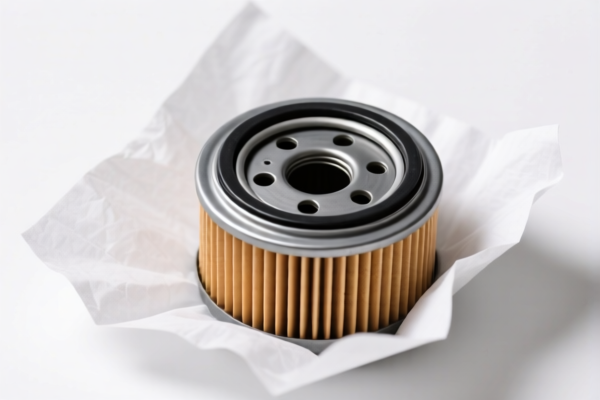
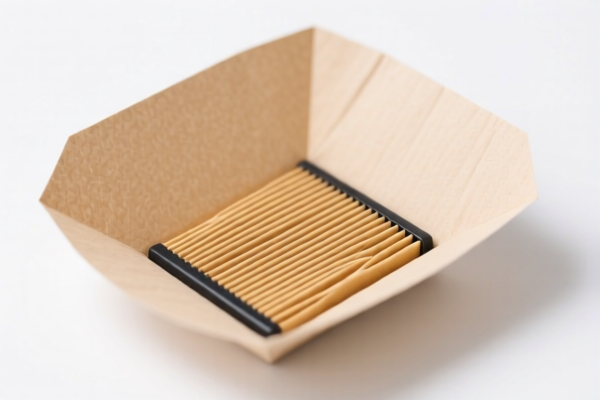
商品图片
AI分析
🎨 Oil Painting Filter Paper: The Ultimate Customs & Tax Guide (2026 Edition)
🌐 HS Code Reference & Clearance Guide | 2026 Latest Tariff Analysis | Professional Clearance Strategy
📌 I. Product Definition & Classification: What Exactly is "Oil Painting Filter Paper"?
Oil Painting Filter Paper is a specialized consumable material used in painting, primarily for filtering impurities, pigments, or solvents. It can be made from paper, cellulose, fiber, or composite plastic materials. In international trade, its classification depends heavily on the material composition and specific usage scenario.
⚠️ Key Distinction Point:
- If it is raw paper/filter material without mechanical assembly → Classified under Chapter 48 (Paper & Paperboard) or Chapter 84 (Machinery Parts).
- If it is a plastic-based filter medium for cosmetic/industrial use → Classified under Chapter 39 (Plastics).
- ⚠️ CRITICAL WARNING: Regardless of the HS Code, all these categories face heavy US tariffs (35% total) due to Section 301 and Section 122 penalties.
📦 II. HS Code Classification Details (2026 Latest Tariff Authority Comparison)
| HS Code | Product Description | Application Scenario | Material/Structure | Total Tax Rate |
|---|---|---|---|---|
4823.20.10.00 |
Paint filter paper, matched with paint filter use and filter paper material | Painting consumables, studio filters | Paper/Cellulose | 35.0% |
8421.29.00.65 |
Liquid filter medium, oil paint filter paper as liquid filter consumable | Industrial/Professional liquid filtration | Paper/Fiber based | 35.0% |
8421.99.01.80 |
Parts of other filtering machinery/appliances, paper/fiber type for filtration | Replacement parts for filter machines | Paper/Fiber based | 35.0% |
4823.20.90.00 |
Filter paper and paperboard, paper products conforming to filter paper use | General paper-based filtration | Paper/Board | 35.0% |
3926.90.99.89 |
Other plastic and other material products, reference classification for cosmetic filter paper | Cosmetic/Industrial plastic filters | Plastic/Composite | 22.8% |
🔍 Key Reminder:
- Papers & Fibers (4823, 8421): These are the most common classifications for traditional "Oil Painting Filter Paper." They are treated as Paper products or Machine Parts.
- Plastics (3926): Only applicable if the filter paper is explicitly plastic-based (e.g., synthetic mesh or coated plastic paper) and used for cosmetic/industrial purposes. Avoid this if it's traditional paper.
💰 III. 2026 Latest Tariff Rate Details (Including Surcharges, Policy Add-ons)
✅ Applicable Country: United States (US)
✅ Origin: China (CN)
✅ Effective Date: Post-November 2025 (Current Active Tariffs)
🎯 1. 4823.20.10.00 & 4823.20.90.00 —— Paper-Based Filter Paper
| Item | Content |
|---|---|
| Base Tariff | 0.0% (ad valorem) |
| Section 301 Additional Tariff | +25.0% (USITC Footnote) |
| Section 122 Tariff | +10.0% (Trade remedy/Specific clause) |
| Total Tariff Rate | 35.0% |
| Tax Calculation | CIF Value × 35% |
| De Minimis Exemption? | ❌ NO (deny_de_minimis applies) |
| Legal Basis Path | Section 301: 8523... → Section 122: 9903... → USITC:4823.20.10.00 |
📌 Explanation:
- Base Tariff is 0%: Paper products often have low base duties.
- Section 301 (25%): The primary "Trade War" tariff on Chinese goods.
- Section 122 (10%): An additional duty applied to specific imports, often overlapping with Section 301.
- Total 35%: This is a high tariff category. Do not underestimate it.
🎯 2. 8421.29.00.65 & 8421.99.01.80 —— Liquid Filter Medium / Machine Parts
| Item | Content |
|---|---|
| Base Tariff | 0.0% |
| Section 301 Additional Tariff | +25.0% |
| Section 122 Tariff | +10.0% |
| Total Tariff Rate | 35.0% |
| Tax Calculation | CIF Value × 35% |
| De Minimis Exemption? | ❌ NO |
| Legal Basis Path | Section 301: Machinery/Parts → Section 122 → USITC:8421... |
📌 Note:
- Even though these are "Machine Parts," they are often classified under Chapter 84.
- They still attract the full 35% tariff because the material (paper/fiber) and origin (China) trigger both Section 301 and Section 122.
🎯 3. 3926.90.99.89 —— Plastic/Other Material Filter (Cosmetic Reference)
| Item | Content |
|---|---|
| Base Tariff | 5.3% |
| Section 301 Additional Tariff | +7.5% |
| Section 122 Tariff | +10.0% |
| Total Tariff Rate | 22.8% |
| Tax Calculation | CIF Value × 22.8% |
| De Minimis Exemption? | ❌ NO |
| Legal Basis Path | Section 301: Plastics → Section 122 → USITC:3926... |
📌 Advantage:
- If your product is plastic-based, the total tariff is 22.8%, which is 12.2% lower than paper-based filters.
- ⚠️ However: Misclassification is a serious offense. Only use this if the product is technically a plastic filter, not traditional paper.
🛠️ IV. Clearance Practical Advice (Real-World Pitfall Avoidance Guide)
✅ 1. Preparation Checklist (Non-negotiable)
| Document | Required | Explanation |
|---|---|---|
| ✅ Product Specifications | ✔️ | Must specify: Material (Paper/Plastic), Size, Filtration Precision, Use Case (Paint/Cosmetic) |
| ✅ Material Composition Report | ✔️ | Crucial for distinguishing between 4823 (Paper) and 3926 (Plastic) |
| ✅ Product Photos (Clear Label) | ✔️ | Show packaging, material texture, and intended use |
| ✅ Commercial Invoice | ✔️ | Must explicitly state "Oil Painting Filter Paper" or "Liquid Filter Medium" |
| ✅ Packing List | ✔️ | Detail weight and quantity |
✅ 2. Declaration Tips (Key Mantra)
🔥 "Material Determines Code, Code Determines Tax! Don't Guess, Specify!"
| Scenario | Correct Declaration | Wrong Action |
|---|---|---|
| Traditional Paper Filter | 4823.20.10.00 or 8421.29.00.65 |
Use 3926 → Customs Audit Risk |
| Plastic/Synthetic Filter | 3926.90.99.89 |
Use 4823 → Overpay Tax (22.8% vs 35%) |
| Mixed Package (Paper + Plastic) | Declare separately by HS Code | Mix in one line → Confusion & Delay |
| "Filter Paper" vague description | Specify "Cellulose-based" or "Polyester-based" | Write "Filter Paper" only → Customs Reclassification |
✅ 3. Special Handling
| Scenario | Handling Advice |
|---|---|
| OEM Custom Filters | Provide design specs to prove material type (Paper vs Plastic) |
| Small Batch Samples | Still subject to 35% (or 22.8%) tax; no de minimis exemption for CN origin |
| Used/Recycled Paper | May face additional sanitary inspections; ensure it's new filter paper |
🌍 V. Global Market Clearance Comparison (2026 Latest)
| Country/Region | Recommended HS Code | Tariff (CN Origin) | Certification | Notes |
|---|---|---|---|---|
| 🇺🇸 USA | 4823.20.10.00 / 3926.90.99.89 |
35% (Paper) / 22.8% (Plastic) | None specific | Highest Tax Burden |
| 🇨🇳 China | 4823.20.10.00 |
5% | None | Low tax, easy entry |
| 🇪🇺 EU | 4823.20 |
6.5% | REACH (if chemical treated) | Moderate tax |
| 🇬🇧 UK | 4823.20 |
6.5% | UKCA | Moderate tax |
| 🇯🇵 Japan | 4823.20 |
0-8% | None | Low tax |
📌 Conclusion:
- USA is the only market with punitive 35% tariffs on paper filters.
- Plastic filters (3926) save 12.2% in the US, but misclassification risks fines.
- Consider supply chain diversification (e.g., sourcing from Vietnam/Thailand) for US exports to avoid Section 301/122 tariffs.
📌 VI. Common Mistakes & Pitfall Guide (Blood & Tears Lessons)
❌ Mistake 1: Declaring Plastic Filters as Paper (4823)
👉 Consequence: Overpay 12.2% tax.
💡 Solution: Verify material composition. If it's synthetic, use 3926.
❌ Mistake 2: Declaring Paper Filters as Plastic (3926)
👉 Consequence: Customs Penalty + Back Taxes + Legal Risk.
💡 Solution: Do not misclassify. Paper is Paper.
❌ Mistake 3: Using "Filter Paper" without specifying material
👉 Consequence: Customs Reassignment → Delay + Additional Duty.
💡 Solution: Always specify "Cellulose" or "Polyester" in description.
❌ Mistake 4: Assuming De Minimis ($800) applies
👉 Consequence: Full Tax Charged on small shipments.
💡 Solution: Budget for 35% tax on ALL CN-origin shipments.
✅ Correct Practice:
"Oil Painting Filter Paper, 100% Cellulose, 50 sheets/box, for removing impurities from oil paints, Model XYZ"
OR
"Synthetic Filter Disc, Polyester Material, for Cosmetic Filtration, Model ABC"
🎯 VII. Conclusion: Professional Declaration, Save Money, Avoid Risks!
🎯 Remember the Mantra:
🔹 "Paper = 35%, Plastic = 22.8%, Misclassify = Fine!"
🔹 "Specify Material, Avoid Penalty, Clear Fast, Sleep Well!"
📌 Pro Tip:
If your filter paper is originally from Vietnam, Mexico, Thailand, or Malaysia, you may apply for IEEPA Exemption or Tariff Preference, reducing tax to 0%~5%.
For high-volume shipments, consider Advance Ruling (Pre-classification) from US Customs to ensure correct HS Code.
📣 Immediate Action:
📞 Contact a professional customs broker + Provide Material Specs + Apply for Pre-classification
🚀 Let your filter paper clear smoothly, reduce costs, and boost profits!
✨ Professional Clearance Starts with Accurate Classification!
💼 Every cent of cost deserves precise calculation!
用户评价
关于 HS 编码归类
协调制度(HS)是由世界海关组织(WCO)制定的国际贸易商品分类标准。全球 200 多个国家采用 HS 系统作为海关关税、贸易统计和进出口监管的基础。
每个 HS 编码遵循以下层级结构:
- 章(2 位)——商品大类(例如:第 84 章:机器和机械设备)
- 品目(4 位)——章内的更具体分类
- 子目(6 位)——国际通用细分,所有 WCO 成员国统一使用
- 本国细分(8-10 位)——各国自行扩展的细分编码,如美国 HTSUS 10 位编码
正确的 HS 编码归类对于顺利通关、准确缴纳关税和遵守贸易法规至关重要。错误归类可能导致海关延误、多缴关税或罚款。
从CN进口到US时,适用的关税税率可能包括:
- 最惠国(MFN)税率——适用于 WTO 成员国的标准关税税率
- 普通税率——适用于无贸易协定国家
- 贸易救济关税——附加关税,如 301 条款(反倾销)、232 条款(国家安全)或反补贴税
本页内容仅供参考。如需正式归类,请咨询当地海关或持牌报关代理。