Organic Casting Curing Agent
CN → US| HS编码 | 关税税率 | 原产国 | 目的国 | 文档 |
|---|---|---|---|---|
| 3814005090 | 41.0% | CN | US | 官方文档 |
| 3209100000 | 40.1% | CN | US | 官方文档 |
| 3824999397 | 40.0% | CN | US | 官方文档 |
| 3209900000 | 40.9% | CN | US | 官方文档 |
商品图片
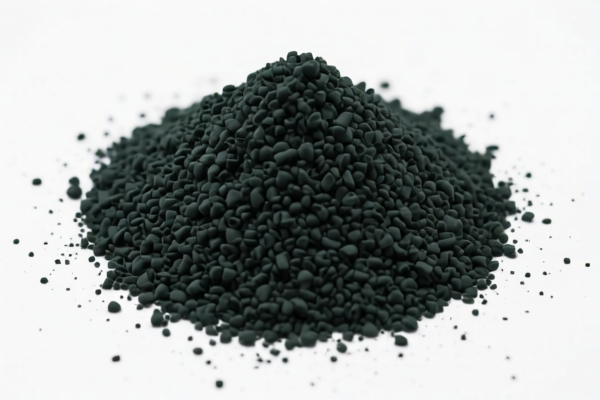
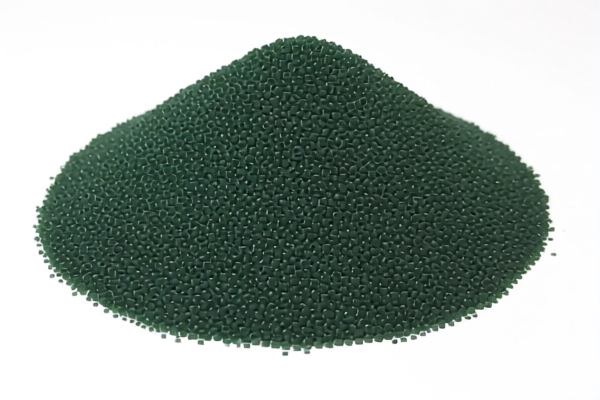
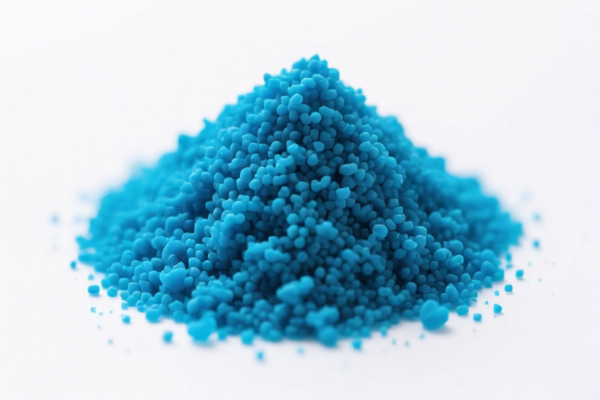
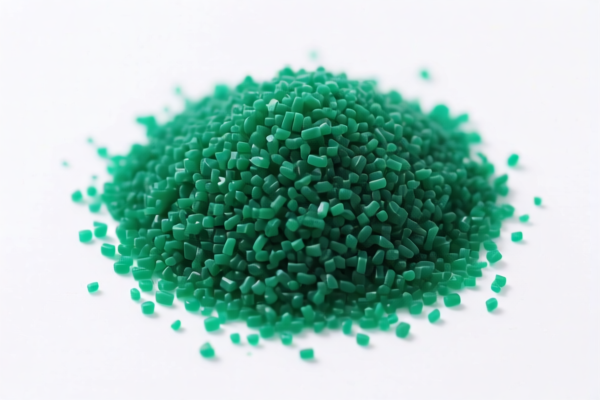
AI分析
🧪 Organic Casting Curing Agent (Chemical Synthesis Agent)
🌐 HS Code Reference & Customs Clearance Guide | 2026 Latest Tariff Analysis | Professional Strategy for US Imports
📌 I. Product Definition & Classification: What is an "Organic Casting Curing Agent"?
An Organic Casting Curing Agent is a chemical substance used in industrial processes, particularly in polymer chemistry, resin manufacturing, and composite materials. It acts as a hardener or cross-linking agent that facilitates the transformation of liquid resins or polymers into solid, durable structures.
In international trade, its classification depends heavily on its chemical composition and primary function: * As a Solvent/Diluent: If primarily used to adjust viscosity or serve as a carrier for the curing process. * As a Paint/Varnish Component: If mixed directly into coatings to form the final film structure. * As a General Chemical Product: If it’s a specialized intermediate for chemical synthesis that doesn’t fit neatly into coatings or solvents.
⚠️ Critical Distinction:
- Is it a ready-to-use coating base? → Likely Chapter 32.
- Is it a chemical intermediate/solvent for further synthesis? → Likely Chapter 38.
📦 II. HS Code Classification Details (2026 Latest Tariff Authority)
Based on the provided data, here are the four most relevant HS Codes for "Organic Casting Curing Agents," ranked by logical fit and tax implications.
| HS Code | Product Description & Logic | Applicable Scenario | Primary Classification Basis |
|---|---|---|---|
| 3814.00.50.90 | Organic composite solvents & diluters based on hardener use | Used as a solvent/diluent to facilitate the casting/curing process; organic chemical synthesis origin | Organic Composite Solvent/Diluter |
| 3209.10.00.00 | Polymer-based paints/varnishes (chemical modified polymers) | If the agent is a core component of a polymer-based coating or varnish system | Polymer-based Paint/Varnish |
| 3824.99.93.97 | Chemical products/preparations for the chemical industry (Catch-all) | Specialized chemical intermediate not fitting specific coating/solvent categories | Other Chemical Product/Preparation |
| 3209.90.00.00 | Paints/varnishes based on synthetic polymers or chemically modified natural polymers | If specifically formulated as a resin modifier or synthetic polymer additive for coatings | Synthetic Polymer Paint/Resin Modifier |
🔍 Key Insight:
- The classification hinges on whether the product is viewed as a standalone chemical intermediate (Chapter 38) or a finished coating component (Chapter 32).
- 3814.00.50.90 is often the most defensible if the agent’s primary role is to act as a solvent/diluent carrier for organic synthesis.
- 3209.10.00.00 applies if the curing agent is integral to a paint/varnish formulation that results in a polymer film.
💰 III. 2026 Latest Tariff Rate Breakdown (Including Surtaxes & Policy Add-ons)
✅ Applicable Country: United States (US)
✅ Country of Origin: China (CN)
✅ Effective Date: Ongoing (Section 301 & IEEPA tariffs active)
All four HS Codes listed below are subject to the same surtax structure due to their origin in China. Here is the detailed tax breakdown:
🎯 1. 3814.00.50.90 — Organic Composite Solvent/Diluter
| Item | Detail |
|---|---|
| Base Duty Rate | 6.0% |
| Section 301 Surtax | +25.0% |
| IEEPA Surtax (122 Clause) | +10.0% |
| Total Tax Rate | 41.0% |
| Tax Calculation | CIF Value × 41.0% |
| De Minimis Exemption | ❌ Not Eligible (High tax rate excludes $800 de minimis benefit for many brokers) |
| Legal Basis Path | USITC:3814.00.50.90 → SECTION301:25% → IEEPA:10% |
📌 Explanation:
- This code is categorized as an organic composite solvent. The 6% base rate is moderate, but the 35% total surcharge (25% Section 301 + 10% IEEPA) makes it expensive.
- Risk: If customs determine this is a chemical preparation (not a solvent), they may reclassify it to 3209 or 3824, potentially changing the base rate slightly but keeping the total high.
🎯 2. 3209.10.00.00 — Polymer-based Paints/Varnishes
| Item | Detail |
|---|---|
| Base Duty Rate | 5.1% |
| Section 301 Surtax | +25.0% |
| IEEPA Surtax (122 Clause) | +10.0% |
| Total Tax Rate | 40.1% |
| Tax Calculation | CIF Value × 40.1% |
| De Minimis Exemption | ❌ Not Eligible |
| Legal Basis Path | USITC:3209.10.00.00 → SECTION301:25% → IEEPA:10% |
📌 Explanation:
- This code applies if the curing agent is considered a "chemical modified polymer" component of a paint or varnish.
- Savings: Slightly lower total tax (40.1% vs. 41.0%) due to a lower base rate (5.1% vs. 6.0%).
- Condition: Must prove it’s used in coating applications.
🎯 3. 3824.99.93.97 — Other Chemical Products/Preparations
| Item | Detail |
|---|---|
| Base Duty Rate | 5.0% |
| Section 301 Surtax | +25.0% |
| IEEPA Surtax (122 Clause) | +10.0% |
| Total Tax Rate | 40.0% |
| Tax Calculation | CIF Value × 40.0% |
| De Minimis Exemption | ❌ Not Eligible |
| Legal Basis Path | USITC:3824.99.93.97 → SECTION301:25% → IEEPA:10% |
📌 Explanation:
- This is the "catch-all" category for chemical products not specified elsewhere.
- Lowest Total Tax: 40.0% (Base 5.0% + 35% surcharges).
- Strategy: Use this if the product is a specialized chemical intermediate with no clear paint/solvent application. However, it requires strong technical justification to avoid being reclassified into Chapter 32.
🎯 4. 3209.90.00.00 — Other Paints/Varnishes (Synthetic Polymer Based)
| Item | Detail |
|---|---|
| Base Duty Rate | 5.9% |
| Section 301 Surtax | +25.0% |
| IEEPA Surtax (122 Clause) | +10.0% |
| Total Tax Rate | 40.9% |
| Tax Calculation | CIF Value × 40.9% |
| De Minimis Exemption | ❌ Not Eligible |
| Legal Basis Path | USITC:3209.90.00.00 → SECTION301:25% → IEEPA:10% |
📌 Explanation:
- This code covers paints/varnishes based on synthetic polymers or chemically modified natural polymers that don’t fall under 3209.10.
- Higher Base Rate: The 5.9% base rate makes the total 40.9%, slightly higher than 3209.10.
- Use Case: When the curing agent is a synthetic resin modifier.
🛠️ IV. Customs Clearance Practical Advice (Real-World Pitfall Guide)
✅ 1. Documentation Checklist (Non-Negotiable)
| Document | Required? | Purpose |
|---|---|---|
| ✅ Technical Data Sheet (TDS) | ✔️ | Proves chemical composition and intended use (solvent vs. coating component). |
| ✅ Safety Data Sheet (SDS) | ✔️ | Shows hazardous properties, flash point, and chemical nature (critical for Chapter 38 vs 32). |
| ✅ Certificate of Analysis (CoA) | ✔️ | Verifies purity and concentration of the organic curing agent. |
| ✅ Bill of Lading | ✔️ | Must match the declared HS Code and product name precisely. |
| ✅ Commercial Invoice | ✔️ | Must clearly state "Organic Chemical Curing Agent" or "Resin Hardener," NOT generic "Chemicals." |
| ✅ Form E (if applicable) | ❌ | Not needed for US-China trade (no FTA), but keep for record-keeping. |
✅ 2. Declaration Strategy (Key Rules)
🔥 “Describe Precisely, Justify Logically, Avoid Ambiguity!”
| Scenario | Correct Declaration | Wrong Practice |
|---|---|---|
| Primary use is solvent/diluent | 3814.00.50.90 — "Organic Composite Solvent for Chemical Synthesis" |
Calling it "Paint Additive" → 3209 classification risk |
| Primary use is resin curing in coatings | 3209.10.00.00 — "Polymer-based Varnish Component" |
Calling it "General Chemical" → 3824 risk |
| Specialized chemical intermediate | 3824.99.93.97 — "Chemical Intermediate for Industrial Synthesis" |
Vague "Curing Agent" → High audit risk |
| Mixed use (Solvent + Resin) | 3814.00.50.90 (if solvent role dominates) |
Arbitrary selection → Customs reclassification |
✅ 3. Special Handling Tips
| Situation | Recommendation |
|---|---|
| Hazardous Material | Ensure proper IMDG/DOT labeling. Some curing agents are corrosive or flammable. |
| New Product Introduction | Apply for a Pre-Ruling (Prelinary Determination) from CBP to lock in the HS Code before shipment. |
| Origin Declaration | Clearly state "Made in China" to trigger correct 301/IEEPA surcharges and avoid penalties for misdeclaration. |
| Value Declaration | Ensure CIF value includes all costs (freight, insurance, loading) to avoid valuation disputes. |
🌍 V. Global Market Comparison (2026 Update)
| Market | Recommended HS Code | Est. Total Duty (China Origin) | Key Requirement |
|---|---|---|---|
| 🇺🇸 USA | 3814.00.50.90 / 3209.10.00.00 |
40.0% - 41.0% | SDS, TDS, 301/IEEPA surtax |
| 🇨🇳 China | 3814.00.50.90 / 3209.10.00.00 |
~0% - 5% (Import Duty) | No Section 301/IEEPA |
| 🇪🇺 EU | 3824.99.93 / 3209.90.00 |
~0% - 6.5% | REACH Registration, CLP Labeling |
| 🇯🇵 Japan | 3824.99.93 / 3209.90.00 |
~5.0% - 8.0% | JIS Standards, Industrial Safety |
📌 Conclusion:
- USA is the most costly market due to 35% in surtaxes (25% Section 301 + 10% IEEPA).
- EU & Japan do not impose these specific surtaxes, but have stricter chemical registration requirements (REACH, JITL).
- Strategy: If targeting the US, optimize HS Code selection to minimize the base rate (aim for 3824 or 3209.10 if justifiable) and prepare thorough technical documentation to prevent reclassification.
📌 VI. Common Mistakes & Pitfall Guide (Lessons Learned)
❌ Mistake 1: Declaring "Curing Agent" generically
👉 Result: CBP reclassifies to highest duty rate or requires additional info → Delay & Storage Fees
❌ Mistake 2: Using 3814 for a product that is clearly a paint component
👉 Result: Customs rejects the code, forces change to 3209, and applies penalties for misdeclaration.
❌ Mistake 3: Ignoring the IEEPA 10% surtax
👉 Result: Underpayment of duties → Audits, Fines, and Potential Import Ban
❌ Mistake 4: Providing incomplete SDS
👉 Result: Customs cannot verify chemical nature → Seizure or Return
✅ Correct Approach:
"Organic Curing Agent for Polymer Resin, CAS No. XXXXXXX, Used as Solvent/Intermediate, SDS Attached, Made in China"
🎯 VII. Conclusion: Smart Classification, Cost Control, Smooth Clearance
🎯 Remember the Key Principles:
🔹 "Solvent Role = 3814 (41%) | Paint Component = 3209 (40.1-40.9%) | Chemical Intermediate = 3824 (40.0%)"
🔹 "Documentation is King: TDS + SDS = Accurate Classification"
🔹 "Surcharge is Fixed: 35% is unavoidable for China-origin goods in the US"
📌 Pro Tip:
If your curing agent is not made in China (e.g., Vietnam, Thailand, Germany), you can avoid the 301/IEEPA surcharges, reducing total duty to 5-8%.
Consider supply chain diversification if US tariffs are unsustainable.
📣 Immediate Action:
📞 Consult a Customs Broker + Submit SDS/TDS + Apply for CBP Pre-Ruling
🚀 Ensure Your Organic Curing Agent clears customs smoothly, avoids penalties, and protects your margins!
✨ Professional Customs Clearance Starts with Precise Classification!
💼 Every Percent of Duty Counts – Optimize Your Strategy Today!
用户评价
关于 HS 编码归类
协调制度(HS)是由世界海关组织(WCO)制定的国际贸易商品分类标准。全球 200 多个国家采用 HS 系统作为海关关税、贸易统计和进出口监管的基础。
每个 HS 编码遵循以下层级结构:
- 章(2 位)——商品大类(例如:第 84 章:机器和机械设备)
- 品目(4 位)——章内的更具体分类
- 子目(6 位)——国际通用细分,所有 WCO 成员国统一使用
- 本国细分(8-10 位)——各国自行扩展的细分编码,如美国 HTSUS 10 位编码
正确的 HS 编码归类对于顺利通关、准确缴纳关税和遵守贸易法规至关重要。错误归类可能导致海关延误、多缴关税或罚款。
从CN进口到US时,适用的关税税率可能包括:
- 最惠国(MFN)税率——适用于 WTO 成员国的标准关税税率
- 普通税率——适用于无贸易协定国家
- 贸易救济关税——附加关税,如 301 条款(反倾销)、232 条款(国家安全)或反补贴税
本页内容仅供参考。如需正式归类,请咨询当地海关或持牌报关代理。