Organic Solvent for Paint
CN → US| HS编码 | 关税税率 | 原产国 | 目的国 | 文档 |
|---|---|---|---|---|
| 3814002000 | 41.5% | CN | US | 官方文档 |
| 3210000000 | 36.8% | CN | US | 官方文档 |
| 3814001000 | 41.5% | CN | US | 官方文档 |
| 3208100000 | 38.7% | CN | US | 官方文档 |
| 3208900000 | 38.2% | CN | US | 官方文档 |
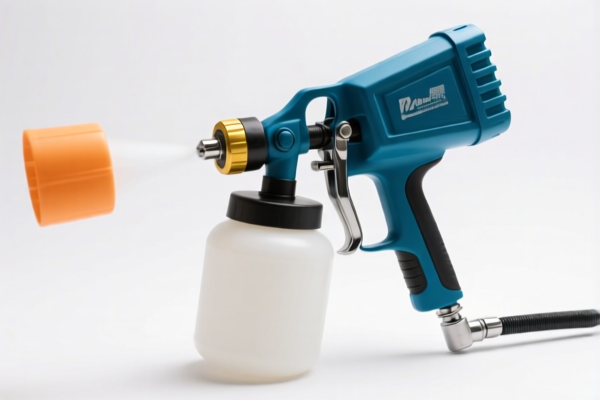
商品图片


AI分析
🎨 Organic Solvent for Paint: HS Code Classification & US Customs Clearance Guide (2026)
🌐 HS Code Reference & Customs Clearance Guide | 2026 Latest Tariff Analysis | Professional-Level Compliance Strategy
📌 I. Product Definition & Classification: Do You Really Understand "Organic Solvent for Paint"?
Organic solvents for paint are critical chemical components used in industrial coatings, automotive refinishing, and architectural painting. In international trade, they are not a single monolithic category but are classified based on their chemical composition, primary function, and formulation.
Key Distinctions: * Paint Thinners/Reducers (HS 3814): Specifically formulated to reduce viscosity or clean equipment; often mixtures of aliphatic/aromatic hydrocarbons, esters, and ketones. * Paints/Varnishes in Solution (HS 3208/3210): If the solvent is the primary medium for dissolving resins/pigments and forms a liquid coating itself, it may be classified under Chapter 32. * Specialized Preparations: Mixtures with specific additives for removing old paint or enhancing adhesion.
⚠️ Critical Distinction Point:
- If the product is pure solvent or a simple mixture intended to thin or clean → Typically Chapter 38 (Miscellaneous Chemical Products).
- If the product is a liquid coating system (resin + solvent + pigment) ready to apply → Typically Chapter 32 (Tanning or Dye Extracts; Pigments; Paints and Varnishes).
- Misclassification Risk: Declaring a ready-to-use paint as a "solvent" to avoid higher duties is a major red flag for CBP (U.S. Customs and Border Protection).
📦 II. HS Code Classification Details (2026 Latest Tariff Authority Comparison)
Based on the provided dataset, the following HS Codes apply to "Organic Solvent for Paint" products. Note that the classification hinges on the specific use and chemical nature described in the summary.
| HS Code | Product Description (Summary) | Application Scenario | Chemical/Functional Nature |
|---|---|---|---|
3814.00.20.00 |
Organic solvent for paint, matching organic composite solvent materials and mixing for paints or paint strippers | Industrial thinning, composite solvent blending, paint removal agents | Composite solvent mixture for thinning or stripping |
3814.00.10.00 |
Organic solvent for paint, matching organic composite solvents and paint or varnish removers | Paint/Varish removal, cleaner formulation | Specific for paint/varnish removal (stripping) |
3210.00.00.00 |
Organic solvent for paint, matching paints, varnishes, and tinting paints material scope | Liquid coating application, varnishing, tinting base | Classified as a paint/varnish product itself |
3208.10.00.00 |
Organic solvent for paint, matching paints/varnishes dispersed or dissolved in non-aqueous media | Solvent-based paints, lacquers in non-water bases | Paint/varnish in non-aqueous dispersion/dissolution |
3208.90.00.00 |
Organic solvent for paint, matching paints and varnishes use and non-aqueous medium chemical properties | General solvent-based coating systems, specialty varnishes | General non-aqueous paint/varnish category |
🔍 Key Insight:
- HS 3814 codes are for solvents/cleaners (thinners, strippers).
- HS 32xx codes are for coatings themselves (paints, varnishes) where the solvent is part of the final formulated product.
- Do not mix these categories. A "paint thinner" (3814) is legally and tariff-wise different from a "solvent-based paint" (3208/3210).
💰 III. 2026 Latest Tariff Rate Breakdown (Including Surtaxes, Policy Add-ons)
✅ Applicable Country: United States (US)
✅ Origin: China (CN)
✅ Effective Date: 2025/2026 (Current enforcement period)
✅ Scope: All HS Codes listed above are subject to US trade remedies.
🎯 1. Chapter 38: Miscellaneous Chemical Products (3814.00.10.00, 3814.00.20.00)
These codes fall under Section XVI Notes, but specifically targeted by trade remedies.
| Item | Content |
|---|---|
| Base Tariff Rate | 6.5% (ad valorem) |
| Section 301 Surtax | +25% (China-specific duty, Footnote 9903.88.01) |
| IEEPA Surtax | +10% (Against China/HK, effective Nov 10, 2025) |
| Total Tax Rate | 41.5% |
| Tax Calculation | CIF Value × 41.5% |
| De Minimis Eligibility | ❌ No (denied for China-origin goods) |
| Legal Basis Path | IEEPA:9903.01.25 → IEEPA:9903.01.24 → USITC:3814 → FOOTNOTE:9903.88.01 |
📌 Explanation:
- 6.5% is the standard MFN rate for paint thinners/chemical preparations.
- 25% is the punitive tariff under Section 301 for Chinese chemical exports.
- 10% is the additional IEEPA tariff targeting Chinese-origin goods.
- Total: 41.5% is a very high cost for chemical solvents. Importers must plan accordingly.
🎯 2. Chapter 32: Paints & Varnishes (3210.00.00.00, 3208.10.00.00, 3208.90.00.00)
These codes represent formulated paints/varnishes rather than pure solvents.
| HS Code | Product | Base Rate | Surtax (301) | IEEPA (10%) | Total Rate |
|---|---|---|---|---|---|
3210.00.00.00 |
Paints, varnishes, tinting paints | 1.8% | +25% | +10% | 36.8% |
3208.10.00.00 |
Paints in non-aqueous medium (dispersed/dissolved) | 3.7% | +25% | +10% | 38.7% |
3208.90.00.00 |
Other paints/varnishes in non-aqueous medium | 3.2% | +25% | +10% | 38.2% |
📌 Explanation:
- Base rates are lower (1.8%–3.7%) compared to solvents because paints are considered end-products with higher value-added.
- However, the 25% Section 301 and 10% IEEPA surcharges are uniformly applied to these Chinese-origin goods.
- Total rates range from 36.8% to 38.7%, still significant but slightly lower than pure solvents (41.5%).
🛠️ IV. Customs Clearance Practical Advice (Real-World Pitfall Avoidance)
✅ 1. Documentation Checklist (Non-negotiable)
| Document | Must Provide | Description |
|---|---|---|
| ✅ Product Specification Sheet | ✔️ | Detailed chemical composition (CAS numbers), percentage of volatile organic compounds (VOC), flash point. |
| ✅ Safety Data Sheet (SDS) | ✔️ | Crucial for hazardous material classification. Must align with HS code description (e.g., "paint" vs. "cleaner"). |
| ✅ Product Photos | ✔️ | Clear images of label, container, and usage context. |
| ✅ Commercial Invoice | ✔️ | Must explicitly state "Organic Solvent for Paint" or "Paint/Varish" – never vague terms like "Liquid Chemical". |
| ✅ Certificate of Origin (CO) | ✔️ | To prove origin (China) and apply correct surcharges. |
| ✅ Customs Bond | ✔️ | Required for all commercial imports into the US. |
✅ 2. Declaration Techniques (Key Mnemonics)
🔥 "Function Defines Code, Composition Defines Tax!"
| Scenario | Correct Declaration | Incorrect Practice | Consequence |
|---|---|---|---|
| Paint Thinner/Cleaner | HS 3814.xx.xx.xx |
Declare as "Paint" → HS 32xx | Under-declaration: Penalty + Back Taxes |
| Ready-to-Use Paint | HS 3208.xx.xx.xx / 3210.xx.xx.xx |
Declare as "Solvent" → HS 3814 | Over-declaration: Delayed release, audit |
| Composite Solvent Mix | HS 3814.00.20.00 |
Declare as "Pure Chemical" | Misclassification risk if additives present |
| Varnish/Stripping Agent | HS 3814.00.10.00 |
Generic "Chemical Liquid" | CBP may reclassify based on SDS |
📌 Critical Tip:
- The SDS Section 1 (Product Identification) must match the declared HS code.
- If the product is a paint stripper, use3814.00.10.00.
- If it is a paint thinner, use3814.00.20.00.
- If it is a paint itself, use3208.10.00.00or3208.90.00.00.
✅ 3. Special Circumstances Handling
| Situation | Handling Advice |
|---|---|
| OEM/White Label Paints | Provide brand authorization and formula sheet. CBP checks if it’s a "paint" or "solvent". |
| High VOC Content | May require additional EPA/TSCA documentation. Ensure compliance with environmental laws. |
| Hazardous Material (Hazmat) | Must declare as UN Number on bill of lading and customs entry. Ensure proper packaging and placarding. |
| Transshipment via 3rd Country | High Risk! US CBP traces origin. If chemically processed in China, surcharges still apply. No duty evasion via transshipment. |
🌍 V. Global Market Customs Comparison (2026 Latest)
| Country/Region | Recommended HS Code | Tariff (China Origin) | Key Certification | Notes |
|---|---|---|---|---|
| 🇺🇸 USA | 3814.00.20.00 / 3208.10.00.00 |
36.8% – 41.5% | TSCA, SDS, Hazmat | High tariffs due to Section 301 + IEEPA. |
| 🇨🇳 China | 3814.00.00.00 / 3208.10.00.00 |
Varies (5%–10%) | CCC (if applicable) | Lower base tariffs, no US surcharges. |
| 🇪🇺 EU | 3814.00.00.00 / 3208.10.00.00 |
5%–6.5% | REACH, CLP Labeling | No US-style surcharges. REACH compliance critical. |
| 🇯🇵 Japan | 3814.00.00.00 / 3208.10.00.00 |
5%–6% | JIS Standards | Moderate tariffs. Strict chemical registration. |
📌 Conclusion:
- USA is the most expensive market for Chinese chemical products due to layered tariffs.
- Compliance costs (SDS, Hazmat, TSCA) are high in the US.
- Consider supply chain diversification if volume is high, as 40%+ duty significantly impacts margins.
📌 VI. Common Mistakes & Pitfall Guide (Lessons Learned)
❌ Mistake 1: Declaring a paint stripper as a general cleaner to avoid specific HS codes.
👉 Result: CBP may reclassify under 3814.00.10.00 with penalties for misdeclaration.
❌ Mistake 2: Using vague terms like "Chemical Liquid" or "Solvent" without specifying function.
👉 Result: Customs holds shipment for 15–30 days to request SDS and proof of use.
❌ Mistake 3: Ignoring Hazmat Declaration for solvent-based products.
👉 Result: Shipping refusal, fines, or dangerous cargo rejection at port.
❌ Mistake 4: Assuming transshipment (e.g., via Vietnam) eliminates tariffs.
👉 Result: CBP audits trace chemical origin. If Chinese-sourced, 301/IEEPA taxes still apply.
✅ Correct Approach:
"Organic Solvent Thinner, HS 3814.00.20.00, VOC < XX%, Flammable Liquid UN 1263, For Industrial Paint Application"
🎯 VII. Conclusion: Precise Classification Saves Money!
🎯 Remember the Mnemonic:
🔹 "Solvent Cleaner → 3814 (41.5%) | Paint Varnish → 32xx (36–39%) | Vague Name → Delayed Release!"
🔹 "SDS is King, Function is Queen, Misclassification Costs 40%!"
📌 Pro Tip:
If your product is chemically processed in China but used as a component in a larger non-Chinese system, consult a trade attorney. However, for standalone solvents/paints, expect high duties.
Recommend Advance Ruling from CBP to lock in classification and avoid surprise audits.
📣 Immediate Action:
📞 Contact a licensed customs broker + Provide SDS & Formula + Apply for CBP Advance Ruling
🚀 Ensure your Organic Solvent for Paint clears customs smoothly, avoids penalties, and maximizes profit margins!
✨ Professional clearance starts with precise classification!
💼 Every percentage point in duty affects your bottom line!
用户评价
关于 HS 编码归类
协调制度(HS)是由世界海关组织(WCO)制定的国际贸易商品分类标准。全球 200 多个国家采用 HS 系统作为海关关税、贸易统计和进出口监管的基础。
每个 HS 编码遵循以下层级结构:
- 章(2 位)——商品大类(例如:第 84 章:机器和机械设备)
- 品目(4 位)——章内的更具体分类
- 子目(6 位)——国际通用细分,所有 WCO 成员国统一使用
- 本国细分(8-10 位)——各国自行扩展的细分编码,如美国 HTSUS 10 位编码
正确的 HS 编码归类对于顺利通关、准确缴纳关税和遵守贸易法规至关重要。错误归类可能导致海关延误、多缴关税或罚款。
从CN进口到US时,适用的关税税率可能包括:
- 最惠国(MFN)税率——适用于 WTO 成员国的标准关税税率
- 普通税率——适用于无贸易协定国家
- 贸易救济关税——附加关税,如 301 条款(反倾销)、232 条款(国家安全)或反补贴税
本页内容仅供参考。如需正式归类,请咨询当地海关或持牌报关代理。