Organic Solvent for Polyurethane Coatings
CN → US| HS编码 | 关税税率 | 原产国 | 目的国 | 文档 |
|---|---|---|---|---|
| 3814002000 | 41.5% | CN | US | 官方文档 |
| 3210000000 | 36.8% | CN | US | 官方文档 |
| 3814001000 | 41.5% | CN | US | 官方文档 |
| 3208100000 | 38.7% | CN | US | 官方文档 |
| 3208900000 | 38.2% | CN | US | 官方文档 |
商品图片

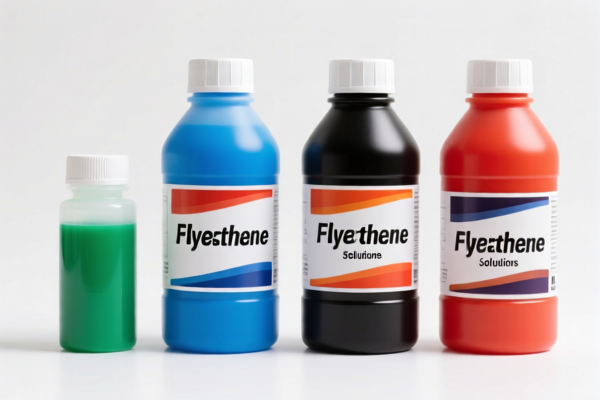
AI分析
🎨 Organic Solvent for Polyurethane Coatings
🌐 HS Code Reference & Customs Clearance Guide | 2026 Latest Tariff Analysis | Professional Clearance Strategy
📌 I. Product Definition & Classification: What Exactly Are "Organic Solvents for Coatings"?
Organic solvents for polyurethane (PU) coatings are chemical mixtures primarily used to dissolve, disperse, or dilute resin systems, paints, and varnishes. Unlike pure chemical substances (which might fall under Chapters 29 or 38 distinct headings for specific chemicals), these are typically pre-mixed industrial formulations designed for specific coating applications.
In international trade, they are classified based on their function and composition: * Pure Chemical Solvents (e.g., pure Toluene, MEK): Usually fall under Chapter 29 (Organic Chemicals). * Prepared Mixtures for Coatings/Stripping: Fall under Chapter 38 (Miscellaneous Chemical Products), specifically headings 3814 or 3208/3209 depending on whether they contain binding agents or are purely solvents.
⚠️ Key Distinction Point:
- If the product is a pure chemical substance (e.g., 99%+ purity, single component) → Likely Chapter 29.
- If it is a mixture/preparation specifically marketed for dissolving, diluting, or stripping coatings (containing two or more components or additives) → Likely Chapter 38 (3814) or Chapter 32 (3208/3210).
- Note: The data below strictly follows the provided<DATA>which categorizes these products under Chapter 38 and 32, assuming they are prepared mixtures/formulations.
📦 II. HS Code Classification Details (Based on Provided Data)
| HS Code | Product Description | Application Scenario | Tax Rate (US Import from CN) |
|---|---|---|---|
3814.00.20.00 |
Organic Solvents for Coatings; Matched with Organic Composite Solvent Materials & Functional Additives | Specific functional solvents for complex PU coating systems; contains functional additives. | 41.5% |
3210.00.00.00 |
Organic Solvents for Coatings; Matches Paints, Varnishes & Color Tinting Paints Category | Solvents used in conjunction with paints, varnishes, and colorants; may have slight binding properties. | 36.8% |
3814.00.10.00 |
Organic Solvents for Coatings; Matched with Organic Composite Solvents & Paint Remover Uses | Multipurpose solvents used as paint strippers or general diluents for composite coatings. | 41.5% |
3208.10.00.00 |
Organic Solvents for Coatings; Matches Paints/Varnishes Dispersed or Dissolved in Non-Aqueous Media | Solvents where the coating material is already dispersed/dissolved, or solvents specifically for non-aqueous mediums. | 38.7% |
3208.90.00.00 |
Organic Solvents for Coatings; Matches Paints/Varnishes Uses & Non-Aqueous Medium Nature | General non-aqueous solvent-based coatings or solvents with non-aqueous characteristics. | 38.2% |
🔍 Key Reminder:
- All these codes involve US import tariffs from China.
- The base tariff is low (1.8%-6.5%), but the Section 301 Tariff (25%) and Section 122 Tariff (10%) drastically increase the total cost.
- Total Tax Rates Range: 36.8% – 41.5%. This is a high-cost commodity for US importers.
💰 III. 2026 Latest Tariff Rate Breakdown (Including Surcharges & Policy Add-ons)
✅ Applicable Country: United States (US)
✅ Country of Origin: China (CN)
✅ Effective Time: Current (Section 301 & 122 tariffs remain active)
🎯 1. 3814.00.20.00 & 3814.00.10.00 — Organic Solvents (Composite/Functional)
| Item | Content |
|---|---|
| Base Tariff | 6.5% (Ad Valorem) |
| Section 301 Tariff | +25.0% (USITC Footnote 9903.88.03 for HS 3814) |
| Section 122 Tariff | +10.0% (Specific to certain chemical mixtures/coating solvents) |
| Total Tax Rate | 41.5% |
| Tax Calculation | CIF Value × 41.5% |
| De Minimis Exemption | ❌ Not Applicable (Deny de minimis for China-origin goods under these HS codes) |
| Legal Basis | HTSUS:3814.00.10/20 → USITC:Footnote 9903.88.03 (301) → Section 122 Statute |
📌 Explanation:
- The 25% comes from the Trade Expansion Act of 1962, Section 301, targeting Chinese goods.
- The 10% is an additional statutory tariff under Section 122 (often applied to specific chemical products or national security concerns).
- Total 41.5% is a very high barrier. Importers must carefully calculate landed costs.
🎯 2. 3210.00.00.00 — Paint/Varnish Related Solvents
| Item | Content |
|---|---|
| Base Tariff | 1.8% |
| Section 301 Tariff | +25.0% |
| Section 122 Tariff | +10.0% |
| Total Tax Rate | 36.8% |
| Tax Calculation | CIF Value × 36.8% |
| De Minimis Exemption | ❌ Not Applicable |
| Legal Basis | HTSUS:3210.00.00.00 → USITC:Footnote 9903.88.03 → Section 122 |
📌 Note:
- Slightly lower total rate due to a lower base tariff (1.8% vs 6.5%).
- However, still extremely expensive. Classification must be precise: if it’s purely a solvent, 3814 might be more accurate, but if it’s considered a "prepared paint" or closely linked to paint formulation, 3210 may be used.
🎯 3. 3208.10.00.00 & 3208.90.00.00 — Non-Aqueous Medium Paints/Solvents
| Item | Content |
|---|---|
| Base Tariff | 3.7% (for .10) / 3.2% (for .90) |
| Section 301 Tariff | +25.0% |
| Section 122 Tariff | +10.0% |
| Total Tax Rate | 38.7% (for .10) / 38.2% (for .90) |
| Tax Calculation | CIF Value × Rate |
| De Minimis Exemption | ❌ Not Applicable |
📌 Note:
- Chapter 32 products (paints, varnishes) often have lower base tariffs than Chapter 38 prepared solvents.
- Classification Risk: Customs may reclassify "pure solvents" as Chapter 38 if they don’t contain sufficient binding agents. Ensure documentation clearly states the composition.
🛠️ IV. Customs Clearance Practical Advice (Real-World Pitfall Guide)
✅ 1. Documentation Checklist (Non-Negotiable)
| Document | Required? | Notes |
|---|---|---|
| ✅ SDS (Safety Data Sheet) | ✔️ Critical | Must clearly list all components, concentrations, and hazard classes. Essential for determining correct HS Code. |
| ✅ Product Specification Sheet | ✔️ | Detail exact chemical composition. Is it a pure solvent or a mixture? |
| ✅ Commercial Invoice | ✔️ | Clearly state "Organic Solvent for Polyurethane Coatings" or similar. Avoid vague terms like "Chemical Liquid." |
| ✅ Packing List | ✔️ | Specify net/gross weight, container type (e.g., IBC, drums). |
| ✅ Origin Certificate | ✔️ | Mandatory for verifying China origin (triggers 301/122 tariffs). |
| ✅ FDA/CPSC Compliance | If Applicable | If used in consumer products, ensure no restricted substances. |
✅ 2. Declaration Tips (Key Mantras)
🔥 "Be Specific, Not Vague! Mixtures vs. Pure Chemicals Define Your Tax!"
| Scenario | Correct Declaration | Wrong Practice |
|---|---|---|
| Pure Solvent Mixture | 3814.00.10.00 or 3814.00.20.00 |
Using 2903 (Organic Halogenated Hydrocarbons) → High Risk of Rejection |
| Paint/Varnish Mix | 3210.00.00.00 or 3208.xxxx |
Misclassifying as 3814 when it has binding agents → Overpayment or Underpayment |
| Generic "Solvent" | Never use | ❌ Leads to Customs Examination, Delays, and Potential Penalties |
✅ 3. Special Circumstances
| Situation | Handling Advice |
|---|---|
| OEM/Private Label | Provide contract showing buyer/seller relationship. Ensure invoice reflects true transaction value. |
| High Purity (>99%) | Consider re-evaluating HS Code to Chapter 29 if it’s a single pure substance. Might have lower Section 301 exposure (check specific 29xx codes). |
| Non-China Origin | If sourced from Vietnam/Thailand, Section 301 (25%) may not apply, significantly reducing tax. |
| Small Quantity Samples | Still subject to tariffs if value exceeds $800 (de minimis threshold). For samples < $800, ensure proper exemption claim (but risky for commercial goods). |
🌍 V. Global Market Comparison (2026 Latest)
| Country/Region | Recommended HS Code | Tariff (Approx.) | Certification | Notes |
|---|---|---|---|---|
| 🇺🇸 USA | 3814.00.xxxx or 3210.00.00.00 |
36.8% – 41.5% | SDS, DOT Hazmat | High Tariff Zone |
| 🇨🇳 China | 3814.00 or 3210 |
5% – 10% | N/A | Low domestic tax |
| 🇪🇺 EU | 3814.00 or 3208/3210 |
4.5% – 6.5% | REACH, CLP | No Section 301/122 |
| 🇦🇺 Australia | 3814.00 |
5% | GHS Labeling | No extra surcharges |
| 🇯🇵 Japan | 3814.00 |
0% – 3% | PSSC | Competitive pricing |
📌 Conclusion:
- The USA is the most expensive market due to dual tariffs (301 + 122).
- EU and Japan offer much lower duty burdens, making them attractive alternatives if supply chain allows.
📌 VI. Common Errors & Pitfalls (Lessons Learned)
❌ Error 1: Using generic "Solvent" on the Invoice
👉 Result: Customs flags for incomplete description → Delays, Fines, Potential Seizure
❌ Error 2: Misclassifying Pure Chemicals as "Prepared Mixtures"
👉 Result: Wrong HS Code → Overpayment of Duty (if 3814 is higher than 29xx) or Underpayment (if 29xx is higher) → Penalties
❌ Error 3: Ignoring Section 122 Tariff
👉 Result: Unexpected 10% additional cost at border → Cash Flow Issues
❌ Error 4: Not Providing SDS
👉 Result: Hazardous Material rejection → Shipment Returned or Destroyed
✅ Correct Practice:
"Organic Solvent Mixture for Polyurethane Coatings, HS 3814.00.20.00, SDS Attached, Non-Hazardous Class 9 (if applicable)"
🎯 VII. Conclusion: Professional Declaration, Cost Control, Efficient Clearance!
🎯 Remember the Mantra:
🔹 "Specific HS Code, Specific Tariff, Vague Description, Big Trouble!"
🔹 "3814 is 41.5%, 3210 is 36.8%, Choose Wisely to Save Money!"
📌 Pro Tip:
If your solvent is 100% pure (e.g., Pure Methyl Ethyl Ketone), check Chapter 29 (e.g., 2914.11.00 or similar). Some Chapter 29 codes have 0% Section 301 or lower rates. Consult a customs broker to re-evaluate!
For imported mixtures from China, the 36.8%–41.5% tariff is unavoidable unless you qualify for exemptions (e.g., specific industry exclusions, though rare for solvents).
📣 Immediate Action:
📞 Engage a Licensed Customs Broker + Provide Full SDS + Verify HS Code via Advance Ruling
🚀 Ensure Smooth Clearance, Minimize Tariff Impact, Boost Profit Margins!
✨ Professional Customs Clearance Starts with Accurate Classification!
💼 Every Percent in Tariff is Real Cost!
用户评价
关于 HS 编码归类
协调制度(HS)是由世界海关组织(WCO)制定的国际贸易商品分类标准。全球 200 多个国家采用 HS 系统作为海关关税、贸易统计和进出口监管的基础。
每个 HS 编码遵循以下层级结构:
- 章(2 位)——商品大类(例如:第 84 章:机器和机械设备)
- 品目(4 位)——章内的更具体分类
- 子目(6 位)——国际通用细分,所有 WCO 成员国统一使用
- 本国细分(8-10 位)——各国自行扩展的细分编码,如美国 HTSUS 10 位编码
正确的 HS 编码归类对于顺利通关、准确缴纳关税和遵守贸易法规至关重要。错误归类可能导致海关延误、多缴关税或罚款。
从CN进口到US时,适用的关税税率可能包括:
- 最惠国(MFN)税率——适用于 WTO 成员国的标准关税税率
- 普通税率——适用于无贸易协定国家
- 贸易救济关税——附加关税,如 301 条款(反倾销)、232 条款(国家安全)或反补贴税
本页内容仅供参考。如需正式归类,请咨询当地海关或持牌报关代理。