Organic Solvents for Pesticide Preparation
CN → US| HS编码 | 关税税率 | 原产国 | 目的国 | 文档 |
|---|---|---|---|---|
| 2942000500 | 41.5% | CN | US | 官方文档 |
| 2942003500 | 41.5% | CN | US | 官方文档 |
| 3808990800 | 41.5% | CN | US | 官方文档 |
| 3808915001 | 40.0% | CN | US | 官方文档 |
| 3814001000 | 41.5% | CN | US | 官方文档 |
商品图片
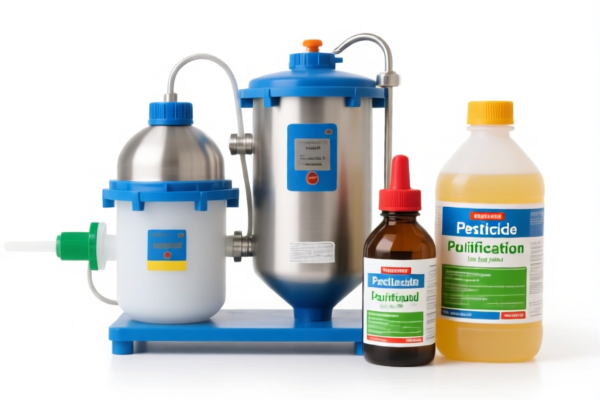
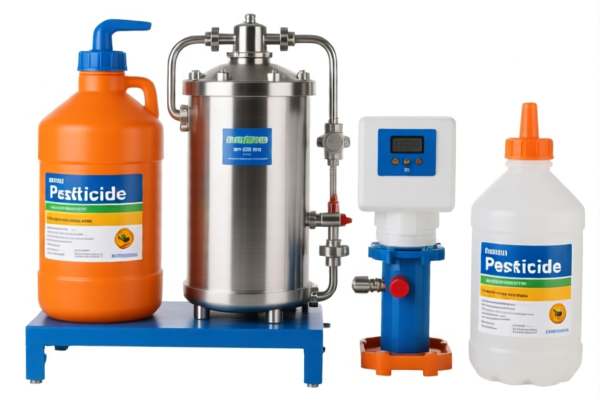
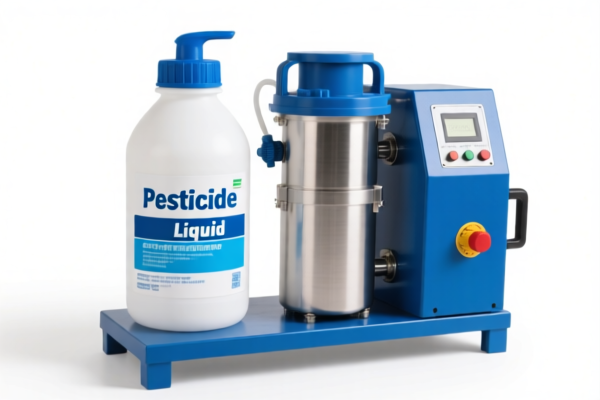
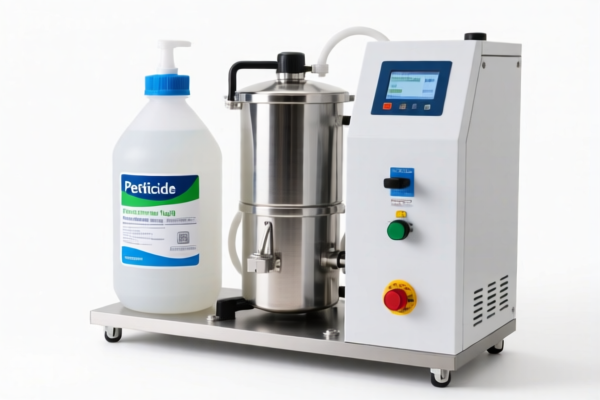
AI分析
🧪 Organic Solvents for Pesticide Preparation
🌐 HS Code Reference & Customs Clearance Guide | 2026 Latest Tariff Analysis | Professional Compliance Strategy
📌 I. Product Definition & Classification: Do You Really Understand "Organic Solvents for Pesticides"?
Organic solvents for pesticide preparation are critical chemical intermediates used to dissolve, disperse, or transport active pesticide ingredients. In international trade, they fall into a complex gray area between industrial organic chemicals and agricultural formulations. Misclassification is the #1 cause of customs delays and penalty notices.
⚠️ Critical Distinction Point:
- Is it a pure chemical compound intended as a generic solvent? → Likely Chapter 29 (Organic Chemicals).
- Is it a formulated mixture specifically designed as a carrier for insecticides/rodenticides? → Likely Chapter 38 (Insecticides, Rodenticides, Fungicides, etc.).
- Is it a multicomponent solvent blend not specifically prepared for pesticides? → Likely Chapter 38 (Preparations of Chapter 38).
📦 II. HS Code Classification Matrix (2026 Latest Tariff Authority Comparison)
| HS Code | Product Description | Application Scenario | Key Classification Logic |
|---|---|---|---|
2942.00.05.00 |
Organic Solvents (Aromatic/Modified Aromatic) | Generic aromatic solvents used in pesticide formulation but classified as generic organic compounds. | Classified under "Other Organic Compounds" due to aromatic/modified aromatic composition. |
2942.00.35.00 |
Organic Solvents (General) | General organic solvents used in pesticide prep, categorized as a "catch-all" for other organic compounds. | Classified under "Other Organic Compounds" as a residual category for generic organics. |
3808.99.08.00 |
Pesticide Formulations (Organic Solvent Based) | Pesticide preparations containing organic solvents as a carrier vehicle. | Classified under "Insecticides, Rodenticides..." due to primary function as a pesticide carrier. |
3808.91.50.01 |
Insecticide Preparations | Organic solvents explicitly formulated as components of insecticide preparations. | Classified under "Insecticides" because the solvent component aligns with insecticide formulation logic. |
3814.00.10.00 |
Organic Composite Solvents | Multi-component solvent blends named specifically as "Organic Composite Solvents." | Exact name match with classification logic for composite solvents. |
🔍 Key Reminder:
- If the product is a pure chemical with a specific IUPAC name, it often falls under Chapter 29 (2942...).
- If the product is a mixture/preparation primarily used to deliver pesticides, it often falls under Chapter 38 (3808...or3814...).
- Note: All listed HS codes below are subject to US import tariffs for goods originating from China.
💰 III. 2026 Latest Tariff Rate Breakdown (Including Surtaxes & Policy Add-ons)
✅ Applicable Country: United States (US)
✅ Country of Origin: China (CN)
✅ Effective Date: November 10, 2025 onwards (including subsequent imports)
🎯 1. 2942.00.05.00 & 2942.00.35.00 —— Generic Organic Solvents (Chapter 29)
| Item | Detail |
|---|---|
| Base Tariff Rate | 6.5% (Ad valorem) |
| Section 301 Surtax | +25.0% (USITC Footnote related to Section 301) |
| Section 122 Tariff | +10.0% (Specific provision for certain organic chemicals) |
| Total Effective Rate | 41.5% |
| Tax Calculation | CIF Value × 41.5% |
| De Minimis Exemption? | ❌ No (High risk of audit for low-value shipments) |
| Legal Basis Path | USITC:2942.00.05.00 → Section 301: +25% → Section 122: +10% |
📌 Explanation:
- These codes classify the solvent as a generic organic chemical.
- The 6.5% base rate is standard for many organic chemicals.
- However, due to trade tensions, a 25% Section 301 surtax applies.
- An additional 10% Section 122 tariff is levied on specific organic compounds.
- Total: 41.5%. This is a high-cost classification.
🎯 2. 3808.99.08.00 & 3808.91.50.01 —— Pesticide/Insecticide Preparations (Chapter 38)
| Item | Detail |
|---|---|
| Base Tariff Rate | 5.0% (for 3808.91.50.01) / 6.5% (for 3808.99.08.00*) |
| Section 301 Surtax | +25.0% (USITC Footnote related to Section 301) |
| Section 122 Tariff | +10.0% (Specific provision) |
| Total Effective Rate | 40.0% (for 3808.91.50.01) / 41.5% (for 3808.99.08.00) |
| Tax Calculation | CIF Value × Rate |
| De Minimis Exemption? | ❌ No |
| Legal Basis Path | USITC:3808.91.50.01 → Section 301: +25% → Section 122: +10% |
📌 Note:
-3808.91.50.01(Insecticides) has a slightly lower base rate (5.0%), resulting in a 40.0% total rate.
-3808.99.08.00(Other Pesticide Preparations) has a base rate of 6.5%, resulting in a 41.5% total rate.
- Classification as a "preparation" may offer a slight tariff advantage over generic chemicals in some contexts, but the surtaxes remain the same.
🎯 3. 3814.00.10.00 —— Organic Composite Solvents (Chapter 38)
| Item | Detail |
|---|---|
| Base Tariff Rate | 6.5% |
| Section 301 Surtax | +25.0% |
| Section 122 Tariff | +10.0% |
| Total Effective Rate | 41.5% |
| Tax Calculation | CIF Value × 41.5% |
| De Minimis Exemption? | ❌ No |
| Legal Basis Path | USITC:3814.00.10.00 → Section 301: +25% → Section 122: +10% |
📌 Explanation:
- This code is used when the solvent is a composite blend specifically named as such.
- It attracts the same 41.5% total rate as the generic organic chemicals.
- The key is proving the product is a "composite solvent" and not a simple mixture of pesticides.
🛠️ IV. Customs Clearance Practical Advice (Combat Avoidance Guide)
✅ 1. Document Checklist (All Must Be Provided)
| Document | Required | Explanation |
|---|---|---|
| ✅ Safety Data Sheet (SDS) | ✔️ | Must clearly state composition, CAS numbers, and primary use. |
| ✅ Formula/Composition Analysis | ✔️ | Critical for distinguishing between Chapter 29 (pure chemicals) and Chapter 38 (preparations). |
| ✅ Product Photo (Label) | ✔️ | Must show clear product name, CAS No., and warning labels. |
| ✅ Commercial Invoice | ✔️ | Must specify "Organic Solvent for Pesticide Preparation" or specific chemical name. |
| ✅ Certificate of Origin (CO) | ✔️ | Mandatory for determining Section 301 applicability. |
| ✅ Usage Declaration Letter | ✔️ | Explain if it's a carrier, a pure chemical, or a finished preparation. |
✅ 2. Declaration Techniques (Key Mantras)
🔥 “Pure Chemical = Ch29, Preparation = Ch38, Name Matters, Tax Varies!”
| Scenario | Correct Declaration | Error to Avoid |
|---|---|---|
| Generic Aromatic Solvent | 2942.00.05.00 or 2942.00.35.00 |
Calling it "Pesticide Carrier" without proof → May still be 41.5% but risk audit. |
| Formulated Insecticide Carrier | 3808.91.50.01 |
Calling it "Pure Solvent" → May result in 41.5% instead of 40.0%. |
| Multi-Component Solvent Blend | 3814.00.10.00 |
Calling it "Simple Mixture" → Misclassification risk. |
| Pure Chemical with Specific CAS | 2942... series |
Using generic "Organic Solvent" → High risk of customs inquiry. |
✅ 3. Special Cases Handling
| Situation | Handling Advice |
|---|---|
| OEM Private Label Solvents | Provide manufacturer’s formula and SDS. Do not claim it’s a "finished pesticide" if it’s just a solvent. |
| Solvents for Agricultural Use Only | If marketed exclusively for pesticides, Chapter 38 (3808...) is more appropriate, potentially saving 1.5% on base rate. |
| Solvents for Industrial Use (Non-Pesticide) | If used for paints/glues, Chapter 29 or 3814. Do not claim pesticide use if false. |
| Low-Value Samples | Even for low values, De Minimis exemption is denied for these HS codes. Declare fully. |
🌍 V. Global Market Customs Comparison (2026 Latest)
| Country/Region | Recommended HS Code | Tariff (China Origin) | Certification Required | Notes |
|---|---|---|---|---|
| 🇺🇸 USA | 2942... or 3808... |
40.0% - 41.5% | EPA TSCA + SDS | High risk of Section 301/122 surtaxes. |
| 🇨🇳 China | 2942... or 3808... |
5.0% - 6.5% | N/A | Base rate only, no surtaxes. |
| 🇪🇺 EU | 2942... or 3808... |
5.0% - 6.5% | REACH | No Section 301/122 equivalents. |
| 🇦🇺 Australia | 2942... or 3808... |
5.0% | AICIS | Moderate tariff, no surtaxes. |
| 🇯🇵 Japan | 2942... or 3808... |
5.0% - 6.5% | JIS/Practically Zero | Low tariff, strict chemical registration. |
📌 Conclusion:
- The USA imposes the highest effective tariff (40-41.5%) due to Section 301 and Section 122 add-ons.
- China, EU, Australia, and Japan do not impose these punitive surtaxes, making them cheaper markets for these goods.
- Strategy: If exporting to the US, ensure precise classification to avoid penalties, and consider cost implications in pricing.
📌 VI. Common Errors & Pitfalls (Lessons Learned)
❌ Error 1: Classifying a pesticide formulation as a generic solvent
👉 Consequence: Incorrect HS Code. Customs may reclassify to 3808, applying different scrutiny.
✅ Fix: Use 3808 codes if it’s a finished preparation/carrier.
❌ Error 2: Claiming De Minimis for low-value shipments
👉 Consequence: 41.5% tax applied retroactively + fines. De Minimis is denied for these codes.
✅ Fix: Always declare and pay taxes, no matter the value.
❌ Error 3: Vague Description: "Organic Solvent"
👉 Consequence: Customs detention for "Insufficient Info."
✅ Fix: Use specific names: "Mixture of X and Y CAS Numbers, Used as Carrier for Pesticides."
❌ Error 4: Ignoring Section 122
👉 Consequence: Underpayment by 10%.
✅ Fix: Always include Section 122 in tariff calculation for these organic chemicals.
🎯 VII. Conclusion: Precise Classification Saves Money!
🎯 Remember the Mantra:
🔹 "Pure Chemical = Ch29, Preparation = Ch38, 301 + 122 = 35% Extra, Name It Right!"
🔹 "41.5% is the US Reality, 40% is the Insecticide Sweet Spot, Declare Fully!"
📌 Pro Tip:
If your product is a composite solvent (3814.00.10.00) or insecticide preparation (3808.91.50.01), ensure your SDS and Commercial Invoice perfectly match the classification logic.
For US imports, pre-arrival consultation with a customs broker is mandatory to avoid the 41.5% shock.
📣 Take Action Now:
📞 Contact a licensed Customs Broker + Provide SDS + Apply for ISF (10+2) Filing
🚀 Ensure smooth customs clearance, avoid 41.5% penalties, and protect your margins!
✨ Professional Clearance Starts with Accurate Classification!
💼 Every percentage point of tax counts!
用户评价
关于 HS 编码归类
协调制度(HS)是由世界海关组织(WCO)制定的国际贸易商品分类标准。全球 200 多个国家采用 HS 系统作为海关关税、贸易统计和进出口监管的基础。
每个 HS 编码遵循以下层级结构:
- 章(2 位)——商品大类(例如:第 84 章:机器和机械设备)
- 品目(4 位)——章内的更具体分类
- 子目(6 位)——国际通用细分,所有 WCO 成员国统一使用
- 本国细分(8-10 位)——各国自行扩展的细分编码,如美国 HTSUS 10 位编码
正确的 HS 编码归类对于顺利通关、准确缴纳关税和遵守贸易法规至关重要。错误归类可能导致海关延误、多缴关税或罚款。
从CN进口到US时,适用的关税税率可能包括:
- 最惠国(MFN)税率——适用于 WTO 成员国的标准关税税率
- 普通税率——适用于无贸易协定国家
- 贸易救济关税——附加关税,如 301 条款(反倾销)、232 条款(国家安全)或反补贴税
本页内容仅供参考。如需正式归类,请咨询当地海关或持牌报关代理。