Other Adhesives
CN → US| HS编码 | 关税税率 | 原产国 | 目的国 | 文档 |
|---|---|---|---|---|
| 3506990000 | 37.1% | CN | US | 官方文档 |
| 3506915000 | 37.1% | CN | US | 官方文档 |
| 3824405000 | 40.0% | CN | US | 官方文档 |
| 3824100000 | 41.0% | CN | US | 官方文档 |
| 3506105000 | 37.1% | CN | US | 官方文档 |
商品图片
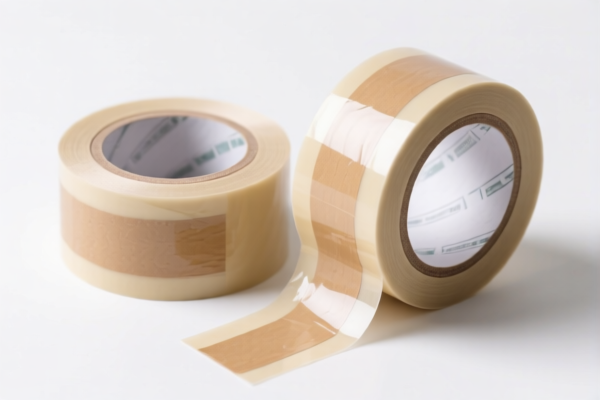


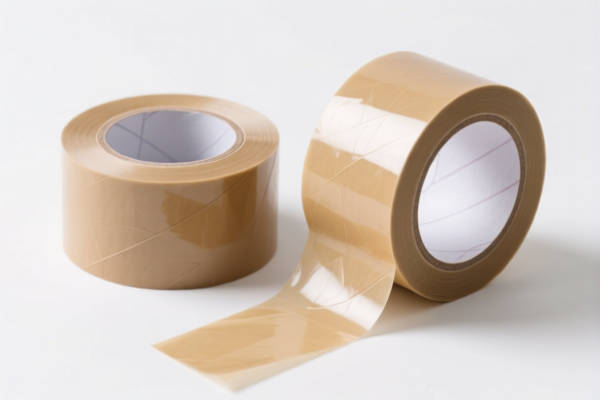
AI分析
🧪 Adhesives (Other Adhesives & Preparations)
🌐 HS Code Reference & Customs Clearance Guide | 2026 Latest Tariff Analysis | Professional Clearance Strategy
📌 I. Product Definition & Classification: Do You Really Know "Other Adhesives"?
In international trade, "Other Adhesives" is not a single, uniform category. It is an umbrella term covering prepared glues, adhesive additives, and chemical preparations that do not fall under specific primary categories (like fasteners or rubber-based tapes). Correct classification depends heavily on the chemical composition, state (liquid/paste), and primary function (binding vs. modifying).
⚠️ Key Distinction Point:
- Finished Adhesives (Glues): Products ready to bond materials directly → Generally Chapter 35.
- Additives/Preparations: Substances added to adhesives or used for surface treatment → Generally Chapter 38.
- Material Conflict: Ensure the product description does not imply rubber-based (Chapter 40) or pressure-sensitive tapes, which have different codes.
📦 II. HS Code Classification Details (2026 Latest Tariff Authority Comparison)
| HS Code | Product Description | Applicability Scenario | Key Characteristic |
|---|---|---|---|
3506.99.00.00 |
Other prepared adhesives (General Purpose/Residual) | Industrial glues, epoxy resins, polyurethane adhesives not specified elsewhere | Primary Bonding Agent |
3506.91.50.00 |
Other adhesives (General Binding Application) | Adhesives fitting general binding descriptions, no material conflict | General Binding Function |
3824.40.50.00 |
Adhesive Additives (Chemical Preparations) | Additives for adhesives, chemical agents that modify adhesive properties | Modifier/Additive |
3824.10.00.00 |
Adhesive Additives (Chemical Mixtures) | Chemical preparations used in adhesive formulation, no material/state conflict | Chemical Mixture |
3506.10.50.00 |
Adhesives (Residual/Other Category Fallback) | Adhesives meeting material/use requirements, classified under residual "other" clauses | Fallback/Other Category |
🔍 Important Reminder:
- Chapter 35 (3506): Focuses on the adhesive itself (the glue).
- Chapter 38 (3824): Focuses on preparations and additives (chemicals for the glue).
- Misclassifying an additive as a finished glue (or vice versa) can lead to incorrect tax calculations and customs delays.
💰 III. 2026 Latest Tariff Rate Details (Including Surtaxes & Policy Add-ons)
✅ Applicable Country: United States (US)
✅ Origin: China (CN)
✅ Effective Time: From November 10, 2025 (including subsequent imports)
🎯 1. 3506.99.00.00 & 3506.91.50.00 & 3506.10.50.00 —— Prepared Adhesives (Chapter 35)
| Item | Content |
|---|---|
| Base Tariff Rate | 2.1% (ad valorem) |
| Section 301 Surtax | +25.0% (USITC Footnote for Chinese Goods) |
| Section 122 Tariff | +10.0% (Specific US Import Restriction) |
| Total Tariff Rate | 37.1% |
| Tax Calculation | CIF Value × 37.1% |
| De Minimis Eligibility | ❌ Not Applicable (High value/complexity usually exceeds de minimis thresholds for this category; check specific shipment value limits) |
| Legal Basis Path | USITC:3506.99.00.00 → SECTION_301 → SECTION_122 |
📌 Explanation:
- "Base Tariff 2.1%": Standard MFN rate for prepared adhesives.
- "Section 301 Surtax 25%": The most significant cost driver for Chinese-origin adhesives.
- "Section 122 Tariff 10%": An additional specific duty applied to certain imports from China.
- Total 37.1%: This is a high-cost category. Accurate declaration is critical to avoid underpayment penalties.
🎯 2. 3824.40.50.00 —— Adhesive Additives (Chemical Preparations)
| Item | Content |
|---|---|
| Base Tariff Rate | 5.0% (ad valorem) |
| Section 301 Surtax | +25.0% |
| Section 122 Tariff | +10.0% |
| Total Tariff Rate | 40.0% |
| Tax Calculation | CIF Value × 40.0% |
| De Minimis Eligibility | ❌ Not Applicable |
| Legal Basis Path | USITC:3824.40.50.00 → SECTION_301 → SECTION_122 |
📌 Note:
- Higher base rate (5.0%) than finished glues (2.1%), but same surtaxes.
- Classification as an "additive" must be strictly justified by chemical composition and use (modifying, not bonding).
🎯 3. 3824.10.00.00 —— Adhesive Additives (Chemical Mixtures)
| Item | Content |
|---|---|
| Base Tariff Rate | 6.0% (ad valorem) |
| Section 301 Surtax | +25.0% |
| Section 122 Tariff | +10.0% |
| Total Tariff Rate | 41.0% |
| Tax Calculation | CIF Value × 41.0% |
| De Minimis Eligibility | ❌ Not Applicable |
| Legal Basis Path | USITC:3824.10.00.00 → SECTION_301 → SECTION_122 |
📌 Attention:
- This code often applies to more complex chemical preparations or mixtures.
- The highest total rate among the provided options (41.0%). Ensure the product is not simply a generic glue mislabeled as a "mixture" to avoid scrutiny.
🛠️ IV. Customs Clearance Practical Advice (Battle-Tested Pitfall Avoidance Guide)
✅ 1. Documentation Checklist (Non-negotiable)
| Document | Mandatory? | Explanation |
|---|---|---|
| ✅ Product Specification Sheet | ✔️ | Must detail chemical composition, viscosity, curing time, and primary use (binding vs. additive). |
| ✅ Safety Data Sheet (SDS) | ✔️ | Crucial for chemical classification. Confirms hazardous nature and composition. |
| ✅ Product Photos | ✔️ | Clear images of packaging, label, and product state (liquid/paste). |
| ✅ Commercial Invoice | ✔️ | Must explicitly state "Prepared Adhesive" or "Adhesive Additive", NOT just "Glue" or "Chemical". |
| ✅ Certificate of Origin (CO) | ✔️ | Required to verify Chinese origin for accurate surtax application. |
| ✅ Packing List | ✔️ | Detailed breakdown to avoid "mixed shipment" issues. |
✅ 2. Declaration Tips (Key Mantras)
🔥 “Distinguish Bonding vs. Modifying, Label Precisely, Avoid General Terms!”
| Scenario | Correct Declaration | Wrong Practice |
|---|---|---|
| Finished Glue (Epoxy/Polyurethane) | 3506.99.00.00 or 3506.91.50.00 |
Declaring as "Chemical Mixture" → 40-41% Tax |
| Additive for Glue (e.g., hardener, primer) | 3824.40.50.00 or 3824.10.00.00 |
Declaring as "Finished Adhesive" → Potential Misclassification |
| Generic "Adhesive" | Specify Type (e.g., "Industrial Epoxy Adhesive") | Using vague term "Other Adhesive" → Customs Audit/Delay |
| Adhesive + Applicator Gun | Declare Gun Separately if Significant Value | Bundling may complicate classification |
📌 Critical Note:
- If you declare3824(Additive) for a product that is primarily used for bonding, Customs may reclassify it to3506(Adhesive) and assess penalties.
- Conversely, declaring a simple additive as3506is less risky but leads to overpayment (37.1% vs 40.0% is small, but base rates differ). However, the main risk is misclassification penalties.
✅ 3. Special Situations
| Situation | Handling Advice |
|---|---|
| Custom Formulation | Provide formula sheet. If >50% is adhesive resin, lean towards Chapter 35. If <50% and primarily chemical modifier, lean towards Chapter 38. |
| Mixed Shipment | Separate HS Codes on invoice. Do not bundle under one "general" code. |
| Hazardous Materials | Ensure SDS is up-to-date. Some adhesives require UN packaging and specific hazardous cargo declarations. |
| OEM Private Label | Ensure the supplier’s MSDS/SDS is available. Customs often requests this for chemical products. |
🌍 V. Global Market Comparison (2026 Latest)
| Country/Region | Recommended HS Code | Tariff (China Origin) | Certification | Note |
|---|---|---|---|---|
| 🇺🇸 United States | 3506.99.00.00 (Glue)3824.40.50.00 (Additive) |
37.1% (Glue) 40.0% (Additive) |
SDS, TSCA | High Section 301 & 122 impact |
| 🇨🇳 China | 3506.99.00.00 |
~10-15% (Import Duty) | CIQ | Lower base rates |
| 🇪🇺 European Union | 3506.91.00 |
0-6.5% | REACH, CLP | No Section 301/122 equivalent |
| 🇯🇵 Japan | 3506.91.00 |
5-6% | JIS | Moderate tariffs |
📌 Conclusion:
- The US is the most costly market due to the cumulative effect of Base Tariff + Section 301 (25%) + Section 122 (10%).
- Chapter 38 (Additives) often has a higher base rate than Chapter 35 (Glues), but both are heavily impacted by surtaxes.
- Pre-classification is essential to avoid paying 41% when 37.1% might be applicable (or vice versa) based on precise product use.
📌 VI. Common Errors & Pitfalls (Lessons Learned the Hard Way)
❌ Error 1: Calling all chemical liquids "Adhesives" regardless of function
👉 Consequence: If it’s a primer or hardener, it should be 3824. Misclassification can lead to duty underpayment/overpayment issues.
❌ Error 2: Ignoring Section 122 Tariff
👉 Consequence: Assuming only Section 301 (25%) applies. Missing the additional 10% leads to underpayment and customs holds.
❌ Error 3: Vague Description "Glue"
👉 Consequence: Customs cannot determine if it’s 3506 or 3824. Leads to examination delay (1-3 weeks).
❌ Error 4: Mixing Additives and Finished Glues in One Line Item
👉 Consequence: Complex valuation and classification. Split them.
✅ Correct Approach:
"Prepared Industrial Epoxy Adhesive, Liquid, for Bonding Metal, Non-Hazardous, Model XYZ"
OR
"Chemical Adhesive Additive, Primer Solution, for Surface Preparation, Model ABC"
🎯 VII. Conclusion: Precise Classification, Cost Control, Smooth Clearance!
🎯 Remember the Mantra:
🔹 "Glue vs. Additive, Chapter 35 vs. 38, 37% vs. 41%, Precision Saves Money!"
🔹 "Section 301 & 122 Add Up, Don't Forget the 35% Surcharge!"
📌 Pro Tip:
If your adhesives are originating from Vietnam, Mexico, or Thailand, you may avoid Section 301 and Section 122 tariffs, significantly reducing costs to Base Rate Only (2.1%-6.0%).
Recommendation: Apply for Advance Ruling from US CBP for high-volume shipments to lock in classification and tax liability.
📣 Immediate Action:
📞 Consult with a Licensed Customs Broker + Provide SDS & Spec Sheet + Apply for Pre-Ruling
🚀 Ensure Your Adhesives Pass US Customs Smoothly, Minimize Tax Burden, Maximize Profit!
✨ Professional Clearance Starts with Accurate Classification!
💼 Every Percent of Tax Saved is Pure Profit!
用户评价
关于 HS 编码归类
协调制度(HS)是由世界海关组织(WCO)制定的国际贸易商品分类标准。全球 200 多个国家采用 HS 系统作为海关关税、贸易统计和进出口监管的基础。
每个 HS 编码遵循以下层级结构:
- 章(2 位)——商品大类(例如:第 84 章:机器和机械设备)
- 品目(4 位)——章内的更具体分类
- 子目(6 位)——国际通用细分,所有 WCO 成员国统一使用
- 本国细分(8-10 位)——各国自行扩展的细分编码,如美国 HTSUS 10 位编码
正确的 HS 编码归类对于顺利通关、准确缴纳关税和遵守贸易法规至关重要。错误归类可能导致海关延误、多缴关税或罚款。
从CN进口到US时,适用的关税税率可能包括:
- 最惠国(MFN)税率——适用于 WTO 成员国的标准关税税率
- 普通税率——适用于无贸易协定国家
- 贸易救济关税——附加关税,如 301 条款(反倾销)、232 条款(国家安全)或反补贴税
本页内容仅供参考。如需正式归类,请咨询当地海关或持牌报关代理。