Other Coniferous Logs (Unprocessed)
CN → US| HS编码 | 关税税率 | 原产国 | 目的国 | 文档 |
|---|---|---|---|---|
| 4403220165 | 35.0% | CN | US | 官方文档 |
| 4403260165 | 35.0% | CN | US | 官方文档 |
商品图片
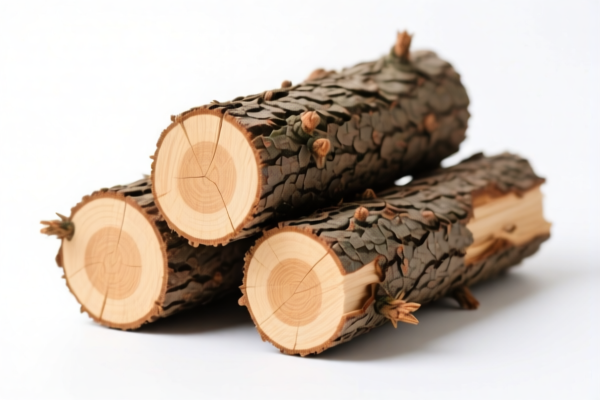
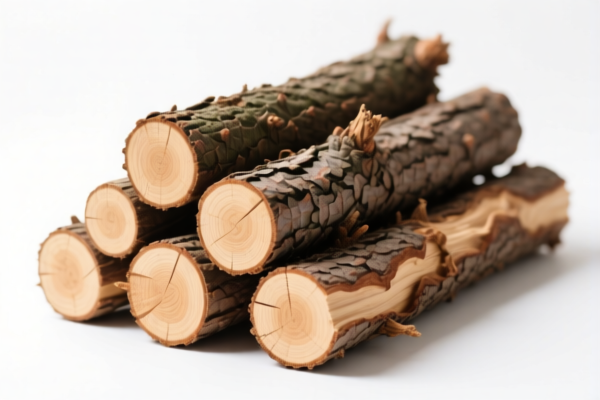
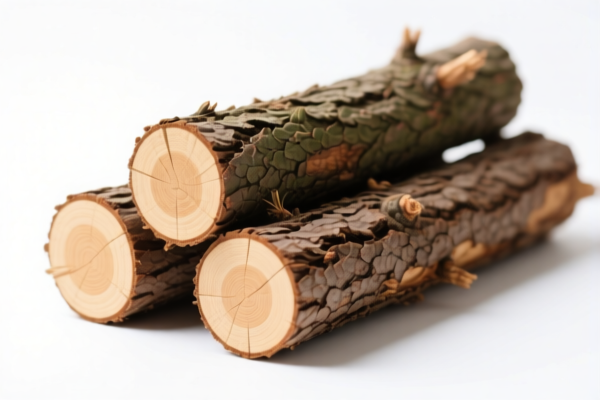
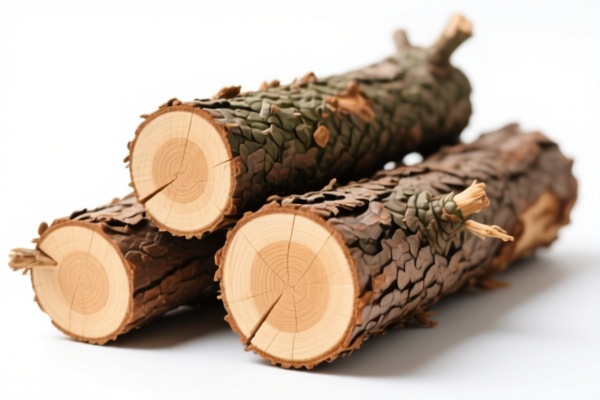
AI分析
🪵 Raw Coniferous Logs (Unprocessed Wood in the Rough)
🌐 HS Code Reference & Customs Clearance Guide | 2026 Latest Tariff Analysis | Professional Clearance Strategy
📌 I. Product Definition & Classification: What are "Raw Coniferous Logs"?
"Wood in the rough" refers to timber that has been felled but not yet processed into lumber, plywood, or other manufactured wood products. Specifically, for Coniferous Trees (softwoods like Pine, Spruce, Fir, etc.), this category includes logs that are either: 1. Stripped of bark or sapwood; OR 2. Roughly squared (cut into a square or rectangular shape, but not fully planed or sanded).
In international trade, this form of wood is the primary raw material for sawmills, paper mills, and veneer producers. It is distinct from "processed wood" which has been fully dressed, planed, or shaped into finished goods.
⚠️ Key Distinction Point:
- If the wood is squared, planed, or shaped beyond basic rough cutting → It may fall under different chapters (e.g., Chapter 44 for semi-manufactured wood).
- If the wood is non-coniferous (hardwood like Oak, Maple) → It falls under different HS codes (e.g., 4403.49).
- This guide strictly applies to CONIFEROUS logs, specifically Pine (Pinus spp.) and other softwoods.
📦 II. HS Code Classification Details (2026 Latest Tariff Authority Reference)
Based on the provided data, there are two primary HS Codes for Raw Coniferous Logs. The distinction lies in the specific sub-category of the coniferous species.
| HS Code | Product Description | Applicable Scenario | Specific Species |
|---|---|---|---|
4403.22.01.65 |
Wood in the rough, coniferous: Of Pine (Pinus spp.), other, other | Logs made specifically from Pine species that do not fall under more specific Pine sub-categories (e.g., not Southern Yellow Pine if classified separately elsewhere, or generic Pine logs). | 🌲 Pine (Pinus spp.) |
4403.26.01.65 |
Wood in the rough, coniferous: Other, other | Logs made from other coniferous species (e.g., Spruce, Fir, Larch, Hemlock, Cedar) that are not Pine. | 🌲 Other Conifers (Spruce/Fir/etc.) |
🔍 Critical Reminder:
- Both codes represent "Wood in the Rough".
- If the wood has been treated (e.g., with creosote, copper chromate arsenate, etc.), it may be classified under 4403.90, which has different tariff implications.
- "Roughly squared" is allowed. If the wood is hewn or roughly squared, it still falls under 4403, not 4407 (sawn wood).
💰 III. 2026 Latest Tariff Rate Breakdown (Including Surcharges & Policy Add-ons)
✅ Applicable Country: United States (US)
✅ Origin: China (CN) [Inferred from typical context of such high surcharges; adjust if origin is different]
✅ Effective Time: Current 2025/2026 Tariff Structure
🎯 1. 4403.22.01.65 — Pine Logs (Unprocessed)
| Item | Content |
|---|---|
| Base Tariff Rate | 0.0% (Ad Valorem) |
| Section 301 Surcharge | +25.0% |
| Total Tax Rate | 25.0% |
| Tax Calculation | CIF Value × 25% |
| De Minimis Exemption | ❌ Not Applicable |
| Legal Basis Path | USITC:4403.22.01.65 → Section 301: Footnote 9903.88.01 |
📌 Explanation:
- The 0% base rate reflects the US's general preference for raw material imports to support domestic manufacturing.
- However, the 25% Section 301 surcharge is imposed on all goods originating from China. This is a non-negotiable additional duty for Chinese-origin coniferous logs.
- Total Duty: 25%. This is a significant cost factor. If the CIF value is $100,000, the duty is $25,000.
🎯 2. 4403.26.01.65 — Other Coniferous Logs (Unprocessed)
| Item | Content |
|---|---|
| Base Tariff Rate | 0.0% (Ad Valorem) |
| Section 301 Surcharge | +25.0% |
| Total Tax Rate | 25.0% |
| Tax Calculation | CIF Value × 25% |
| De Minimis Exemption | ❌ Not Applicable |
| Legal Basis Path | USITC:4403.26.01.65 → Section 301: Footnote 9903.88.01 |
📌 Note:
- The tariff treatment for "Other Coniferous" is identical to that of Pine logs.
- Whether the log is Spruce (Picea), Fir (Abies), or Larch (Larix), if it is from China and classified as "Other Coniferous," the 25% surcharge applies.
🛠️ IV. Customs Clearance Practical Advice (Real-World Pitfall Avoidance)
✅ 1. Required Documentation Checklist (No Shortages Allowed)
| Document | Mandatory? | Description |
|---|---|---|
| ✅ Commercial Invoice | ✔️ | Must clearly state "Wood in the Rough," "Coniferous," and specific species if known (e.g., "Pine Logs"). |
| ✅ Packing List | ✔️ | Detailing volume (board feet or cubic meters), number of logs, and weight. |
| ✅ Phytosanitary Certificate | ✔️ | CRITICAL: Issued by the exporting country's plant protection agency. Proves the wood is free from pests/diseases (e.g., Emerald Ash Borer, Pine Beetle). Without this, shipment will be rejected or fumigated at port. |
| ✅ Fumigation Certificate | ✔️ | If required by US Customs and Border Protection (CBP) or USDA APHIS. Often combined with Phytosanitary Certificate. |
| ✅ Bill of Lading | ✔️ | Standard shipping document. |
| ✅ Species Identification | ✔️ | Customs may request scientific names (Pinus sylvestris, Picea abies, etc.) to verify HS Code accuracy. |
✅ 2. Declaration Tips (Key Mantras)
🔥 “Be Specific on Species, Declare ‘Rough’, Avoid ‘Sawn’!”
| Scenario | Correct Declaration | Wrong Practice | Consequence |
|---|---|---|---|
| Raw Logs | "Raw Coniferous Logs, Roughly Squared, Pine Species" | Declaring as "Sawn Lumber" | Misclassification → Penalty + Retroactive Duties |
| Treated Wood | "Creosote-Treated Coniferous Logs" | Omitting treatment info | Falls under 4403.90 (different tariff) → Audit Risk |
| Mixed Species | "Coniferous Logs, Mixed Species" | Specifying only one species | If inspected, discrepancy leads to delays |
| Origin | "Origin: China" | Hiding origin or marking as "Country X" | Customs fraud → Seizure + Heavy Fines |
📌 Note:
- Do not declare these as "Lumber" or "Sawn Wood" (HS 4407).
- Ensure the description explicitly states "Wood in the Rough" or "Logs".
- If the wood is "Roughly Squared", still use 4403. Do not use 4407 unless it is fully dressed.
✅ 3. Special Circumstances Handling
| Scenario | Handling Advice |
|---|---|
| Non-Chinese Origin (e.g., Canada, Russia) | No Section 301 Surcharge! If logs are from Canada (FTA/USMCA), duty may be 0%. Verify Certificate of Origin. |
| Treated Logs | If treated with pesticides/chemicals, HS Code changes to 4403.90. Check specific tariff for treated wood (may have additional EPA requirements). |
| Large Volume Imports | Consider applying for HTS Exclusions if available (rare for logs). Pre-clearance with USDA APHIS is recommended. |
| Pest Inspection | USDA APHIS may inspect upon arrival. Ensure wood is free of visible bark, insects, or frass (insect waste) to expedite release. |
🌍 V. Global Market Comparison (2026 Latest)
| Country/Region | Recommended HS Code | Tariff (China Origin) | Certification Requirement | Notes |
|---|---|---|---|---|
| 🇺🇸 USA | 4403.22.01.65 / 4403.26.01.65 |
25% (Section 301) | Phytosanitary + Fumigation | High duty. No USMCA benefit from China. |
| 🇨🇳 China | 4403.22 / 4403.26 |
0% - 5% | Depends on export policy | Import duty low if not strategic reserve. |
| 🇪🇺 EU | 4403.22 / 4403.26 |
0% - 3% | FSC/PEFC (if marketed as sustainable) | No Section 301 equivalent. CBAM does not apply to raw wood. |
| 🇬🇧 UK | 4403.22 / 4403.26 |
0% - 3% | FSC/PEFC | Post-Brexit tariffs similar to EU for most logs. |
| 🇯🇵 Japan | 4403.22 / 4403.26 |
0% (RCEP/JEPA benefits if applicable) | Phytosanitary | RCEP may reduce duty to 0% if originating in Japan/China with proper origin proof. |
📌 Conclusion:
- USA is the most expensive market for Chinese coniferous logs due to the 25% Section 301 tariff.
- EU/UK/Japan offer much lower or zero duties, but may have stricter sustainability certifications (FSC/PEFC) and phytosanitary checks.
📌 VI. Common Mistakes & Pitfall Guide (Lessons Learned)
❌ Mistake 1: Declaring "Sawn Lumber" when goods are "Raw Logs"
👉 Consequence: HS Code mismatch (4407 vs 4403) → Penalty + Potential duty difference + Delay.
❌ Mistake 2: Omitting "Coniferous" or specific species
👉 Consequence: Customs may assign a generic or higher-risk code → Increased scrutiny + Inspection delays.
❌ Mistake 3: Ignoring Phytosanitary Requirements
👉 Consequence: Shipment Rejected or Destroyed. USDA APHIS is strict on wood imports from China due to pest risks.
❌ Mistake 4: Assuming "Roughly Squared" makes it "Sawn Wood"
👉 Consequence: Misclassification. "Roughly squared" is still 4403 (Logs). Only fully dressed/sanded wood is 4407.
✅ Correct Practice:
"Raw Coniferous Logs, Roughly Squared, Pine Species (Pinus spp.), Origin: China, Treated with [Chemical if any], Phytosanitary Certificate Attached."
🎯 VII. Conclusion: Professional Declaration, Cost Control, and Efficiency!
🎯 Remember the Mantra:
🔹 "Logs are Rough, Lumber is Sawn, Code 4403 for Raw, 4407 for Planed."
🔹 "China Origin means 25% Surcharge, Canada Origin may be 0%."
🔹 "Phytosanitary is Key, No Certificate, No Entry!"
📌 Pro Tip:
If your logs are originating from Canada, utilize the USMCA (CUSMA) agreement to claim 0% duty.
For Chinese logs, consider supply chain diversification to countries with favorable trade agreements (e.g., Vietnam for processed wood, but for logs, Canada is the best alternative for the US market).
Always apply for a Pre-Ruling from CBP if the wood treatment status is ambiguous.
📣 Immediate Action:
📞 Contact a licensed customs broker + Provide Phytosanitary Certificate + Verify HS Code
4403.22.01.65or4403.26.01.65
🚀 Ensure your logs are pest-free, properly documented, and clearly labeled to avoid the 25% tariff trap and port delays!
✨ Professional Customs Clearance Starts with Accurate Classification!
💼 Your Cost Efficiency Depends on These Details!
用户评价
关于 HS 编码归类
协调制度(HS)是由世界海关组织(WCO)制定的国际贸易商品分类标准。全球 200 多个国家采用 HS 系统作为海关关税、贸易统计和进出口监管的基础。
每个 HS 编码遵循以下层级结构:
- 章(2 位)——商品大类(例如:第 84 章:机器和机械设备)
- 品目(4 位)——章内的更具体分类
- 子目(6 位)——国际通用细分,所有 WCO 成员国统一使用
- 本国细分(8-10 位)——各国自行扩展的细分编码,如美国 HTSUS 10 位编码
正确的 HS 编码归类对于顺利通关、准确缴纳关税和遵守贸易法规至关重要。错误归类可能导致海关延误、多缴关税或罚款。
从CN进口到US时,适用的关税税率可能包括:
- 最惠国(MFN)税率——适用于 WTO 成员国的标准关税税率
- 普通税率——适用于无贸易协定国家
- 贸易救济关税——附加关税,如 301 条款(反倾销)、232 条款(国家安全)或反补贴税
本页内容仅供参考。如需正式归类,请咨询当地海关或持牌报关代理。