Other Halogenated Olefin Copolymers, Primary Forms
CN → US商品图片
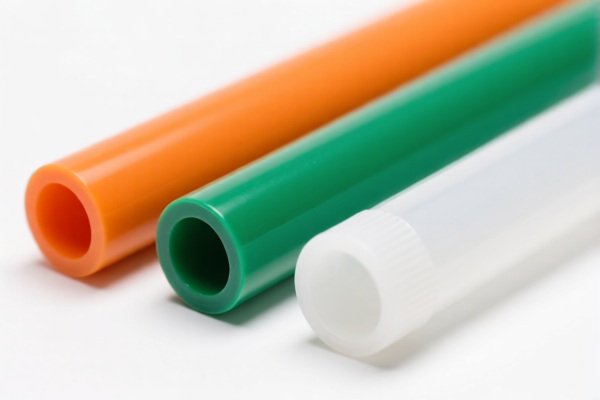

AI分析
🧪 Other Halogenated Olefin Copolymers, Primary Forms
🌐 HS Code Reference & Customs Clearance Guide | 2026 Latest Tariff Analysis | Professional Entry Strategy
📌 Part I: Product Definition & Classification: What Are "Other Halogenated Olefin Copolymers"?
Halogenated olefin copolymers are synthetic polymers derived from olefins (like ethylene or propylene) where some or all of the hydrogen atoms have been replaced by halogens (chlorine, fluorine, bromine, or iodine). The phrase "Other" in the Harmonized System (HS) classification is crucial—it typically excludes specific polymers already categorized elsewhere, such as: * Polyvinyl Chloride (PVC) – Usually classified under heading 3904. * Polytetrafluoroethylene (PTFE/Teflon) – Usually classified under heading 3904. * Polychlorotrifluoroethylene (PCTFE) – Usually classified under heading 3904.
"Other" typically includes: 1. Chlorosulfonated Polyethylene (CSPE), e.g., Hypalon®. 2. Chlorinated Polyethylene (CPE). 3. Fluorinated Ethylene Propylene (FEP) – Note: FEP is often grouped here or under 3904 depending on specific national interpretations, but generally, fluoropolymers not explicitly listed in 3904.xx go to "Other". 4. Iodinated or Brominated Olefin Copolymers (used for flame retardancy).
Primary Forms refers to: * Primary Form: Unprocessed or loosely processed materials. This includes: * Powders * Granules/Pellets * Lumps * Paste (if not yet compounded into finished articles) * In Liquid Form (if polymerizable monomers or pre-polymers are intended for further polymerization)
⚠️ Key Distinction:
- If the material is compounded with additives (fillers, stabilizers, colorants) specifically for a certain end-use (e.g., extrusion compound for pipes), it may still be considered a "primary form" if the polymer base remains identifiable.
- If it is shaped into films, sheets, profiles, or rods, it is no longer a "primary form" and would fall under different headings (e.g., 3920 or 3916-3917).
📦 Part II: HS Code Classification Details (2026 Latest Tariff Alignment)
| HS Code | Product Description | Primary Form Indicators | Application/Context |
|---|---|---|---|
3904.61.00 |
Chlorosulfonated polyethylene (CSPE) – Primary forms | Pellets, powder, lumps | Hypalon®-type elastomers; roofing, cable jacketing |
3904.69.00 |
Other halogenated olefin polymers in primary forms | Granules, powders, pastes | CPE, FEP (if not 3904.4x), brominated polymers |
3904.10 |
Excluded: PVC in primary forms | — | See heading 3904.10 |
3904.21 |
Excluded: PTFE in primary forms | — | See heading 3904.21 |
3904.41 |
Excluded: FEP (Fluorinated ethylene propylene) in primary forms | — | Note: Some countries classify FEP here. Check local nomenclature. |
🔍 Important Note for 2026:
- Heading 3904 covers "Halogenated olefin polymers in primary forms."
- The subheading3904.61is specifically for CSPE.
- Subheading3904.69captures all other halogenated olefin copolymers (like CPE, specialized fluoropolymers) in primary forms.
- If the product is a copolymer (e.g., ethylene-chlorotrifluoroethylene), it may fall under3904.69unless specifically listed.
💰 Part III: 2026 Latest Tariff Rate Breakdown (Including Surtaxes & Policy Add-ons)
✅ Applicable Country: United States (US)
✅ Country of Origin: China (CN)
✅ Effective Date: November 10, 2025 (including subsequent imports)
🎯 1. 3904.61.00.00 – Chlorosulfonated Polyethylene (CSPE) in Primary Forms
| Item | Content |
|---|---|
| Basic Duty Rate | 5.3% (ad valorem) |
| Section 301 Surtax (USITC Footnote 9903.88.01) | +25% |
| IEEPA Surcharge (China/ HK Products) | +10% (Effective Nov 10, 2025) |
| Total Effective Rate | 40.3% |
| Tax Calculation | CIF Value × 40.3% |
| De Minimis Eligibility | ❌ Not Eligible (deny_de_minimis applies to most polymer materials from China under Section 301) |
| Legal Pathway | IEEPA:9903.01.25 → IEEPA:9903.01.24 → USITC:3904.61.00.00 → FOOTNOTE:9903.88.01 |
📌 Explanation:
- CSPE is a high-performance elastomer. While the base duty is moderate, the Section 301 surcharge of 25% significantly increases costs.
- The IEEPA 10% adds further burden on Chinese-origin goods.
- Total 40.3% is a high barrier for importers.
🎯 2. 3904.69.00.00 – Other Halogenated Olefin Polymers in Primary Forms
| Item | Content |
|---|---|
| Basic Duty Rate | 5.3% (ad valorem) |
| Section 301 Surtax (USITC Footnote 9903.88.01) | +25% |
| IEEPA Surcharge (China/ HK Products) | +10% (Effective Nov 10, 2025) |
| Total Effective Rate | 40.3% |
| Tax Calculation | CIF Value × 40.3% |
| De Minimis Eligibility | ❌ Not Eligible |
| Legal Pathway | IEEPA:9903.01.25 → IEEPA:9903.01.24 → USITC:3904.69.00.00 → FOOTNOTE:9903.88.01 |
📌 Note:
- This includes Chlorinated Polyethylene (CPE), brominated olefin copolymers, and fluorinated olefins not specifically listed in 3904.4x.
- Rates are identical to CSPE due to the same Section 301 classification logic for polymer materials.
🛠️ Part IV: Practical Customs Clearance Advice (Real-World Pitfall Avoidance)
✅ 1. Required Documentation Checklist
| Document | Mandatory | Description |
|---|---|---|
| ✅ Product Specification Sheet | ✔️ | Must clearly state: Polymer type, halogen content %, monomer composition, primary form (powder/granule). |
| ✅ Technical Data Sheet (TDS) | ✔️ | Shows viscosity, melting point, and intended use. |
| ✅ Certificate of Origin (CO) | ✔️ | Essential for proving origin. If non-China, may reduce tax. |
| ✅ Commercial Invoice | ✔️ | Must explicitly state: "Halogenated Olefin Copolymer, Primary Form, HS Code 3904.69.00.00" |
| ✅ Packing List | ✔️ | Detail net/gross weight. Ensure no finished articles (sheets/films) are mixed. |
| ✅ FMEA or Safety Data Sheet (SDS) | ✔️ | Halogenated compounds may have environmental/safety regulations (EPA, TSCA). |
| ✅ Non-Mixing Declaration | ✔️ | Confirm no additives that would change classification (e.g., if heavily filled, may be considered "compound"). |
✅ 2. Declaration Tips (Key Mantra)
🔥 "Primary Form, No Shape, HS 3904, Check Halogen!"
| Scenario | Correct Declaration | Wrong Practice |
|---|---|---|
| CSPE Granules | 3904.61.00.00 |
Misclassify as generic plastic → 301 surcharge applies anyway, but wrong HS causes delays. |
| CPE Powder | 3904.69.00.00 |
Call it "rubber" → Could be misclassified under 4002, leading to different rules. |
| Fluorinated Copolymer Pellets | 3904.69.00.00 (or 3904.41 if FEP) |
Do not declare as "plastic waste" or "recycled material." |
| Compounded Pellets (with fillers) | Still 3904.xx if polymer base is dominant |
If fillers >50%, may fall under Chapter 39 Note 2 exceptions → Check local rules. |
✅ 3. Special Handling Cases
| Case | Handling Advice |
|---|---|
| OEM Branded Granules | Provide master formula agreement to prove polymer identity. Avoid vague descriptions like "industrial plastic." |
| Halogen Content >10% | May trigger EPA TSCA review or REACH (EU) compliance. Ensure environmental compliance docs are ready. |
| Mixed Shipment (Primary Form + Finished Articles) | Split shipment! Primary forms go under 3904. Finished articles (e.g., sheets) go under 3920/3916. Mixed declaration leads to seizure. |
| Origin from Vietnam/Thailand | Apply for Free Trade Agreement (FTA) benefit. Section 301 surcharge may be waived if originating rules are met. |
🌍 Part V: Global Market Comparison (2026 Latest)
| Country/Region | Recommended HS Code | Duty Rate (China Origin) | Certification Requirements | Notes |
|---|---|---|---|---|
| 🇺🇸 USA | 3904.61.00 / 3904.69.00 |
40.3% (incl. 301+IEEPA) | TSCA, EPA | High tariffs. Consider supply chain diversification. |
| 🇨🇳 China | 3904.61.00 / 3904.69.00 |
5.3% | None (Domestic) | No surtaxes. |
| 🇪🇺 EU | 3904.61.00 / 3904.69.00 |
6.5% | REACH, CLP | No US-style surtaxes. REACH registration required for high-volume halogenated polymers. |
| 🇦🇺 Australia | 3904.61.00 / 3904.69.00 |
5.0% | ACCC, EPA | Moderate tariffs. |
| 🇯🇵 Japan | 3904.61.00 / 3904.69.00 |
6.0% | PSE, JIS | No surtaxes. |
📌 Conclusion:
- The USA is the most punitive market due to Section 301 and IEEPA.
- For US-bound goods, consider shifting production to ASEAN countries (Vietnam, Thailand) to leverage FTAs and avoid 301 tariffs.
- EU, Japan, and Australia offer more favorable duty environments, making them better options if supply chain flexibility allows.
📌 Part VI: Common Mistakes & Pitfalls (Lessons Learned)
❌ Mistake 1: Declaring CSPE as "Rubber" under heading 4002
👉 Consequence: Wrong HS code → Penalty + Back taxes + Delay. CSPE is a halogenated olefin polymer, not natural or synthetic rubber in the traditional sense.
❌ Mistake 2: Ignoring "Primary Form" definition
👉 Consequence: If goods are shipped as sheets or films, they must be declared under 3920 or 3916, not 3904. Misdeclaration leads to 200%+ penalty rates.
❌ Mistake 3: Failing to disclose halogen type
👉 Consequence: Environmental agencies (EPA, EU REACH) may flag the shipment. Halogenated compounds are heavily regulated due to toxicity and persistence.
❌ Mistake 4: Assuming all fluoropolymers are 3904.41
👉 Consequence: FEP is 3904.41, but other fluorinated olefin copolymers (like ECTFE or PFA) may fall under 3904.69. Check specific chemical names.
✅ Correct Approach:
"Chlorosulfonated Polyethylene (CSPE), Primary Form, Granules, HS Code 3904.61.00.00, TSCA Compliant, Origin: China"
🎯 Part VII: Conclusion: Precise Classification Saves Money
🎯 Remember the Mantra:
🔹 "Primary Form, No Shape, Check Halogen Type, HS 3904!"
🔹 "Section 301 Hits Hard – 40.3% Total for China!"
🔹 "Split Shipments Avoid Penalties!"
📌 Pro Tip:
If your halogenated olefin copolymer is originating in Vietnam, Mexico, or Thailand, you can apply for preferential tariffs under USMCA (Mexico) or US-Vietnam FTAs. This can reduce the 40.3% rate to 0-5%.
Action: Request a Country of Origin Certificate and verify Tariff Engineering rulings for your specific chemical structure.
📣 Immediate Action:
📞 Consult a Customs Broker + Provide Chemical Structure Diagram + Apply for Advance Ruling if unsure.
🚀 Ensure your halogenated polymers clear customs smoothly, legally, and cost-effectively!
✨ Professional Customs Clearance Starts with Accurate Classification!
💼 Every Percentage Point of Duty Matters!
用户评价
关于 HS 编码归类
协调制度(HS)是由世界海关组织(WCO)制定的国际贸易商品分类标准。全球 200 多个国家采用 HS 系统作为海关关税、贸易统计和进出口监管的基础。
每个 HS 编码遵循以下层级结构:
- 章(2 位)——商品大类(例如:第 84 章:机器和机械设备)
- 品目(4 位)——章内的更具体分类
- 子目(6 位)——国际通用细分,所有 WCO 成员国统一使用
- 本国细分(8-10 位)——各国自行扩展的细分编码,如美国 HTSUS 10 位编码
正确的 HS 编码归类对于顺利通关、准确缴纳关税和遵守贸易法规至关重要。错误归类可能导致海关延误、多缴关税或罚款。
从CN进口到US时,适用的关税税率可能包括:
- 最惠国(MFN)税率——适用于 WTO 成员国的标准关税税率
- 普通税率——适用于无贸易协定国家
- 贸易救济关税——附加关税,如 301 条款(反倾销)、232 条款(国家安全)或反补贴税
本页内容仅供参考。如需正式归类,请咨询当地海关或持牌报关代理。