Other Non Coniferous Wood for Construction
CN → US| HS编码 | 关税税率 | 原产国 | 目的国 | 文档 |
|---|---|---|---|---|
| 4407990295 | 35.0% | CN | US | 官方文档 |
| 4407990242 | 35.0% | CN | US | 官方文档 |
| 4403260164 | 35.0% | CN | US | 官方文档 |
| 4401110000 | 35.0% | CN | US | 官方文档 |
| 4407190092 | 35.0% | CN | US | 官方文档 |
商品图片
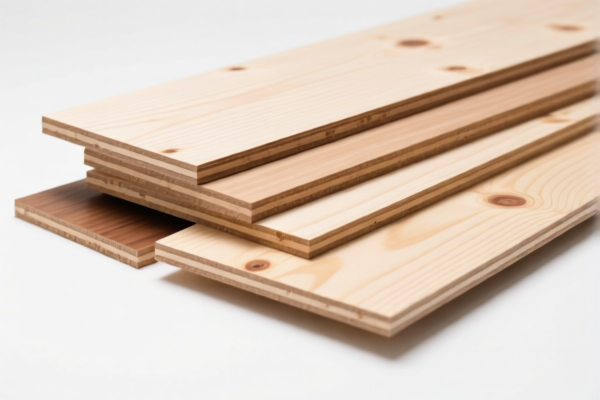
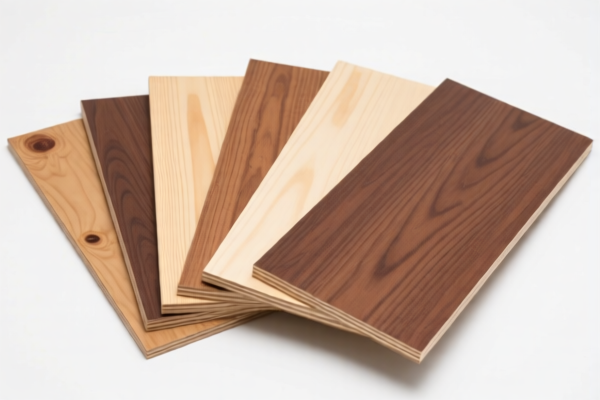
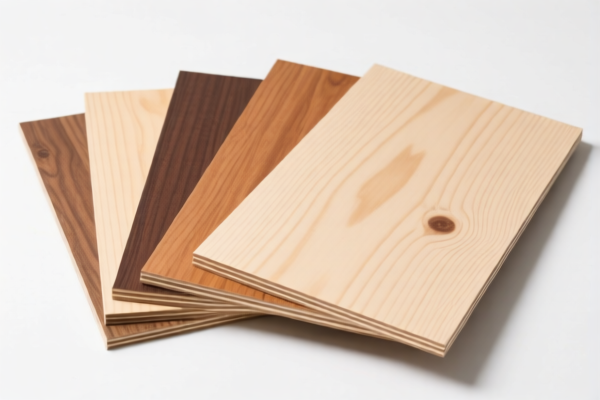
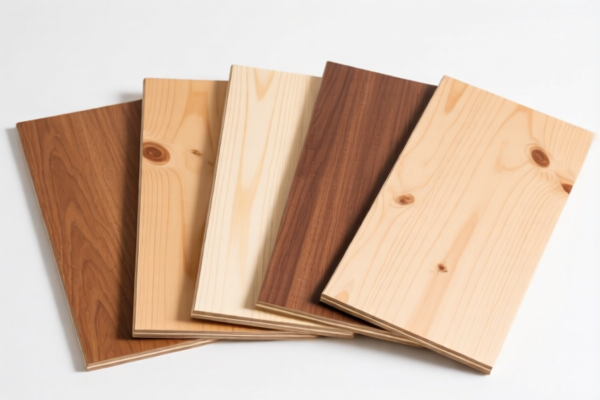
AI分析
🌲 Timber for Construction: Non-Coniferous Wood (Hardwood Lumber)
🌐 HS Code Reference & Customs Clearance Guide | 2026 Latest Tariff Analysis | Professional Clearance Strategy
📌 I. Product Definition & Classification: Are You Clear on "Non-Coniferous Wood"?
Non-coniferous wood (commonly referred to as hardwood) refers to wood derived from broad-leaved trees (dicots). In international trade and construction, this category is distinct from coniferous wood (softwood, e.g., pine, spruce). The HS Code classification depends heavily on the processing state (sawn, planed, peeled) and the thickness of the wood.
For "Construction" purposes, the wood is typically: 1. Sawn or Chipped Lengthwise: Cut into specific dimensions for beams, flooring, or structural use. 2. Thickness > 6 mm: This is the critical threshold. Wood thinner than 6mm is often classified as veneer (Chapter 44.01 or 44.08), while wood >6mm falls under Chapter 44.07. 3. Processed: It may be planed, sanded, or end-joined, but it is not yet manufactured into a finished product (like furniture or windows).
⚠️ Key Distinction:
- If the wood is < 6 mm thick → It is likely Veneer (HS Code 4408).
- If the wood is > 6 mm thick and simply sawn/peeled/sliced → It is Sawn Wood (HS Code 4407).
- If the wood is further processed into doors, windows, or flooring → It moves to Chapter 44 subheadings for manufactured goods (e.g., 4409, 4418).
📦 II. HS Code Classification Details (2026 Latest Tariff Authority)
Based on the provided data, the wood falls under Chapter 44, specifically 4407.99.02 (Other non-coniferous wood, sawn/chipped lengthwise, >6mm). Below are the specific codes and their descriptions:
| HS Code | Product Description | Application Scenario | Key Characteristics |
|---|---|---|---|
| 4407.99.02.95 | Other Non-Coniferous Wood (General) | General construction timber, furniture frames, generic hardwood lumber | ✅ Non-coniferous (Hardwood) ✅ Thickness > 6mm ✅ Not specifically listed as Hickory/Pecan |
| 4407.99.02.42 | Hickory (Carya spp.) & Pecan (Carya spp.) | High-grade furniture, flooring, tool handles, specialty construction | ✅ Specific species: Hickory/Pecan ✅ Non-coniferous ✅ Thickness > 6mm |
🔍 Critical Note:
- Both codes are under 4407, which covers "Wood sawn or chipped lengthwise... of a thickness exceeding 6 mm".
- The difference lies in the specific wood type:
-4407.99.02.42is for Hickory/Pecan only.
-4407.99.02.95is a "Catch-all" for all other non-coniferous woods (e.g., Oak, Maple, Walnut, Teak, etc.) that do not have a specific code in this subheading.
💰 III. 2026 Latest Tariff Rate Breakdown (Detailed Tax Clauses)
✅ Applicable Country: United States (US)
✅ Origin: China (CN) (Implied by the tax structure in the data)
✅ Effective Time: Current (Based on provided data)
🎯 1. 4407.99.02.95 —— Other Non-Coniferous Wood (General)
| Item | Content |
|---|---|
| Basic Tariff Rate | 0.0% (Ad Valorem) |
| Additional Tariff (Section 301) | +25.0% |
| Total Tax Rate | 25.0% |
| Tax Calculation | CIF Value × 25% |
| De Minimis Exemption | ❌ Not Applicable (High-value industrial/raw material) |
| Legal Basis | HS 4407.99.02.95 + Section 301 Footnotes |
📌 Explanation:
- The 0% is the standard Most Favored Nation (MFN) rate for sawn hardwood.
- The +25% is the Section 301 additional tariff imposed on Chinese-origin goods.
- Total: 25%. This is a significant cost factor for raw timber imports.
🎯 2. 4407.99.02.42 —— Hickory & Pecan Wood
| Item | Content |
|---|---|
| Basic Tariff Rate | 0.0% (Ad Valorem) |
| Additional Tariff (Section 301) | +25.0% |
| Total Tax Rate | 25.0% |
| Tax Calculation | CIF Value × 25% |
| De Minimis Exemption | ❌ Not Applicable |
| Legal Basis | HS 4407.99.02.42 + Section 301 Footnotes |
📌 Note:
- Despite being a specific, high-value species (Hickory/Pecan), the tax treatment is identical to general non-coniferous wood under this classification.
- Both codes carry a flat 25% total tariff.
🛠️ IV. Customs Clearance Practical Advice (Real-World Pitfalls)
✅ 1. Required Documentation Checklist
| Document | Required | Explanation |
|---|---|---|
| ✅ Commercial Invoice | ✔️ | Must clearly state: "Sawn Wood, Non-Coniferous, Thickness > 6mm" |
| ✅ Packing List | ✔️ | Detail dimensions (length, width, thickness) and weight |
| ✅ Phytosanitary Certificate | ✔️ | Crucial for wood! Must confirm no pests/fungi (ISPM 15 standard) |
| ✅ Fumigation Certificate | ✔️ | If not heat-treated, chemical fumigation proof is required |
| ✅ Species Declaration | ✔️ | Must specify if it is Hickory/Pecan (42) or Other (95) |
| ✅ Bill of Lading (B/L) | ✔️ | Consistent with invoice and packing list |
✅ 2. Declaration Tips (Key Mnemonic)
🔥 "Thickness is King, Species is Queen, Phytosanitary is Law!"
| Scenario | Correct Declaration | Incorrect Practice |
|---|---|---|
| Wood < 6mm | Do NOT use 4407. Use 4408 (Veneer) or 4401 (Wood chips) | Misdeclaring thin wood as "sawn lumber" → Seizure |
| Coniferous Wood | Do NOT use 4407.99. Use 4407.10/19/20/29 | Using "Non-Coniferous" code for Pine/Spruce → Penalty |
| Furniture Parts | Do NOT use 4407. Use 4421/4418 | Declaring finished doors/windows as raw lumber → Higher Duty/Complexity |
| Hickory/Pecan | Use 4407.99.02.42 | Using 4407.99.02.95 (Wrong sub-code, though rate is same, accuracy matters for data) |
✅ 3. Special Considerations
| Situation | Handling Advice |
|---|---|
| End-Jointed Wood | Still classified under 4407 if not assembled into panels/furniture. Declare as "End-Jointed Lumber." |
| Treated Wood | If chemically treated, additional environmental declarations may be required. |
| Value Fluctuation | Since tax is Ad Valorem (25%), higher declared value = higher tax. Ensure invoice reflects fair market value. |
| Anti-Dumping | Check if specific anti-dumping duties apply to Chinese hardwood imports (rare for raw lumber, but verify). |
🌍 V. Global Market Clearance Comparison (2026 Latest)
| Country/Region | Recommended HS Code | Tariff (China Origin) | Certification Requirements | Notes |
|---|---|---|---|---|
| 🇺🇸 USA | 4407.99.02.95 / .42 |
25% (Total) | Phytosanitary + Fumigation | Section 301 tax is mandatory |
| 🇨🇳 China | 4407.99.02.95 / .42 |
~10-15% | Phytosanitary | Import duty + VAT |
| 🇪🇺 EU | 4407.99.49 |
0% (Most FTA partners) | Phytosanitary + EUTR (Timber Regulation) | Strict legality verification |
| 🇬🇧 UK | 4407.99.90 |
0-20% | Phytosanitary | Post-Brexit rules apply |
📌 Conclusion:
- The US 25% tariff is the most significant barrier for Chinese non-coniferous wood.
- Phytosanitary compliance is non-negotiable in all markets; failure leads to immediate return or destruction.
📌 VI. Common Errors & Pitfalls (Lessons Learned)
❌ Error 1: Declaring Veneer (<6mm) as Sawn Wood (>6mm)
👉 Consequence: Wrong HS Code → 100% Duty Rate or Fine!
❌ Error 2: Failing to provide Phytosanitary Certificate
👉 Consequence: Held at Customs, fumigation at importer's cost, or Rejected.
❌ Error 3: Misclassifying Coniferous Wood (Pine) as Non-Coniferous
👉 Consequence: Wrong tariff subheading → Audit/penalty.
❌ Error 4: Not specifying Species for Hickory/Pecan
👉 Consequence: Customs may default to the "Other" code (.95), causing data discrepancies.
✅ Correct Declaration Example:
"Wood, Sawn, Lengthwise, Non-Coniferous, Hickory (Carya spp.), Thickness 25mm, Fumigated, HS Code 4407.99.02.42"
🎯 VII. Conclusion: Precise Classification, Cost Control!
🎯 Remember the Rule:
🔹 "Thickness > 6mm = 4407"
🔹 "Non-Coniferous = 4407.99"
🔹 "Hickory/Pecan = .42 | Others = .95"
🔹 "Total Tax = 25% (China-US)"
📌 Pro Tip:
If you are importing Hickory or Pecan, ensure your supplier provides species proof to use 4407.99.02.42. While the tax rate is the same, accurate classification avoids customs delays. For other hardwoods, 4407.99.02.95 is your go-to code.
📣 Immediate Action:
📞 Verify Phytosanitary Status before shipping.
📄 Confirm Thickness (Must be >6mm for 4407).
💡 Calculate Landed Cost including 25% duty.
✨ Professional Customs Clearance, Starting with Accurate Classification!
💼 Your timber profit margin depends on precise declaration!
用户评价
关于 HS 编码归类
协调制度(HS)是由世界海关组织(WCO)制定的国际贸易商品分类标准。全球 200 多个国家采用 HS 系统作为海关关税、贸易统计和进出口监管的基础。
每个 HS 编码遵循以下层级结构:
- 章(2 位)——商品大类(例如:第 84 章:机器和机械设备)
- 品目(4 位)——章内的更具体分类
- 子目(6 位)——国际通用细分,所有 WCO 成员国统一使用
- 本国细分(8-10 位)——各国自行扩展的细分编码,如美国 HTSUS 10 位编码
正确的 HS 编码归类对于顺利通关、准确缴纳关税和遵守贸易法规至关重要。错误归类可能导致海关延误、多缴关税或罚款。
从CN进口到US时,适用的关税税率可能包括:
- 最惠国(MFN)税率——适用于 WTO 成员国的标准关税税率
- 普通税率——适用于无贸易协定国家
- 贸易救济关税——附加关税,如 301 条款(反倾销)、232 条款(国家安全)或反补贴税
本页内容仅供参考。如需正式归类,请咨询当地海关或持牌报关代理。