Other Plastic Disposable Films
CN → US| HS编码 | 关税税率 | 原产国 | 目的国 | 文档 |
|---|---|---|---|---|
| 8485200000 | 38.1% | CN | US | 官方文档 |
| 3921904010 | 39.2% | CN | US | 官方文档 |
| 3921905010 | 39.8% | CN | US | 官方文档 |
| 3920992000 | 39.2% | CN | US | 官方文档 |
| 3920995000 | 40.8% | CN | US | 官方文档 |
商品图片
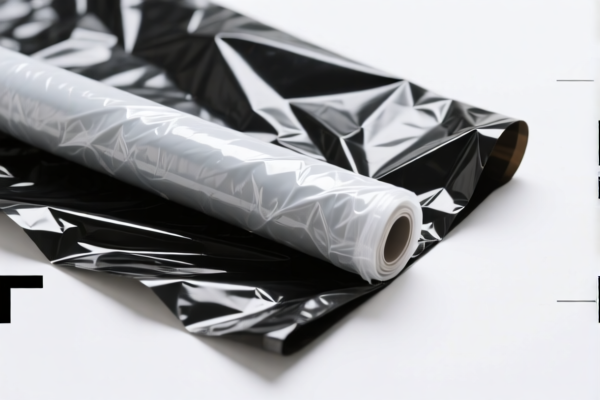
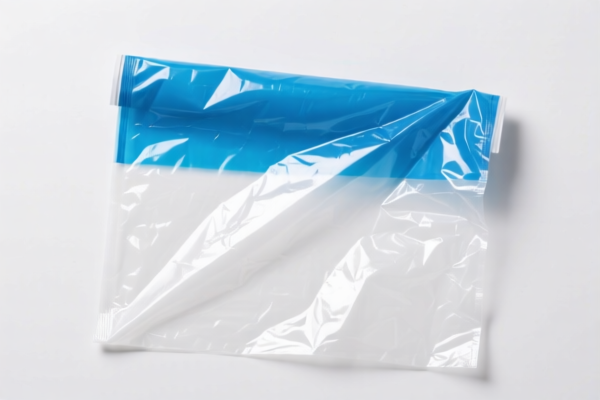
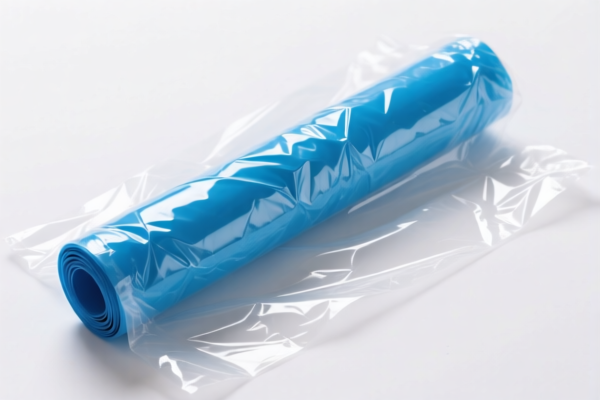
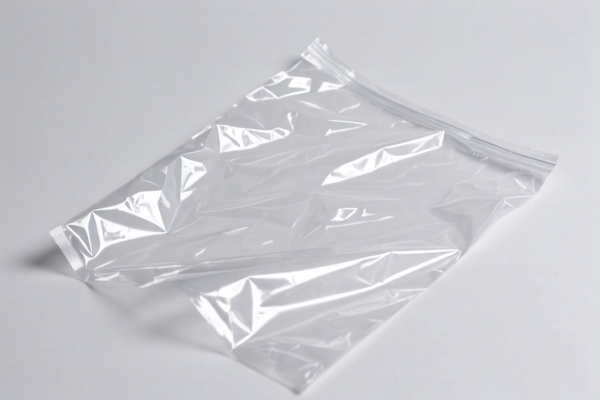
AI分析
🎬 Other Plastic Disposable Films (Other Laminated Plastic Films, Sheets, and Strip)
🌐 HS Code Reference & Customs Clearance Guide | 2026 Latest Tariff Analysis | Professional Compliance Strategy
📌 I. Product Definition & Classification: What Exactly Are "Other Plastic Disposable Films"?
In international trade, "Other Plastic Disposable Films" generally refer to plastic sheets, films, foils, and strips made from materials like polypropylene (PP), polyethylene (PE), or polyesters, which are laminated, non-reinforced, or made of specific plastics like PPO (Polyphenylene Oxide). These materials are widely used in packaging, labeling, industrial wrapping, and consumer goods.
Key Distinctions in Classification: * Laminated Films vs. Single Material: If the film consists of multiple layers of different plastics bonded together, it may fall under 8485.20.00.00 (though note: this code often refers to parts of machinery in some contexts, but per the provided data, it is defined here as "Other laminated plastic films"). Correction based strictly on provided DATA: The data explicitly links 8485.20.00.00 to "Other laminated plastic films." * Reinforced vs. Non-Reinforced: Films reinforced with paper, glass fibers, or other materials have different codes than pure plastic films. * Base Polymer: The type of plastic (e.g., PPO vs. generic plastic) significantly impacts the HS Code.
⚠️ Critical Classification Point:
- If the film is laminated (multi-layer), check 8485.20.00.00.
- If the film is non-foamed, non-reinforced but made of specific plastics like PPO, check 3920.99.50.00 or 3920.99.20.00.
- If it is a general plastic film without specific polymer designation in the summary, it falls under 3921.90 series.
📦 II. HS Code Classification Details (Based on Provided Data 2026)
| HS Code | Product Description (from DATA) | Total Tax Rate | Tax Detail Breakdown |
|---|---|---|---|
8485.20.00.00 |
Other laminated plastic films, material: plastic, form: film, belongs to other categories | 38.1% | Base: 3.1%, Sec. 301: 25.0%, Section 122: 10% |
3921.90.40.10 |
Other plastic plates, sheets, film, foil, and strips, material: plastic, form: film, not specified paper-reinforced | 39.2% | Base: 4.2%, Sec. 301: 25.0%, Section 122: 10% |
3921.90.50.10 |
Plastic plates, sheets, film, foil, and strips, material: plastic, form: film, not limited specific reinforcement | 39.8% | Base: 4.8%, Sec. 301: 25.0%, Section 122: 10% |
3920.99.20.00 |
Other plastic products, material: Polyphenylene Oxide (PPO), form: film | 39.2% | Base: 4.2%, Sec. 301: 25.0%, Section 122: 10% |
3920.99.50.00 |
Non-foamed, non-reinforced plastic plates, sheets, film, foil, and strips, material: Polyphenylene Oxide (PPO), form: film | 40.8% | Base: 5.8%, Sec. 301: 25.0%, Section 122: 10% |
🔍 Key Insight:
- The base tariff ranges from 3.1% to 5.8% depending on the specific polymer and lamination status.
- The Section 301 (25%) and Section 122 (10%) surcharges are fixed across all these categories, bringing the total tax burden to 38.1%–40.8%.
- PPO-based films generally face higher base tariffs (4.2%–5.8%) than generic laminated films (3.1%–4.8%).
💰 III. 2026 Latest Tariff Rate Breakdown (Including Surcharges)
✅ Applicable Country: USA (US)
✅ Origin: China (CN)
✅ Effective Time: 2025–2026 (Current Data)
🎯 1. 8485.20.00.00 —— Other Laminated Plastic Films
| Item | Content |
|---|---|
| Base Tariff | 3.1% (ad valorem) |
| USITC Section 301 Surcharge | +25.0% |
| Section 122 Surcharge | +10.0% |
| Total Tariff Rate | 38.1% |
| Calculation | CIF Value × 38.1% |
| De Minimis Exemption | ❌ Not Applicable (High-value industrial materials usually excluded) |
| Legal Basis | USITC:8485.20.00.00 + Footnote: Sec 301 + Section 122 |
📌 Explanation:
- Despite the HS Code starting with "84" (Machinery), the provided data classifies it as "Other laminated plastic films." Ensure the physical product matches this description (multi-layer plastic film).
- High Tariff Alert: 38.1% is a significant cost driver. Margin analysis is essential.
🎯 2. 3921.90.40.10 & 3921.90.50.10 —— General Plastic Films (Non-PPO)
| Item | Content |
|---|---|
| Base Tariff | 4.2% (for .40.10) / 4.8% (for .50.10) |
| USITC Section 301 Surcharge | +25.0% |
| Section 122 Surcharge | +10.0% |
| Total Tariff Rate | 39.2% (for .40.10) / 39.8% (for .50.10) |
| Calculation | CIF Value × Total Rate |
| De Minimis Exemption | ❌ Not Applicable |
| Legal Basis | USITC:3921.90.xx.xx + Footnote: Sec 301 + Section 122 |
📌 Explanation:
- The difference between .40.10 and .50.10 lies in the specificity of the "reinforcement" or "type" of plastic. If your film is not reinforced with paper, .40.10 is likely correct. If it’s a broader category without specified reinforcement limits, .50.10 may apply.
- Both incur the same high surcharges.
🎯 3. 3920.99.20.00 & 3920.99.50.00 —— PPO-Based Plastic Films
| Item | Content |
|---|---|
| Base Tariff | 4.2% (for .20.00) / 5.8% (for .50.00) |
| USITC Section 301 Surcharge | +25.0% |
| Section 122 Surcharge | +10.0% |
| Total Tariff Rate | 39.2% (for .20.00) / 40.8% (for .50.00) |
| Calculation | CIF Value × Total Rate |
| De Minimis Exemption | ❌ Not Applicable |
| Legal Basis | USITC:3920.99.xx.xx + Footnote: Sec 301 + Section 122 |
📌 Explanation:
- PPO (Polyphenylene Oxide) is a high-performance engineering plastic.
- Non-foamed, non-reinforced PPO films (.50.00) face the highest base tariff (5.8%), resulting in a 40.8% total tax rate.
- If the PPO film is not explicitly "non-foamed/non-reinforced" or is in a different state, it may fall under .20.00, reducing the rate slightly.
🛠️ IV. Customs Clearance Practical Advice (Battle-Tested Pitfall Avoidance)
✅ 1. Documentation Checklist (Non-Negotiable)
| Document | Required | Description |
|---|---|---|
| ✅ Product Specification Sheet | ✔️ | Must specify: Layer count (for lamination), Base Polymer (PPO vs. General Plastic), Thickness, Dimensions. |
| ✅ Composition Statement | ✔️ | Explicitly state if reinforced with paper, glass, or other materials. Crucial for distinguishing between 3921 and 3920 codes. |
| ✅ Photos (Packaged & Unpackaged) | ✔️ | Show cross-section if laminated. Show labeling. |
| ✅ Commercial Invoice | ✔️ | Must clearly state: "Plastic Film, Laminated/Non-Laminated, Polymer Type." Avoid vague terms like "Plastic Sheet." |
| ✅ Packing List | ✔️ | Detail net/gross weight and dimensions. |
✅ 2. Declaration Strategy (Key Mnemonic)
🔥 “Laminated = 8485, General Plastic = 3921, PPO Plastic = 3920. Be Specific or Pay More!”
| Scenario | Correct HS Code | Incorrect Code | Consequence |
|---|---|---|---|
| Multi-layer plastic film | 8485.20.00.00 |
3921.90.40.10 |
Under-declaration risk; penalty if audited. |
| Single-layer generic plastic film | 3921.90.40.10 |
3921.90.50.10 |
Minor rate diff (39.2% vs 39.8%), but accuracy is key. |
| PPO Film (Non-foamed, non-reinforced) | 3920.99.50.00 |
3920.99.20.00 |
Over/under-tax by 1.6%. Audit trail issue. |
| PPO Film (Reinforced with paper) | NOT IN DATA | 3920.99.50.00 |
Major Error: Reinforced films may fall under different chapters (e.g., 3921 with paper). Check if paper reinforcement moves it to 3921 or elsewhere. |
✅ 3. Special Considerations
| Situation | Advice |
|---|---|
| Laminated Films | Ensure the lamination is not with paper/cardboard. If paper is involved, it may no longer be "plastic film" but "plastic-coated paper," changing the HS code entirely. |
| PPO Films | Clearly state "Polyphenylene Oxide" in the description. Vague terms like "Engineering Plastic" will lead to delays and potential reclassification. |
| Non-Foamed Status | For PPO films, explicitly declare "Non-Foamed." Foamed PPO films may have different classification. |
🌍 V. Global Market Comparison (2026 Overview)
| Country/Region | Recommended HS Code | Approx. Total Duty | Certification | Notes |
|---|---|---|---|---|
| 🇺🇸 USA | See Table II | 38.1% – 40.8% | None Specific | High surcharges due to China origin. |
| 🇨🇳 China | 3921.90.40.10 / 3920.99.50.00 | ~5% - 6% | CCC (if applicable) | Low base tariff, no surcharges. |
| 🇪🇺 EU | 3920.99 / 3921.90 | ~6.5% | REACH, RoHS | No Section 301/122 equivalents. |
| 🇯🇵 Japan | 3921.90 / 3920.99 | ~6.0% | PSE (if electrical) | Stable, lower tariff environment. |
📌 Conclusion:
- The US market is the most expensive due to the 35% combined surcharge (25% + 10%).
- If possible, consider supply chain diversification (e.g., sourcing from Vietnam or Mexico) to potentially avoid these surcharges, subject to Rules of Origin.
📌 VI. Common Mistakes & Pitfalls (Lessons Learned)
❌ Mistake 1: Using "Plastic Film" as the sole description
👉 Result: Customs cannot determine the base tariff (3.1% vs 5.8%). Leads to hold and examination delays.
❌ Mistake 2: Misclassifying PPO as "General Plastic"
👉 Result: Underpayment of base tariff (4.2-4.8% vs 5.8%). Penalties + Back Taxes.
❌ Mistake 3: Ignoring "Lamination" Status
👉 Result: If a laminated film is declared as single-layer (3921), but is actually 8485.20, the classification error is significant. Audit Risk.
❌ Mistake 4: Assuming De Minimis Applies
👉 Result: Plastic films are industrial materials. Even small shipments may not qualify for Section 321 (de minimis) if the value or nature of goods triggers scrutiny. Assume full duty applies.
✅ Best Practice:
“Laminated Plastic Film, Multi-layer, Total Thickness 0.5mm, Material: PE/PP Laminate, Non-Reinforced, Model ABC”
OR
“PPO Plastic Film, Non-Foamed, Non-Reinforced, Thickness 0.3mm, Grade XYZ”
🎯 VII. Conclusion: Precision is Profit
🎯 Remember:
🔹 “HS Code Determines Duty, Base Tariff Dictates Margin, Surcharges Kill Profit.”
🔹 “35% Surcharge is Fixed. Save on Base Tariff by Correct Classification.”
🔹 “PPO is 40.8%, Generic is 39.2%, Laminated is 38.1%. Choose Wisely.”
📌 Pro Tip:
If your product qualifies for Section 301 Exclusions (check current USITC lists), you may reduce the 25% surcharge. However, based on the provided data, no exclusions are listed. Always verify with a licensed customs broker.
📣 Immediate Action:
📞 Contact a Customs Broker + Provide Product Specs + Verify HS Code Pre-Ruling
🚀 Avoid the 35% Surprise. Protect Your Margins.
✨ Professional Customs Compliance Starts with Accurate Classification!
💼 Every 0.1% of Duty Saved is Pure Profit Added!
用户评价
关于 HS 编码归类
协调制度(HS)是由世界海关组织(WCO)制定的国际贸易商品分类标准。全球 200 多个国家采用 HS 系统作为海关关税、贸易统计和进出口监管的基础。
每个 HS 编码遵循以下层级结构:
- 章(2 位)——商品大类(例如:第 84 章:机器和机械设备)
- 品目(4 位)——章内的更具体分类
- 子目(6 位)——国际通用细分,所有 WCO 成员国统一使用
- 本国细分(8-10 位)——各国自行扩展的细分编码,如美国 HTSUS 10 位编码
正确的 HS 编码归类对于顺利通关、准确缴纳关税和遵守贸易法规至关重要。错误归类可能导致海关延误、多缴关税或罚款。
从CN进口到US时,适用的关税税率可能包括:
- 最惠国(MFN)税率——适用于 WTO 成员国的标准关税税率
- 普通税率——适用于无贸易协定国家
- 贸易救济关税——附加关税,如 301 条款(反倾销)、232 条款(国家安全)或反补贴税
本页内容仅供参考。如需正式归类,请咨询当地海关或持牌报关代理。