Other Plastic Profiles
CN → US| HS编码 | 关税税率 | 原产国 | 目的国 | 文档 |
|---|---|---|---|---|
| 3916905000 | 40.8% | CN | US | 官方文档 |
| 3916903000 | 41.5% | CN | US | 官方文档 |
| 3926909989 | 22.8% | CN | US | 官方文档 |
| 3926909987 | 22.8% | CN | US | 官方文档 |
| 9403994080 | 35.0% | CN | US | 官方文档 |
| 9403993080 | 35.0% | CN | US | 官方文档 |
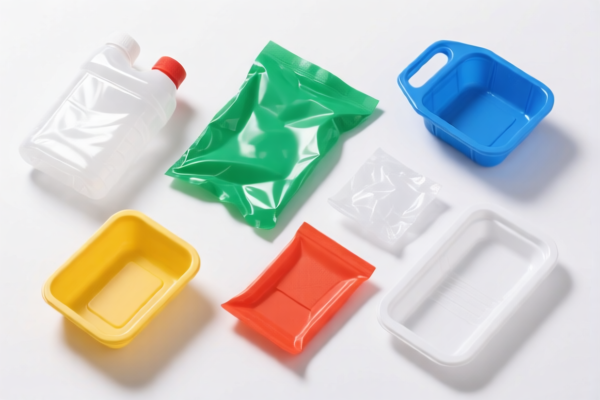
商品图片



AI分析
🏗️ Other Plastic Profiles & Articles (Generic Plastic Goods)
🌐 HS Code Reference & Clearance Guide | 2026 Latest Tariff Analysis | Professional Entry Strategy
📌 I. Product Definition & Classification: Do You Really Know "Plastic Profiles"?
In international trade, "Other Plastic Profiles" is not a single, precise commodity description but a broad category that spans multiple Harmonized System (HS) chapters depending on the shape, dimension, and end-use of the product. Misclassification is extremely common and leads to severe tariff penalties (up to 25%–31.5%+).
These goods are generally divided into two major groups: 1. Extruded Shapes (Headings 3916 & 3925/3926): Rods, sticks, monofilaments (>1mm), and profile shapes that are raw or surface-worked but not further assembled. 2. Finished Articles (Heading 3926): Furniture parts, electrical conduits, or other manufactured plastic items.
⚠️ Key Distinction Point:
- If the item is a raw extruded shape (rod, stick, profile) → Look at Chapter 39.16.
- If the item is a finished article (like a furniture part or electrical conduit) → Look at Chapter 39.26.
- Critical Trigger: Monofilament diameter > 1mm? → 3916. Furniture part? → 9403. Electrical conduit? → 3926.
📦 II. HS Code Classification Details (2026 Authoritative Mapping)
Based on the provided data, here are the precise HS Codes and their corresponding tax implications for "Other Plastic Profiles" and related plastic articles.
| HS Code | Product Description | Key Characteristics & Scenarios | Tax Rate (Total) |
|---|---|---|---|
3916.90.50.00 |
Plastic Profiles (Non-Monofilament) Monofilament/rods/sticks/profile shapes, surface-worked but not otherwise worked. Of other plastics. |
✅ Raw/semi-finished profiles. ❌ Not monofilament. ✅ Other plastics (e.g., PVC, PE, PP profiles). ✅ Surface-worked (painted, polished) but not assembled. |
0.0% |
3916.90.30.00 |
Plastic Monofilament Monofilament of other plastics, >1mm cross-section. |
✅ Monofilament (single filament strand). ✅ Any cross-sectional dimension > 1 mm. ❌ Not solid rods/sticks (those go to 3916.90.50 if not monofilament). |
31.5% |
3926.90.99.89 |
Other Plastic Articles Other articles of plastics (3901–3914). Other. |
✅ Generic finished plastic parts. ✅ Not furniture, not electrical conduit. ✅ E.g., plastic knobs, handles, non-structural decorative parts. |
12.8% |
3926.90.99.87 |
Plastic Electrical Conduit Rigid tubes/pipes suitable for use as electrical conduit. |
✅ Rigid PVC/PE pipes/tubes specifically for wiring. ✅ Must be "suitable for use as electrical conduit." ❌ Not water pipes (those may be different). |
12.8% |
9403.99.40.80 |
Furniture Parts (Rubber/Plastic - Other) Parts of furniture, of rubber or plastics. Other. |
✅ Furniture components made of plastic/rubber. ❌ Not reinforced/laminated. ✅ E.g., plastic legs, chair backs, table tops (parts only). |
25.0% |
9403.99.30.80 |
Furniture Parts (Reinforced/Laminated Plastic) Parts of furniture, of reinforced or laminated plastics. |
✅ Furniture components made of reinforced (e.g., fiberglass) or laminated plastic. ✅ E.g., laminated wooden-plastic composite furniture parts. |
25.0% |
🔍 Focus Alert:
-3916.90.50.00(0%) is the "sweet spot" for raw plastic profiles that are not monofilament and not furniture parts.
-3916.90.30.00(31.5%) is a trap for monofilament. Even if it looks like a "profile," if it is a single strand >1mm, it triggers the highest tax in this list.
-9403.99.40.80&9403.99.30.80(25%) apply ONLY if the plastic item is explicitly a part of furniture. Do not misdeclare a plastic profile as a furniture part unless it is sold as such.
💰 III. 2026 Latest Tariff Rate Breakdown (Detailed Tax Clauses)
✅ Applicable Country: USA
✅ Origin: China (CN)
✅ Effective Date: 2025–2026 (Current Trade Policy)
🎯 1. 3916.90.50.00 —— Plastic Profiles (Non-Monofilament)
| Item | Detail |
|---|---|
| Base Tariff | 0.0% |
| Surcharge (Section 301/IEEPA) | 0.0% |
| Total Tax Rate | 0.0% |
| Calculation | CIF Value × 0% = $0 |
| De Minimis Eligible? | ✅ Yes (if < $800) |
| Legal Basis | HTSUS: 3916.90.50 |
📌 Explanation:
This is the most favorable rate for generic plastic profiles (rods, sticks, shapes) that are not monofilament. It assumes "other plastics" (non-PVC, non-PE if specific subheadings don't apply, but here grouped as "other"). No additional USITC or IEEPA surcharges apply.
🎯 2. 3916.90.30.00 —— Plastic Monofilament (>1mm)
| Item | Detail |
|---|---|
| Base Tariff | 6.5% |
| Surcharge (Section 301) | +25.0% |
| Total Tax Rate | 31.5% |
| Calculation | CIF Value × 31.5% |
| De Minimis Eligible? | ❌ No (High tariff usually triggers scrutiny, though de minimis is technically $800, high taxes still apply if entered formally) |
| Legal Basis | HTSUS: 3916.90.30 + USITC Footnote 301 |
📌 Explanation:
Monofilament is treated more strictly. The 6.5% base + 25% Section 301 surcharge = 31.5%. This is a high-cost classification. Avoid if possible by proving it is not "monofilament" (e.g., it is a solid rod or multi-filament cord).
🎯 3. 3926.90.99.89 & 3926.90.99.87 —— Other Plastic Articles / Electrical Conduit
| Item | Detail |
|---|---|
| Base Tariff | 5.3% |
| Surcharge (Section 301) | +7.5% |
| Total Tax Rate | 12.8% |
| Calculation | CIF Value × 12.8% |
| De Minimis Eligible? | ✅ Yes (if < $800) |
| Legal Basis | HTSUS: 3926.90.99 + USITC Footnote 301 (lower rate category) |
📌 Explanation:
Finished plastic articles (like conduit or generic parts) fall under a lower surcharge band (7.5%) compared to monofilament (25%). Total 12.8%. This is moderate.
-3926.90.99.87: Specifically for rigid electrical conduit.
-3926.90.99.89: For all other plastic articles not elsewhere specified.
🎯 4. 9403.99.40.80 & 9403.99.30.80 —— Furniture Parts (Plastic/Rubber)
| Item | Detail |
|---|---|
| Base Tariff | 0.0% |
| Surcharge (Section 301) | +25.0% |
| Total Tax Rate | 25.0% |
| Calculation | CIF Value × 25.0% |
| De Minimis Eligible? | ❌ No (Generally high tariffs trigger stricter de minimis enforcement) |
| Legal Basis | HTSUS: 9403.99 + USITC Footnote 301 |
📌 Explanation:
Even though the base tariff is 0%, the 25% Section 301 surcharge applies, making the total 25%. This applies to furniture parts made of plastic/rubber (reinforced or not). Do not use this code unless the item is definitely a furniture component.
🛠️ IV. Practical Customs Clearance Advice (Avoiding Pitfalls)
✅ 1. Documentation Checklist (Must-Have)
| Document | Required? | Purpose |
|---|---|---|
| ✅ Product Spec Sheet | ✔️ | Defines dimensions, material type (PP, PVC, PE, etc.), and whether it is monofilament or solid profile. |
| ✅ Technical Drawing | ✔️ | Critical to prove cross-section >1mm and shape (round rod vs. filament). |
| ✅ Product Photos | ✔️ | Clear shots of ends, surfaces, and packaging. |
| ✅ Bill of Lading / Invoice | ✔️ | Must match HS Code description exactly (e.g., "Plastic Profile Rod" vs. "Furniture Part"). |
| ✅ Certificate of Origin | ✔️ | To verify China origin and apply correct surcharges. |
✅ 2. Declaration Strategy (Key Mnemonics)
🔥 "Rod vs. Filament, Part vs. Product!"
| Scenario | Correct Declaration | Wrong Declaration | Consequence |
|---|---|---|---|
| Solid Plastic Rod/Profile (Non-filament) | 3916.90.50.00 (0%) |
3916.90.30.00 |
Overpay 31.5% |
| Monofilament Strand (>1mm) | 3916.90.30.00 (31.5%) |
3916.90.50.00 |
Underpay → Penalty + Back Taxes |
| Plastic Pipe for Electricity | 3926.90.99.87 (12.8%) |
3916.90.50.00 |
Misclassification risk (Conduit is a finished article) |
| Plastic Leg for a Table | 9403.99.40.80 (25%) |
3916.90.50.00 |
Underpay 25% → High Audit Risk |
✅ 3. Special Cases & Risk Management
| Case | Handling Advice |
|---|---|
| "Other Plastics" Ambiguity | If the plastic type is unknown, assume 3916.90.50.00 (0%) if it’s not monofilament. However, provide material MSDS to customs if questioned. |
| Reinforced Plastic Parts | If the plastic is reinforced (e.g., with glass fiber) and used for furniture, it MUST go to 9403.99.30.80 (25%). Do not declare as raw profile. |
| Electrical Conduit | Must be explicitly "rigid" and "suitable for electrical conduit." Flexible corrugated tubes may have different codes. Specify RIGID PVC in description. |
| Mixed Containers | If shipping both profiles and furniture parts, separate them in commercial invoice. Do not lump into one "Miscellaneous Plastic" line item. |
🌍 V. Global Market Comparison (2026 Update)
| Country/Region | Recommended HS Code (For Profiles) | Tariff Rate | Notes |
|---|---|---|---|
| 🇺🇸 USA | 3916.90.50.00 |
0.0% | Best for non-monofilament profiles. |
| 🇺🇸 USA | 3916.90.30.00 |
31.5% | Avoid monofilament due to high tax. |
| 🇨🇳 China | 3916.90.50.00 |
~6–10% | Export duties may apply; check current export policy. |
| 🇪🇺 EU | 3916.90 |
~6.5% | No Section 301 equivalent, but VAT applies. |
| 🇮🇳 India | 3916.90 |
~7.5–12% | Basic customs duty + Social Welfare Surcharge. |
📌 Conclusion:
The USA market offers a 0% tariff advantage for3916.90.50.00but a 31.5% penalty for3916.90.30.00. Precision in defining "monofilament" vs. "profile" is the single most important factor for cost savings.
📌 VI. Common Errors & Pitfalls (Lessons Learned)
❌ Error 1: Declaring Monofilament as "Plastic Rod"
👉 Result: Customs classifies as 3916.90.30.00 (31.5%). You underpaid 31.5%.
👉 Fix: Accurately describe as "Monofilament" if >1mm diameter.
❌ Error 2: Declaring Furniture Parts as "Plastic Profiles"
👉 Result: Customs classifies as 9403.99.40.80 (25%). You underpaid 25%.
👉 Fix: If it’s a finished part for furniture, declare as such.
❌ Error 3: Ignoring "Surface-Worked" Status
👉 Result: If painted or printed, it may still be 3916.90.50.00 (0%) as long as it’s not "otherwise worked" into a finished article. But if assembled into a larger product, it’s no longer a "profile."
👉 Fix: Ensure items are shipped in raw/extruded form, not pre-assembled.
✅ Correct Declaration Example:
"Plastic Profile Rods, Extruded PVC, Surface-Polished, Not Reinforced, Not Furniture Parts, HS 3916.90.50.00"
🎯 VII. Conclusion: Precision Pays
🎯 Remember the Golden Rule:
🔹 "Rod = 0%, Filament = 31.5%, Furniture Part = 25%, Conduit = 12.8%."
🔹 "Define shape, define end-use, avoid ambiguity."
📌 Pro Tip:
If you are unsure whether your item is "monofilament" or "profile," consult a customs broker before shipping. A pre-ruling can save you thousands in duties and penalties.
📣 Immediate Action:
📞 Verify cross-sectional dimensions.
📦 Separate monofilament from solid profiles in inventory.
🚀 Ship with precision to maximize your 0% tariff advantage on3916.90.50.00!
✨ Professional Classification, Efficient Clearance, Cost Optimization!
💼 Every Percentage Point Counts in International Trade!
用户评价
关于 HS 编码归类
协调制度(HS)是由世界海关组织(WCO)制定的国际贸易商品分类标准。全球 200 多个国家采用 HS 系统作为海关关税、贸易统计和进出口监管的基础。
每个 HS 编码遵循以下层级结构:
- 章(2 位)——商品大类(例如:第 84 章:机器和机械设备)
- 品目(4 位)——章内的更具体分类
- 子目(6 位)——国际通用细分,所有 WCO 成员国统一使用
- 本国细分(8-10 位)——各国自行扩展的细分编码,如美国 HTSUS 10 位编码
正确的 HS 编码归类对于顺利通关、准确缴纳关税和遵守贸易法规至关重要。错误归类可能导致海关延误、多缴关税或罚款。
从CN进口到US时,适用的关税税率可能包括:
- 最惠国(MFN)税率——适用于 WTO 成员国的标准关税税率
- 普通税率——适用于无贸易协定国家
- 贸易救济关税——附加关税,如 301 条款(反倾销)、232 条款(国家安全)或反补贴税
本页内容仅供参考。如需正式归类,请咨询当地海关或持牌报关代理。