Other Plastic Strips (for Protection)
CN → US| HS编码 | 关税税率 | 原产国 | 目的国 | 文档 |
|---|---|---|---|---|
| 3921905050 | 39.8% | CN | US | 官方文档 |
| 3925900000 | 40.3% | CN | US | 官方文档 |
| 3916200020 | 40.8% | CN | US | 官方文档 |
| 3916905000 | 40.8% | CN | US | 官方文档 |
| 3921190090 | 41.5% | CN | US | 官方文档 |
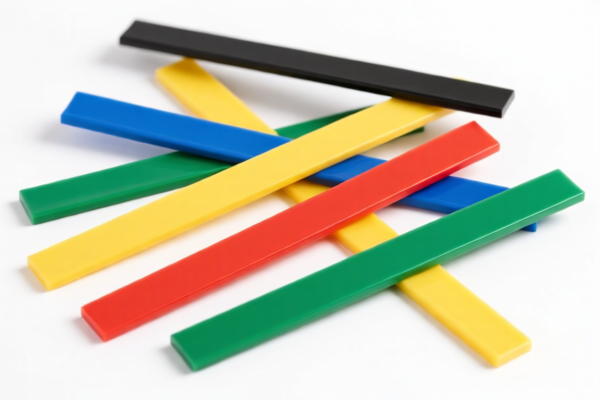
商品图片



AI分析
🧱 Other Plastic Strips (For Protection / Construction Use)
🌐 HS Code Reference & Customs Clearance Guide | 2024/2025 Latest Tariff Analysis | Professional Compliance Strategy
📌 I. Product Definition & Classification: What Are "Other Plastic Strips"?
"Other Plastic Strips" (often referred to as plastic trim, edging, or profile strips) are semi-finished or finished plastic products used primarily in construction, decoration, and industrial protection. They are typically extruded profiles made from PVC, PP, PE, or ABS.
In international trade, these products are often misclassified because they look like simple "plastic items." However, their specific function (construction protection) and form (strips/profiles) dictate their HS Code.
⚠️ Key Distinction:
- If the strip is a finished building component (e.g., skirting board, door frame, protective edge for stairs), it often falls under Chapter 39 (Plastics and Articles Thereof), specifically heading 39.21 (other plates, sheets, film, foil, and strip) or 39.25 (builders' ware).
- If the strip is a simple raw profile not yet shaped for a specific building part, it may fall under 39.16 (monofilament, rods, sticks, and profile shapes).
📦 II. HS Code Classification Details (Authoritative Comparison)
Based on the provided data, here are the 5 most likely HS Codes for "Plastic Strips for Construction/Protection Use," ranked by tax efficiency.
| HS Code | Product Description | Application Scenario | Estimated Total Tax (CN→US) |
|---|---|---|---|
| 3921.90.50.50 | Plastic strip, for building use; material & form match | Protective edge strips, wall corner protectors, decorative trim | 39.8% 🟢 (Lowest) |
| 3925.90.00.00 | Plastic strip, for building use; classified as other plastic building components | Skirting boards, door casings, window frames, cladding profiles | 40.3% 🟡 |
| 3916.20.00.20 | Plastic strip, for building use; fits description of building type materials | Extruded PVC/PE profiles, rods, sticks for construction | 40.8% 🔴 |
| 3916.90.50.00 | Plastic strip, for building use; classified as other plastic products | Non-specified plastic profiles, general-purpose plastic strips | 40.8% 🔴 |
| 3921.19.00.90 | Plastic strip, for building use; fits "other plastic strip" definition | Unoriented/other plastic strips, films, or bands for protection | 41.5% 🔴 (Highest) |
🔍 Key Insight:
- 3921.90.50.50 offers the lowest total tax (39.8%) among the options, likely due to specific subheading nuances for "building use" items that are not strictly "builders' ware" (39.25) or raw profiles (39.16).
- 3925.90.00.00 is the most common classification for "finished" building components (like skirting boards).
- 3916.20/3916.90 are for raw profiles. If your product is a finished protective strip, these may be less accurate but are still used if the product doesn't fit 39.25.
💰 III. Detailed Tariff Rate Breakdown (China to US)
✅ Applicable Country: United States (US)
✅ Origin: China (CN)
✅ Effective Date: Current (2024/2025)
🎯 1. 3921.90.50.50 —— Plastic Strip for Building Use (Lowest Tax Option)
| Item | Content |
|---|---|
| Basic Duty Rate | 4.8% (Standard MFN Rate) |
| Section 301 Duty (Additional) | +25.0% (List 4A/B on China-origin goods) |
| Section 122 Duty (Additional) | +10.0% (Specific to certain plastic articles/building materials under trade actions) |
| Total Effective Rate | 39.8% |
| Tax Calculation | CIF Value × 39.8% |
| De Minimis Exemption | ❌ Not Applicable (Section 321 de minimis does NOT apply to goods subject to Section 301/122 duties) |
| Legal Basis | Section 301: 19 CFR 1220 → Section 122: Trade Action → USITC: 3921.90.50.50 |
📌 Explanation:
- 4.8% Basic Duty: Standard duty for "Other plates, sheets, film, foil, and strip, of plastics."
- 25% Section 301: The primary US tariff on Chinese imports.
- 10% Section 122: This is a specific additional duty often applied to certain plastic products or building materials under recent trade enforcement actions.
- Total 39.8%: This is a high-cost import. You must factor this into your pricing strategy.
🎯 2. 3925.90.00.00 —— Other Plastic Building Components
| Item | Content |
|---|---|
| Basic Duty Rate | 5.3% |
| Section 301 Duty | +25.0% |
| Section 122 Duty | +10.0% |
| Total Effective Rate | 40.3% |
| Tax Calculation | CIF Value × 40.3% |
| De Minimis Exemption | ❌ Not Applicable |
📌 Note:
- Slightly higher than 3921 due to a higher basic duty (5.3% vs 4.8%).
- Often used for finished building products like door frames or skirting boards.
🎯 3. 3916.20.00.20 & 3916.90.50.00 —— Plastic Profiles / Other Plastic Products
| Item | Content |
|---|---|
| Basic Duty Rate | 5.8% |
| Section 301 Duty | +25.0% |
| Section 122 Duty | +10.0% |
| Total Effective Rate | 40.8% |
| Tax Calculation | CIF Value × 40.8% |
📌 Note:
- These are often used for extruded profiles (rods, sticks, shapes).
- If your product is a raw plastic strip used for protection (e.g., corner guards before installation), this may apply.
🎯 4. 3921.19.00.90 —— Other Plastic Strips
| Item | Content |
|---|---|
| Basic Duty Rate | 6.5% |
| Section 301 Duty | +25.0% |
| Section 122 Duty | +10.0% |
| Total Effective Rate | 41.5% |
| Tax Calculation | CIF Value × 41.5% |
📌 Note:
- Highest tax rate. Avoid this classification unless the product strictly fits "other plastic strips" and doesn't qualify for the "building use" descriptions in 3921.90.50.50.
🛠️ IV. Customs Clearance Practical Advice (Avoid Pitfalls)
✅ 1. Document Checklist (Must-Prepare)
| Document | Required? | Purpose |
|---|---|---|
| ✅ Product Specification Sheet | ✔️ | Details material (PVC/PP/PE), dimensions, thickness, and intended use (e.g., "protective corner strip for drywall") |
| ✅ Product Photos | ✔️ | Show the strip in isolation and installed (if possible) to prove "building use" |
| ✅ Commercial Invoice | ✔️ | Must clearly state: "Plastic Protective Strip for Building Construction" – Do not just say "Plastic Strip" |
| ✅ Packing List | ✔️ | Include weight, volume, and packaging details |
| ✅ Certificate of Origin (CO) | ✔️ | Required for duty determination |
| ✅ Third-Party Test Report | ✔️ | If claiming fire-retardant or UV-resistant properties, provide test data |
✅ 2. Declaration Tips (Key Mnemonic)
🔥 “Building Use, Specify It Clear; Material & Form, Don’t Let It Be Near!”
| Scenario | Correct Declaration | Wrong Declaration | Risk |
|---|---|---|---|
| Finished Corner Guard | "PVC Plastic Corner Protector for Wall Construction" | "Plastic Toy" or "Plastic Pipe" | Misclassification → Penalty |
| Raw Extruded Strip | "PVC Plastic Profile, Unfinished, for Cutting into Protective Edges" | "Finished Building Material" | May be classified as 3916 (higher basic duty) |
| Mixed Shipment | Declare "Plastic Strip for Building Use" | "Mixed Plastic Goods" | Customs may audit entire shipment |
✅ 3. Special Considerations
| Situation | Handling Advice |
|---|---|
| Customs Audits | Be prepared to show installations photos or customer invoices proving the product is used in construction. |
| Section 122 Impact | Ensure your HS Code is correctly validated against Section 122 lists. Some "plastic strips" are specifically targeted. |
| De Minimis | No 80$ exemption! Even for small shipments, these duties apply. Plan for cash flow impact. |
| Origin Labeling | Must be clearly marked "Made in China" on product and packaging. |
🌍 V. Global Market Comparison (2024/2025)
| Country/Region | Recommended HS Code | Total Duty (China Origin) | Certification Required | Notes |
|---|---|---|---|---|
| 🇺🇸 USA | 3921.90.50.50 |
39.8% | None (general) | Highest duty due to 301+122 |
| 🇨🇳 China | 3921.90.50.50 |
~4.8% | CCC (if applicable) | Low duty, no additional tariffs |
| 🇪🇺 EU | 3921.90.50.50 |
~6.5% | CE (if electrical) | No Section 301/122 equivalent |
| 🇬🇧 UK | 3921.90.50.50 |
~6.5% | UKCA | Post-Brexit rules apply |
| 🇦🇺 Australia | 3921.90.50.50 |
~5.0% | None | Favorable for some plastics |
📌 Conclusion:
- The US market is the most challenging due to Section 301 (25%) and Section 122 (10%) tariffs.
- Consider supply chain diversification (e.g., sourcing from Vietnam, Thailand, or Mexico) to avoid high US duties.
- For US imports, pre-classification rulings are highly recommended to confirm the best HS Code.
📌 VI. Common Mistakes & Pitfalls (Lessons Learned)
❌ Mistake 1: Declaring as "Plastic Film" or "Plastic Bag"
👉 Consequence: Incorrect HS Code → 20-30% duty difference + penalties.
✅ Fix: Always specify "Strip," "Profile," or "Corner Guard."
❌ Mistake 2: Ignoring Section 122
👉 Consequence: Underpaying duties → Audits and back-taxes.
✅ Fix: Verify if your plastic product is subject to Section 122 additional duties.
❌ Mistake 3: Using vague descriptions like "Plastic Part"
👉 Consequence: Customs may assign the highest duty code automatically.
✅ Fix: Use precise descriptions: "PVC Plastic Protective Strip for Drywall Edges."
❌ Mistake 4: Assuming De Minimis Applies
👉 Consequence: Small shipments still incur 39.8% duty.
✅ Fix: Plan for duty payment on all shipments, regardless of value.
🎯 VII. Conclusion: Professional Classification, Cost Optimization!
🎯 Remember the Key Points:
🔹 "Building Use" is your best friend → Aim for
3921.90.50.50(39.8%) or3925.90.00.00(40.3%).
🔹 "Raw Profile" costs more →3916codes have higher basic duties.
🔹 "Other Strip" is last resort →3921.19.00.90(41.5%) is the most expensive.
🔹 Total Duty = Basic + 301 (25%) + 122 (10%) → Always calculate 39.8%-41.5%.
📌 Pro Tip:
If you are importing large volumes, apply for an Importer Security Filing (ISF) and consider Section 301 Exclusions if available (though rare for plastics).
For long-term cost savings, explore sourcing from non-China origins to avoid the 35%+ tariff burden.
📣 Immediate Action:
📞 Consult a Customs Broker + Provide Product Photos + Request HS Code Ruling
🚀 Ensure Compliance, Avoid Delays, and Protect Your Margins!
✨ Precision in Classification, Profit in Compliance!
💼 Every Percentage Point Counts in Tariff Planning!
用户评价
关于 HS 编码归类
协调制度(HS)是由世界海关组织(WCO)制定的国际贸易商品分类标准。全球 200 多个国家采用 HS 系统作为海关关税、贸易统计和进出口监管的基础。
每个 HS 编码遵循以下层级结构:
- 章(2 位)——商品大类(例如:第 84 章:机器和机械设备)
- 品目(4 位)——章内的更具体分类
- 子目(6 位)——国际通用细分,所有 WCO 成员国统一使用
- 本国细分(8-10 位)——各国自行扩展的细分编码,如美国 HTSUS 10 位编码
正确的 HS 编码归类对于顺利通关、准确缴纳关税和遵守贸易法规至关重要。错误归类可能导致海关延误、多缴关税或罚款。
从CN进口到US时,适用的关税税率可能包括:
- 最惠国(MFN)税率——适用于 WTO 成员国的标准关税税率
- 普通税率——适用于无贸易协定国家
- 贸易救济关税——附加关税,如 301 条款(反倾销)、232 条款(国家安全)或反补贴税
本页内容仅供参考。如需正式归类,请咨询当地海关或持牌报关代理。