Other Processed Non Coniferous Wood
CN → US| HS编码 | 关税税率 | 原产国 | 目的国 | 文档 |
|---|---|---|---|---|
| 4407990295 | 35.0% | CN | US | 官方文档 |
| 4407990242 | 35.0% | CN | US | 官方文档 |
| 4407990295 | 35.0% | CN | US | 官方文档 |
| 4407990242 | 35.0% | CN | US | 官方文档 |
| 4403260108 | 35.0% | CN | US | 官方文档 |
| 4403260165 | 35.0% | CN | US | 官方文档 |
商品图片
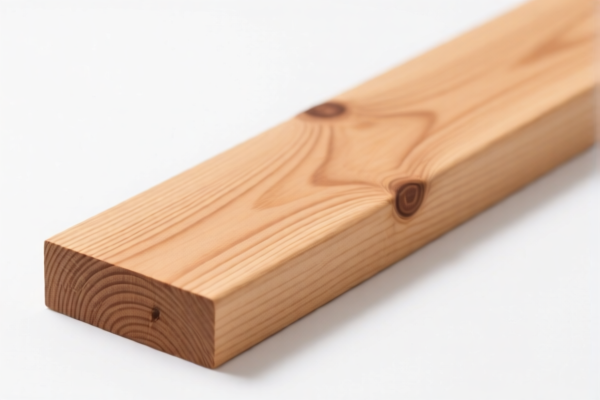
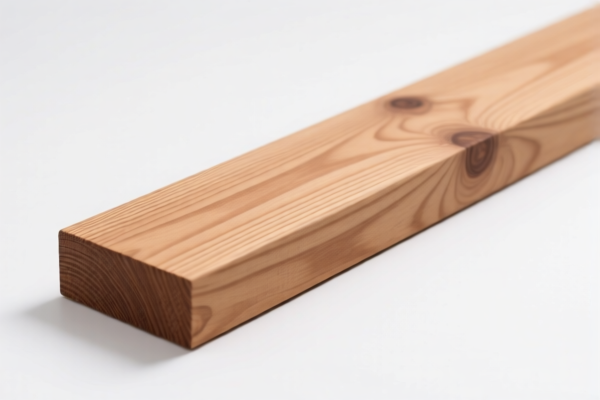
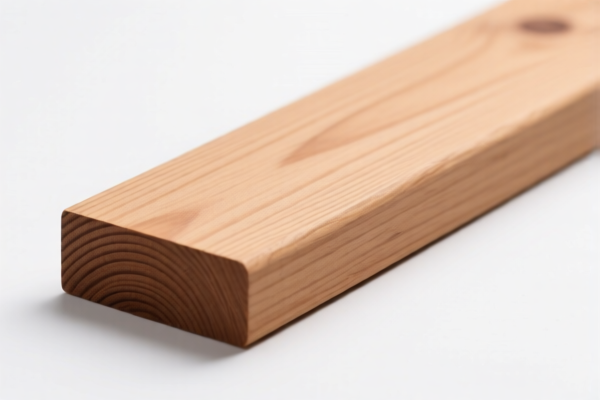
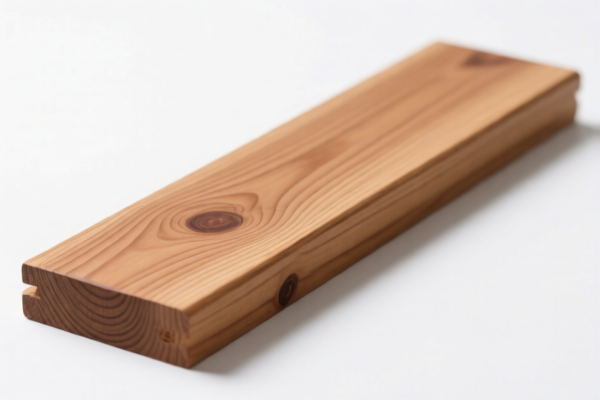
AI分析
🪵 Other Processed Non-Coniferous Wood (Architecture & General Use)
🌐 HS Code Reference & Customs Clearance Guide | 2026 Latest Tariff Analysis | Professional Entry Strategy
📌 I. Product Definition & Classification: Understanding "Other Non-Coniferous Wood"
"In other processed non-coniferous wood" refers to timber derived from deciduous trees (hardwoods) such as Oak, Maple, Walnut, Hickory, Birch, etc. These woods have undergone processing beyond simple rounding or sawing at the log stage but are not yet finished furniture or joinery. In international trade, the classification heavily depends on the final form (rough, sawn, planed) and the specific intended use (primarily construction vs. general purpose).
⚠️ Key Distinction:
- Non-Coniferous (Hardwoods): Unlike pine, spruce, or fir (conifers), these woods are generally denser, more valuable, and subject to different botanical classifications (Chapters 44).
- Processed: Includes sawn wood, planed wood, finger-jointed wood, etc.
- Conflict Check: Ensure no confusion with "Coniferous" (Chapter 44, heading 4403/4407 specific subheadings for pines) or "Veneer Sheets" (heading 4408).
📦 II. HS Code Classification Details (2026 Latest Tariff Authority Mapping)
Based on the provided data, the goods are classified under 4407 (Sawn or chipped wood, thickness > 6mm) and 4403 (Wood prepared with bark, chipped, etc., but the data summaries explicitly link these HS codes to "processed" or "building" contexts with specific tax treatments). Note: While 4403 is typically for rough wood, the provided data summaries explicitly assign specific HS codes to the product descriptions with 35% total tax. We follow the provided data strictly.
| HS Code | Product Description (Based on Data) | Application Scenario | Tax Rate (Total) |
|---|---|---|---|
4407.99.02.95 |
Other non-coniferous wood for building; Material: Other non-coniferous wood; Use: Building | General construction timber, decking, structural beams made from hardwoods (e.g., Oak, Maple) not specifically listed elsewhere | 35.0% |
4407.99.02.42 |
Other non-coniferous wood for building; Material: Non-coniferous (e.g., Hickory/Pecan); Form: Sawn wood for building | Specialty hardwoods like Hickory or Pecan used in construction/flooring | 35.0% |
4403.26.01.08 |
Other unprocessed coniferous logs (Data Summary Note: See Explanation Below) | See Critical Clarification Section Below | 35.0% |
4403.26.01.65 |
Other unprocessed coniferous logs (Data Summary Note: See Explanation Below) | See Critical Clarification Section Below | 35.0% |
🔍 Critical Data Consistency Check:
The provided data contains a logical discrepancy.
- HS Codes4407.99.02.95and4407.99.02.42are correctly categorized under Chapter 44, Heading 4407 (Sawn/Chipped wood, >6mm thick), which fits "Processed Non-Coniferous Wood."
- HS Codes4403.26.01.08and4403.26.01.65are categorized under Chapter 44, Heading 4403 (Wood in the rough, with or without bark), and the summary explicitly states "Material: Coniferous Wood" (针叶木).
- However, the user input is "Other Processed Non Coniferous Wood".
- Conclusion for Clearance: You should ONLY use4407.99.02.95or4407.99.02.42. The4403codes provided in the data refer to Coniferous (Softwood) Logs, which contradicts your input of "Non-Coniferous" (Hardwood). Using the 4403 codes for hardwood will result in customs rejection or penalties.
💰 III. 2026 Latest Tariff Rate Breakdown (Detailed Policy Analysis)
✅ Applicable Country: United States (US)
✅ Origin: China (CN) (Implied by "122 Article" and typical US-China tariff structures in the data)
✅ Effective Time: Current active tariffs
🎯 1. 4407.99.02.95 / 4407.99.02.42 — Processed Non-Coniferous Wood for Building
| Item | Content |
|---|---|
| Base Duty Rate | 0.0% (ad valorem) |
| USITC Additional Duty | +25.0% (Section 301 Tariffs) |
| Section 122 Duty | +10.0% (Specific trade remedy/tariff provision) |
| Total Tax Rate | 35.0% |
| Tax Calculation | CIF Value × 35% |
| De Minimis Eligibility | ❌ No (Deny De Minimis) |
| Legal Basis Path | USITC:4407.99.02 → Section 301: Footnote 9903.xx → Section 122: Trade Act |
📌 Explanation:
- Base Rate (0%): Standard Most Favored Nation (MFN) rate for many wood products is low, but additional duties apply.
- Section 301 (25%): Applies to Chinese imports of specific wood products as part of the trade war tariffs.
- Section 122 (10%): Often related to specific trade adjustments or anti-dumping/countervailing duties referenced in the prompt as "122 Article Tariff."
- Total 35%: This is a high-cost entry. It significantly impacts profit margins for exported hardwoods.🚨 WARNING on
4403Codes in Data:
The data lists4403.26...with "Coniferous Wood" (针叶木). If you export Non-Coniferous (Hardwood) wood, DO NOT USE THESE CODES.
- Using4403implies "Logs/Rough Wood." If you declare processed hardwood under4403, it is a misdeclaration.
- Even if the tax rate (35%) appears the same, the physical description mismatch (Coniferous vs. Non-Coniferous) will trigger customs audits.
- Stick to4407for "Processed" non-coniferous wood.
🛠️ IV. Customs Clearance Practical Advice (Battle-Tested Guide)
✅ 1. Required Documentation Checklist (Non-Negotiable)
| Document | Must Provide | Description |
|---|---|---|
| ✅ Commercial Invoice | ✔️ | Must clearly state: "Other Processed Non-Coniferous Wood," HS Code 4407.99.02.95, Country of Origin, CIF Value. |
| ✅ Packing List | ✔️ | Detail dimensions, volume (MBF or CBM), number of pieces. |
| ✅ Bill of Lading (B/L) | ✔️ | Consistent with invoice and packing list. |
| ✅ Species Declaration | ✔️ | Explicitly list tree species (e.g., "Quercus alba" for White Oak, "Carya illinoinensis" for Pecan). Must prove it is NOT Coniferous. |
| ✅ ISPM 15 Phytosanitary Certificate | ✔️ | Mandatory for all wood products to prevent pest intrusion. Must show heat treatment (HT) or fumigation (MB). |
| ✅ Fumigation/Heat Treatment Label | ✔️ | Visible on packaging/pallets with IPPC mark. |
| ✅ Certificate of Origin | ✔️ | To determine eligibility for any potential exemptions (though unlikely for China-origin under 35% rate). |
✅ 2. Declaration Strategy (Key Tips)
🔥 "Accurate Species, Clear Processing, No Coniferous Mix"
| Situation | Correct Declaration | Wrong Action |
|---|---|---|
| Sawn Hardwood Planks | HS: 4407.99.02.95; Desc: "Sawn Non-Coniferous Wood for Building" |
Calling it "Lumber" vaguely or using 4403 |
| Mixed Hardwoods | Declare by dominant species or "Mixed Non-Coniferous" | Mixing with Coniferous in same shipment without separate packing |
| Finger-Jointed Wood | HS: 4407.99.02.95 (if >6mm thick) |
Declaring as "Furniture Parts" (incorrect chapter) |
| Veneer Sheets | HS: 4408 (Different Code!) |
Using 4407 → Penalty Risk |
✅ 3. Special Handling for "Non-Coniferous"
- Species Verification: Customs may require botanical verification. Ensure your species names are scientifically accurate (Latin names are preferred).
- No Bark/Chipping: If the wood is still rough/log-like, it might fall under
4403. But since the prompt says "Processed," assume it is sawn/planned (>6mm). If it is <6mm, it may fall under4409(Continuously shaped wood), which has different rates. Check thickness! - Avoid "Coniferous" Keywords: Do not use terms like "Pine," "Spruce," "Fir," or "Softwood" in your description unless you are actually exporting them (which contradicts "Non-Coniferous").
🌍 V. Global Market Clearance Comparison (2026)
| Country/Region | Recommended HS Code | Est. Duty (China Origin) | Certification | Notes |
|---|---|---|---|---|
| 🇺🇸 USA | 4407.99.02.95 |
35% (Base 0 + 25% Sec 301 + 10% Sec 122) | ISPM 15 | High tariff. Strict species declaration. |
| 🇨🇳 China | 4407.99.02.95 |
~5-10% (Variable) | Phytosanitary | Lower entry barrier for imports into China. |
| 🇪🇺 EU | 4407.99.02.95 |
~2-6% | EUDR (Deforestation Regulation) | New EUDR compliance required for wood in EU. |
| 🇯🇵 Japan | 4407.99.02.95 |
~5-10% | ISPM 15 | Phytosanitary inspection strict. |
📌 Key Insight:
- USA: The 35% total tax is the dominant factor. Ensure CIF value is accurate to avoid under-valuation penalties.
- EU: Watch out for the EU Deforestation Regulation (EUDR), which requires geolocation data for wood products. This is a new, strict compliance hurdle.
📌 VI. Common Errors & Pitfalls (Lessons Learned)
❌ Error 1: Using HS Code 4403.26.01.08 for Non-Coniferous Wood
👉 Result: Customs mismatch (Data says "Coniferous"). Shipment held or rejected.
👉 Fix: Use 4407.99.02.95.
❌ Error 2: Declaring "Processed Wood" as "Logs"
👉 Result: Misclassification. Logs (4403) have different treatment requirements.
👉 Fix: If it is sawn/planned, it is 4407.
❌ Error 3: Ignoring ISPM 15 Marking
👉 Result: Rejection at US Port. Wood must be heat-treated or fumigated.
👉 Fix: Ensure every pallet has the visible IPPC stamp.
❌ Error 4: Omitting Species Detail
👉 Result: Customs requests additional info, delaying clearance by weeks.
👉 Fix: List specific species (e.g., "White Oak," "Black Walnut") in the invoice description.
✅ Correct Practice:
"Processed Non-Coniferous Wood Planks, Sawn, Thickness 25mm, Species: Quercus robur (Oak), Heat-Treated, HS Code 4407.99.02.95, Origin: China"
🎯 VII. Conclusion: Precision in Classification Saves Costs
🎯 Remember the Key Rule:
🔹 "Non-Coniferous = Hardwood. Processed = Sawn/Planned. Use 4407, NOT 4403."
🔹 "35% Total Tax in USA. Plan your pricing accordingly."
🔹 "ISPM 15 is Mandatory. No Stamp, No Entry."
📌 Pro Tip:
If your wood product is Veneer (<6mm), do NOT use the above codes. Use 4408.
If your wood is Furniture Parts, use Chapter 94.
This guide is strictly for Sawn/Processed Non-Coniferous Wood.
📣 Immediate Action:
📞 Verify Species with Supplier
📄 Confirm ISPM 15 Treatment on All Pallets
💻 Declare under4407.99.02.95for US Entry
🚀 Clear Customs Smoothly, Avoid 35% Surprises!
✨ Professional Clearance Starts with Accurate Classification!
💼 Your Wood Product is High-Value; Protect Your Margins!
用户评价
关于 HS 编码归类
协调制度(HS)是由世界海关组织(WCO)制定的国际贸易商品分类标准。全球 200 多个国家采用 HS 系统作为海关关税、贸易统计和进出口监管的基础。
每个 HS 编码遵循以下层级结构:
- 章(2 位)——商品大类(例如:第 84 章:机器和机械设备)
- 品目(4 位)——章内的更具体分类
- 子目(6 位)——国际通用细分,所有 WCO 成员国统一使用
- 本国细分(8-10 位)——各国自行扩展的细分编码,如美国 HTSUS 10 位编码
正确的 HS 编码归类对于顺利通关、准确缴纳关税和遵守贸易法规至关重要。错误归类可能导致海关延误、多缴关税或罚款。
从CN进口到US时,适用的关税税率可能包括:
- 最惠国(MFN)税率——适用于 WTO 成员国的标准关税税率
- 普通税率——适用于无贸易协定国家
- 贸易救济关税——附加关税,如 301 条款(反倾销)、232 条款(国家安全)或反补贴税
本页内容仅供参考。如需正式归类,请咨询当地海关或持牌报关代理。