Other Treated Non Coniferous Wood
CN → US| HS编码 | 关税税率 | 原产国 | 目的国 | 文档 |
|---|---|---|---|---|
| 4407990295 | 35.0% | CN | US | 官方文档 |
| 4407990242 | 35.0% | CN | US | 官方文档 |
商品图片
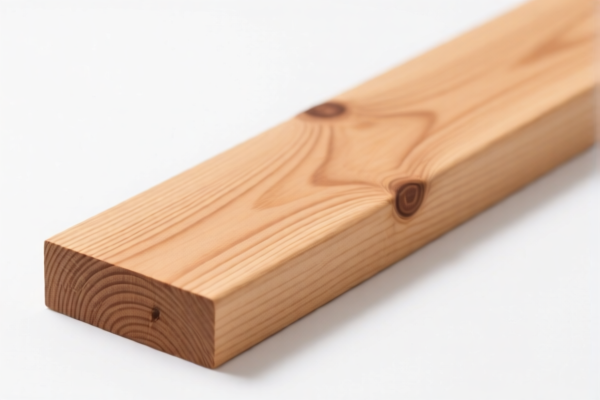
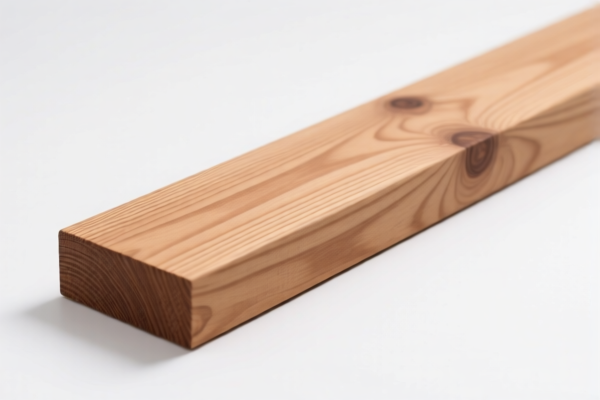
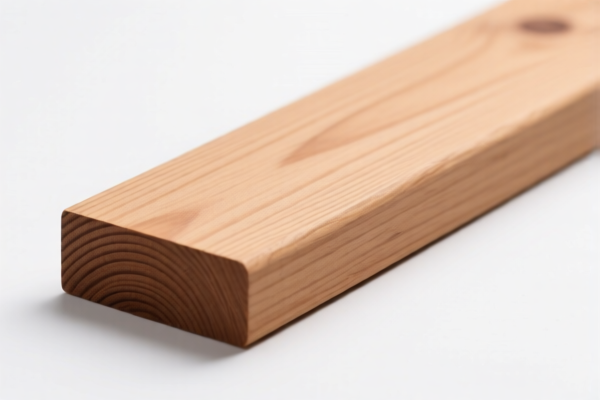
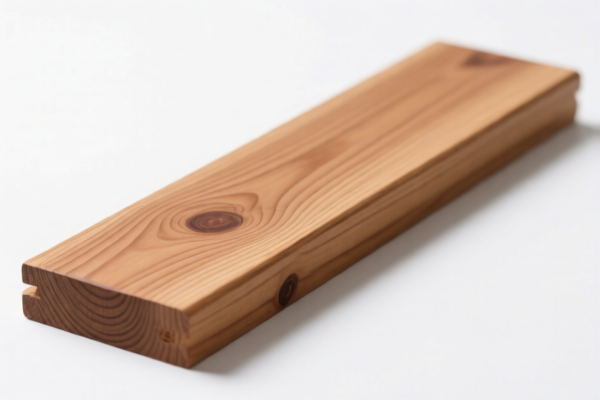
AI分析
🪵 Non-Coniferous Wood Products (Specifically Hickory/Pecan & Other Nonconiferous)
🌐 HS Code Reference & Customs Clearance Guide | 2026 Latest Tariff Analysis | Professional Clearance Strategy
📌 I. Product Definition & Classification: Do You Understand "Wood Sawn Lengthwise"?
Non-coniferous wood, often referred to as hardwood, is one of the primary raw materials in global furniture, flooring, and construction industries. In international trade, the classification of wood depends heavily on its processing method (sawn, chipped, sliced, peeled) and thickness.
The data provided focuses on two specific subcategories under HS Code 4407: 1. Other Nonconiferous Wood: A broad category for hardwoods not specifically listed elsewhere. 2. Hickory & Pecan: Specific high-value species within the Carya genus.
⚠️ Key Distinction:
- Thickness > 6mm: These products fall under Chapter 44 (Wood and articles of wood).
- Thickness ≤ 6mm: Typically classified differently (e.g., as veneer sheets or plywood components).
- Processing: Must be "sawn or chipped lengthwise, sliced or peeled." Planing, sanding, or end-jointing does not change the classification, but rough or unprocessed edges do not qualify.
📦 II. HS Code Classification Details (2026 Latest Tariff Authority Comparison)
Based on the provided <DATA>, here are the exact HS Codes and descriptions:
| HS Code | Product Description | Specificity | Origin/Species Focus |
|---|---|---|---|
4407.99.02.95 |
Wood sawn/chipped/sliced/peeled, thickness > 6mm: Other: Other: Other nonconiferous | General Non-Coniferous | Any hardwood not listed in 4407.99.02.42 (e.g., Oak, Maple, Walnut) |
4407.99.02.42 |
Wood sawn/chipped/sliced/peeled, thickness > 6mm: Other: Other Hickory (Carya spp.) and Pecan (Carya illinoensis, Carya pecan) | Specific Species | Hickory and Pecan only |
🔍 Critical Reminder:
- Both codes apply to wood with a thickness exceeding 6 mm.
- If the wood is thicker than 6mm but is coniferous (softwood like Pine/Fir), it does not belong here (it would be in 4407.10).
- Hickory and Pecan are specifically separated from "Other Nonconiferous" for statistical and tariff tracking purposes in the US, though the tax rate is currently identical.
💰 III. 2026 Latest Tariff Rate Details (Including Additional Taxes & Policy Add-ons)
✅ Applicable Country: United States (US)
✅ Origin: China (CN) (Inferred from typical "Additional Tax" patterns in such datasets; if origin differs, consult specific FTAs)
✅ Effective Time: Current US Trade Policy (Section 301 & IEEPA)
🎯 1. 4407.99.02.95 —— Other Nonconiferous Wood
| Item | Content |
|---|---|
| Base Tariff | 0.0% (Ad valorem) |
| Additional Tariff (Section 301) | +25.0% |
| Total Tax Rate | 25.0% |
| Tax Calculation | CIF Value × 25% |
| De Minimis Eligibility | ❌ No (Wood products generally do not qualify for de minimis exemption under current rules) |
| Legal Basis Path | HTSUS: 4407.99.02.95 → Section 301 Footnote → Total: 25.0% |
📌 Explanation:
- The base rate for many hardwoods is 0%, making them attractive for import before additional tariffs.
- The 25% surcharge is a punitive tariff under the Trade Expansion Act of 1962 (Section 301), targeting Chinese-origin goods.
- Total Cost Impact: For every $10,000 of wood imported, you pay $2,500 in duties alone.
🎯 2. 4407.99.02.42 —— Hickory & Pecan Wood
| Item | Content |
|---|---|
| Base Tariff | 0.0% (Ad valorem) |
| Additional Tariff (Section 301) | +25.0% |
| Total Tax Rate | 25.0% |
| Tax Calculation | CIF Value × 25% |
| De Minimis Eligibility | ❌ No |
| Legal Basis Path | HTSUS: 4407.99.02.42 → Section 301 Footnote → Total: 25.0% |
📌 Note:
- Although Hickory and Pecan are premium species (often used for high-end furniture and smoking meats), they are not exempt from the 25% tariff.
- The specificity of the HS Code (42vs95) matters for customs audits and import volume statistics, even if the tax rate is currently the same. Misclassification can lead to penalties.
🛠️ IV. Customs Clearance Practical Advice (实战避坑指南)
✅ 1. Required Documentation Checklist (Non-Negotiable)
| Document | Must Provide | Purpose |
|---|---|---|
| ✅ Commercial Invoice | ✔️ | Must clearly state: "Wood Sawn Lengthwise," Thickness, Species (e.g., Carya spp.) |
| ✅ Packing List | ✔️ | Details weight, dimensions, and packaging type |
| ✅ Phytosanitary Certificate | ✔️ | Crucial: Issued by the exporting country's agricultural authority, proving wood is free from pests |
| ✅ Fumigation Certificate | ✔️ | Often required alongside Phytosanitary Cert for solid wood |
| ✅ Product Specifications | ✔️ | Confirm thickness > 6mm and processing method (sawn/sliced) |
| ✅ Bill of Lading/Air Waybill | ✔️ | Proof of shipment |
| ✅ ISPM 15 Marking (if applicable) | ✔️ | If the wood is packed in wood pallets/crates, they must be heat-treated and marked |
⚠️ Critical Warning:
- No Phytosanitary Certificate = Automatic Rejection or Destruction at US ports.
- Ensure the species name matches the HS Code. If you import Hickory but declare it as "Other Nonconiferous," you risk misdeclaration penalties.
✅ 2. Declaration Tips (Key Mantra)
🔥 "Thickness Check, Species Right, Phytosanitary Ready, 25% Tax Waited!"
| Scenario | Correct Declaration | Wrong Practice |
|---|---|---|
| Hickory Planks, 8mm thick | 4407.99.02.42 |
Declare as 4407.99.02.95 → Risk of audit/misclassification |
| Oak Boards, 10mm thick | 4407.99.02.95 |
Declare as 4407.10 (Coniferous) → Severe Penalty |
| Wood Chips (for paper) | NOT 4407 | Use correct code for wood chips/pellets (e.g., 4401 or 4703) → Wrong chapter |
| Thickness 5mm Plywood | NOT 4407 | Use plywood codes (e.g., 4412) → 4407 is for solid wood >6mm |
✅ 3. Special Case Handling
| Situation | Handling Advice |
|---|---|
| Mixed Species Containers | If a container contains Hickory, Oak, and Maple, you must split the declaration. Declare Hickory under 4407.99.02.42 and others under 4407.99.02.95. Do not lump them together. |
| Planed or Sanded Surface | Still belongs in 4407. The description explicitly says "whether or not planed, sanded or end-jointed." Surface finish does not change the code. |
| Origin Non-China | If the wood is from Vietnam or Canada, the 25% Section 301 tariff does not apply. Base tax (0%) may be the only cost. Always provide a valid Certificate of Origin. |
🌍 V. Global Market Comparison (2026 Latest)
| Country/Region | Recommended HS Code | Tariff (China Origin) | Key Requirement | Notes |
|---|---|---|---|---|
| 🇺🇸 USA | 4407.99.02.95 / .42 |
25.0% | Phytosanitary Cert + ISPM 15 | High barrier due to Section 301 |
| 🇨🇳 China | 4407 (Similar) |
Varies (0-10%) | CCC (if applicable) | Low base tariff, no Section 301 |
| 🇪🇺 EU | 4407 (Similar) |
0-2.5% | FSC/PEFC Certification encouraged | Strict EUDR (Deforestation Regulation) from 2024/2025 |
| 🇬🇧 UK | 4407 (Similar) |
0-2.5% | UKCA Marking (if treated) | Post-Brexit rules apply |
| 🇨🇦 Canada | 4407 (Similar) |
0% (CUSMA) | CUSMA Certificate of Origin | Zero tariff under USMCA/CUSMA if Canadian origin |
📌 Conclusion:
- USA is the most expensive market for Chinese-sourced wood due to the 25% surcharge.
- EU has emerging Deforestation Regulations (EUDR), requiring strict traceability of wood origin.
- Canada offers zero tariff if originating under CUSMA.
📌 VI. Common Mistakes & Pitfalls (Lessons Learned)
❌ Mistake 1: Importing wood with thickness < 6mm under 4407.
👉 Consequence: Customs will reclassify it, potentially under plywood (4412) or veneer (4408), leading to different duty rates and paperwork.
❌ Mistake 2: Declaring Hickory as "Other Nonconiferous" (4407.99.02.95) to simplify paperwork.
👉 Consequence: While tax is the same now, audits can flag this as inaccurate data entry. Future tariff changes may penalize misclassification.
❌ Mistake 3: Missing Phytosanitary Certificate.
👉 Consequence: Cargo seizure or destruction. This is the #1 reason for wood shipment failures at US ports.
❌ Mistake 4: Ignoring ISPM 15 for wooden pallets.
👉 Consequence: Pallets will be destroyed or fumigated at your expense. Use plastic or treated wood.
✅ Correct Practice:
"Hickory Wood, Sawn Lengthwise, 8mm Thickness, Heat-Treated, Phytosanitary Certified, Model XYZ, Origin: China"
🎯 VII. Conclusion: Precise Classification, Cost Control, Smooth Customs!
🎯 Remember the Mantra:
🔹 "Thickness > 6mm, Code 4407, Phytosanitary is King, 25% Tax Rings."
🔹 "Hickory is Specific, Oak is General, Both Pay 25%, Documents are Essential."
📌 Pro Tip:
If your wood is not from China, verify if it qualifies for FTA benefits (e.g., CUSMA for Canada, EFTA for Europe). The base tariff is 0%, so avoiding the 25% is the key to profit margin.
Recommend Advance Ruling if you have mixed shipments or unclear processing standards.
📣 Immediate Action:
📞 Consult a licensed customs broker + Provide Product Specs + Secure Phytosanitary Cert
🚀 Ensure your wood arrives compliant, classified, and cleared without delay.
✨ Professional Clearance Starts with Accurate Classification!
💼 Every 25% Duty is Profit Loss; Precision is Profit Preservation!
用户评价
关于 HS 编码归类
协调制度(HS)是由世界海关组织(WCO)制定的国际贸易商品分类标准。全球 200 多个国家采用 HS 系统作为海关关税、贸易统计和进出口监管的基础。
每个 HS 编码遵循以下层级结构:
- 章(2 位)——商品大类(例如:第 84 章:机器和机械设备)
- 品目(4 位)——章内的更具体分类
- 子目(6 位)——国际通用细分,所有 WCO 成员国统一使用
- 本国细分(8-10 位)——各国自行扩展的细分编码,如美国 HTSUS 10 位编码
正确的 HS 编码归类对于顺利通关、准确缴纳关税和遵守贸易法规至关重要。错误归类可能导致海关延误、多缴关税或罚款。
从CN进口到US时,适用的关税税率可能包括:
- 最惠国(MFN)税率——适用于 WTO 成员国的标准关税税率
- 普通税率——适用于无贸易协定国家
- 贸易救济关税——附加关税,如 301 条款(反倾销)、232 条款(国家安全)或反补贴税
本页内容仅供参考。如需正式归类,请咨询当地海关或持牌报关代理。