Other Untanned Reptile Skins
CN → US商品图片
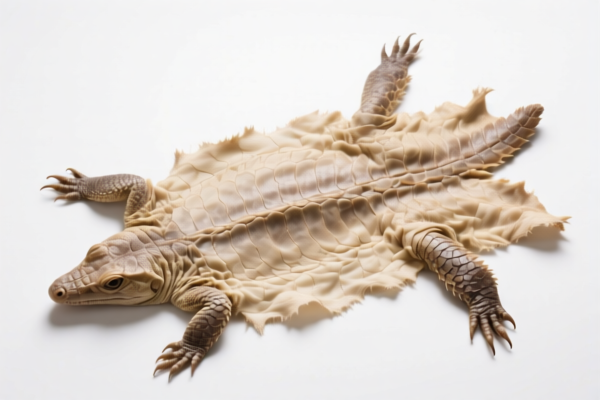
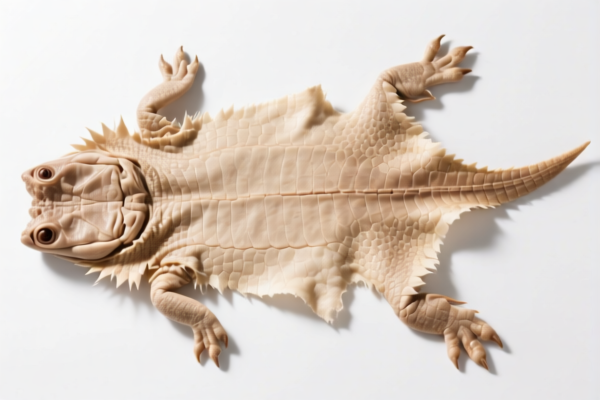
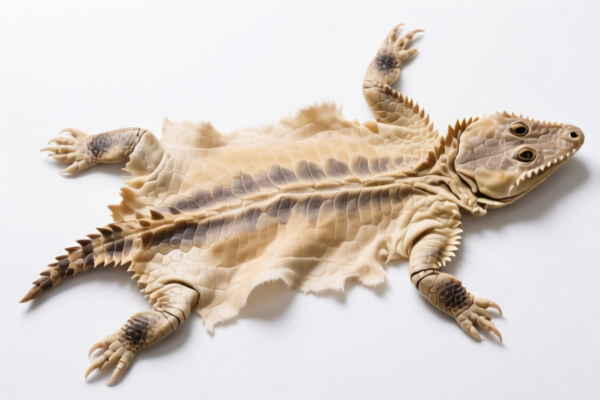
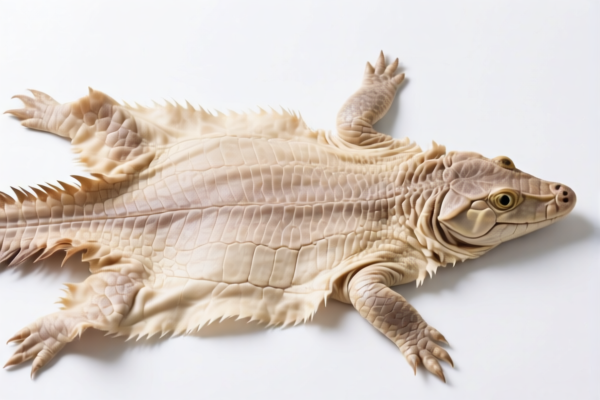
AI分析
🐊 Other Untanned Reptile Skins (Raw Hides & Skins)
🌐 HS Code Reference & Customs Clearance Guide | 2026 Latest Tariff Full Analysis | Professional Clearance Strategy 📌 I. Product Definition & Classification: What Exactly Are "Other Untanned Reptile Skins"?
In international trade, raw reptile skins are strictly regulated due to CITES (Convention on International Trade in Endangered Species) constraints and specific textile/leather classifications. "Other Untanned Reptile Skins" refers to raw hides of reptiles (snakes, crocodiles, alligators, lizards, geckos, etc.) that have NOT undergone tanning or pickling processes, excluding those specifically classified under crocodile/alligator skins if they fall under separate dedicated codes (depending on the 8-digit or 10-digit level specificity).
Key Distinction: * Raw/Salted (Untanned): Freshly skinned, preserved with salt (wet salted) or dried. These are agricultural/livestock commodities. * Tanned/Pickled: Chemically treated for durability. These often fall under Chapter 41 (Leather) or specific processed leather codes. * "Other": Excludes skins of crocodiles, alligators, and caimans if they have their own specific subheadings (e.g., 4106.21/22 in many systems). This category usually captures snakes (vipers, pythons, boas), lizards, geckos, and other wild reptiles.
⚠️ CRITICAL WARNING: * CITES Compliance is Mandatory: Most reptile skins are listed under CITES Appendices I or II. Without proper CITES Permits (Export & Import), customs will seize and destroy the shipment, and fines can be astronomical. * Species Identification: You must declare the Scientific Name (Latin name) of the species. Generic terms like "Snake Skin" are often rejected.
📦 II. HS Code Classification Details (2026 Latest Tariff Authority)
Note: HS Codes vary slightly by country (8-digit vs. 10-digit). Below are the standard World Customs Organization (WCO) 6-digit codes and common national extensions (e.g., US HTS, EU CN).
| HS Code (WCO 6-digit) | Product Description | Applicable Species | CITES Status | Tanned? |
|---|---|---|---|---|
| 4106.21.00 | Crocodile, Alligator, or Caiman Skins (Wet-Salted) | Crocodilians | Check Appendix | ❌ No (Raw) |
| 4106.22.00 | Crocodile, Alligator, or Caiman Skins (Other, e.g., Dried) | Crocodilians | Check Appendix | ❌ No (Raw) |
| 4106.31.00 | Snake Skins (Wet-Salted) | Snakes (Pythons, Vipers, Boas, etc.) | High Risk | ❌ No (Raw) |
| 4106.32.00 | Snake Skins (Other, e.g., Dried/Salted) | Snakes (Pythons, Vipers, Boas, etc.) | High Risk | ❌ No (Raw) |
| 4106.40.00 | Other Reptile Skins (Wet-Salted or Dried) | Lizards, Geckos, Chameleons, Other | Variable | ❌ No (Raw) |
🔍 Key Reminder: * If the product is Snake Skin, it is NOT "Other." It has its own specific code (4106.31/32). Only use 4106.40.00 for lizards, geckos, or truly "other" reptiles. * "Untanned" means raw. If you have pickled skins (lightly treated to prevent decay but not fully tanned), they may still fall under Chapter 41 but require specific chemical declaration.
💰 III. 2026 Latest Tariff Rates Breakdown (Including Add-on Taxes)
✅ Target Country: United States (US)
✅ Country of Origin: China (CN)
✅ Effective Date: Post-2025 Trade Policies (Section 301 & IEEPA apply)
🎯 1. Snake Skins (HTS: 4106.31.00 / 4106.32.00)
| Item | Detail |
|---|---|
| Base MFN Rate | Free (0%) or Low (2-5%) depending on specific subheading |
| USITC Section 301 Add-on | +25% (High-risk category for potential dual-use or luxury goods scrutiny) |
| IEEPA Add-on (China) | +10% (Effective Nov 10, 2025, for Chinese-origin raw hides) |
| Total Effective Rate | ~35% (if 0% base) to ~40% (if 5% base) |
| De Minimis Exemption | ❌ Denied (Raw animal products are excluded from $800 de minimis) |
| Legal Path | HTS:4106.31.00 → FOOTNOTE:301.China.RawHides → IEEPA:9903.01.24 |
📌 Explanation: * Raw snake skins are considered luxury raw materials. While base rates are low, the 301 tariffs and IEEPA surcharges significantly increase costs. * CITES Permit Failure: If CITES documents are missing, the duty is irrelevant—goods are confiscated.
🎯 2. Other Reptile Skins (e.g., Lizards/Geckos) (HTS: 4106.40.00)
| Item | Detail |
|---|---|
| Base MFN Rate | Free (0%) or Low (2-3%) |
| USITC Section 301 Add-on | +25% |
| IEEPA Add-on (China) | +10% |
| Total Effective Rate | ~35% |
| De Minimis Exemption | ❌ Denied |
| Legal Path | HTS:4106.40.00 → FOOTNOTE:301.China.RawHides → IEEPA:9903.01.24 |
📌 Note: * Lizard skins (e.g., Iguana, Gecko) are often less regulated than crocodile but still require CITES verification if listed. * Always verify if the specific lizard species is CITES-listed. If not, you may still need a Non-CITES Declaration.
🛠️ IV. Customs Clearance Practical Advice (Battle-Tested Pitfall Avoidance)
✅ 1. Required Documentation Checklist (Non-Negotiable)
| Document | Required? | Description |
|---|---|---|
| ✅ CITES Export Permit | YES | Issued by the country of origin. Must match the scientific name exactly. |
| ✅ CITES Import Permit | YES (Often) | Required by US FWS (Fish & Wildlife Service) for most Appendix I/II species. |
| ✅ FWS Declaration Form 3-177 | YES | Mandatory US Fish & Wildlife Service form for import. |
| ✅ Commercial Invoice | YES | Must list Scientific Name (e.g., Python bivittatus), not just "Snake Skin." |
| ✅ Packing List | YES | Details quantity, weight, and preservation method (Salted/Dried). |
| ✅ Species Identification Report | Recommended | From a recognized taxonomist or lab, especially for "Other" reptiles. |
| ✅ Salt Content Declaration | YES | Customs may check moisture/salt content to verify "Raw" status vs. "Tanned." |
✅ 2. Declaration Tips (Critical Keywords)
🔥 "Science Name First, CITES Second, Raw Third!"
| Scenario | Correct Declaration | Incorrect Practice |
|---|---|---|
| Snake Skins | "Raw Salted Python Skin, Scientific Name: Python bivittatus, CITES App. II" |
"Snake Skin for Bag" |
| Lizard Skins | "Dried Iguana Skin, Scientific Name: Iguana iguana, CITES App. I" |
"Lizard Skin" |
| Crocodile | "Wet-Salted Crocodile Skin, Scientific Name: Crocodylus porosus" |
"Reptile Skin" |
| Tanned vs. Raw | "UNTANNED, RAW HIDE" |
"Leather" (If not tanned, this is fraud) |
⚠️ Warning: Misdeclaring "Raw" as "Tanned Leather" (Chapter 41) or vice versa can lead to fraud charges because CITES permits differ for raw vs. processed goods.
✅ 3. Special Cases & Risk Management
| Situation | Handling Advice |
|---|---|
| High-Value Luxury Skins (e.g., Python, Gaboon Viper) | These are high-audit items. Expect physical inspection. Have CITES permits ready in digital and physical form. |
| Mixed Shipments | Do NOT mix CITES-listed and non-CITES species in one container without separate declarations. Segregate clearly. |
| Gecko/Lizard Skins | Some geckos are CITES-listed (e.g., Tokay Gecko). Others are not. Verify each species individually. |
| Small Quantity (Sample) | Even samples require CITES permits. De minimis ($800) does NOT apply to CITES items. |
🌍 V. Global Market Clearance Comparison (2026 Latest)
| Country/Region | Recommended HS Code | Tariff (CN Origin) | CITES/Regulation | Notes |
|---|---|---|---|---|
| 🇺🇸 USA | 4106.31/32 or 4106.40 |
~35% (incl. 301+IEEPA) | Strict FWS Control | CITES Permit + FWS 3-177 mandatory. High audit rate. |
| 🇨🇳 China | 4106.31/32 or 4106.40 |
0-13% | CITES Managed | Import quotas may apply. Domestic processing encouraged. |
| 🇪🇺 EU | 4106 series |
0-6.5% | Strict CITES | Requires EU CITES Export/Import Licenses. |
| 🇬🇧 UK | 4106 series |
0-6.5% | Strict CITES | Post-Brexit rules mirror EU but require UK-specific permits. |
| 🇯🇵 Japan | 4106 series |
Free or 6% | Strict CITES | Requires CITES certificates. |
📌 Conclusion: * USA is the most expensive due to 301/IEEPA tariffs on raw hides. * CITES is the biggest barrier, not tariff. Ensure permits are valid and match the scientific name exactly.
📌 VI. Common Mistakes & Pitfalls (Blood Lessons)
❌ Mistake 1: Using Common Names Only (e.g., "Snake Skin") 👉 Consequence: Customs rejects declaration → Delay 2-4 weeks or Seizure. ✅ Fix: Always use Scientific Name (e.g., Python reticulatus).
❌ Mistake 2: Missing CITES Permits 👉 Consequence: Confiscation + Fine up to $10,000 per violation + Criminal charges. ✅ Fix: Apply for CITES permits months in advance.
❌ Mistake 3: Misclassifying "Tanned" as "Raw" 👉 Consequence: Evading higher taxes or different regulations → Fraud Investigation. ✅ Fix: Be honest about processing stage. Raw = Untanned. Tanned = Processed.
❌ Mistake 4: Ignoring "Other Reptile" Specifics 👉 Consequence: Lizard skins sometimes have different CITES status than snake skins. ✅ Fix: Verify each species individually against CITES Appendices.
🎯 VII. Conclusion: Professional Clearance, Risk-Free Trade!
🎯 Remember the Mantra:
🔹 "Scientific Name is King, CITES Permit is Queen, Raw vs. Tanned is the Key!" 🔹 "HS Code 4106, Tariff ~35%, Permits are Mandatory, No Exceptions!"
📌 Pro Tip:
If you are importing Python or Cobra skins (high-risk CITES Appendix I), consider working with a licensed CITES broker in the destination country. They can expedite permit verification and prevent costly delays.
📣 Immediate Action:
📞 Contact Your Customs Broker NOW. 📄 Request CITES Permits from Supplier. 📝 Verify Scientific Names on All Documents. 🚀 Ensure Smooth, Legal, and Efficient Clearance!
✨ Professional Customs Clearance Starts with Precise Classification! 💼 Every Gram of Raw Skin is Worth Its Weight in Gold—Protect Your Shipment!
用户评价
关于 HS 编码归类
协调制度(HS)是由世界海关组织(WCO)制定的国际贸易商品分类标准。全球 200 多个国家采用 HS 系统作为海关关税、贸易统计和进出口监管的基础。
每个 HS 编码遵循以下层级结构:
- 章(2 位)——商品大类(例如:第 84 章:机器和机械设备)
- 品目(4 位)——章内的更具体分类
- 子目(6 位)——国际通用细分,所有 WCO 成员国统一使用
- 本国细分(8-10 位)——各国自行扩展的细分编码,如美国 HTSUS 10 位编码
正确的 HS 编码归类对于顺利通关、准确缴纳关税和遵守贸易法规至关重要。错误归类可能导致海关延误、多缴关税或罚款。
从CN进口到US时,适用的关税税率可能包括:
- 最惠国(MFN)税率——适用于 WTO 成员国的标准关税税率
- 普通税率——适用于无贸易协定国家
- 贸易救济关税——附加关税,如 301 条款(反倾销)、232 条款(国家安全)或反补贴税
本页内容仅供参考。如需正式归类,请咨询当地海关或持牌报关代理。