Other Vulcanized Rubber Sealing Parts
CN → US| HS编码 | 关税税率 | 原产国 | 目的国 | 文档 |
|---|---|---|---|---|
| 8487900040 | 38.9% | CN | US | 官方文档 |
| 4016935020 | 37.5% | CN | US | 官方文档 |
| 4016935010 | 37.5% | CN | US | 官方文档 |
| 8708995500 | 37.5% | CN | US | 官方文档 |
| 8708995500 | 37.5% | CN | US | 官方文档 |
商品图片
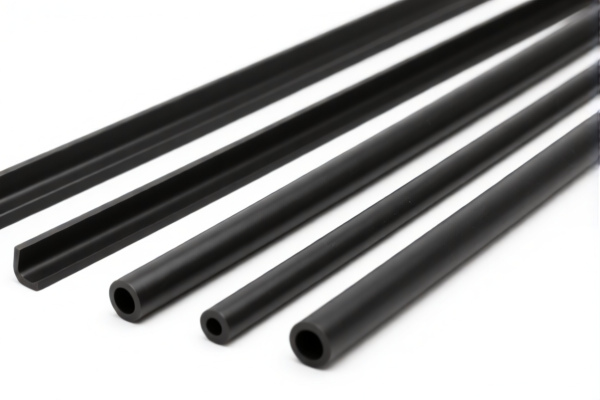
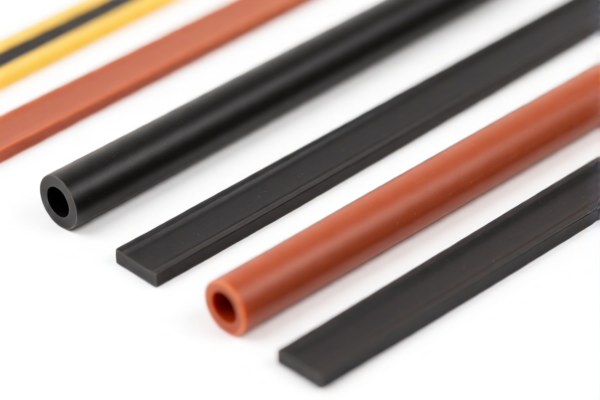
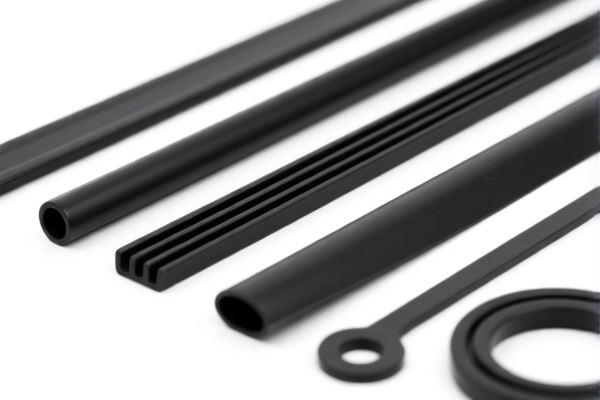
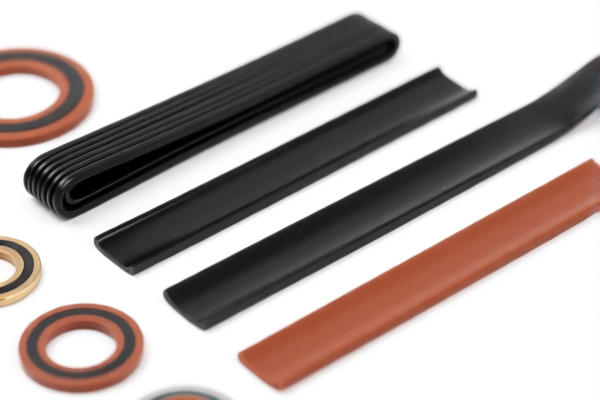
AI分析
🏭 Vulcanized Rubber Sealing Parts (Mechanical Seals & Gaskets)
🌐 HS Code Reference & Customs Clearance Guide | 2026 Latest Tariff Analysis | Professional-Level Clearance Strategy
📌 I. Product Definition and Classification: What Exactly Are "Vulcanized Rubber Sealing Parts"?
Vulcanized rubber sealing parts are essential mechanical components designed to prevent the leakage of fluids (liquids or gases) or the ingress of contaminants in machinery, automotive systems, and industrial equipment. They are primarily made from rubber that has undergone vulcanization—a chemical process that improves durability, elasticity, and resistance to heat, oil, and weathering.
In international trade, these parts are generally categorized into two distinct logical paths based on their primary function and structural specificity:
- General Mechanical Seals (Chapter 84/85 context):
If the seal is a generic mechanical component (e.g., O-rings, U-cups, oil seals) not exclusively dedicated to a specific vehicle model, it is often classified under Chapter 84 (Nuclear reactors, boilers, machinery). - Automotive Specific Seals (Chapter 87 context):
If the seal is explicitly designed for and used exclusively in motor vehicles (e.g., car door weatherstrips, vehicle-specific oil seals, exhaust gaskets), it is classified under Chapter 87 (Vehicles other than railway vehicles).
⚠️ Key Distinction Point:
- If the product is a generic industrial seal (not vehicle-specific) → Likely 8487.90 or 4016.93.
- If the product is an automotive part (even if rubber) → Likely 8708.99.
- Note: Customs authorities often scrutinize "rubber seals" to prevent misclassification of automotive parts as generic rubber goods to avoid higher tariffs.
📦 II. HS Code Classification Details (2026 Latest Tariff Authoritative Comparison)
| HS Code | Product Description | Application Scenario | Material & Structure Match |
|---|---|---|---|
8487.90.00.40 |
Machinery parts and accessories, n.e.s. (specifically: seals/gaskets not elsewhere specified) | Generic industrial machinery, pumps, valves; non-vehicle specific seals. | ✅ Vulcanized Rubber; ✅ Sealing Function (Mechanical Part) |
4016.93.50.20 |
Other vulcanized rubber goods (other than hard rubber): Gaskets, washers, and other seals | General purpose rubber seals; industrial gaskets not specific to vehicles. | ✅ Vulcanized Rubber; ✅ Sealing Item (Rubber Good) |
4016.93.50.10 |
Other vulcanized rubber goods: Seals and gaskets | Similar to above; generic rubber sealing components. | ✅ Vulcanized Rubber; ✅ Sealing Item (Rubber Good) |
8708.99.55.00 |
Parts and accessories of motor vehicles: Other parts and accessories | Automotive seals, weatherstrips, door seals, vehicle-specific oil seals. | ✅ Vulcanized Rubber; ✅ Automotive Part |
8708.99.55.00 |
Parts and accessories of motor vehicles: Other parts and accessories | Automotive sealing strips; vehicle component integration. | ✅ Vulcanized Rubber; ✅ Automotive Part |
🔍 Critical Note:
- 8487.90.00.40 and 4016.93.50.x are for generic/non-automotive seals.
- 8708.99.55.00 is strictly for automotive seals. Misclassifying an auto-part as a generic rubber part (4016) to avoid higher automotive tariffs is a common audit target.
- All codes above share the same tax structure due to current US-China trade policies.
💰 III. 2026 Latest Tariff Rate Breakdown (Including Additional Taxes & Policy Surcharges)
✅ Applicable Country: United States (US)
✅ Country of Origin: China (CN)
✅ Effective Date: From November 10, 2025 (including subsequent imports)
🎯 1. 8487.90.00.40 — Machinery Parts (Generic Seals)
| Item | Content |
|---|---|
| Base Tariff | 3.9% (ad valorem) |
| USITC Additional Tariff (Section 301) | +25.0% |
| IEEPA Additional Tariff (Section 122) | +10.0% |
| Total Tariff Rate | 38.9% |
| Tax Calculation | CIF Value × 38.9% |
| De Minimis Eligibility | ❌ No (deny_de_minimis) |
| Legal Authority Path | Base: 8487.90.00.40 → 301: 8487.90.00.40 → IEEPA: 9903.01.25 |
📌 Explanation:
- The 3.9% base rate applies to generic machinery parts.
- The 25% Section 301 tariff applies to most Chinese machinery parts.
- The 10% IEEPA tariff applies to Chinese-origin goods under the current emergency authority.
- Total: 38.9%. This is a high-cost category for generic industrial seals.
🎯 2. 4016.93.50.20 & 4016.93.50.10 — Other Vulcanized Rubber Goods (Gaskets/Seals)
| Item | Content |
|---|---|
| Base Tariff | 2.5% (ad valorem) |
| USITC Additional Tariff (Section 301) | +25.0% |
| IEEPA Additional Tariff (Section 122) | +10.0% |
| Total Tariff Rate | 37.5% |
| Tax Calculation | CIF Value × 37.5% |
| De Minimis Eligibility | ❌ No (deny_de_minimis) |
| Legal Authority Path | Base: 4016.93.50.x → 301: 4016.93.50.x → IEEPA: 9903.01.25 |
📌 Explanation:
- Rubber goods have a lower base rate (2.5%) compared to machinery parts (3.9%).
- However, the 35% surcharge (25% + 10%) remains identical.
- Total: 37.5%. This is 1.4% cheaper than the machinery classification but carries significant risk if the goods are deemed "automotive parts" by customs.
🎯 3. 8708.99.55.00 — Automotive Parts and Accessories
| Item | Content |
|---|---|
| Base Tariff | 2.5% (ad valorem) |
| USITC Additional Tariff (Section 301) | +25.0% |
| IEEPA Additional Tariff (Section 122) | +10.0% |
| Total Tariff Rate | 37.5% |
| Tax Calculation | CIF Value × 37.5% |
| De Minimis Eligibility | ❌ No (deny_de_minimis) |
| Legal Authority Path | Base: 8708.99.55.00 → 301: 8708.99.55.00 → IEEPA: 9903.01.25 |
📌 Explanation:
- Although this is an automotive part, the base rate is low (2.5%).
- The 35% surcharge is standard for Chinese automotive components.
- Total: 37.5%.
- Risk Warning: If you classify an automotive seal as4016(generic rubber) to simplify paperwork, CBP may reclassify it as8708(auto part) during audit. Since the tax rate is the same (37.5%), the main risk is penalties for misdeclaration, not just tax differences.
🛠️ IV. Customs Clearance Practical Advice (Real-World Pitfall Avoidance Guide)
✅ 1. Required Documentation Checklist (Nothing Missing)
| Document | Required? | Explanation |
|---|---|---|
| ✅ Product Spec Sheet | ✔️ | Must state: Material (Vulcanized Rubber), Shape (O-ring, Gasket, Strip), Hardness (Shore A), Resistance (Oil/Water). |
| ✅ Product Photos | ✔️ | Clear images showing the part number, shape, and any branding. For auto parts, show installation context if possible. |
| ✅ Commercial Invoice | ✔️ | Must clearly describe the item: e.g., "Vulcanized Rubber Oil Seal, Part No. XYZ, for Pump/Motor" OR "Automotive Door Weatherstrip, Car Model ABC." |
| ✅ Declaration of Use | ✔️ | Crucial! Clearly state: "For Industrial Machinery" OR "For Motor Vehicle [Make/Model]". This determines Chapter 84/40 vs. 87. |
| ✅ Packaging List | ✔️ | Show packing details to avoid "missing parts" queries. |
✅ 2. Declaration Strategy (Key Mantras)
🔥 "Know the Use, Choose the Chapter; Auto Parts in Auto Chapter, Generic in Generic Chapter!"
| Scenario | Correct HS Code | Why? |
|---|---|---|
| Industrial Pump O-Ring | 8487.90.00.40 or 4016.93.50.x |
Not specific to a vehicle. Use 8487 for "machinery parts" or 4016 for "rubber goods." |
| Car Door Seal (Weatherstrip) | 8708.99.55.00 |
Explicitly for a motor vehicle. Must be declared as auto part. |
| Universal Rubber Gasket | 4016.93.50.20 |
Generic rubber good, not a machine part with precision engineering. |
| Engine Oil Seal (Car) | 8708.99.55.00 |
Even though it's a seal, it's an auto part. Do NOT declare as generic rubber. |
✅ 3. Special Handling for Rubber vs. Machinery
| Situation | Handling Advice |
|---|---|
| Ambiguous "Seals" | If the seal is used in both industrial and auto contexts, declare based on the actual shipment's end-use. If mixed, consider splitting the declaration. |
| "Hard Rubber" vs. "Vulcanized" | Ensure the spec says "Vulcanized." "Hard Rubber" (ebonite) has different codes. Most seals are flexible vulcanized rubber. |
| Sets/Kits | If sold as a "Seal Kit" for a specific car, always use 8708.99.55.00. Do not try to break it down into individual rubber rings. |
🌍 V. Global Market Clearance Comparison (2026 Latest)
| Country/Region | Recommended HS Code | Tariff (China Origin) | Certification | Notes |
|---|---|---|---|---|
| 🇺🇸 USA | 8487.90.00.40 / 4016.93.50.x / 8708.99.55.00 |
37.5% - 38.9% | None Specific | High tariffs due to 301/122. De minimis exempt. |
| 🇨🇳 China | 4016.93.50.x |
~1.0% - 2.0% | CCC (if auto part) | Low base tariff. |
| 🇪🇺 EU | 4016.93.90 |
~0% - 4.5% | REACH + RoHS | No Section 301 equivalent. Lower overall cost. |
| 🇲🇽 Mexico | 4016.93.50 |
~0% (USMCA) | NOM | If under USMCA rules, may be duty-free. |
📌 Conclusion:
- The US market is the most expensive for Chinese rubber/auto parts due to layered tariffs.
- EU and Mexico offer significantly better duty advantages.
- For US exports, accuracy in declaring "Auto Part" vs. "Generic Rubber" is critical to avoid fines, even if the final tax rate is similar.
📌 VI. Common Mistakes & Pitfall Guide (Lessons Learned)
❌ Mistake 1: Declaring an Automotive Door Seal as "Vulcanized Rubber Gasket" (HS 4016).
👉 Consequence: CBP may reclassify as 8708.99.55.00. Since the tax is the same (37.5%), you face penalties for misdeclaration and potential seizure.
👉 Fix: Always declare auto parts under Chapter 87 if they are vehicle-specific.
❌ Mistake 2: Declaring a Generic Industrial Seal as an Auto Part (HS 8708).
👉 Consequence: Unnecessary scrutiny. While the tax is the same, auto parts require stricter documentation (e.g., VIN compatibility).
👉 Fix: Use Chapter 40 or 84 for non-vehicle specific parts.
❌ Mistake 3: Claiming De Minimis (Section 321) for shipments under $800.
👉 Consequence: FAIL. All these HS codes are subject to IEEPA Section 122 and Section 301, which explicitly deny de minimis.
👉 Fix: Prepare full formal entry documentation even for small shipments.
✅ Correct Practice:
"Vulcanized Nitrile Rubber Oil Seal, 50mm ID, for Industrial Hydraulic Pump, No Vehicle Application"
vs.
"Rubber Door Weatherstrip, Left Side, for 2020 Toyota Camry"
🎯 VII. Conclusion: Professional Declaration, Save Costs, Avoid Penalties!
🎯 Remember the Mantras:
🔹 "Auto Part = Chapter 87; Generic Rubber = Chapter 40/84."
🔹 "No De Minimis! Tariff is ~38%. Prepare Formal Entry."
🔹 "Tax Rate is Similar, but Penalty for Wrong Code is High!"
📌 Pro Tip:
If your rubber seals are used in non-automotive applications, clearly highlight "Industrial Use" in the invoice description to support classification under 4016 or 8487. If they are for cars, be honest about 8708 to avoid audit risks.
📣 Immediate Action:
📞 Contact your Customs Broker with product photos and specific end-use declaration.
🚀 Ensure your Commercial Invoice matches the HS Code classification exactly to prevent clearance delays.
✨ Professional Clearance Starts with Precise Classification!
💼 Every percentage point of tax matters in high-tariff environments!
用户评价
关于 HS 编码归类
协调制度(HS)是由世界海关组织(WCO)制定的国际贸易商品分类标准。全球 200 多个国家采用 HS 系统作为海关关税、贸易统计和进出口监管的基础。
每个 HS 编码遵循以下层级结构:
- 章(2 位)——商品大类(例如:第 84 章:机器和机械设备)
- 品目(4 位)——章内的更具体分类
- 子目(6 位)——国际通用细分,所有 WCO 成员国统一使用
- 本国细分(8-10 位)——各国自行扩展的细分编码,如美国 HTSUS 10 位编码
正确的 HS 编码归类对于顺利通关、准确缴纳关税和遵守贸易法规至关重要。错误归类可能导致海关延误、多缴关税或罚款。
从CN进口到US时,适用的关税税率可能包括:
- 最惠国(MFN)税率——适用于 WTO 成员国的标准关税税率
- 普通税率——适用于无贸易协定国家
- 贸易救济关税——附加关税,如 301 条款(反倾销)、232 条款(国家安全)或反补贴税
本页内容仅供参考。如需正式归类,请咨询当地海关或持牌报关代理。