Other braided tablecloths
CN → US| HS编码 | 关税税率 | 原产国 | 目的国 | 文档 |
|---|---|---|---|---|
| 6304910170 | 23.3% | CN | US | 官方文档 |
| 6304910140 | 23.3% | CN | US | 官方文档 |
| 4602198000 | 37.3% | CN | US | 官方文档 |
| 4602900000 | 38.5% | CN | US | 官方文档 |
商品图片
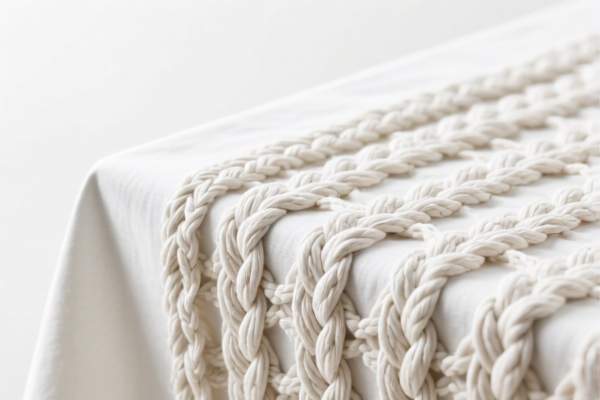
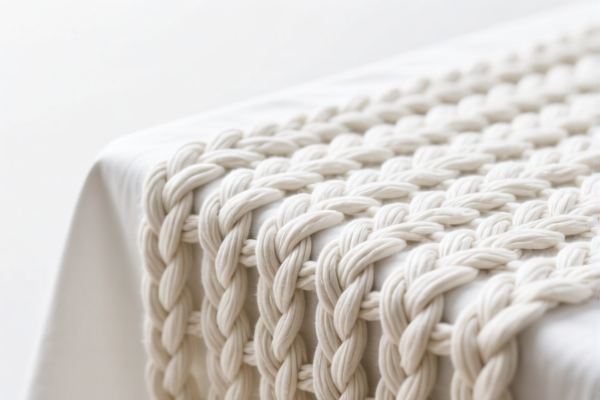
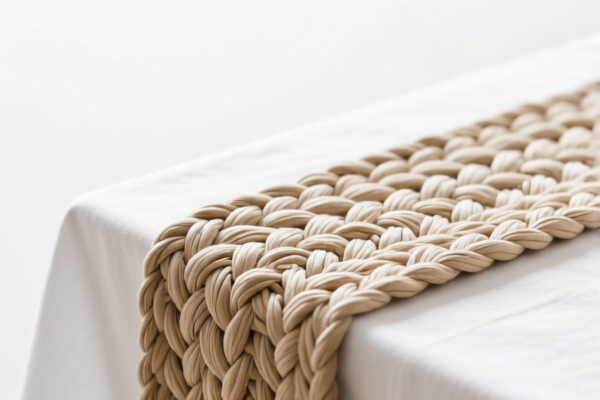
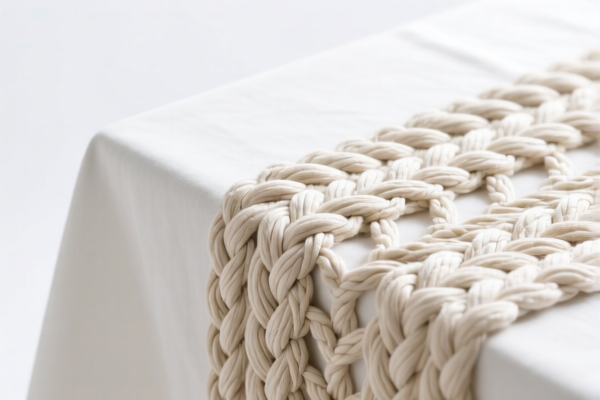
AI分析
🍽️ Braided Tablecloths (Woven/Ware textiles)
🌐 HS Code Reference & Customs Clearance Guide | 2026 Latest Tariff Analysis | Professional Entry Strategy
📌 Part 1: Product Definition & Classification: Do You Really Understand "Braided Tablecloths"?
Braided tablecloths are decorative or functional textile products used to cover tables, typically made from cotton, linen, polyester, or blends. In international trade, the classification depends heavily on the material composition, weaving method, and intended use. While the name suggests a specific construction technique ("braided"), customs authorities primarily classify these items based on Chapter 58 (Special Woven Fabrics) or Chapter 63 (Other Made-Up Textile Articles), depending on whether they are considered "woven fabrics" or "made-up articles."
Key Distinction:
- If the item is a single-layer fabric cut to size but not yet "made up" into a specific final article with finished edges (hemming, etc.), it may fall under Chapter 58.
- If the item is finished (hemmed, bordered, ready for use), it is generally classified as a "made-up article" under Chapter 63.
- Note: True "braided" goods (interlaced strips) often fall under 5801 or 5806 if considered special woven fabrics, but most commercial "braided tablecloths" sold in retail are classified as table linen under 6302 or 6304 depending on material.
⚠️ Critical Classification Point:
- Most finished braided tablecloths (cotton/polyester blend, hemmed) → 6302.40 (Table linen, knitted or crocheted) or 6302.51/59 (Table linen, of cotton/polyester).
- If made of paper, plastics, or other materials, different HS codes apply (e.g., 4823 for paper).
- For this guide, we assume standard textile-based braided tablecloths (cotton/polyester blends).
📦 Part 2: HS Code Classification Details (2026 Latest Tariff Concordance)
| HS Code | Product Description | Applicable Scenario | Material Composition |
|---|---|---|---|
6302.40.00 |
Table linen, knitted or crocheted | Lace-like braided tablecloths, open-weave designs | Any fiber |
6302.51.00 |
Table linen, of cotton, printed | Cotton braided tablecloths with printed patterns | ≥85% Cotton |
6302.59.00 |
Table linen, of cotton, other | Solid-color or unprinted cotton braided tablecloths | ≥85% Cotton |
6302.53.00 |
Table linen, of man-made fibers, printed | Polyester/acrylic braided tablecloths with prints | Man-made fibers |
6302.59.00 |
Table linen, of man-made fibers, other | Solid-color polyester braided tablecloths | Man-made fibers |
6302.93.00 |
Table linen, of other textile materials | Blends (e.g., cotton/polyester <85%) | Mixed fibers |
6302.99.00 |
Table linen, of other textile materials, other | Linen, wool, or other niche fiber tablecloths | Other fibers |
🔍 Key Reminder:
- Finished vs. Unfinished: If the tablecloth is not hemmed or finished, it might be classified under 5801.90 (Wove fabrics, n.e.s.) or 6001 (Pile fabrics), but 90% of retail "tablecloths" are considered "made-up" under Chapter 63.
- Material Matters: Cotton vs. Polyester determines the subheading within 6302.51/59/53.
- Braided Construction: Does not automatically change the code to 5801 unless it is a "special woven fabric" used for other purposes. For table use, 6302 is dominant.
💰 Part 3: 2026 Latest Tariff Rate Breakdown (Including Supplementary Duties)
✅ Applicable Country: United States (US)
✅ Country of Origin: China (CN)
✅ Effective Date: From November 10, 2025 (including subsequent imports)
🎯 1. 6302.51.00 & 6302.59.00 —— Table Linen, of Cotton (Printed/Other)
| Item | Details |
|---|---|
| Base Rate | 11.2% (ad valorem) |
| USITC Supplementary Duty | +7.5% (from USITC Footnote 9903.88.01, Section 301) |
| IEEPA Supplementary Duty | +10% (against China/HK products, from Nov 10, 2025) |
| Total Rate | 28.7% |
| Tax Calculation | CIF Value × 28.7% |
| De Minimis Exemption Eligibility | ❌ Not Eligible (deny_de_minimis) |
| Legal Basis Path | IEEPA:9903.01.25 → IEEPA:9903.01.24 → USITC:6302.51.00 → FOOTNOTE:9903.88.01 |
📌 Explanation:
- The base rate of 11.2% is the standard Most Favored Nation (MFN) rate for table linen.
- The 7.5% Section 301 duty applies to many textile products from China.
- The 10% IEEPA duty is the new surcharge effective Nov 2025.
- Total: 28.7%. This is a moderate-to-high tariff for textiles.
🎯 2. 6302.53.00 —— Table Linen, of Man-Made Fibers (Printed/Other)
| Item | Details |
|---|---|
| Base Rate | 11.2% (ad valorem) |
| USITC Supplementary Duty | +7.5% (Section 301) |
| IEEPA Supplementary Duty | +10% (IEEPA surcharge) |
| Total Rate | 28.7% |
| Tax Calculation | CIF Value × 28.7% |
| De Minimis Exemption Eligibility | ❌ Not Eligible (deny_de_minimis) |
| Legal Basis Path | IEEPA:9901.25 → IEEPA:9903.01.24 → USITC:6302.53.00 → FOOTNOTE:9903.88.01 |
📌 Note:
- Polyester and nylon braided tablecloths are classified here.
- Same total rate as cotton table linen.
- No de minimis exemption: Even for low-value shipments, duties apply.
🎯 3. 6302.40.00 —— Table Linen, Knitted or Crocheted
| Item | Details |
|---|---|
| Base Rate | 8.5% (ad valorem) |
| USITC Supplementary Duty | +7.5% (Section 301) |
| IEEPA Supplementary Duty | +10% (IEEPA surcharge) |
| Total Rate | 26.0% |
| Tax Calculation | CIF Value × 26.0% |
| De Minimis Exemption Eligibility | ❌ Not Eligible (deny_de_minimis) |
| Legal Basis Path | IEEPA:9903.01.25 → IEEPA:9903.01.24 → USITC:6302.40.00 → FOOTNOTE:9903.88.01 |
📌 Note:
- True "braided" items might sometimes be misclassified here if they resemble crochet/knit structures.
- Slightly lower total rate (26.0%) but still significant.
🛠️ Part 4: Customs Clearance Practical Advice (Field Pitfall Guide)
✅ 1. Preparation Checklist (Mandatory)
| Document | Required | Details |
|---|---|---|
| ✅ Product Specification Sheet | ✔️ | Include fiber content (e.g., 80% Cotton, 20% Polyester), dimensions, weight |
| ✅ Photos of Finished Product | ✔️ | Show hemming, borders, and braiding texture |
| ✅ Label/Tag Copy | ✔️ | Must include Country of Origin, Fiber Content, Care Instructions |
| ✅ Commercial Invoice | ✔️ | Clearly state "Braided Tablecloth, Textile, Made-up Article" |
| ✅ Packing List | ✔️ | Detail quantity, gross/net weight, packaging type |
| ✅ Fiber Content Test Report | ✔️ | Third-party lab report (e.g., SGS, BV) proving cotton vs. polyester ratio |
✅ 2. Declaration Tips (Key Mnemonic)
🔥 “Finish determines Chapter 63, Material determines Subheading, Origin determines Surcharge!”
| Scenario | Correct Declaration | Incorrect Approach |
|---|---|---|
| Finished Tablecloth (Hemmed) | 6302.51.00 (if cotton, printed) |
Misdeclare as "Fabric" (5801) → Risk of seizure |
| Unfinished Fabric Roll | 5801.90 or 6001 |
Misdeclare as "Tablecloth" → Misclassification penalty |
| Poly-Cotton Blend (Non-85% Cotton) | 6302.93.00 |
Misdeclare as 100% Cotton → Underpayment of duties |
| Paper Tablecloth | 4823.90 |
Misdeclare as Textile → Wrong HS Code entirely |
✅ 3. Special Circumstances Handling
| Scenario | Handling Advice |
|---|---|
| OEM Custom Orders | Provide design specs and sample photos to prove it’s a "made-up article," not fabric. |
| Set with Napkins | Declare separately. Tablecloths under 6302, Napkins under 6302.40/51/59. Do not bundle unless same HS code. |
| Gift Samples | Still subject to de minimis rules? ❌ No. Textiles from China are denied de minimis. Declare properly. |
| Anti-Dumping/Countervailing Duties (AD/CVD) | Check if specific braided goods from certain factories are subject to AD/CVD. Generally, standard table linen is not, but verify. |
🌍 Part 5: Global Market Comparison (2026 Latest)
| Country/Region | Recommended HS Code | Tariff (China Origin) | Certification Required | Notes |
|---|---|---|---|---|
| 🇺🇸 USA | 6302.51/59 |
28.7% | None specific, but labeling laws apply | High tariff due to Section 301 + IEEPA |
| 🇨🇳 China | 6302.51/59 |
10% | CCC (if applicable) | No additional surcharges for domestic trade |
| 🇪🇺 EU | 6302.40 |
0% (GSP may apply) | CE (if applicable), REACH | Low tariff if GSP eligible; check rules of origin |
| 🇬🇧 UK | 6302.51 |
0% (Post-Brexit GATS) | UKCA | Zero tariff under UK-GPA |
| 🇯🇵 Japan | 6302.51 |
0% (EPA) | None | Free trade agreement benefits |
📌 Conclusion:
- USA is the most expensive market for Chinese braided tablecloths due to 28.7% total duty.
- EU, UK, and Japan offer 0% or low tariffs, making them more competitive for Chinese exporters.
- Supply Chain Strategy: Consider shifting assembly or origin to non-China countries (e.g., Vietnam, Bangladesh) to avoid US surcharges, but ensure substantial transformation.
📌 Part 6: Common Mistakes & Pitfall Guide (Lessons Learned)
❌ Mistake 1: Declaring "Tablecloth" as "Fabric" (HS 5801)
👉 Consequence: Misclassification → Customs may reject, impose penalties, or back-due duties.
✅ Fix: Always use Chapter 63 for finished, hemmed tablecloths.
❌ Mistake 2: Incorrect Fiber Content Declaration
👉 Consequence: Wrong subheading (e.g., 6302.51 vs 6302.59) → Underpayment of duties → Audit & fines.
✅ Fix: Provide third-party fiber content reports.
❌ Mistake 3: Ignoring IEEPA Surcharge Eligibility
👉 Consequence: Assuming de minimis applies → Shipment held at border, delayed release.
✅ Fix: Textiles from China do not qualify for de minimis in the US.
❌ Mistake 4: Packaging Misdeclaration
👉 Consequence: Weight discrepancy → Inspection delays.
✅ Fix: Declare accurate gross and net weights, including packaging.
🎯 Part 7: Conclusion: Professional Declaration for Cost Efficiency
🎯 Key Takeaways:
🔹 "Finish it, and it’s Chapter 63; Raw it, and it’s Chapter 58/60."
🔹 "Cotton vs. Polyester changes the subheading, but not the total rate (28.7%)."
🔹 "No De Minimis for Chinese Textiles to USA – Plan for 28.7% Duty!"
📌 Pro Tip:
If your tablecloths are originating from Vietnam, India, or Bangladesh, you may qualify for lower or zero tariffs under various trade agreements.
Consider HS Code Pre-Ruling from US Customs (CBP) for large shipments to ensure classification accuracy.
📣 Immediate Action:
📞 Engage a licensed customs broker.
📄 Prepare fiber content certificates and product photos.
🚀 Optimize your supply chain to mitigate the 28.7% US tariff burden.
✨ Professional Clearance Starts with Accurate Classification!
💼 Every Duty Percent Counts in Your Margin!
用户评价
关于 HS 编码归类
协调制度(HS)是由世界海关组织(WCO)制定的国际贸易商品分类标准。全球 200 多个国家采用 HS 系统作为海关关税、贸易统计和进出口监管的基础。
每个 HS 编码遵循以下层级结构:
- 章(2 位)——商品大类(例如:第 84 章:机器和机械设备)
- 品目(4 位)——章内的更具体分类
- 子目(6 位)——国际通用细分,所有 WCO 成员国统一使用
- 本国细分(8-10 位)——各国自行扩展的细分编码,如美国 HTSUS 10 位编码
正确的 HS 编码归类对于顺利通关、准确缴纳关税和遵守贸易法规至关重要。错误归类可能导致海关延误、多缴关税或罚款。
从CN进口到US时,适用的关税税率可能包括:
- 最惠国(MFN)税率——适用于 WTO 成员国的标准关税税率
- 普通税率——适用于无贸易协定国家
- 贸易救济关税——附加关税,如 301 条款(反倾销)、232 条款(国家安全)或反补贴税
本页内容仅供参考。如需正式归类,请咨询当地海关或持牌报关代理。