Other coniferous logs (Unstripped bark)
CN → US| HS编码 | 关税税率 | 原产国 | 目的国 | 文档 |
|---|---|---|---|---|
| 4403210165 | 35.0% | CN | US | 官方文档 |
| 4403220165 | 35.0% | CN | US | 官方文档 |
商品图片
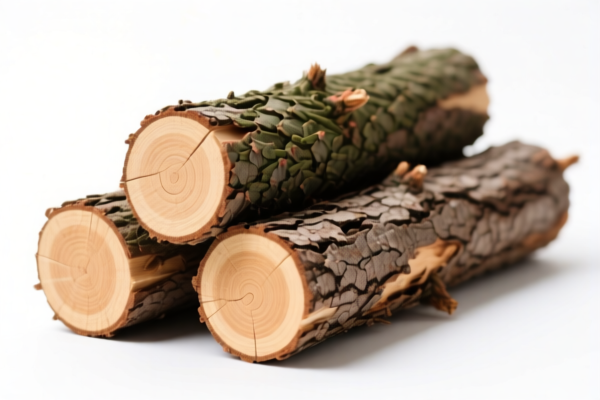
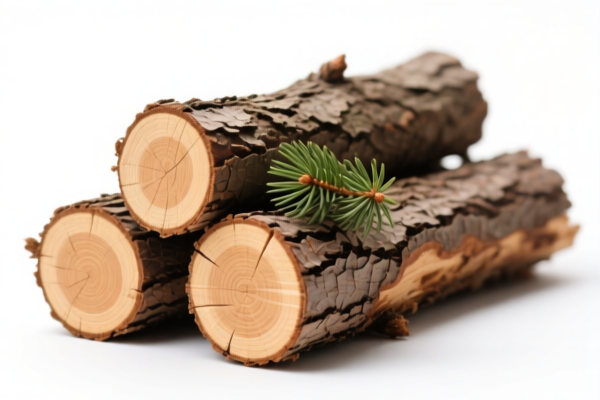
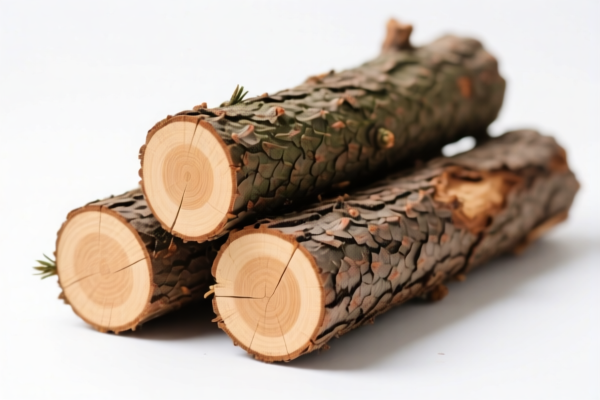
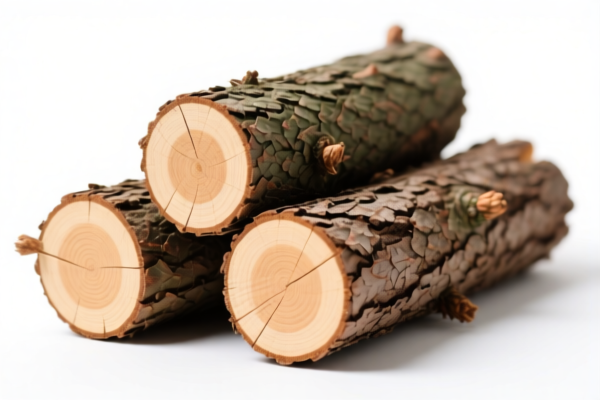
AI分析
🌲 Raw Timber: Other Coniferous Logs (Unstripped Bark)
🌐 HS Code Reference & Customs Clearance Guide | 2026 Latest Tariff Analysis | Professional Clearance Strategy
📌 I. Product Definition & Classification: What Exactly Are "Other Coniferous Logs"?
Wood in the rough, whether or not stripped of bark or sapwood, or roughly squared, falls under Chapter 44 of the Harmonized System. For Coniferous Wood (softwoods), the classification hinges on the species (usually Pine, Spruce, Fir, etc.) and the dimensional specifications (cross-sectional size).
The term "Other Coniferous Logs (Unstripped Bark)" generally refers to logs that: 1. Are Coniferous: Belonging to the Pinaceae family (e.g., Pine/Pinus spp., Spruce, Fir). 2. Are in the Rough: Unprocessed sawn timber, typically used for pulp, paper, or further milling. 3. Have Unstripped Bark: The outer bark has not been removed. 4. Do Not Meet Specific Pine Dimensions: They fall outside the specific definition of large-diameter Pine logs (which often have their own sub-heading) or are non-Pine conifers.
⚠️ Key Distinction Point:
- If the wood is Pine (Pinus spp.) with the smallest cross-sectional dimension ≥ 15 cm, it typically falls under 4403.21.
- If the wood is Other Coniferous (e.g., Spruce, Fir) OR Pine with dimensions < 15 cm, it falls under 4403.22 ("Other").
- Note: The provided data indicates specific HS codes for Pine and "Other," implying a distinction based on species or dimensions.
📦 II. HS Code Classification Details (2026 Latest Tariff Authoritative Comparison)
Based on the provided <DATA>, here are the specific HS Codes and their corresponding tax rates.
| HS Code | Product Description | Applicable Scenario | Bark Status | Smallest Cross-Sectional Dimension |
|---|---|---|---|---|
4403.21.01.65 |
Other, coniferous: Of pine (Pinus spp.), of which the smallest cross-sectional dimension is 15 cm or more | Large-diameter Pine Logs | ✅ Unstripped (or roughly squared) | ≥ 15 cm |
4403.22.01.65 |
Other, coniferous: Of pine (Pinus spp.), other | Smaller-diameter Pine Logs or Other Conifers | ✅ Unstripped (or roughly squared) | < 15 cm (if Pine) OR Non-Pine Conifer |
🔍 Important Reminder:
-4403.21.01.65is strictly for Pine (Pinus spp.) logs where the thinnest dimension is 15 cm or more.
-4403.22.01.65covers "Other" coniferous logs. This includes Pine logs smaller than 15 cm in their smallest cross-sectional dimension, as well as other coniferous species (like Spruce or Fir) that do not fit the specific Pine criteria above.
- "Unstripped Bark" is a key descriptive element. If the bark is stripped, it might fall under a different sub-heading (e.g., 4403.41 vs 4403.49), but the provided codes specify the general "Other" category for coniferous wood in the rough.
💰 III. 2026 Latest Tariff Rate Details (Including Additional Taxes)
✅ Applicable Country: United States (US)
✅ Origin: China (CN) (Assumed based on typical 25% Section 301 tariffs context in the data)
✅ Effective Time: Current tariffs as per data snippet
🎯 1. 4403.21.01.65 —— Pine Logs (≥ 15 cm smallest cross-section)
| Item | Content |
|---|---|
| Base Tariff Rate | 0.0% (ad valorem) |
| Additional Tariff (Section 301) | +25.0% |
| Total Tax Rate | 25.0% |
| Tax Calculation | CIF Value × 25% |
| De Minimis Exemption | ❌ Not Applicable (Wood products generally do not qualify for $800 de minimis exemption for duty calculation in this context, but verify specific broker advice) |
| Legal Basis Path | HTSUS:4403.21.01.65 → USITC Section 301 Footnote |
📌 Explanation:
- The 0% base rate reflects the standard MFN (Most Favored Nation) duty for many wood products.
- The 25% additional tariff is likely imposed under Section 301 of the Trade Act of 1974 against Chinese imports. This is a significant cost factor for importers.
- Total Cost: Importers must budget for 25% of the CIF value in tariffs alone.
🎯 2. 4403.22.01.65 —— Other Coniferous Logs (or Pine < 15 cm)
| Item | Content |
|---|---|
| Base Tariff Rate | 0.0% (ad valorem) |
| Additional Tariff (Section 301) | +25.0% |
| Total Tax Rate | 25.0% |
| Tax Calculation | CIF Value × 25% |
| De Minimis Exemption | ❌ Not Applicable |
| Legal Basis Path | HTSUS:4403.22.01.65 → USITC Section 301 Footnote |
📌 Note:
- Despite being classified as "Other," the tax rate is identical to the larger Pine logs in this specific dataset.
- This uniformity simplifies cost forecasting for importers of various coniferous logs from China.
- Whether it's Spruce, Fir, or small Pine, the 25% surcharge applies equally under this provision.
🛠️ IV. Customs Clearance Practical Advice (Real-World Pitfall Guide)
✅ 1. Required Documentation Checklist (Non-Negotiable)
| Document | Must Provide | Explanation |
|---|---|---|
| ✅ Commercial Invoice | ✔️ | Must clearly state "Wood in the Rough, Coniferous, Unstripped Bark" |
| ✅ Packing List | ✔️ | Detail dimensions, volume (CBM), and weight |
| ✅ Phytosanitary Certificate | ✔️ | Critical for Wood. Issued by the country of export origin, confirming the wood is free from pests/diseases |
| ✅ Fumigation Certificate | ✔️ | Often required to prove treatment against borers, moths, etc. |
| ✅ Bill of Lading (B/L) | ✔️ | Clean B/L with proper description |
| ✅ ISPM 15 Marking | ✔️ | If packaged in wood, packaging must comply with ISPM 15 standards |
| ✅ Species Declaration | ✔️ | Explicitly state if Pine (Pinus), Spruce, etc., to avoid misclassification |
✅ 2. Declaration Tips (Key Mantra)
🔥 “Exact Dimensions, Species Clear, Bark Status True, Phytosanitary Ready!”
| Situation | Correct Declaration | Incorrect Practice |
|---|---|---|
| Pine Logs ≥ 15 cm | 4403.21.01.65 |
Misdeclaring as "Other" → Audit risk |
| Pine Logs < 15 cm | 4403.22.01.65 |
Misdeclaring as 4403.21... → Duty discrepancy |
| Spruce/Fir Logs | 4403.22.01.65 |
Calling them "Pine" → Incorrect species code |
| Stripped Bark | Check sub-heading 4403.41/49 | Claiming "Unstripped" when stripped → Misdescription |
✅ 3. Special Considerations
| Situation | Handling Advice |
|---|---|
| Dimension Verification | CBP may measure logs upon arrival. Ensure declared "smallest cross-sectional dimension" is accurate. |
| Species Identification | If the shipment contains mixed species, declare the dominant one or split lines if possible. Misidentification can lead to penalties. |
| Pest Control | Ensure the Phytosanitary Certificate is valid and matches the invoice date. Expired certificates = Rejection/Return. |
| Tariff Engineering | Consider if the wood can be processed (e.g., chipped for pulp) to change the HS code, though "logs in the rough" are specific. |
🌍 V. Global Market Comparison (2026 Latest)
| Country/Region | Recommended HS Code | Tariff Rate (China Origin) | Certification Requirements | Notes |
|---|---|---|---|---|
| 🇺🇸 USA | 4403.21.01.65 / 4403.22.01.65 |
25% (Section 301) | Phytosanitary, ISPM 15 | Base rate 0%, but 25% surcharge applies |
| 🇨🇳 China | 4403.21 / 4403.22 |
Varies (Import Duty) | Phytosanitary | Export tariffs may apply |
| 🇪🇺 EU | 4403.21 / 4403.22 |
0% - 2.5% | FLEGT, EUTR Compliance | No Section 301 tariffs, but strict EUTR rules |
| 🇬🇧 UK | 4403.21 / 4403.22 |
0% - 2.5% | UKCA, FLEGT | Post-Brexit rules apply |
| 🇯🇵 Japan | 4403.21 / 4403.22 |
0% - 3% | Phytosanitary | Low tariffs, high quality standards |
📌 Conclusion:
- USA has the highest effective duty rate due to the 25% Section 301 tariff.
- EU, UK, Japan, and China generally have lower base tariffs, but compliance with phytosanitary and legality regulations (EUTR/FLEGT) is stricter in Europe.
- Cost Impact: US importers face a 25% tariff burden on top of the CIF value, significantly affecting profitability.
📌 VI. Common Mistakes & Pitfall Guide (Lessons Learned)
❌ Mistake 1: Declaring "Unstripped" when bark is mostly removed
👉 Consequence: Misclassification → Potential fines or seizure
❌ Mistake 2: Ignoring the 15 cm threshold for Pine logs
👉 Consequence: Wrong HS code → Audit flag and back-tariff payments
❌ Mistake 3: Missing or expired Phytosanitary Certificate
👉 Consequence: Refusal of Entry → Return or destruction of cargo
❌ Mistake 4: Not providing Species Specificity
👉 Consequence: CBP may reclassify to a higher-duty or more restrictive code
✅ Correct Practice:
"Coniferous Wood, Logs, Unstripped Bark, Pine (Pinus spp.), Smallest Cross-Sectional Dimension 18 cm, Phytosanitary Certificate Attached, Fumigated per ISPM 15"
🎯 VII. Conclusion: Professional Declaration, Cost Control, Efficiency!
🎯 Remember the Mantra:
🔹 "Dimension Matters: ≥15cm is Pine 21, <15cm is Pine 22."
🔹 "Bark on = Rough, No Bark = Processed? Check Subheadings."
🔹 "Phytosanitary is King: No Cert = No Entry!"
🔹 "Tariff Hit: 25% on Top of CIF for US Imports from China."
📌 Pro Tip:
- If your logs are not from China, the 25% Section 301 tariff does NOT apply. Check for Free Trade Agreements (FTAs) (e.g., USMCA for Canada/Mexico) which may offer 0% duty.
- Always request a Pre-Ruling from CBP if the wood species or dimensions are ambiguous.
- Consider duty drawbacks if the wood is re-exported after further processing.
📣 Take Action Now:
📞 Consult a licensed Customs Broker + Provide Photos/Samples + Verify Phytosanitary Status
🚀 Ensure Smooth Clearance, Avoid Delays, and Maximize Profit Margins!
✨ Professional Customs Clearance Starts with Precise Classification!
💼 Every Percent of Duty Saved is Pure Profit!
用户评价
关于 HS 编码归类
协调制度(HS)是由世界海关组织(WCO)制定的国际贸易商品分类标准。全球 200 多个国家采用 HS 系统作为海关关税、贸易统计和进出口监管的基础。
每个 HS 编码遵循以下层级结构:
- 章(2 位)——商品大类(例如:第 84 章:机器和机械设备)
- 品目(4 位)——章内的更具体分类
- 子目(6 位)——国际通用细分,所有 WCO 成员国统一使用
- 本国细分(8-10 位)——各国自行扩展的细分编码,如美国 HTSUS 10 位编码
正确的 HS 编码归类对于顺利通关、准确缴纳关税和遵守贸易法规至关重要。错误归类可能导致海关延误、多缴关税或罚款。
从CN进口到US时,适用的关税税率可能包括:
- 最惠国(MFN)税率——适用于 WTO 成员国的标准关税税率
- 普通税率——适用于无贸易协定国家
- 贸易救济关税——附加关税,如 301 条款(反倾销)、232 条款(国家安全)或反补贴税
本页内容仅供参考。如需正式归类,请咨询当地海关或持牌报关代理。