Other coniferous timber for cladding
CN → US商品图片
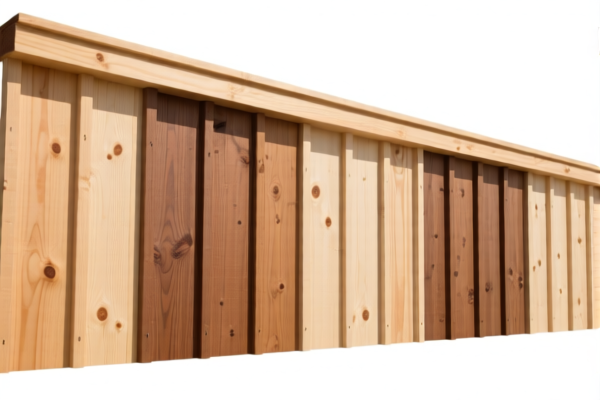
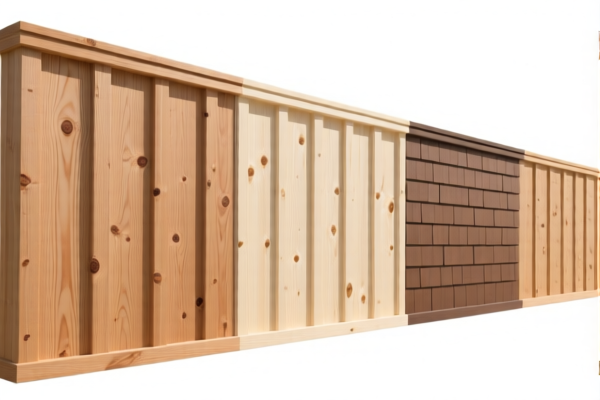
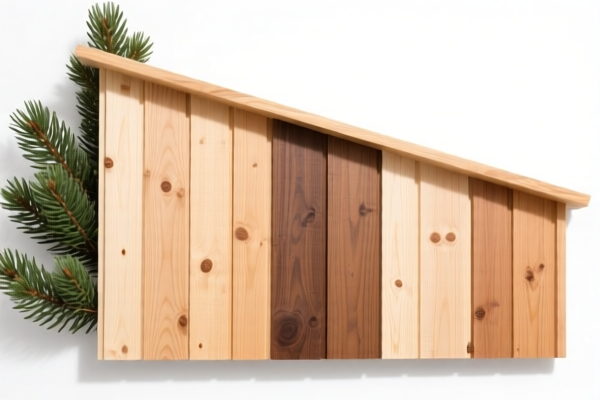
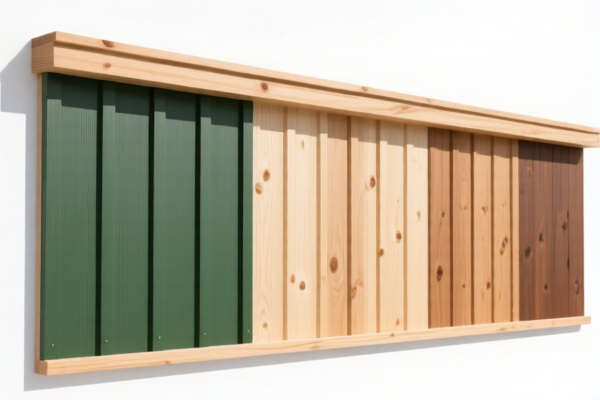
AI分析
🪵 Other Coniferous Timber for Cladding
🌐 HS Code Reference & Customs Clearance Guide | 2026 Latest Tariff Analysis | Professional Clearance Strategy
📌 I. Product Definition & Classification: Do You Truly Understand “Cladding Timber”?
Coniferous timber for cladding refers to processed wood from softwood trees (such as pine, spruce, fir, cedar, or larch) that has been shaped, planed, or profiled specifically for use as exterior or interior wall coverings. Unlike raw logs or simple sawn lumber, cladding timber is designed for aesthetic and protective architectural applications.
In international trade, it is strictly differentiated from: * Raw Logs/Sawn Wood: Unprocessed or simply cut wood intended for construction or fuel. * Non-Coniferous Wood: Hardwoods like oak, teak, or walnut (which fall under different HS headings). * Prefabricated Building Panels: Composite structures with insulation or non-wood components.
⚠️ Key Distinction Point:
- If the wood is simple sawn, planed, or sanded (even if slightly shaped for fit) → Classified under Chapter 44, Heading 4409.
- If it is veneered, laminated, or composed with non-wood materials (e.g., foam backing) → May fall under Chapter 44 or 68/73 depending on composition.
- Crucial Note: “Cladding” is a functional description; the material and processing level dictate the HS Code.
📦 II. HS Code Classification Details (2026 Latest Tariff Authority Match)
| HS Code | Product Description | Application Scenario | Processing Level |
|---|---|---|---|
4409.10.10.00 |
Coniferous wood, continuously shaped along any edge, surface or end, whether or not planed, sanded or finger-jointed | Profiled cladding boards (shiplap, tongue-and-groove, shiplap joints), cedar shakes | ✅ Shaped/Profiled |
4409.10.90.00 |
Other coniferous wood, continuously shaped | Simple planed or sanded planks not continuously shaped for interlocking | ✅ Planed/Sanded |
4407.10.00.00 |
Wood sawn or chipped lengthwise, sliced or peeled, thickness > 6mm, unworked or worked on edges (simple planing) | Rough-sawn or lightly planed softwood (NOT continuously shaped for cladding fit) | ❌ Not continuously shaped |
4421.90.90.00 |
Other wooden articles (incl. prefabricated panels) | Prefabricated wall panels with insulation backing, composite cladding | ✅ Composite |
3918.10.00.00 |
Floor coverings of plastic (if cladding is plastic-wood composite) | Vinyl-look cladding (Not wood) | ❌ Not wood |
🔍 Critical Reminder:
- Continuously shaped (e.g., tongue-and-groove, rebated edges for overlapping) is the defining factor for4409.10.
- Simple planing or sanding that does not create an interlocking or overlapping profile falls under4407.10or4409.10.90, not4409.10.10.
- Pre-finished or painted wood still falls under4409if it is primarily wood.
💰 III. 2026 Latest Tariff Rate Breakdown (Including Surcharges & Policy Add-ons)
✅ Applicable Country: United States (US)
✅ Origin: China (CN)
✅ Effective Date: From November 10, 2025 (including subsequent imports)
🎯 1. 4409.10.10.00 — Coniferous Wood, Continuously Shaped (e.g., Tongue & Groove, Shiplap)
| Item | Detail |
|---|---|
| Base Tariff Rate | 5.3% (ad valorem) |
| USITC Surcharge (Section 301) | +25% (From USITC Footnote 9903.88.01) |
| IEEPA Surcharge (China-Specific) | +10% (For Chinese/Hong Kong products, effective Nov 10, 2025) |
| Total Effective Rate | 40.3% |
| Tax Calculation | CIF Value × 40.3% |
| De Minimis Eligibility | ❌ Not Eligible (deny_de_minimis) |
| Legal Basis Path | IEEPA:9903.01.25 → IEEPA:9903.01.24 → USITC:4409.10.10.00 → FOOTNOTE:9903.88.01 |
📌 Explanation:
- The 25% Section 301 tariff applies to most wood products of Chinese origin.
- The 10% IEEPA surcharge is a new layer targeting Chinese imports effective Nov 2025.
- Total 40.3% is a high-cost barrier. This impacts the competitiveness of Chinese cladding in the US market.
🎯 2. 4409.10.90.00 — Other Coniferous Wood (Planed/Sanded but not continuously shaped)
| Item | Detail |
|---|---|
| Base Tariff Rate | 5.3% |
| USITC Surcharge (Section 301) | +25% |
| IEEPA Surcharge | +10% |
| Total Effective Rate | 40.3% |
| Tax Calculation | CIF × 40.3% |
| De Minimis Eligibility | ❌ Not Eligible |
| Legal Basis Path | IEEPA:9901.25 → IEEPA:9903.01.24 → USITC:4409.10.90.00 → FOOTNOTE:9903.88.01 |
📌 Note:
- Same tariff structure as4409.10.10.00.
- Even if the wood is only lightly planed (not interlocking), it still attracts the 25% + 10% surcharges.
- Do not assume simple planing avoids tariffs; the surcharges apply to all Chapter 44 wood products from China.
🎯 3. 4407.10.00.00 — Sawn Wood (Unshaped/Plain Sawn)
| Item | Detail |
|---|---|
| Base Tariff Rate | 3.6% |
| USITC Surcharge | +25% |
| IEEPA Surcharge | +10% |
| Total Effective Rate | 38.6% |
| Tax Calculation | CIF × 38.6% |
| De Minimis Eligibility | ❌ Not Eligible |
⚠️ Warning:
- If you mistakenly declare “cladding boards” as “plain sawn wood” (4407) when they are actually profiled (4409), customs may reclassify and impose penalties.
- However, if the wood is truly unshaped, the rate is slightly lower (38.6% vs 40.3%), but still very high.
🛠️ IV. Customs Clearance Practical Advice (Battle-Proven Pitfall Avoidance)
✅ 1. Required Documentation Checklist (Mandatory)
| Document | Must Provide | Explanation |
|---|---|---|
| ✅ Product Specification Sheet | ✔️ | Includes species (Pine, Cedar, Fir), dimensions, moisture content, treatment type |
| ✅ Processing Description | ✔️ | Must specify: “Continuously shaped along edges” vs “Simple planed” |
| ✅ Product Photos (Clear Label) | ✔️ | Show edge profile (T&G, Shiplap) or surface finish |
| ✅ Fumigation/Heat Treatment Certificate (ISPM 15) | ✔️ | Mandatory for raw wood imports to US to prevent pest entry |
| ✅ Commercial Invoice | ✔️ | Clearly state “Coniferous Wood Cladding, Profiled” or “Sawn Wood” |
| ✅ Certificate of Origin (CO) | ✔️ | If not from China, may qualify for reduced tariffs |
| ✅ Packaging List | ✔️ | Detail palletization, weight, and dimensions |
✅ 2. Declaration Tips (Key Mantra)
🔥 “Profile determines code, treatment ensures entry, species matters for duty!”
| Scenario | Correct Declaration | Wrong Practice |
|---|---|---|
| Tongue & Groove or Shiplap Cladding | 4409.10.10.00 |
Misdeclared as “Sawn Wood” → Penalty + Rejection |
| Plain Planed Boards (No interlock) | 4409.10.90.00 or 4407.10.00.00 |
Over-declaring as “Profiled” → Higher scrutiny |
| Prefabricated Panel with Foam Backing | 4421.90.90.00 |
Declared as “Solid Wood” → Misclassification |
| Unfired Raw Logs | 4403 |
Declared as “Cladding” → Rejected for lack of treatment |
✅ 3. Special Case Handling
| Scenario | Handling Advice |
|---|---|
| Heat-Treated vs. Fumigated | Ensure ISPM 15 Mark is visible on packaging. Without it, goods will be refused entry or destroyed. |
| Pressure-Treated Wood | Must disclose chemical treatment. Some treatments require EPA/EPA-equivalent compliance. |
| Cedar vs. Pine | Species affects market value, but not HS Code. All coniferous cladding falls under 4409.10. |
| Prefabricated Wall Panels | If wood is < 6mm thick or composite, may fall under 4421 or 3918. Do not misdeclare as solid cladding. |
🌍 V. Global Market Comparison (2026 Latest)
| Country/Region | Recommended HS Code | Tariff (China Origin) | Certification Requirements | Notes |
|---|---|---|---|---|
| 🇺🇸 USA | 4409.10.10.00 |
40.3% (25% + 10% + 5.3%) | ISPM 15 + Fumigation | High tariff barrier |
| 🇨🇳 China | 4409.10.10.00 |
5% | GB Standards | No surcharge |
| 🇪🇺 EU | 4409.10.10.00 |
0% (if FSC-certified) | CE + EUTR (EU Timber Regulation) | No surcharge if legal origin |
| 🇬🇧 UK | 4409.10.10.00 |
0% | UKCA + FSC | Post-Brexit trade benefits |
| 🇦🇺 Australia | 4409.10.10.00 |
5% | Biosecurity Permit | Strict quarantine |
| 🇯🇵 Japan | 4409.10.10.00 |
0% | JAS (if marketed as JAS) | Low tariff, high quality standards |
📌 Conclusion:
- USA is the most expensive market for Chinese coniferous cladding due to 40.3% effective tariff.
- EU, UK, Japan, and China have significantly lower or zero tariffs, making them more attractive for export.
- ISPM 15 compliance is non-negotiable in all markets to avoid quarantine rejection.
📌 VI. Common Mistakes & Pitfall Guide (Blood-Stained Lessons)
❌ Mistake 1: Declaring “Tongue & Groove” cladding as “Sawn Wood” (4407)
👉 Consequence: Customs reclassifies to 4409, imposes penalty + back taxes + late fees.
❌ Mistake 2: Omitting ISPM 15 treatment declaration
👉 Consequence: Shipment rejected or destroyed at port. Costly delay.
❌ Mistake 3: Confusing Cladding with Prefabricated Panels
👉 Consequence: Wrong HS Code → Customs audit → Potential fraud suspicion.
❌ Mistake 4: Not disclosing Pressure Treatment
👉 Consequence: Biosecurity violation → Quarantine hold → Demurrage fees.
✅ Correct Practice:
“Coniferous Wood Cladding, Tongue & Groove, Heat-Treated (ISPM 15), Cedar Species, FSC Certified, Model XYZ, for Exterior Use”
🎯 VII. Conclusion: Professional Declaration Saves Money & Time!
🎯 Remember the Mantra:
🔹 “Profiled = 4409, Plain = 4407, ISPM 15 is Mandatory, US Tariffs are 40%+!”
🔹 “HS Code decides duty, Treatment decides entry, Declaration decides speed!”
📌 Pro Tip:
- If your cladding is sourced from Vietnam, Malaysia, or Canada, you may qualify for lower or zero tariffs in the US/EU.
- Apply for an Advance Ruling from US Customs (CBP) before shipping to confirm HS Code and tariff liability.
📣 Take Action Now:
📞 Contact a licensed customs broker + Provide product photos + Verify ISPM 15 certification
🚀 Ensure your cladding clears customs smoothly, avoids penalties, and maximizes profit!
✨ Professional clearance starts with accurate classification!
💼 Every percentage point of tariff is a point of profit lost!
用户评价
关于 HS 编码归类
协调制度(HS)是由世界海关组织(WCO)制定的国际贸易商品分类标准。全球 200 多个国家采用 HS 系统作为海关关税、贸易统计和进出口监管的基础。
每个 HS 编码遵循以下层级结构:
- 章(2 位)——商品大类(例如:第 84 章:机器和机械设备)
- 品目(4 位)——章内的更具体分类
- 子目(6 位)——国际通用细分,所有 WCO 成员国统一使用
- 本国细分(8-10 位)——各国自行扩展的细分编码,如美国 HTSUS 10 位编码
正确的 HS 编码归类对于顺利通关、准确缴纳关税和遵守贸易法规至关重要。错误归类可能导致海关延误、多缴关税或罚款。
从CN进口到US时,适用的关税税率可能包括:
- 最惠国(MFN)税率——适用于 WTO 成员国的标准关税税率
- 普通税率——适用于无贸易协定国家
- 贸易救济关税——附加关税,如 301 条款(反倾销)、232 条款(国家安全)或反补贴税
本页内容仅供参考。如需正式归类,请咨询当地海关或持牌报关代理。