Other halogenated olefin copolymers in primary forms
CN → US| HS编码 | 关税税率 | 原产国 | 目的国 | 文档 |
|---|---|---|---|---|
| 3904400000 | 40.3% | CN | US | 官方文档 |
| 3904905000 | 41.5% | CN | US | 官方文档 |
商品图片
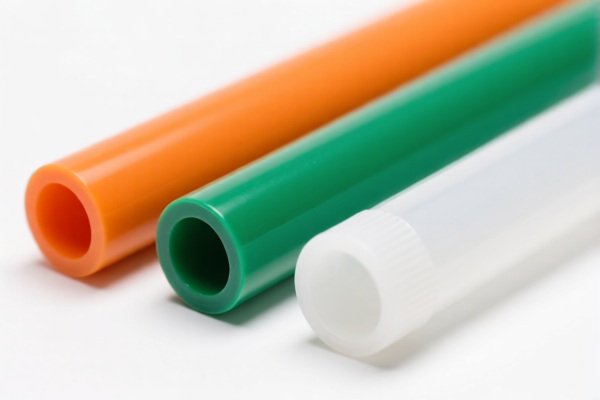

AI分析
🧪 Vinyl Chloride Copolymers & Other Halogenated Olefins (Primary Forms)
🌐 HS Code Reference & Customs Clearance Guide | 2026 Latest Tariff Analysis | Strategic Clearance Strategy for Polymers
📌 Part 1: Product Definition & Classification: What Are "Halogenated Olefin Copolymers"?
These products fall under Chapter 39 (Plastics and Articles Thereof). Specifically, they are polymers where vinyl chloride or other halogenated olefins are the principal monomer. In international trade, distinguishing between homopolymers and copolymers is critical for accurate HS Code assignment.
Key Distinction: * Vinyl Chloride Copolymers (VCC): Polymers formed from vinyl chloride and other monomers (e.g., ethyl acrylate, vinyl acetate, vinylidene chloride). These are distinct from pure Polyvinyl Chloride (PVC) homopolymers (which usually fall under 3904.10). * Other Halogenated Olefins: Polymers based on monomers like vinyl fluoride, vinylidene fluoride, or chloroprene, excluding vinyl chloride.
⚠️ Critical Classification Point:
- If the product is a copolymer of vinyl chloride (not pure PVC) → Likely 3904.40.
- If the product is an other halogenated olefin polymer (not vinyl chloride based) or a "other" vinyl chloride polymer not listed elsewhere → Likely 3904.90.
- Note: Pure PVC homopolymers (3904.10) are excluded from this specific data set.
📦 Part 2: HS Code Classification Details (2026 Latest Tariff Alignment)
Based on the provided data, there are two primary HS Codes for these goods. Note that the tax rates vary drastically depending on the specific chemical composition and origin.
| HS Code | Product Description | Application Scenario | Key Characteristic |
|---|---|---|---|
3904.40.00.00 |
Other vinyl chloride copolymers | Flexible PVC compounds, impact-modified PVC, specific industrial resins | Contains vinyl chloride + at least one other monomer |
3904.90.50.00 |
Other: Other | Other halogenated olefin polymers (e.g., PVDF, PVF), or vinyl chloride polymers not elsewhere specified | Non-vinyl chloride halogenated olefins OR "other" unspecified types |
🔍 Important Reminder:
- 3904.40.00.00 specifically targets vinyl chloride copolymers.
- 3904.90.50.00 acts as a residual category for other halogenated olefins or unspecified vinyl chloride polymers.
- Misclassification between "copolymer" and "other" can lead to significant tariff differences.
💰 Part 3: 2026 Latest Tariff Rate Breakdown (Including Surtaxes & Policy Add-ons)
✅ Applicable Country: United States (US)
✅ Origin: China (CN) (Implied by the 25% surtax in the data)
✅ Effective Time: Current Trade Policy (Section 301 & IEEPA applicable)
🎯 1. 3904.40.00.00 —— Other Vinyl Chloride Copolymers
| Item | Content |
|---|---|
| Base Tariff | 5.3% (ad valorem) |
| Surtax (Section 301) | +25.0% (Additional duty on Chinese origin goods) |
| Total Tax Rate | 30.3% |
| Tax Calculation | CIF Value × 30.3% |
| De Minimis Exemption | ❌ Not Applicable (High duty rates exclude small parcel exemptions in most commercial contexts) |
| Legal Basis Path | HTSUS:3904.40.00.00 → USITC Footnote 9903.88.01 (Section 301 Surtax) |
📌 Explanation:
- This category carries a moderate base tariff but is subject to the full 25% Section 301 surtax due to Chinese origin.
- The total landed cost impact is 30.3%, which is significant for high-volume chemical imports.
- Note: Data does not show an additional IEEPA 10% surtax for this specific code in the provided snippet, unlike electronics. However, always verify current USITC lists as policies change.
🎯 2. 3904.90.50.00 —— Other: Other
| Item | Content |
|---|---|
| Base Tariff | 0.0% |
| Surtax (Section 301) | 0.0% |
| Total Tax Rate | 0.0% |
| Tax Calculation | $0 (Duty-Free) |
| De Minimis Exemption | ✅ Applicable (if value < $800, subject to CBP discretion) |
| Legal Basis Path | HTSUS:3904.90.50.00 |
📌 Explanation:
- This code represents a duty-free entry for "other" halogenated olefin polymers or unspecified vinyl chloride polymers.
- Strategic Implication: If your product can be legitimately classified under3904.90.50.00(e.g., it is not a standard vinyl chloride copolymer but a different halogenated olefin like PVDF), it offers a massive 30.3% cost advantage over3904.40.00.00.
- Caution: Misclassifying a vinyl chloride copolymer as "other" to avoid the 25% surtax is considered fraud and carries heavy penalties.
🛠️ Part 4: Customs Clearance Practical Advice (Real-World Pitfall Guide)
✅ 1. Required Documentation Checklist (Non-Negotiable)
| Document | Must Provide | Explanation |
|---|---|---|
| ✅ Chemical Composition Analysis | ✔️ | Must detail monomer types and percentages. Critical to prove it is a copolymer (for 3904.40) vs. other (for 3904.90). |
| ✅ Technical Data Sheet (TDS) | ✔️ | Shows physical form, molecular weight, and application. |
| ✅ Certificate of Origin | ✔️ | Required to determine if Section 301 surtax applies. |
| ✅ Commercial Invoice | ✔️ | Must clearly state: "Vinyl Chloride Copolymer" or "Halogenated Olefin Polymer" – vague terms like "Plastic Pellets" will trigger inspections. |
| ✅ HS Code Ruling (Pre-Ruling) | ✔️ | Highly Recommended for 3904.40.00.00 to avoid disputes over "copolymer" definition. |
✅ 2. Classification Strategy (Key Mantra)
🔥 "Composition is King, Copolymer vs. Other Determines the Rate!"
| Scenario | Correct HS Code | Tax Rate | Consequence of Error |
|---|---|---|---|
| Vinyl Chloride + Ethyl Acrylate Copolymer | 3904.40.00.00 |
30.3% | If misclassified as 3904.90 → Penalty + Back Taxes |
| Pure Polyvinylidene Fluoride (PVDF) | 3904.90.50.00 |
0.0% | If misclassified as 3904.40 → Overpayment of 30.3% |
| Polyvinyl Chloride (Homopolymer) | Not in Data | See 3904.10 | Do not use 3904.40 or 3904.90 |
✅ 3. Special Handling Tips
| Situation | Advice |
|---|---|
| Mixed Shipments | If a container has both vinyl chloride copolymers and other halogenated olefins, separate them if possible. Applying 30.3% to duty-free items is wasteful. |
| "Other" Classification Risk | Using 3904.90.50.00 for a vinyl chloride copolymer is a high-risk audit trigger. Only use this if the product is chemically distinct (e.g., chloroprene-based). |
| Raw Material Form | Ensure the product is in primary forms (granules, powders, liquids). If processed into sheets or pipes, it moves to Chapter 39 articles (e.g., 3920, 3921), which have different tax rules. |
🌍 Part 5: Global Market Comparison (2026 Overview)
| Market | Recommended HS Code | Approx. Tariff | Notes |
|---|---|---|---|
| 🇺🇸 USA | 3904.40.00.00 |
30.3% (China Origin) | High due to 25% surtax. 3904.90.50.00 is 0%. |
| 🇨🇳 China | 3904.40.00.00 |
5.3% (MFN) | Standard import duty. No surtax for imports into China. |
| 🇪🇺 EU | 3904.40 |
0% (Most cases) | EU generally has lower duties on plastics, but anti-dumping may apply. |
| 🇬🇧 UK | 3904.40 |
0% | Post-Brexit UK trade policy favors many polymer imports. |
📌 Conclusion:
- The US market is the most costly for vinyl chloride copolymers due to the 25% Section 301 surtax.
- Strategic Opportunity: If your product is a non-vinyl chloride halogenated olefin (e.g., PVDF, PTFE derivatives), classify under3904.90.50.00to achieve 0% duty in the US.
- Warning: Never misclassify a vinyl chloride copolymer as "other" to avoid taxes. US Customs and Border Protection (CBP) uses chemical testing to verify monomer content.
📌 Part 6: Common Mistakes & Pitfalls (Blood & Tears Lessons)
❌ Mistake 1: Declaring all PVC-related goods under 3904.90.50.00 to save 30.3%
👉 Consequence: CBP will conduct chemical analysis. If vinyl chloride is found, you face penalties of up to 30.3% + interest + potential fraud charges.
❌ Mistake 2: Ignoring the "Copolymer" definition
👉 Consequence: A polymer with 90% vinyl chloride and 10% acrylate is still a copolymer and must go under 3904.40.00.00.
❌ Mistake 3: Using generic descriptions like "Plastic Resin"
👉 Consequence: High probability of customs hold and manual inspection, delaying clearance by weeks.
✅ Correct Approach:
"Vinyl Chloride Copolymer, Granular, for Injection Molding, CAS #9002-86-2 (or specific copolymer CAS), Primary Form"
🎯 Part 7: Conclusion: Professional Classification Saves Money!
🎯 Remember the Mantra:
🔹 "Vinyl Chloride Copolymer = 30.3% (US/China)"
🔹 "Other Halogenated Olefin = 0.0% (US/China)"
🔹 "Chemical Proof is Key – Don't Gamble on Classification!"
📌 Pro Tip:
If you are importing into the US, consider Pre-Ruling Requests with CBP if your product's chemical composition is complex. A binding ruling protects you from retroactive penalties.
📣 Immediate Action:
📞 Consult a Trade Specialist to verify the monomer composition.
📄 Prepare Technical Data Sheets that explicitly state "Copolymer" or "Homopolymer."
🚀 Optimize Your Supply Chain by choosing duty-free HS Codes where legally possible.
✨ Accurate Classification, Smoother Clearance, Lower Costs!
💼 Your Plastic Imports Deserve Precision!
用户评价
关于 HS 编码归类
协调制度(HS)是由世界海关组织(WCO)制定的国际贸易商品分类标准。全球 200 多个国家采用 HS 系统作为海关关税、贸易统计和进出口监管的基础。
每个 HS 编码遵循以下层级结构:
- 章(2 位)——商品大类(例如:第 84 章:机器和机械设备)
- 品目(4 位)——章内的更具体分类
- 子目(6 位)——国际通用细分,所有 WCO 成员国统一使用
- 本国细分(8-10 位)——各国自行扩展的细分编码,如美国 HTSUS 10 位编码
正确的 HS 编码归类对于顺利通关、准确缴纳关税和遵守贸易法规至关重要。错误归类可能导致海关延误、多缴关税或罚款。
从CN进口到US时,适用的关税税率可能包括:
- 最惠国(MFN)税率——适用于 WTO 成员国的标准关税税率
- 普通税率——适用于无贸易协定国家
- 贸易救济关税——附加关税,如 301 条款(反倾销)、232 条款(国家安全)或反补贴税
本页内容仅供参考。如需正式归类,请咨询当地海关或持牌报关代理。