Other plastic foam boards
CN → US| HS编码 | 关税税率 | 原产国 | 目的国 | 文档 |
|---|---|---|---|---|
| 3926904800 | 13.4% | CN | US | 官方文档 |
| 3921110000 | 40.3% | CN | US | 官方文档 |
| 3921190010 | 41.5% | CN | US | 官方文档 |
| 3926901000 | 20.9% | CN | US | 官方文档 |
| 3926909989 | 22.8% | CN | US | 官方文档 |
商品图片
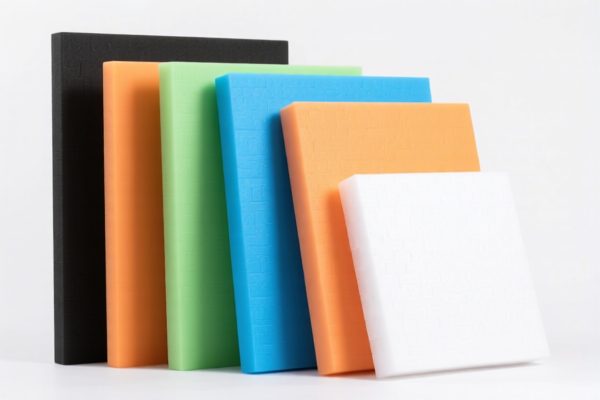
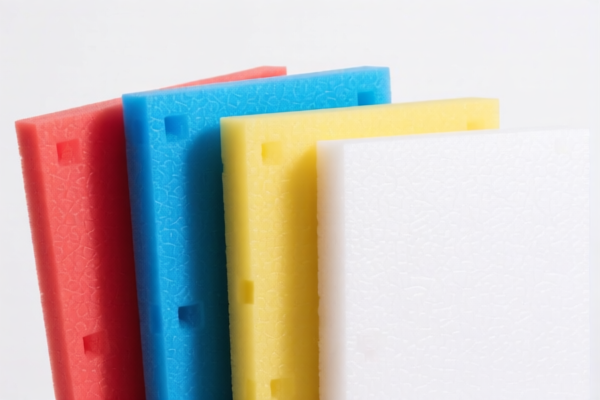
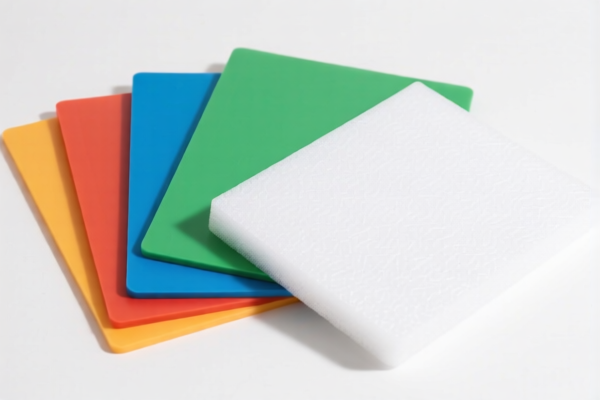
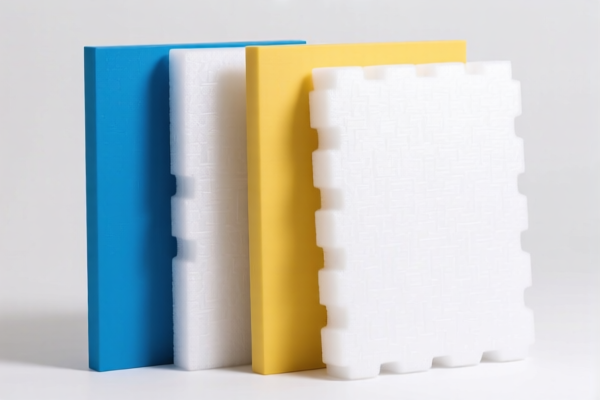
AI分析
📦 Other Plastic Foam Boards: The Ultimate HS Code & Tariff Breakdown
🌐 HS Code Reference & Customs Clearance Guide | 2026 Latest Tariff Analysis | Strategic Clearance Strategies
📌 1. Product Definition & Classification: What Exactly Are "Other Plastic Foam Boards"?
In international trade, "Plastic Foam Boards" are rigid or semi-rigid sheets made from polymeric materials where the structure contains a high volume of gas cells. However, not all foam boards are created equal. The critical distinction lies in:
- Material Composition: Are they Polystyrene (PS), Polyethylene (PE), Polyurethane (PU), or other plastics?
- Form & Structure: Are they "foamed" (cellular structure) or just "hard plastic sheets" (dense)?
- Application: Are they used for packaging, construction insulation, or industrial fabrication?
⚠️ Key Distinction Point:
- Chapter 39.21 typically covers plastic plates, sheets, and films (including foamed/plastic foams).
- Chapter 39.26 covers other articles of plastic (finished items, not plates/sheets).
- Crucial Trap: If the product is strictly a "board/sheet" shape, it likely belongs in 39.21. If it is a finished molded item (like a decorative sign or a specific container part), it may fall under 39.26.
- Origin & Trade Policy: All items below are subject to US Section 301 (25%) and Section 122/IEEPA (10%) tariffs if originating from China.
📊 2. HS Code Classification Details (2026 Latest Tariff Reference)
Based on the provided data, here is the precise breakdown for "Other Plastic Foam Boards" and related plastic articles.
| HS Code | Product Description | Key Characteristics | Typical Use Case |
|---|---|---|---|
| 3926.90.48.00 | Other plastic hard foam boards, material: plastic, form: hard foam board. | Classified under "Other articles of plastic" (3926) rather than plates (3921). Suggests a finished or semi-finished foam article not strictly defined as a "plate." | Specialized foam inserts, custom-cut foam shapes, non-standard foam boards. |
| 3921.11.00.00 | Other plastic hard foam boards, material: plastic hard foam, form: plate, inferred as Polystyrene (PS) foam-like. | Specifically Polystyrene (PS) based foam plates. "11" indicates PS. | Packaging foam, insulation boards, craft materials (Styrofoam sheets). |
| 3921.19.00.10 | Other plastic hard foam boards, material: plastic, form: plate. | Other plastic foams (not PS, PVC, etc.). "19" indicates other plastics in heading 3921. | Polyethylene (PE) foam sheets, EVA foam boards, specialized industrial foam plates. |
| 3926.90.10.00 | Other plastic hard foam boards, material: plastic, form: board. | Falls under "Other articles of plastic" (3926). Likely a specific type of finished plastic board not classified as a raw sheet. | Decorative plastic boards, finished components made of foam/plastic blends. |
| 3926.90.99.89 | Other plastic two-color boards, material: plastic, form: other articles. | Two-color/Multi-layer plastic boards. Classified as "Other" finished articles. | Signage, architectural cladding, decorative laminates. |
🔍 Critical Note:
- 3921.xxxx = Plates, Sheets, Film (Raw/Intermediate form).
- 3926.90.xxxx = Other Articles of Plastic (Finished/Specific items).
- Misclassification between 3921 and 3926 can lead to severe penalties, as the tariff implications differ slightly due to additional duties.
💰 3. 2026 Latest Tariff Rate Breakdown (Including Surcharges & Policy Add-ons)
✅ Applicable Country: United States (US)
✅ Origin: China (CN)
✅ Effective Time: 2025/2026 Current Tariff Structure
🎯 1. HS Code 3926.90.48.00 – Other Plastic Hard Foam Boards
| Item | Detail |
|---|---|
| Base Tariff | 3.4% |
| Section 301 Surcharge | 0.0% |
| Section 122/IEEPA Surcharge | 10.0% |
| Total Tariff Rate | 13.4% |
| Tax Calculation | CIF Value × 13.4% |
| De Minimis Exemption? | ❌ No (Deny De Minimis for Section 301/122 items) |
| Legal Basis | USITC HTS 3926.90.48.00 + IEEPA/Section 122 Orders |
📌 Explanation:
- This classification benefits from a lower surcharge (0% Section 301) compared to other foam boards.
- The 10% is a specific policy surcharge (often referred to as Section 122 or similar emergency tariffs).
- Total cost impact: Moderate (13.4%).
🎯 2. HS Code 3921.11.00.00 – Polystyrene (PS) Foam Plates
| Item | Detail |
|---|---|
| Base Tariff | 5.3% |
| Section 301 Surcharge | 25.0% |
| Section 122/IEEPA Surcharge | 10.0% |
| Total Tariff Rate | 40.3% |
| Tax Calculation | CIF Value × 40.3% |
| De Minimis Exemption? | ❌ No |
| Legal Basis | USITC HTS 3921.11.00.00 + Section 301 + IEEPA |
📌 Explanation:
- High Tariff Zone: PS foam is heavily scrutinized.
- The 25% Section 301 tariff is standard for most Chinese plastic plates/sheets.
- Total cost impact: High (40.3%). Significant margin erosion.
🎯 3. HS Code 3921.19.00.10 – Other Plastic Foam Plates
| Item | Detail |
|---|---|
| Base Tariff | 6.5% |
| Section 301 Surcharge | 25.0% |
| Section 122/IEEPA Surcharge | 10.0% |
| Total Tariff Rate | 41.5% |
| Tax Calculation | CIF Value × 41.5% |
| De Minimis Exemption? | ❌ No |
| Legal Basis | USITC HTS 3921.19.00.10 + Section 301 + IEEPA |
📌 Explanation:
- Even higher base rate than PS foam.
- Applies to non-PS foams (e.g., PE, EVA, PU sheets).
- Total cost impact: Very High (41.5%).
🎯 4. HS Code 3926.90.10.00 – Other Plastic Boards (Finished Articles)
| Item | Detail |
|---|---|
| Base Tariff | 3.4% |
| Section 301 Surcharge | 7.5% |
| Section 122/IEEPA Surcharge | 10.0% |
| Total Tariff Rate | 20.9% |
| Tax Calculation | CIF Value × 20.9% |
| De Minimis Exemption? | ❌ No |
| Legal Basis | USITC HTS 3926.90.10.00 + Section 301 + IEEPA |
📌 Explanation:
- Strategic Advantage: Lower Section 301 rate (7.5%) compared to 3921 (25%).
- If the product can be argued as a "finished article" (3926) rather than a "raw plate" (3921), savings are significant.
- Total cost impact: Moderate (20.9%).
🎯 5. HS Code 3926.90.99.89 – Other Plastic Two-Color Boards
| Item | Detail |
|---|---|
| Base Tariff | 5.3% |
| Section 301 Surcharge | 7.5% |
| Section 122/IEEPA Surcharge | 10.0% |
| Total Tariff Rate | 22.8% |
| Tax Calculation | CIF Value × 22.8% |
| De Minimis Exemption? | ❌ No |
| Legal Basis | USITC HTS 3926.90.99.89 + Section 301 + IEEPA |
📌 Explanation:
- Multi-layer or decorative plastic boards.
- Benefits from lower Section 301 rate (7.5%) as a "finished article."
- Total cost impact: Moderate-High (22.8%).
🛠️ 4. Customs Clearance Practical Advice (Battle-Tested Tips)
✅ 1. Documentation Checklist (Non-Negotiable)
| Document | Required? | Purpose |
|---|---|---|
| Product Specification Sheet | ✅ | Must clearly state material composition (e.g., "Expanded Polystyrene" vs. "Polyethylene"). |
| Cross-Sectional Photos | ✅ | Proves the "foamed" cellular structure (for 3921) or dense/fibrous structure (for 3926). |
| Commercial Invoice | ✅ | Must not say "Plastic Foam Board" only. Use precise HS-aligned description (e.g., "PS Foam Sheet"). |
| Country of Origin Certificate | ✅ | To confirm China origin and apply correct surcharges. |
| Bill of Lading | ✅ | Must match invoice quantity and weight. |
✅ 2. Classification Strategy (Key Mantra)
🔥 "Sheet vs. Article: The 25% Difference!"
| Scenario | Correct Classification | Tariff Rate | Why? |
|---|---|---|---|
| Raw/Unprocessed Foam Sheet | 3921.11.00.00 | 40.3% | It is a "plate/sheet." Subject to 25% Section 301. |
| Custom-Cut Foam Insert | 3926.90.48.00 | 13.4% | It is a "finished article." Subject to 0% Section 301. |
| Decorative Two-Color Panel | 3926.90.99.89 | 22.8% | It is a "finished article." Subject to 7.5% Section 301. |
| Insulation Foam Board (House) | 3921.19.00.10 | 41.5% | It is a "plate." Subject to 25% Section 301. |
⚠️ Warning:
- Do NOT misdeclare a raw PS sheet (3921) as a finished article (3926) to save 25%. US Customs (CBP) requires physical evidence (photos, specs) that the item is not just a sheet.
- If the item is just a cut-to-size sheet, it is still a "plate" (3921).
- If the item is molded, printed, framed, or finished with edges/handles, it may qualify as 3926.
✅ 3. Special Circumstances & Mitigation
| Situation | Strategy |
|---|---|
| High Tariff Sensitivity | Consider Substantial Transformation in a third country (e.g., Vietnam, Mexico) to change origin. |
| Material Ambiguity | Provide Lab Test Reports (FTIR) to prove if it is PS, PE, or other plastic. This affects base rate (5.3% vs 6.5%). |
| Two-Color Boards | Highlight decorative function and finished edges to support 3926.90.99.89 classification. |
| De Minimis Loophole? | ❌ Blocked. Section 301 and IEEPA tariffs apply to all shipments, regardless of value. No $800 exemption. |
🌍 5. Global Market Comparison (2026)
| Market | Recommended HS Code | Approx. Total Tariff (China Origin) | Key Requirement |
|---|---|---|---|
| 🇺🇸 USA | 3921.11.00.00 / 3926.90.48.00 |
13.4% – 41.5% | Strict Origin & Section 301 Compliance |
| 🇨🇳 China | 3921.11.00.00 / 3926.90.48.00 |
5.3% – 6.5% | No Surcharges |
| 🇪🇺 EU | 3921.11.00.00 / 3926.90.48.00 |
6.5% – 7.2% | CE Marking, REACH Compliance |
| 🇬🇧 UK | 3921.11.00.00 / 3926.90.48.00 |
6.5% – 7.2% | UKCA Marking |
| 🇯🇵 Japan | 3921.11.00.00 / 3926.90.48.00 |
3.9% – 5.3% | JIS Standards (if applicable) |
📌 Conclusion:
- The USA is the only major market with additive surcharges (Section 301 + IEEPA).
- Tariff Savings Strategy: If possible, classify as 3926 (finished article) instead of 3921 (plate) to reduce tariff by ~20-25%.
📌 6. Common Mistakes & Pitfalls (Learn from Others’ Pain)
❌ Mistake 1: Declaring all foam boards as 3926.90.99.89 to avoid 25% tariff.
👉 Consequence: CBP audit reveals raw sheets → 25% penalty + Interest.
❌ Mistake 2: Ignoring the 10% IEEPA/Section 122 surcharge.
👉 Consequence: Underpayment by 10% → Seizure or Heavy Penalty.
❌ Mistake 3: Using "Plastic Board" without specifying Material (PS vs. PE).
👉 Consequence: Classification error → Base rate jumps from 3.4% to 6.5% + higher surcharge.
❌ Mistake 4: Assuming De Minimis ($800) applies.
👉 Consequence: Shipment held at port until tariffs paid. No exemption for Chinese-origin plastic foam.
✅ Correct Practice:
"Polystyrene Foam Sheet, 10mm Thick, Unfinished, for Packaging Use, HS 3921.11.00.00"
OR
"Finished Decorative Plastic Board, Two-Tone, Cut to Size, HS 3926.90.99.89"
🎯 7. Conclusion: Precision Pays Off!
🎯 Remember the Mantra:
🔹 "Sheet vs. Article: The 25% Cliff!"
🔹 "Base Rate + 25% (301) + 10% (IEEPA) = High Cost!"
🔹 "Prove it's Finished, Save 25%: Classify as 3926!"
📌 Pro Tip:
If your product is exported to the US, consider:
1. Engineering Change: Can the product be finished (e.g., printed, framed, molded) before export?
2. Third-Country Processing: Can minor assembly be done in Vietnam/Mexico to change origin?
3. Advance Ruling: Apply for a CBP Binding Ruling to lock in the HS Code and avoid post-clearance audits.
📣 Immediate Action:
📞 Consult your customs broker with product photos and material specs.
🚀 Don’t guess your HS Code. Cost $500 in legal fees vs. $50,000 in penalties!
✨ Professional Clearance Starts with Precise Classification!
💼 Your Margins Depend on It!
用户评价
关于 HS 编码归类
协调制度(HS)是由世界海关组织(WCO)制定的国际贸易商品分类标准。全球 200 多个国家采用 HS 系统作为海关关税、贸易统计和进出口监管的基础。
每个 HS 编码遵循以下层级结构:
- 章(2 位)——商品大类(例如:第 84 章:机器和机械设备)
- 品目(4 位)——章内的更具体分类
- 子目(6 位)——国际通用细分,所有 WCO 成员国统一使用
- 本国细分(8-10 位)——各国自行扩展的细分编码,如美国 HTSUS 10 位编码
正确的 HS 编码归类对于顺利通关、准确缴纳关税和遵守贸易法规至关重要。错误归类可能导致海关延误、多缴关税或罚款。
从CN进口到US时,适用的关税税率可能包括:
- 最惠国(MFN)税率——适用于 WTO 成员国的标准关税税率
- 普通税率——适用于无贸易协定国家
- 贸易救济关税——附加关税,如 301 条款(反倾销)、232 条款(国家安全)或反补贴税
本页内容仅供参考。如需正式归类,请咨询当地海关或持牌报关代理。