Other plastic rods
CN → US| HS编码 | 关税税率 | 原产国 | 目的国 | 文档 |
|---|---|---|---|---|
| 3917290090 | 38.1% | CN | US | 官方文档 |
| 3917290050 | 38.1% | CN | US | 官方文档 |
| 3916905000 | 40.8% | CN | US | 官方文档 |
| 3916200091 | 40.8% | CN | US | 官方文档 |
| 3925900000 | 40.3% | CN | US | 官方文档 |
商品图片
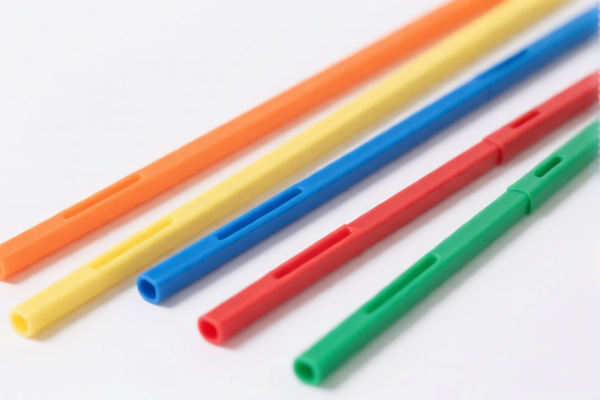
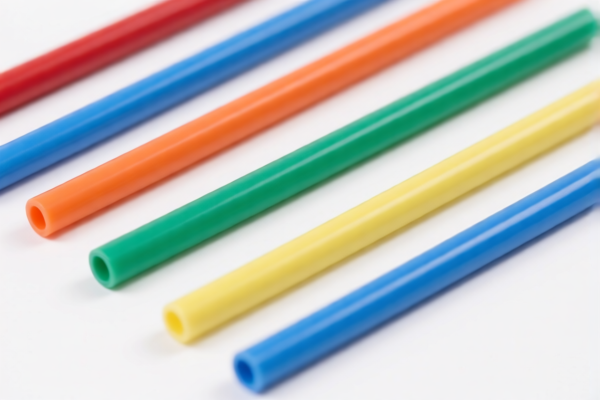
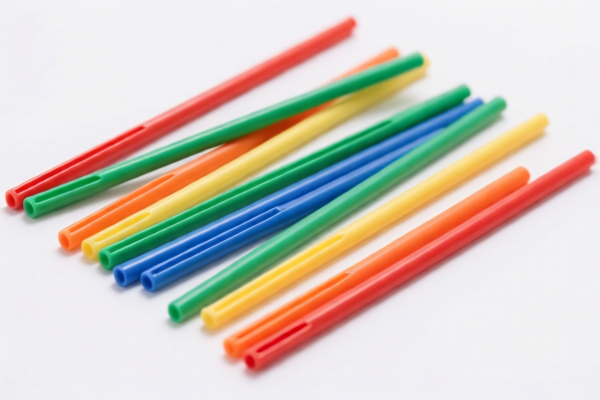
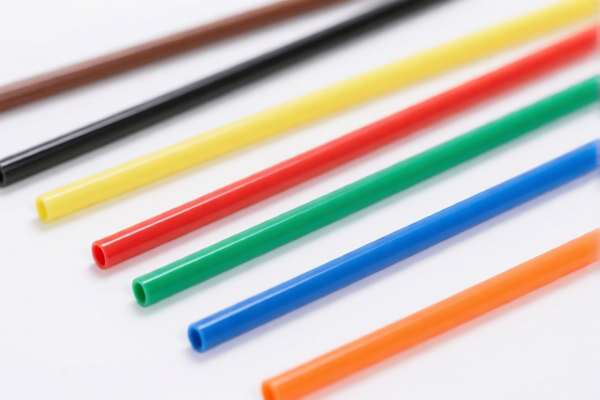
AI分析
🏗️ Other Plastic Rods for Construction & Industrial Use
🌐 HS Code Reference & Customs Clearance Guide | 2026 Latest Tariff Analysis | Professional Clearance Strategy
📌 I. Product Definition & Classification: Do You Really Understand "Plastic Rods"?
"Other plastic rods" is a broad commercial term primarily used in construction, plumbing, industrial machinery, and signage. In international trade, the classification depends heavily on the polymer type (e.g., PVC, PE, PP, ABS), shape/structure (solid rod vs. hollow tube), and intended use (structural, piping, or general purpose).
⚠️ Key Distinction Point:
- If the rod is rigid and used for piping/conduits, it may fall under Chapter 39.17 (Plastic Pipes/Hoses).
- If the rod is solid, non-pipe profile used for structural or mechanical purposes, it typically falls under Chapter 39.16 (Plastic Bars/Rods).
- If the specific plastic type is not specified, customs may apply a "residual" or "other" category, often resulting in higher base tariffs.
📦 II. HS Code Classification Details (2026 Latest Tariff Authority Comparison)
Based on the provided data, here are the six potential HS Codes for "Other Plastic Rods," ranked by specificity and tax efficiency.
| HS Code | Product Description | Application Scenario | Base Tariff | Additional Taxes | Total Tax Rate |
|---|---|---|---|---|---|
3917.29.00.90 |
Other plastic rods for construction, plastic material, rod shape, extended category of hard pipes/conduits. | Construction piping, rigid conduit rods, plumbing supports. | 3.1% | 35.0% (See below) | 38.1% |
3917.29.00.50 |
Other plastic rods for construction, plastic material, rod shape, general construction category. | General construction plastic rods, non-specific piping components. | 3.1% | 35.0% (See below) | 38.1% |
3925.90.00.00 |
Other plastic rods for construction, plastic material, rod shape, usage as construction building materials. | Building materials, structural supports, non-pipe construction elements. | 5.3% | 35.0% (See below) | 40.3% |
3916.90.50.00 |
Other plastic rods, shape: rod, material: plastic, residual category allowing reasonable inference. | Unspecified plastic rods, mixed polymer types, general industrial use. | 5.8% | 35.0% (See below) | 40.8% |
3916.20.00.91 |
Other plastic rods, shape: rod, material: plastic, other classes, non-specific purpose. | Generic plastic rods, not specified as pipe or specific polymer. | 5.8% | 35.0% (See below) | 40.8% |
3916.10.00.00 |
Plastic rods, shape: rod/stick, material: plastic, inferred as ethylene polymer primary products. | Polyethylene (PE) rods, basic polymer profiles. | 5.8% | 35.0% (See below) | 40.8% |
🔍 Key Insight:
- Lowest Tax (38.1%):3917.29.00.90and3917.29.00.50. These codes treat the rods as part of the "plastic pipes/conduits" family, benefiting from a lower base tariff (3.1%).
- Highest Tax (40.8%):3916series codes. These are "bars and rods" categories. They have a higher base tariff (5.8%) but are often used when the product doesn't fit the "pipe" definition.
- Critical Note: All listed codes include a 25.0% Additional Tariff and a 10% "Section 122" Tariff (referenced in data).
💰 III. 2026 Latest Tariff Rate Breakdown (Including Surcharges & Policy Add-ons)
✅ Applicable Market: United States (US)
✅ Origin: China (CN)
✅ Effective Time: Current tariffs apply (2026 context)
🎯 1. 3917.29.00.90 & 3917.29.00.50 — Best Option for Construction Piping Rods
| Item | Content |
|---|---|
| Base Tariff | 3.1% (Ad Valorem) |
| Section 301 Additional Tariff | +25.0% (USITC Footnote for Chinese plastics) |
| "122" Clause Tariff | +10.0% (Specific policy surcharge for this category) |
| Total Tax Rate | 38.1% |
| Tax Calculation | CIF Value × 38.1% |
| De Minimis Exemption | ❌ Not Applicable |
| Legal Basis Path | USITC:3917.29.00.90 → 301:T201 → Policy:122 |
📌 Explanation:
- These codes are optimal if your plastic rods are used for conduits, piping, or fluid transport.
- The 25% Section 301 tariff is standard for Chinese-origin plastics.
- The 10% "122" tariff is a specific add-on mentioned in your data, likely related to recent trade policy adjustments or specific material restrictions.
🎯 2. 3925.90.00.00 — Other Construction Plastics
| Item | Content |
|---|---|
| Base Tariff | 5.3% |
| Section 301 Additional Tariff | +25.0% |
| "122" Clause Tariff | +10.0% |
| Total Tax Rate | 40.3% |
| Tax Calculation | CIF Value × 40.3% |
| Legal Basis Path | USITC:3925.90.00.00 → 301:T201 → Policy:122 |
📌 Note:
- Used for plastic construction materials that don't fit the "pipe" definition (e.g., structural rods, insulation supports).
- Slightly higher base tariff (5.3%) leads to a higher total rate.
🎯 3. 3916 Series (.90.50, .20.00.91, .10.00.00) — General Plastic Bars/Rods
| Item | Content |
|---|---|
| Base Tariff | 5.8% |
| Section 301 Additional Tariff | +25.0% |
| "122" Clause Tariff | +10.0% |
| Total Tax Rate | 40.8% |
| Tax Calculation | CIF Value × 40.8% |
| Legal Basis Path | USITC:3916.xxxx → 301:T201 → Policy:122 |
📌 Note:
- This is the "default" category for solid plastic rods that are not pipes.
-3916.10.00.00specifically targets Polyethylene (PE). If your rods are PVC, PP, or ABS, using this code may lead to classification disputes.
-3916.90.50.00is the "residual" category, used when no other specific plastic type is identified.
🛠️ IV. Customs Clearance Practical Advice (Real-World Pitfall Guide)
✅ 1. Preparation Checklist (No Exceptions)
| Document | Required | Explanation |
|---|---|---|
| ✅ Product Specification Sheet | ✔️ | Must specify: Material (e.g., PVC, PE, ABS), Diameter, Length, Hardness, Intended Use. |
| ✅ Material Safety Data Sheet (MSDS) | ✔️ | Critical for chemical composition verification. |
| ✅ Product Photos | ✔️ | Clear images showing cross-section (solid vs. hollow) and end-use application. |
| ✅ Commercial Invoice | ✔️ | Must state "Plastic Rods for Construction/Industrial Use" – avoid vague terms like "Plastic Items." |
| ✅ Origin Certificate | ✔️ | To prove origin (China) and confirm applicability of 301 tariffs. |
| ✅ Usage Declaration | ✔️ | Explicitly state if used for piping (supports 3917) or structural bars (supports 3916). |
✅ 2. Classification Strategy (Key Mantra)
🔥 "Pipes go to 3917, Solid Bars to 3916, Specific Polymer Matters!"
| Scenario | Correct HS Code | Wrong Action | Consequence |
|---|---|---|---|
| Rods used as pipes/conduits | 3917.29.00.90 (38.1%) |
Misclassified as solid rods (3916) |
Overpay tax by 2.7%. |
| Solid Polyethylene (PE) rods | 3916.10.00.00 (40.8%) |
Misclassified as generic plastic | Potential audit for incorrect material. |
| Unknown/General plastic rods | 3916.90.50.00 (40.8%) |
Using specific codes without proof | Customs may reclassify to higher duty or seize. |
| Construction Structural rods | 3925.90.00.00 (40.3%) |
Using 3917 (pipe category) |
Dispute if not used for fluid conveyance. |
✅ 3. Special Cases Handling
| Situation | Handling Advice |
|---|---|
| Mixed Materials | If rods contain additives (e.g., fiberglass reinforcement), disclose fully. Pure plastic codes may not apply. |
| Custom Shapes | Non-circular rods (square, triangular) still fall under 3916 or 3917 based on use, not shape. |
| OEM/Custom Orders | Provide customer design specs to justify "Construction" use if claiming 3917 or 3925. |
| Pre-Ruling | Given the 38.1% vs. 40.8% difference, consider applying for an Advance Ruling if shipping large volumes. |
🌍 V. Global Market Comparison (2026 Update)
| Country/Region | Recommended HS Code | Est. Tariff | Certification | Notes |
|---|---|---|---|---|
| 🇺🇸 USA | 3917.29.00.90 |
38.1% | No specific | 301 + 122 surcharges apply. |
| 🇨🇳 China | 3917.29.00.90 |
5.3% (Import) | CCC (if applicable) | No additional 301/122. |
| 🇪🇺 EU | 3917.29.00.90 |
0-6.5% | CE/REACH | No 301/122. |
| 🇬🇧 UK | 3917.29.00.90 |
0-6.5% | UKCA | Post-Brexit tariffs vary. |
📌 Conclusion:
- The USA imposes the highest effective burden due to the 25% Section 301 + 10% 122 clause surcharges.
- EU/UK are much more favorable, with no punitive surcharges.
- If you are exporting to the US, strictly justify the3917classification to save 2.7% on every shipment.
📌 VI. Common Errors & Pitfalls (Lessons Learned)
❌ Error 1: Classifying Piping Rods as Solid Bars (3916)
👉 Consequence: You pay 40.8% instead of 38.1%. While small per unit, it adds up significantly on large shipments.
❌ Error 2: Misidentifying Material Type
👉 Consequence: If you claim 3916.10.00.00 (PE) but the rods are PVC, customs may impose penalties for misclassification.
❌ Error 3: Vague Description "Plastic Rods"
👉 Consequence: Customs will choose the "Other" category (3916.90.50.00), leading to the highest base tariff (5.8%) and potential delays.
❌ Error 4: Ignoring the 122 Clause
👉 Consequence: Failing to account for the 10% surcharge leads to underpayment and customs holds.
✅ Correct Declaration Example:
"PVC Plastic Rods, Diameter 50mm, Used for Electrical Conduit Construction, Solid Cross-Section, Origin: China"
→ Supports3917.29.00.90(38.1%)
🎯 VII. Conclusion: Precision Saves Money!
🎯 Key Takeaway:
🔹 "Use 3917 for Pipes/Conduits (38.1%), Use 3916 for Solid Bars (40.8%)."
🔹 "Material and Intended Use are the Keys to Classification."📌 Pro Tip:
If your plastic rods are structural components rather than piping,3925.90.00.00(40.3%) might be a safer middle ground than3916if3917is rejected. Always have product drawings ready to prove "pipe-like" or "structural" intent.
📣 Immediate Action:
📞 Contact your customs broker with detailed specs.
📄 Prepare a material declaration specifying polymer type.
🚀 Optimize for3917.29.00.90if applicable to save 2.7% in taxes.
✨ Professional Clearance, Starting from Accurate Classification!
💼 Every percentage point of tax saved is pure profit!
用户评价
关于 HS 编码归类
协调制度(HS)是由世界海关组织(WCO)制定的国际贸易商品分类标准。全球 200 多个国家采用 HS 系统作为海关关税、贸易统计和进出口监管的基础。
每个 HS 编码遵循以下层级结构:
- 章(2 位)——商品大类(例如:第 84 章:机器和机械设备)
- 品目(4 位)——章内的更具体分类
- 子目(6 位)——国际通用细分,所有 WCO 成员国统一使用
- 本国细分(8-10 位)——各国自行扩展的细分编码,如美国 HTSUS 10 位编码
正确的 HS 编码归类对于顺利通关、准确缴纳关税和遵守贸易法规至关重要。错误归类可能导致海关延误、多缴关税或罚款。
从CN进口到US时,适用的关税税率可能包括:
- 最惠国(MFN)税率——适用于 WTO 成员国的标准关税税率
- 普通税率——适用于无贸易协定国家
- 贸易救济关税——附加关税,如 301 条款(反倾销)、232 条款(国家安全)或反补贴税
本页内容仅供参考。如需正式归类,请咨询当地海关或持牌报关代理。