PBT Fiber Grade Raw Material
CN → US商品图片
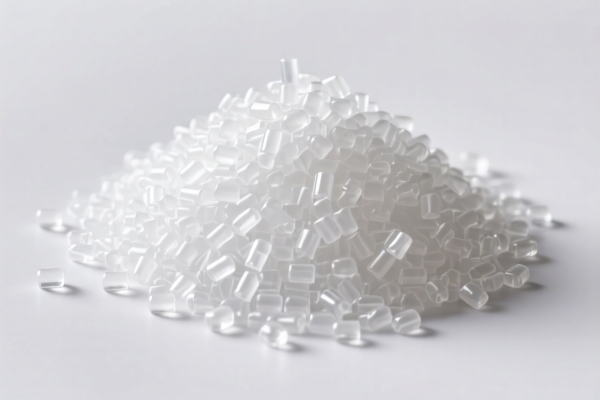
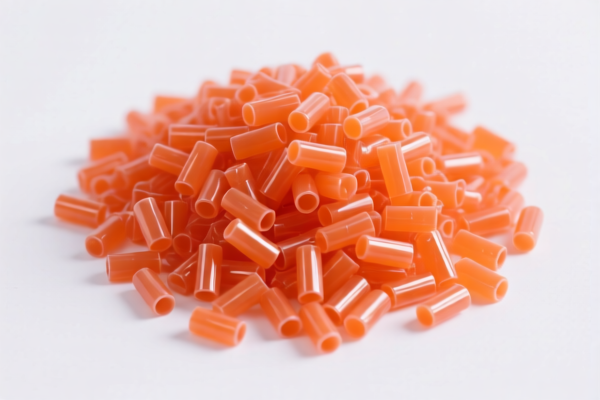
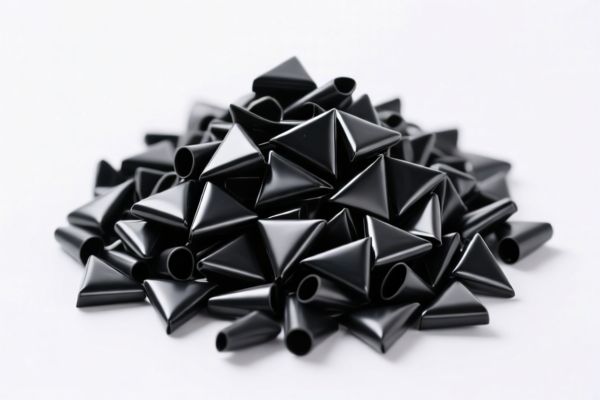
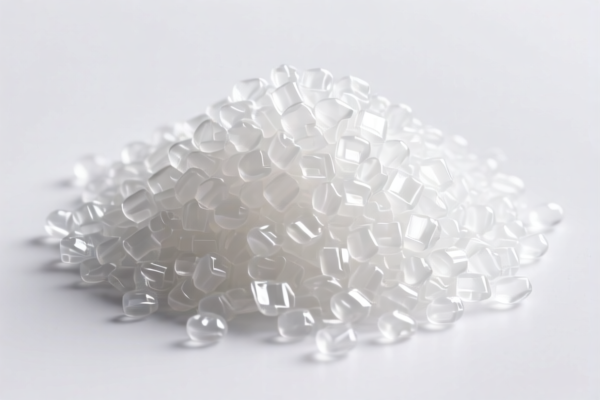
AI分析
🧪 PBT Fiber Grade Raw Material (Polybutylene Terephthalate for Fiber Applications)
🌐 HS Code Reference & Customs Clearance Guide | 2026 Latest Tariff Analysis | Professional Grade Clearance Strategy
📌 1. Product Definition & Classification: Do You Really Understand "PBT Fiber Grade"?
Polybutylene Terephthalate (PBT) is a semi-crystalline thermoplastic polyester. When designated as "Fiber Grade," it implies specific molecular weight, viscosity, and additive packages optimized for melt spinning into filaments. These filaments are subsequently used in carpets, apparel, upholstery, and industrial textiles.
In international trade, the classification hinges on one critical factor: Has it been spun into filaments or woven into fabric?
- Raw Material (Resin/Pellets): The unprocessed polymer in pellet, granule, or powder form. This is the input for textile manufacturers.
- Intermediate Product (Yarn/Filament): If the PBT has already been extruded into continuous filaments (even if not yet woven), it is no longer "raw material" for the purpose of HS Code 3907. It moves into Chapter 54.
⚠️ Key Distinction Point:
- If the product is polymer pellets/granules intended for melting and spinning → Classified under HS 3907.
- If the product is already spun into yarn/filament (even if packaged for export) → Classified under HS 5402.
- If the product is woven fabric → Classified under HS 5407/5513.
📦 2. HS Code Classification Details (2026 Latest Tariff Authority Cross-Reference)
| HS Code | Product Description | Application Scenario | State of Material |
|---|---|---|---|
3907.69.10.00 |
Polyesters, other, in primary forms; Polybutylene terephthalate (PBT) | Raw resin pellets for fiber manufacturing | ✅ Yes (Unspun) |
3907.69.90.00 |
Polyesters, other, in primary forms; Other polyesters | Recycled PBT pellets or non-fiber grade resins | ✅ Yes (Unspun) |
5402.35.00.00 |
Synthetic filaments, discontinuous, oriented, 100% PBT | Spun yarn/filament ready for weaving/knitting | ❌ No (Spun) |
5402.33.00.00 |
Synthetic monofilament, ≥67 decitex, 100% PBT | Industrial filaments (e.g., tires, ropes) | ❌ No (Spun) |
🔍 Crucial Reminder:
- Raw Material means the chemical polymer in its primary form (pellets, flakes, powder). Once it undergoes extrusion into a continuous thread, it ceases to be a "polymer resin" and becomes a "textile yarn." - Declaring PBT pellets as yarn (or vice versa) is a common customs violation. If your product is pellets, do not use 5402 codes. If your product is yarn, do not use 3907 codes.
💰 3. 2026 Latest Tariff Rate Breakdown (Including Surtaxes & Policy Surcharges)
✅ Applicable Country: United States (US)
✅ Country of Origin: China (CN)
✅ Effective Date: From November 10, 2025 (including subsequent imports)
🎯 1. 3907.69.10.00 —— PBT Resin Pellets (Unspun)
| Item | Content |
|---|---|
| Base Rate | 5.3% (ad valorem) |
| USITC Surtax (Section 301) | +25% (from USITC Footnote 9903.02.01) |
| IEEPA Surtax | +10% (for Chinese/HK products, effective Nov 10, 2025) |
| Total Tariff Rate | 40.3% |
| Tax Calculation | CIF Value × 40.3% |
| De Minimis Eligibility | ❌ Not Eligible (deny_de_minimis) |
| Legal Basis Path | IEEPA:9903.01.25 → IEEPA:9903.01.24 → USITC:3907.69.10.00 → FOOTNOTE:9903.02.01 |
📌 Explanation:
- The 25% Section 301 surtax applies to most polymer resins, including PBT, as part of the trade remedy measures. - The 10% IEEPA surtax is a new layer of cost for Chinese-origin synthetic polymer resins. - Total 40.3% is significant. For high-volume textile supply chains, this drastically affects landed cost. - Note: If the PBT is recycled (not virgin), it may fall under3907.69.90.00or potentially3915(waste/scrap), which may have different surtax footnotes. Verify if your material is "primary form" vs. "waste."
🎯 2. 3907.69.90.00 —— Other Polyester Resins (e.g., Recycled PBT)
| Item | Content |
|---|---|
| Base Rate | 5.3% |
| USITC Surtax (Section 301) | +25% |
| IEEPA Surtax | +10% |
| Total Tariff Rate | 40.3% |
| Tax Calculation | CIF Value × 40.3% |
| De Minimis Eligibility | ❌ Not Eligible |
📌 Note:
- Recycled PBT pellets often fall here if they don't meet the specific "PBT" descriptor in 3907.69.10. - Same high tariff burden applies.
🛠️ 4. Customs Clearance Practical Advice (Battle-Tested Pitfall Guide)
✅ 1. Required Documentation Checklist (Non-Negotiable)
| Document | Mandatory | Description |
|---|---|---|
| ✅ Product Specification Sheet | ✔️ | Must clearly state: "PBT Resin," "Fiber Grade," Viscosity (IV), Moisture Content (<0.02%) |
| ✅ Formula/Composition Statement | ✔️ | Confirm it is not a compound or mixture with other polymers (e.g., PC/PBT blends may have different HS codes) |
| ✅ Product Photos (Packaging & Label) | ✔️ | Show pellets/granules, not yarn. Label must say "Polymer Resin" or "Plastic Granules" |
| ✅ Certificate of Origin (CO) | ✔️ | Crucial for determining eligibility for any potential exemptions (though unlikely for CN origin PBT) |
| ✅ Commercial Invoice | ✔️ | Description: "PBT Polybutylene Terephthalate Resin Pellets for Fiber Spinning" |
| ✅ Bill of Lading | ✔️ | Ensure weight/volume matches invoice |
✅ 2. Declaration Tips (Key Mantra)
🔥 "Resin Pellets, Not Yarn; State Grade, Avoid Harm!"
| Situation | Correct Declaration | Wrong Practice |
|---|---|---|
| PBT Pellets for Fiber | 3907.69.10.00 |
Misdeclare as "Textile Fiber" (5402) → Seizure/penalty |
| PBT Pellets (Blended) | Check specific blend code (e.g., 3907.61 if PC/PBT) | Assume all PBT is 3907.69.10 |
| Spun PBT Yarn | 5402.35.00.00 |
Declare as "Resin" → Customs will reject as non-conforming |
| PBT Powder (for coating) | Still 3907 |
Ensure particle size isn't mistaken for chemical waste |
✅ 3. Special Scenarios
| Situation | Handling Advice |
|---|---|
| PC/PBT Blends | Often classified under 3907.61 (Polycarbonates). Surtax rates may differ slightly; verify specifically. |
| Recycled PBT | If classified as "waste/scrap" (Chapter 3915), tariffs may be different, but stricter environmental documentation is required. |
| OEM Private Label | Ensure the invoice reflects the true brand owner; mislabeling can trigger anti-dumping investigations if applicable (though PBT is generally not subject to AD/CVD in the US, unlike aluminum or steel). |
🌍 5. Global Market Comparison (2026 Latest)
| Country/Region | Recommended HS Code | Tariff (CN Origin) | Certification | Notes |
|---|---|---|---|---|
| 🇺🇸 USA | 3907.69.10.00 |
40.3% | None (but FDA contact info recommended for potential food-adjacent indirect contact) | High tariff due to 301 + IEEPA |
| 🇨🇳 China | 3907.69.10.00 |
5.5% | None | Domestic production is abundant; imports less common |
| 🇪🇺 EU | 3907.69.10 |
6.5% | REACH Registration Required | No Section 301 equivalent, but REACH compliance is strict |
| 🇬🇧 UK | 3907.69.10 |
6.5% | UKCA/REACH | Post-Brexit rules apply |
| 🇮🇳 India | 3907.69 |
7.5% - 10% | BIS (if applicable) | Check Basic Customs Duty (BCD) + Social Welfare Surcharge |
📌 Conclusion:
- The US is the most expensive market for PBT fiber grade resin due to the cumulative 40.3% duty burden. - EU/UK are more tariff-friendly (6.5%) but have stringent chemical compliance (REACH). - India has moderate tariffs but complex regulatory layers.
📌 6. Common Mistakes & Pitfalls (Blood-Stained Lessons)
❌ Mistake 1: Declaring PBT Pellets as "Plastic Raw Material" (Generic)
👉 Consequence: Customs may assign a higher general rate or demand extensive verification, causing delays.
👉 Fix: Always use specific 8-digit HS codes.
❌ Mistake 2: Confusing Fiber Grade with Engineering Grade
👉 Consequence: While both are 3907.69, Fiber Grade may have different additives (spin finishes) that require disclosure for safety data sheets (SDS). Failure to provide accurate SDS can lead to EPA/transportation violations.
👉 Fix: Provide updated SDS highlighting "Spin Finish" components.
❌ Mistake 3: Using 5402 (Yarn) codes for 3907 (Resin)
👉 Consequence: Seizure of cargo. Customs sees pellets and expects a polymer code. Yarn codes require proof of spinning.
👉 Fix: If you are exporting resin, stick to 3907. If you are exporting yarn, stick to 5402. Do not mix.
🎯 7. Conclusion: Precision in Classification Saves Millions!
🎯 Remember the Mantra:
🔹 "Pellets are Polymer, Yarn is Textile. Don't Mix Them, or Customs Will Arrest."
🔹 "PBT Resin from China: Expect 40.3% in the US. Plan for Surcharge, Don't Rush."
📌 Pro Tip:
If your PBT resin is originating from Vietnam, Thailand, or Malaysia (due to supply chain diversification), you may apply for preferential tariff treatment under various FTAs (e.g., CPTPP, RCEP), potentially reducing the Section 301 impact.
Recommendation:
📞 Request an Advance Ruling (US CBP) if your product is a blend or has unusual additives.
📄 Ensure your Supplier provides a Certificate of Origin that accurately reflects the manufacturing process to avoid "transshipment" penalties.
📣 Immediate Action:
📦 Audit your BOM (Bill of Materials): Are you importing resin or yarn?
🧮 Calculate Landed Cost: Include the 40.3% tariff for US imports.
🚀 Secure Compliance: Get your REACH registration (EU) or SDS updated (US) before shipment.
✨ Professional Clearance Starts with Accurate Classification!
💼 Every percentage point of duty impacts your bottom line. Optimize now.
用户评价
关于 HS 编码归类
协调制度(HS)是由世界海关组织(WCO)制定的国际贸易商品分类标准。全球 200 多个国家采用 HS 系统作为海关关税、贸易统计和进出口监管的基础。
每个 HS 编码遵循以下层级结构:
- 章(2 位)——商品大类(例如:第 84 章:机器和机械设备)
- 品目(4 位)——章内的更具体分类
- 子目(6 位)——国际通用细分,所有 WCO 成员国统一使用
- 本国细分(8-10 位)——各国自行扩展的细分编码,如美国 HTSUS 10 位编码
正确的 HS 编码归类对于顺利通关、准确缴纳关税和遵守贸易法规至关重要。错误归类可能导致海关延误、多缴关税或罚款。
从CN进口到US时,适用的关税税率可能包括:
- 最惠国(MFN)税率——适用于 WTO 成员国的标准关税税率
- 普通税率——适用于无贸易协定国家
- 贸易救济关税——附加关税,如 301 条款(反倾销)、232 条款(国家安全)或反补贴税
本页内容仅供参考。如需正式归类,请咨询当地海关或持牌报关代理。