PCB Board
CN → US| HS编码 | 关税税率 | 原产国 | 目的国 | 文档 |
|---|---|---|---|---|
| 8534000080 | 35.0% | CN | US | 官方文档 |
| 8543906800 | 35.0% | CN | US | 官方文档 |
| 8543906500 | 35.0% | CN | US | 官方文档 |
| 8473302000 | 85.0% | CN | US | 官方文档 |
| 8537109170 | 37.7% | CN | US | 官方文档 |
商品图片
AI分析
🛠️ Printed Circuit Boards (PCBs)
🌐 HS Code Reference & Customs Clearance Guide | 2026 Latest Tariff Analysis | Professional Clearance Strategy
📌 I. Product Definition & Classification: What Exactly Is a "PCB"?
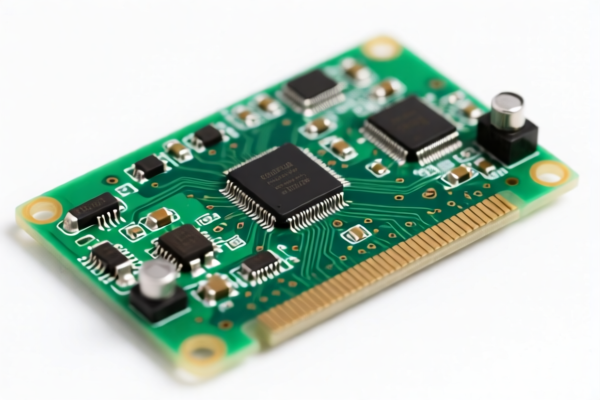
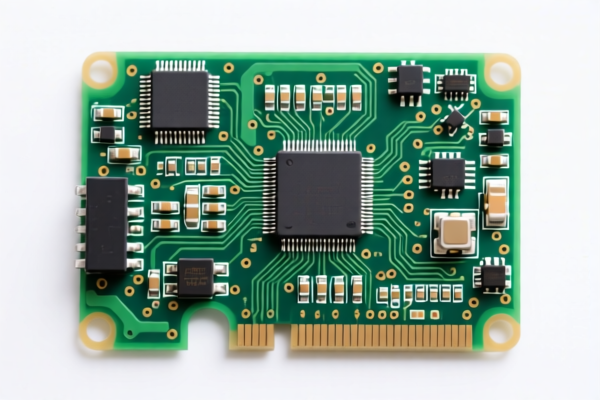
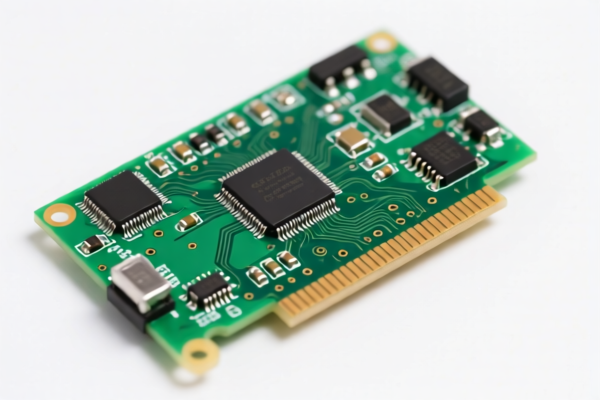
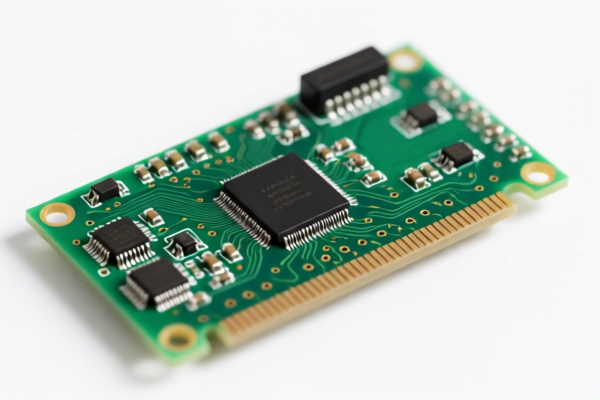
Printed Circuit Boards (PCBs), often referred to in trade data as "Printed Circuits" or "Circuit Assemblies," are the foundational hardware component in almost all electronic devices. They provide mechanical support and electrical connections for electronic components using conductive tracks, pads, and other features etched from copper sheets laminated onto a non-conductive substrate.
In international trade classification, the key differentiator is functional specificity: * Generic PCBs: Plain boards or simple assemblies without specific control, conversion, or detection functions beyond basic connectivity. * Functional Assemblies: PCBs integrated into specific machinery, control systems, or machines performing specific automated tasks.
⚠️ Key Distinction Point:
- If the board is a generic component or a simple assembly not specified elsewhere → Often falls under Chapter 85 (Electrical Machinery) generic categories.
- If the board is a specific part of a machine (e.g., a computer motherboard or control panel) → May fall under Chapter 84 (Machinery) or specific 8537 (Control Panels).
📦 II. HS Code Classification Details (2026 Latest Tariff Authority Reference)
Based on the provided data, here are the five potential classifications for "Printed Circuit Boards" and the logic behind each:
| HS Code | Product Description | Applicable Scenario | Logic/Justification |
|---|---|---|---|
8534.00.00.80 |
Printed Circuits (Other) | Generic PCBs, simple assemblies, flexible or rigid boards not specified elsewhere | Match Success: The name "Printed Circuit Board" aligns with "Printed Circuits." Since the original classification is a "Other" catch-all category, and the physical form (flexible/rigid) and specific use are not explicitly defined, it is reasonably inferred to fit here due to lack of material or use conflict. |
8543.90.68.00 |
Parts of Electrical Apparatus (PCB Assemblies) | PCBs functioning as "Printed Circuit Assemblies" within specific electrical apparatus | Match Success: The item is described as a "Printed Circuit Assembly," which is functionally and physically consistent with the classification explanation for "Printed Circuit Assemblies." |
8543.90.65.00 |
Parts of Electrical Apparatus (Other PCBs) | PCBs used as components in electrical devices where specific use is not stated | Match Success: Similar to the above, the form matches "Printed Circuit Assembly." Per the "catch-all category" matching principle, in the absence of material/use conflicts, it is inclined to be deemed compliant. |
8473.30.20.00 |
Parts of Automatic Data Processing Machines | PCBs acting as components for machines of Chapter 84 (e.g., computers, servers) | Match Success: The PCB is considered a component of machines in Chapter 841 (Automatic Data Processing Machines), fitting the "Printed Circuit Assembly" attribute and use. |
8537.10.91.70 |
Boards for Electric Control or Distribution | PCBs inferred to have power control or distribution functions | Inference Based: The name "Circuit Board" is inferred to have voltage control/distribution functions. As it falls under the "Other" catch-all category for voltage control equipment parts, and there is no obvious material/form conflict, it is deemed possibly compliant. |
🔍 Key Reminder:
- Generic PCBs typically lean towards 8534 or 8543.
- PCBs inside Computers/Servers lean towards 8473.
- PCBs with Control/Distribution Functions lean towards 8537.
- Ambiguity Alert: Without detailed technical sheets (schematics, specific application), customs may default to "catch-all" categories, leading to varying tax rates.
💰 III. 2026 Latest Tariff Rate Breakdown (Including Additional Taxes & Policy Levies)
✅ Applicable Country: USA (US)
✅ Origin: China (CN)
✅ Effective Date: From November 10, 2025 onwards (including subsequent imports)
🎯 1. 8534.00.00.80 & 8543.90.68.00 & 8543.90.65.00 — Generic/Assembled PCBs
| Item | Content |
|---|---|
| Base Tariff | 0.0% (ad valorem) |
| Section 301 Additional Tariff | +25.0% |
| IEEPA Additional Tariff (Section 122) | +10.0% |
| Total Effective Tax Rate | 35.0% |
| Tax Calculation | CIF Value × 35% |
| De Minimis Eligibility | ❌ Not Eligible (Generally restricted for China-origin goods under these sections) |
| Legal Basis Path | USITC:8534.00.00.80 / 8543.90.68.00 → Section 301: 25% → IEEPA Sec 122: 10% |
📌 Explanation:
- These codes represent the broadest categories for PCBs not specified elsewhere.
- Total Tax: 35%. This is a significant cost factor.
- The 25% comes from USITC Footnotes (Section 301).
- The 10% comes from IEEPA (International Emergency Economic Powers Act) targeting Chinese goods.
🎯 2. 8473.30.20.00 — Parts of Automatic Data Processing Machines (ADPM)
| Item | Content |
|---|---|
| Base Tariff | 0.0% (ad valorem) |
| Section 301 Additional Tariff | +25.0% |
| IEEPA Additional Tariff (Section 122) | +10.0% |
| Section 232 Additional Tariff (Steel/Aluminum/Copper) | +50.0% (If applicable materials) |
| Total Effective Tax Rate | 85.0% (Max Potential) |
| Tax Calculation | CIF Value × 85.0% (if copper/steel components trigger Sec 232) |
| De Minimis Eligibility | ❌ Not Eligible |
| Legal Basis Path | USITC:8473.30.20.00 → Section 301: 25% → IEEPA Sec 122: 10% → Section 232: 50% |
📌 Warning:
- If the PCB involves copper, steel, or aluminum that meets the criteria for Section 232 (National Security Imports of Steel/Aluminum), the tariff jumps to 85%.
- Even without Sec 232, the base is 35%. However, the risk of Sec 232 application makes this category extremely high risk for high-value shipments.
🎯 3. 8537.10.91.70 — Control/Distribution Boards
| Item | Content |
|---|---|
| Base Tariff | 2.7% (ad valorem) |
| Section 301 Additional Tariff | +25.0% |
| IEEPA Additional Tariff (Section 122) | +10.0% |
| Total Effective Tax Rate | 37.7% |
| Tax Calculation | CIF Value × 37.7% |
| De Minimis Eligibility | ❌ Not Eligible |
| Legal Basis Path | USITC:8537.10.91.70 → Section 301: 25% → IEEPA Sec 122: 10% |
📌 Note:
- This category has a slightly higher base rate (2.7%) but is still heavily impacted by the same additional tariffs (35% total add-on).
- It is considered a "catch-all" for control boards, so classification must be justified by function.
🛠️ IV. Customs Clearance Practical Advice (Real-World Pitfall Guide)
✅ 1. Preparation Checklist (Non-Negotiable)
| Document | Must Provide | Reason |
|---|---|---|
| ✅ Technical Spec Sheet | ✔️ | Details dimensions, layer count, material (FR-4, etc.), and connections. |
| ✅ Circuit Diagram/Schematic | ✔️ | Critical to prove if it's a generic PCB (8534/8543) or a functional control board (8537/8473). |
| ✅ Product Photos (Labeled) | ✔️ | Clear view of components, model number, and any markings. |
| ✅ Third-Party Test Reports | ✔️ | UL, CE, RoHS (if applicable). |
| ✅ Commercial Invoice | ✔️ | Clearly state "Printed Circuit Board (Generic)" or "PCB Assembly for [Specific Use]". Avoid vague terms like "Electronic Part." |
| ✅ Packing List | ✔️ | Detail packaging to avoid separation of components during inspection. |
✅ 2. Declaration Tips (Key Mnemonic)
🔥 "Specify Use, Show Schematic, Avoid 'Other' Traps!"
| Scenario | Correct Declaration | Incorrect Practice |
|---|---|---|
| Generic PCB | 8534.00.00.80 - "Printed Circuit Board, FR-4, Unpopulated/Populated, No Specific Control Function" |
Vague "Electronics Part" → High risk of audit |
| PCB in Computer | 8473.30.20.00 - "PCB Assembly for Automatic Data Processing Machine" |
Must prove it's for ADPM. Risk of Sec 232. |
| Control Board | 8537.10.91.70 - "Board for Voltage Control/Distribution" |
Must provide functional description proving control nature. |
| Flexible PCB | 8534.00.00.80 - "Flexible Printed Circuit" |
Specify "Flexible" to justify general category. |
✅ 3. Special Situations Handling
| Situation | Handling Advice |
|---|---|
| OEM Custom PCBs | Provide customer PO and design files. Prove it's a specific assembly to avoid "Other" catch-all disputes. |
| PCBs with Copper Foil | Be extremely cautious with 8473 due to Section 232 (50% additional tariff) on copper/steel. Verify if the copper content triggers this. |
| Samples vs. Production | Samples may still be subject to tariffs if declared as commercial goods. Use proper "Sample" declaration if eligible, but verify de minimis rules. |
| Mixed Shipments | If shipping both PCBs and completed devices, declare separately. Do not mix HS codes in one line item. |
🌍 V. Global Market Clearance Comparison (2026 Latest)
| Country/Region | Recommended HS Code | Tariff Rate (China Origin) | Certification Requirements | Notes |
|---|---|---|---|---|
| 🇺🇸 USA | 8534.00.00.80 |
35% (General) 85% (If Sec 232 applies) |
FCC (if RF), UL (Safety) | Highest Risk: High tariffs + Sec 232 potential. |
| 🇨🇳 China | 8534.00.00.80 |
~6-13% (Import Tariff) | CCC (if applicable) | Lower tariffs, but strict quality checks. |
| 🇪🇺 EU | 8534.00.00.80 |
~0-2.5% (Standard MFN) | CE, RoHS, REACH | No Section 301/122 style tariffs. Easier clearance. |
| 🇬🇧 UK | 8534.00.00.80 |
~0-2.5% | UKCA, CE | Similar to EU post-Brexit. |
| 🇯🇵 Japan | 8534.00.00.80 |
~0-0.5% | PSE, JIS | Low tariffs, strict safety standards. |
📌 Conclusion:
- USA is the most challenging market due to 35-85% effective tariffs.
- EU/UK/Japan offer much more favorable tariff environments (~0-5%).
- Supply Chain Strategy: Consider non-China origins or final assembly in third countries to mitigate US tariffs.
📌 VI. Common Mistakes & Pitfall Guide (Lessons Learned)
❌ Mistake 1: Declaring a complex Control PCB as a generic "PCB"
👉 Consequence: Misclassification penalty, retroactive tax assessment, and potential seizure.
❌ Mistake 2: Ignoring Section 232 for PCBs containing significant copper/steel
👉 Consequence: Unexpected 50% additional tariff on 8473 items → Total 85%.
❌ Mistake 3: Vague Invoice Description ("Electronic Components")
👉 Consequence: Customs audit delay, request for additional info, potential devaluation.
❌ Mistake 4: Assuming "De Minimis" ($800) applies to PCBs
👉 Consequence: False. Most PCBs from China are not eligible for de minimis under Section 301/122 restrictions.
✅ Correct Practice:
"Printed Circuit Board (PCB), FR-4 Material, 4-Layer, Populated with Components, Model XYZ, No RF Function, Compliant with RoHS"
🎯 VII. Conclusion: Precise Classification Saves Costs!
🎯 Remember This Mantra:
🔹 "Generic PCBs: 35%. Control PCBs: 37.7%. ADPM PCBs: 35% to 85% (Watch Copper!)."
🔹 "Schematic is Key. Function Defines Code. Tariff is High in US."
📌 Pro Tip:
- If your PCBs are essential components for medical or critical infrastructure, explore Exclusion Requests (though rare and difficult).
- Consider HS Code Pre-Rulings from CBP (U.S. Customs and Border Protection) for high-volume shipments to ensure classification certainty.
📣 Immediate Action:
📞 Contact a licensed customs broker + Provide Schematics + Verify Section 232 Applicability
🚀 Minimize Tariff Exposure, Ensure Smooth Clearance, Protect Your Margins!
✨ Professional Clearance Starts with Accurate Classification!
💼 Every Percent of Tariff Counts!
用户评价
关于 HS 编码归类
协调制度(HS)是由世界海关组织(WCO)制定的国际贸易商品分类标准。全球 200 多个国家采用 HS 系统作为海关关税、贸易统计和进出口监管的基础。
每个 HS 编码遵循以下层级结构:
- 章(2 位)——商品大类(例如:第 84 章:机器和机械设备)
- 品目(4 位)——章内的更具体分类
- 子目(6 位)——国际通用细分,所有 WCO 成员国统一使用
- 本国细分(8-10 位)——各国自行扩展的细分编码,如美国 HTSUS 10 位编码
正确的 HS 编码归类对于顺利通关、准确缴纳关税和遵守贸易法规至关重要。错误归类可能导致海关延误、多缴关税或罚款。
从CN进口到US时,适用的关税税率可能包括:
- 最惠国(MFN)税率——适用于 WTO 成员国的标准关税税率
- 普通税率——适用于无贸易协定国家
- 贸易救济关税——附加关税,如 301 条款(反倾销)、232 条款(国家安全)或反补贴税
本页内容仅供参考。如需正式归类,请咨询当地海关或持牌报关代理。