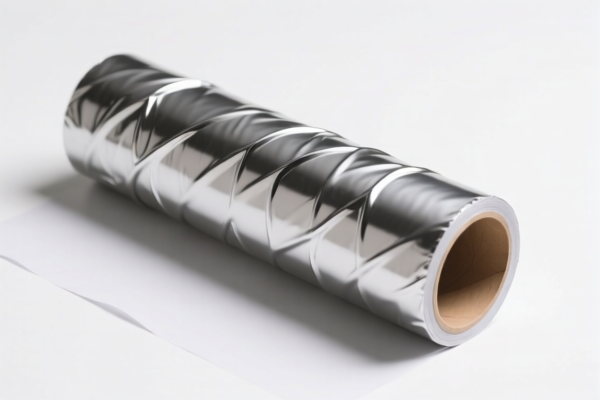
PE Coated Paper Roll
CN → US| HS编码 | 关税税率 | 原产国 | 目的国 | 文档 |
|---|---|---|---|---|
| 4811512010 | 35.0% | CN | US | 官方文档 |
| 4811516000 | 35.0% | CN | US | 官方文档 |
| 4810131900 | 35.0% | CN | US | 官方文档 |
| 4810132090 | 35.0% | CN | US | 官方文档 |
| 4811512010 | 35.0% | CN | US | 官方文档 |
商品图片



AI分析
📜 PE Coated Paper Roll (Polyethylene Coated Paper)
🌐 HS Code Reference & Customs Clearance Guide | 2026 Latest Tariff Analysis | Professional Clearance Strategy
📌 I. Product Definition & Classification: What Exactly is "PE Coated Paper Roll"?
PE Coated Paper Roll refers to paper substrates coated with a layer of polyethylene (PE) plastic. This coating provides critical properties such as moisture resistance, greaseproofing, and sealability, making it indispensable for packaging industries.
In international trade, it is primarily classified based on its weight, surface treatment, and intended use. The most common HS headings fall under Chapter 48 (Paper and Paperboard), specifically Heading 4810 (Paper coated with mineral substances) or Heading 4811 (Paper treated with plastics or other coatings).
⚠️ Key Distinction:
- If the paper is coated with minerals (like clay) and has a PE backing, it often falls under 4810.
- If the primary characteristic is the plastic coating itself for protective/barrier purposes, it often falls under 4811.
- Form Factor: Must be in rolls to fit these specific subheadings. Sheets would fall under different codes.
📦 II. HS Code Classification Details (2026 Latest Tariff Authority Match)
Based on the provided data, here are the specific HS Codes applicable to PE Coated Paper Rolls, along with the reasoning for each classification.
| HS Code | Product Description & Rationale | Total Tax Rate | Tax Breakdown |
|---|---|---|---|
| 4811.51.20.10 | Coated Paper Roll, Beverage Container Base Material • Rationale: The summary explicitly states the form is a "roll," material is "coated paper," and the use is inferred as a base material for beverage containers. • Context: This is a specific sub-category for high-barrier packaging paper. |
35.0% | Base Tariff: 0.0% Additional Tariff: 25.0% Section 122 Tariff: 10% |
| 4811.51.60.00 | Coated Paper Roll, General Coated Paper • Rationale: The coating and classification are consistent. The roll conforms to the paper form without obvious conflicts. This is a general-purpose coated paper roll classification. • Context: Used for packaging where specific end-use (like beverage) is not the primary classifier. |
35.0% | Base Tariff: 0.0% Additional Tariff: 25.0% Section 122 Tariff: 10% |
| 4810.13.19.00 | Coated Paper Roll, Printing/Writing Inference • Rationale: The coating matches material characteristics, and the roll form is valid. It is inferred to be used for printing or writing. • Context: Often applies to coated paper with mineral coatings (clay) used in high-quality printing. |
35.0% | Base Tariff: 0.0% Additional Tariff: 25.0% Section 122 Tariff: 10% |
| 4810.13.20.90 | Coated Paper Roll, Other/Residual Category • Rationale: Coated paper matches material, roll form is valid. Classified under the "Other" residual category based on the principle of fallback for unspecified uses. • Context: A catch-all for coated paper rolls that do not fit more specific printing or beverage container codes. |
35.0% | Base Tariff: 0.0% Additional Tariff: 25.0% Section 122 Tariff: 10% |
🔍 Important Note:
- All listed HS Codes result in a 35.0% total tax rate for imports from China to the US (assuming standard 2026 trade relations).
- The Section 122 Tariff (10%) is a critical component added to the standard 301 tariffs.
- No de minimis exemption applies to these goods under the current high-tax structure.
💰 III. 2026 Latest Tariff Rate Breakdown (Including Surcharges & Policy Add-ons)
✅ Applicable Country: United States (US)
✅ Country of Origin: China (CN)
✅ Effective Date: Post-2025 trade policies (including Section 122 and 301 tariffs)
🎯 1. Universal Rate Structure for PE Coated Paper Rolls
| Item | Content |
|---|---|
| Base Tariff | 0% (Most coated papers enter at 0% MFN rate) |
| USITC Additional Tariff (301) | +25% (Section 301 tariffs on Chinese imports) |
| Section 122 Tariff | +10% (Specific add-on for certain paper products under Section 122) |
| Total Effective Rate | 35.0% |
| Tax Calculation | CIF Value × 35% |
| De Minimis Exemption | ❌ Not Applicable (Section 321 does not apply to high-tax tariff items) |
| Legal Path | USITC:4811/4810 → Footnote:301 → Section122:10% |
📌 Explanation:
- The 25% tariff is part of the ongoing trade dispute measures (Section 301).
- The 10% tariff is a specific addition under Section 122, which targets certain paper and paperboard products to protect domestic capacity.
- Total 35% is a very high barrier, significantly impacting profit margins. Cost optimization and precise classification are crucial.
🛠️ IV. Customs Clearance Practical Advice (Pitfall Avoidance Guide)
✅ 1. Required Documentation Checklist (Must-Have)
| Document | Required? | Notes |
|---|---|---|
| Product Specification Sheet | ✔️ | Must specify: PE coating thickness, paper weight (gsm), tensile strength, and end-use (e.g., "for beverage cartons"). |
| Commercial Invoice | ✔️ | Clearly state "PE Coated Paper Roll" and the exact HS Code. |
| Packing List | ✔️ | Detail roll dimensions (width, length, diameter) and weight. |
| Certificate of Origin | ✔️ | Essential to prove origin. If not CN, check for FTZ benefits. |
| Third-Party Test Report | ✔️ | FDA compliance (if for food/beverage contact), PE composition analysis. |
✅ 2. Classification Strategy (Key Mnemonic)
🔥 "Roll Form, Coated Base, Use Defines the Rate!"
| Scenario | Correct Classification | Incorrect Action | Consequence |
|---|---|---|---|
| For Beverage Cartons | 4811.51.20.10 |
Classifying as general paper | Misses specific usage intent; potential misdeclaration. |
| General Packaging Paper | 4811.51.60.00 |
Classifying as 4810 |
Inconsistent with coating type; customs may request clarification. |
| Printing Paper | 4810.13.19.00 |
Classifying as 4811 |
Wrong chapter logic; mineral coating vs. plastic coating. |
| Other/Unknown Use | 4810.13.20.90 |
No classification | Fallback category; higher scrutiny. |
✅ 3. Special Handling Tips
| Situation | Recommendation |
|---|---|
| Food-Grade PE Coating | Provide FDA 21 CFR compliance certificate. If not provided, customs may delay clearance for safety checks. |
| Multi-Ply Paper | Declare the outermost layer composition. If the outer layer is PE-coated, it falls under 4811. |
| Rolled vs. Cut Sheets | Must be in rolls. If cut into sheets, HS codes change completely (often higher tariffs or different chapters). |
| Origin Marking | Ensure each roll or outer packaging clearly marks "Made in China" to avoid origin disputes. |
🌍 V. Global Market Comparison (2026)
| Country/Region | Recommended HS Code | Tariff Rate | Certification | Notes |
|---|---|---|---|---|
| 🇺🇸 USA | 4811.51.20.10 / 4811.51.60.00 |
35% | FDA (if food contact) | Highest due to 301 + Section 122. |
| 🇨🇳 China | 4811.51.20.10 |
0-5% | None | No additional tariffs for domestic trade. |
| 🇪🇺 EU | 4811.51.00 |
6.5% | REACH | No Section 122 equivalent; lower barrier. |
| 🇬🇧 UK | 4811.51.00 |
6.5% | UKCA | Post-Brexit alignment with EU. |
| 🇯🇵 Japan | 4811.51.00 |
6.0% | JIS | Low barrier; high quality standards. |
📌 Conclusion:
- The US market is the most expensive due to the combination of 301 tariffs and Section 122 add-ons.
- Europe and Asia offer significantly lower tariff barriers (6-7%), making them more competitive for PE Coated Paper exports.
📌 VI. Common Mistakes & Pitfalls (Lessons Learned)
❌ Mistake 1: Declaring as "Paper" (Heading 4801-4805)
👉 Consequence: Misclassification. Customs will reclassify to 4810/4811 and charge 35% + penalties.
❌ Mistake 2: Ignoring the "Roll" Form Requirement
👉 Consequence: If the product is described as "sheets" or "cut paper," it may be classified under different, often higher-tariff, headings or require additional permits.
❌ Mistake 3: Failing to Specify End-Use
👉 Consequence: Using the residual category 4810.13.20.90 may trigger additional audits for "other uses," leading to delays.
❌ Mistake 4: Assuming De Minimis Exemption Applies
👉 Consequence: Under current US rules, goods over $800 may still be subject to tariffs if they are from China and classified under high-duty sections. Do not rely on Section 321.
✅ Correct Declaration Example:
"PE Coated Paper Roll, 150gsm, for Beverage Carton Base, Roll Form, Origin: China, HS Code: 4811.51.20.10"
🎯 VII. Conclusion: Precision Classification Saves Money!
🎯 Remember the Mantra:
🔹 "Roll Form, Coated Base, 35% Tax for China."
🔹 "Specify End-Use to Avoid Residual Categories."
🔹 "Section 122 Adds 10% – Plan for It!"
📌 Pro Tip:
If your PE Coated Paper Roll is not for beverage containers, use 4811.51.60.00 (General). If it is for printing, use 4810.13.19.00. Accurate description prevents costly reclassifications.
📣 Immediate Action:
📞 Contact a Licensed Customs Broker to verify the specific end-use documentation.
📄 Prepare FDA Compliance Docs if used for food/beverage.
💡 Apply for an Advance Ruling if unsure about the specific HS Code.
✨ Professional Clearance Starts with Accurate Classification!
💼 Every Percentage Point of Tariff Matters – Optimize Your HS Code Today!
用户评价
关于 HS 编码归类
协调制度(HS)是由世界海关组织(WCO)制定的国际贸易商品分类标准。全球 200 多个国家采用 HS 系统作为海关关税、贸易统计和进出口监管的基础。
每个 HS 编码遵循以下层级结构:
- 章(2 位)——商品大类(例如:第 84 章:机器和机械设备)
- 品目(4 位)——章内的更具体分类
- 子目(6 位)——国际通用细分,所有 WCO 成员国统一使用
- 本国细分(8-10 位)——各国自行扩展的细分编码,如美国 HTSUS 10 位编码
正确的 HS 编码归类对于顺利通关、准确缴纳关税和遵守贸易法规至关重要。错误归类可能导致海关延误、多缴关税或罚款。
从CN进口到US时,适用的关税税率可能包括:
- 最惠国(MFN)税率——适用于 WTO 成员国的标准关税税率
- 普通税率——适用于无贸易协定国家
- 贸易救济关税——附加关税,如 301 条款(反倾销)、232 条款(国家安全)或反补贴税
本页内容仅供参考。如需正式归类,请咨询当地海关或持牌报关代理。