PET Aluminum Plated Anti Static Protective Film
CN → US| HS编码 | 关税税率 | 原产国 | 目的国 | 文档 |
|---|---|---|---|---|
| 3926909989 | 22.8% | CN | US | 官方文档 |
| 3926909905 | 22.8% | CN | US | 官方文档 |
| 7607201000 | 13.7% | CN | US | 官方文档 |
| 3926909989 | 22.8% | CN | US | 官方文档 |
| 7607205000 | 17.5% | CN | US | 官方文档 |
商品图片
AI分析
🛡️ PET Aluminum Plated Anti-Static Protective Film
🌐 HS Code Reference & Clearance Guide | 2024/2025 Latest Tariff Analysis | Professional Customs Strategy
📌 I. Product Definition & Classification: Do You Really Understand This Film?
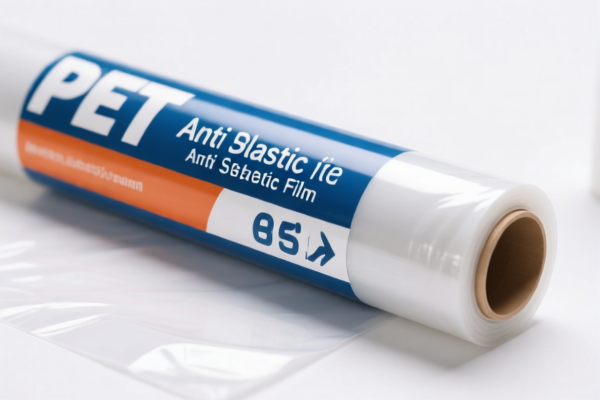
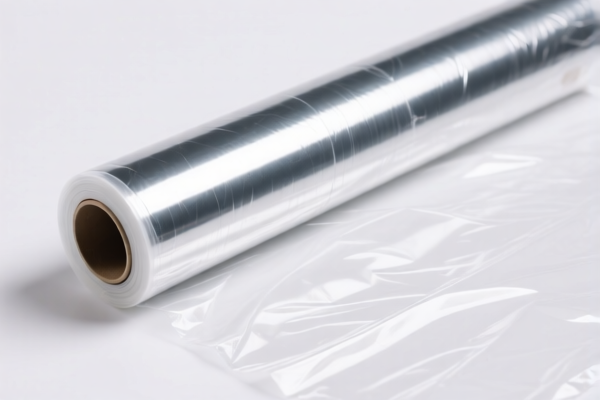
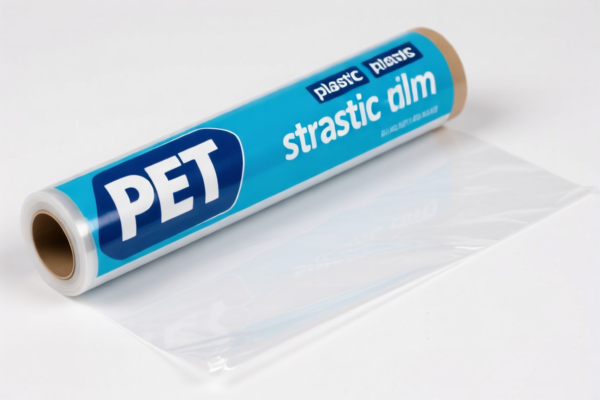
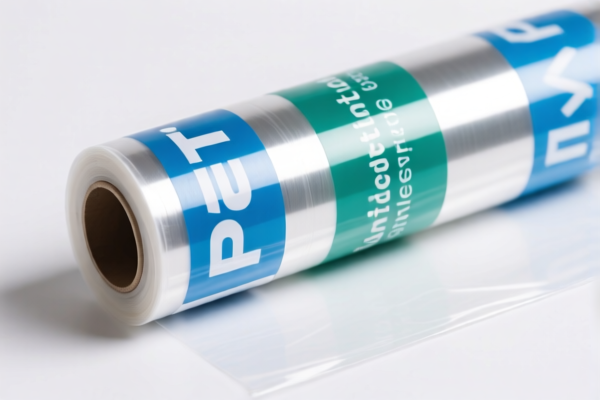
PET Aluminum Plated Anti-Static Protective Film is a composite material used primarily in electronics manufacturing, semiconductor packaging, and precision hardware protection. It combines the mechanical strength of Polyester (PET) with the electromagnetic shielding properties of aluminum, while maintaining static-dissipative capabilities.
In international trade, its classification depends heavily on structural priority: 1. Plastic-Based Priority: If the PET film is the essential character (e.g., thin plastic base with metallic coating), it falls under Chapter 39 (Plastics). 2. Metal-Based Priority: If the aluminum layer provides the primary shielding and structure (e.g., foil backed by plastic), it may fall under Chapter 76 (Aluminum).
⚠️ Key Distinction Point:
- Plastic Characteristic (PET dominant) → Classified as Plastic Articles (3926.90)
- Aluminum Characteristic (Foil dominant) → Classified as Aluminum Foil/Sheets (7607.20)
- Note: Even if labeled "Anti-Static," the anti-static additive does not change the chapter, but confirms its industrial application.
📦 II. HS Code Classification Details (Authoritative Match with DATA)
| HS Code | Product Description | Key Attributes | Tax Rate (Total) |
|---|---|---|---|
3926.90.99.89 |
Other plastic articles: PET Film, Aluminum Plated, Anti-Static | Plastic material (PET), Film form, "Other" category | 22.8% |
3926.90.99.05 |
Plastic Articles: PET Film, Aluminum Plated, Anti-Static | Matches logic of plastic classification | 22.8% |
7607.20.10.00 |
Aluminum Foil: With plastic backing, Anti-Static | Plastic backing present, Aluminum foil property | 13.7% |
7607.20.50.00 |
Aluminum Foil: Sheets, Plastic Backing, Anti-Static | Composite attribute, foil backing | 17.5% |
🔍 Critical Note:
- The same physical product can have two potential HS Codes depending on how customs authorities view the "essential character." -3926codes are more common for thin protective films where PET is the structural base. -7607codes are often used for heavier foils or when the aluminum layer is the primary functional element (EMI shielding).
💰 III. 2024/2025 Latest Tariff Rate Breakdown (Including Surcharges)
✅ Applicable Country: United States (US)
✅ Origin: China (CN)
✅ Effective Time: Current regulations (Section 301 & Section 232 implications)
🎯 1. 3926.90.99.89 & 3926.90.99.05 — Plastic Articles (PET Base)
| Item | Detail |
|---|---|
| Basic Tariff | 5.3% (Ad Valorem) |
| Section 301 Surcharge | 7.5% (Standard US-China trade war tariff) |
| Section 122 Tariff | 10% (Specific provision for certain plastic articles/aluminum components) |
| Total Tax Rate | 22.8% |
| Tax Calculation | CIF Value × 22.8% |
| De Minimis Exemption | ❌ Not Eligible (Deny De Minimis) |
| Legal Basis Path | USITC:3926.90.99.89 → Section 301: 7.5% → Section 122: 10% |
📌 Explanation:
- 5.3%: Standard MFN (Most Favored Nation) rate for plastic articles. - 7.5%: Standard Section 301 tariff applicable to many Chinese goods. - 10%: Specific "122" clause tariff, often applied to materials that could be sensitive (like plastic/aluminum composites). - Total: 22.8%. This is a moderate-to-high tariff burden.
🎯 2. 7607.20.10.00 — Aluminum Foil (With Plastic Backing)
| Item | Detail |
|---|---|
| Basic Tariff | 3.7% (Ad Valorem) |
| Section 301 Surcharge | 0.0% (Often exempted for specific aluminum forms or lower-risk categories) |
| Section 122 Tariff | 10% |
| Total Tax Rate | 13.7% |
| Tax Calculation | CIF Value × 13.7% |
| De Minimis Exemption | ❌ Not Eligible |
| Legal Basis Path | USITC:7607.20.10.00 → Section 122: 10% |
📌 Advantage:
- This code offers a significant saving (9.1% less) compared to the plastic classification. - Requires proof that the aluminum layer is essential.
🎯 3. 7607.20.50.00 — Aluminum Foil (Sheets/Composites)
| Item | Detail |
|---|---|
| Basic Tariff | 0.0% (Ad Valorem) |
| Section 301 Surcharge | 7.5% |
| Section 122 Tariff | 10% |
| Total Tax Rate | 17.5% |
| Tax Calculation | CIF Value × 17.5% |
| De Minimis Exemption | ❌ Not Eligible |
| Legal Basis Path | USITC:7607.20.50.00 → Section 301: 7.5% → Section 122: 10% |
📌 Middle Ground:
- Higher than7607.20.10.00due to the 7.5% Section 301 surcharge. - Still lower than the plastic codes.
🛠️ IV. Customs Clearance Practical Advice (Battle-Tested Tips)
✅ 1. Required Documentation Checklist
| Document | Mandatory? | Notes |
|---|---|---|
| ✅ Product Specification Sheet | ✔️ | Must detail: PET thickness, Aluminum thickness, Anti-static resistance (ohms/sq). |
| ✅ Material Composition Breakdown | ✔️ | % of PET vs. Aluminum. Critical for choosing between 3926 and 7607. |
| ✅ Photos of Product & Packaging | ✔️ | Show roll structure, labels, and anti-static branding. |
| ✅ Commercial Invoice | ✔️ | Clearly state "PET Film" or "Aluminum Foil" based on chosen HS Code. |
| ✅ Certificate of Origin | ✔️ | To prove CN origin (triggers tariffs). |
| ✅ Third-Party Test Report | ✔️ | Proof of anti-static properties (e.g., <10^9 ohms/sq). |
✅ 2. Declaration Strategy (Key Mnemonic)
🔥 "Structure Defines Code: PET Base = 3926, Alu Base = 7607"
| Scenario | Recommended HS Code | Reason |
|---|---|---|
| Thin PET film (e.g., 12-25μm) with metal coating | 3926.90.99.89 |
Plastic is the essential character; aluminum is a thin layer. |
| Heavy Aluminum Foil (e.g., 50-100μm) with PET backing | 7607.20.10.00 |
Aluminum provides shielding; plastic is just backing. |
| General Industrial Wrap | 3926.90.99.05 |
Safe, standard plastic article classification. |
| EMI Shielding Roll Material | 7607.20.50.00 |
If used for conductive shielding, aluminum is key. |
✅ 3. Special Situations
| Situation | Handling Advice |
|---|---|
| OEM Custom Film | Provide design specs to prove aluminum thickness. |
| Anti-Static Claim | Ensure test reports are recent (<6 months). Customs may request this for verification. |
| Mixed Containers | Declare separately. Do not mix PET and Aluminum foil items without clear separation. |
| Low-Value Shipments | Remember: De Minimis is denied for these HS codes. All shipments are taxable. |
🌍 V. Global Market Comparison (2024/2025)
| Country/Region | Recommended HS Code | Tariff (China Origin) | Certification | Notes |
|---|---|---|---|---|
| 🇺🇸 USA | 3926.90.99.89 or 7607.20.10.00 |
22.8% or 13.7% | None specific | High tariffs due to Section 301 & 122. Cost-sensitive. |
| 🇨🇳 China | 3926.90.99.89 |
~5-6% | CCC (if applicable) | Domestic market, lower taxes. |
| 🇪🇺 EU | 3920.62.00 (Similar) |
5-6% | REACH, RoHS | No Section 301. Lower risk. |
| 🇬🇧 UK | 3920.62.00 |
5-6% | UKCA | Post-Brexit rules apply. |
| 🇯🇵 Japan | 3920.62.00 |
4.5-6% | PSE (if electronic) | Stable rates. |
📌 Conclusion:
- USA is the most complex market due to high, layered tariffs. - Optimization Tip: If the product allows, argue for7607.20.10.00(13.7%) instead of3926(22.8%) by emphasizing the aluminum shielding function. This saves 9.1% of the CIF value.
📌 VI. Common Mistakes & Pitfalls (Learn from Others' Pain)
❌ Mistake 1: Declaring as "Protective Film" without specifying material.
👉 Consequence: Customs assigns arbitrary code → 25%+ tariff + fines.
❌ Mistake 2: Using 7607 for very thin PET films.
👉 Consequence: Customs rejects, demands reclassification to 3926 → Delay & storage fees.
❌ Mistake 3: Ignoring "Section 122" tariff.
👉 Consequence: Underpaid tax → Audit & back taxes + interest.
❌ Mistake 4: Not declaring "Anti-Static" property.
👉 Consequence: May be classified as general plastic → Higher scrutiny or misclassification.
✅ Best Practice:
"PET Aluminum Plated Anti-Static Protective Film, Material: 95% PET / 5% Al, Thickness: 25μm, Resistance: <10^9 ohms/sq, Roll Diameter: 300mm"
🎯 VII. Conclusion: Strategic Classification for Cost Efficiency
🎯 Remember This:
🔹 "PET Base = 3926 (22.8%), Alu Base = 7607 (13.7%)"
🔹 "Section 122 adds 10% to both, but 301 may vary."
🔹 "Document Aluminum Thickness to Justify 7607."
📌 Pro Tip:
If your product is primarily for EMI shielding, provide a Letter of Function stating that aluminum is essential for conductivity. This supports classification under 7607.20.10.00, saving you 9.1% in tariffs.
📣 Immediate Action:
📞 Consult a customs broker with your material breakdown.
📄 Prepare test reports for anti-static and material composition.
🚀 Secure the lower tax rate (13.7%) if structurally possible!
✨ Professional Clearance Starts with Accurate Classification!
💼 Every Percent Saved is Profit Gained!
用户评价
关于 HS 编码归类
协调制度(HS)是由世界海关组织(WCO)制定的国际贸易商品分类标准。全球 200 多个国家采用 HS 系统作为海关关税、贸易统计和进出口监管的基础。
每个 HS 编码遵循以下层级结构:
- 章(2 位)——商品大类(例如:第 84 章:机器和机械设备)
- 品目(4 位)——章内的更具体分类
- 子目(6 位)——国际通用细分,所有 WCO 成员国统一使用
- 本国细分(8-10 位)——各国自行扩展的细分编码,如美国 HTSUS 10 位编码
正确的 HS 编码归类对于顺利通关、准确缴纳关税和遵守贸易法规至关重要。错误归类可能导致海关延误、多缴关税或罚款。
从CN进口到US时,适用的关税税率可能包括:
- 最惠国(MFN)税率——适用于 WTO 成员国的标准关税税率
- 普通税率——适用于无贸易协定国家
- 贸易救济关税——附加关税,如 301 条款(反倾销)、232 条款(国家安全)或反补贴税
本页内容仅供参考。如需正式归类,请咨询当地海关或持牌报关代理。