PET Metallized Low Haze Film
CN → US| HS编码 | 关税税率 | 原产国 | 目的国 | 文档 |
|---|---|---|---|---|
| 3920620020 | 39.2% | CN | US | 官方文档 |
| 3921904090 | 39.2% | CN | US | 官方文档 |
| 3920620050 | 39.2% | CN | US | 官方文档 |
| 3921905050 | 39.8% | CN | US | 官方文档 |
| 3921190090 | 41.5% | CN | US | 官方文档 |
商品图片

AI分析
🎞️ PET Metallized Low Haze Film (PET Metallized Film)
🌐 HS Code Reference & Customs Clearance Guide | 2026 Latest Tariff Analysis | Professional-Level Clearance Strategy
📌 I. Product Definition & Classification: What Exactly Is "PET Metallized Low Haze Film"?
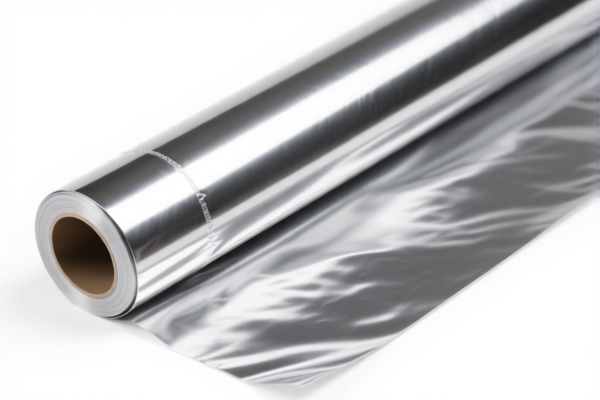
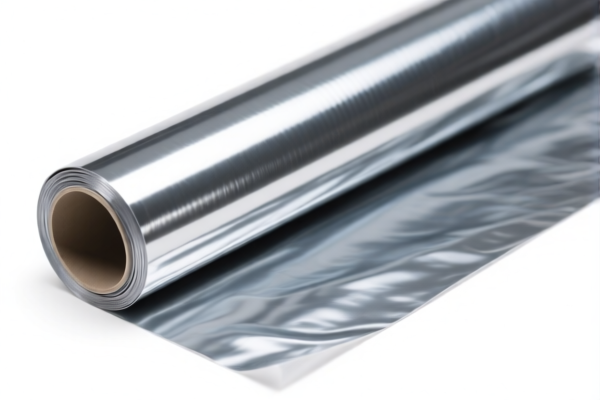
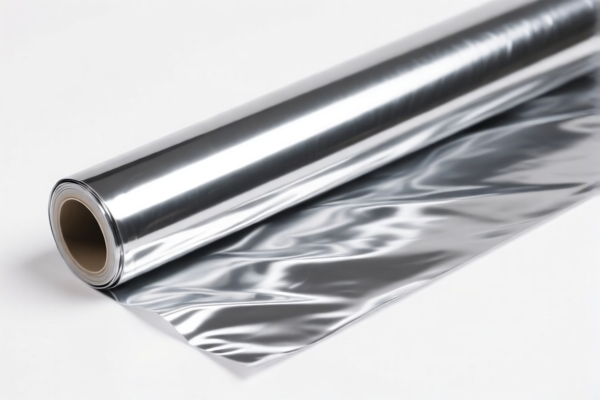
PET Metallized Low Haze Film is a high-performance functional packaging material. It consists of a Polyethylene Terephthalate (PET) base film onto which a thin layer of metal (usually Aluminum) is vacuum-coated. The term "Low Haze" indicates high transparency and high reflectivity, achieved through precise coating technology that minimizes light scattering.
In international trade, this product falls under Chapter 39 (Plastics and Articles Thereof). However, the specific classification depends heavily on whether it is considered a "base plastic film" or a "further worked plastic product." This distinction is critical because it determines the HS Code and, consequently, the tariff burden.
⚠️ Key Classification Logic:
- Is it just a plastic film? If the metallization is viewed as part of the basic plastic film structure without significant functional transformation beyond coating → Consider 3920 or 3921.
- Is it a specialized packaging or finished film? If marketed specifically for packaging or as a distinct "metallized film" product → Consider 3921.90.
- Why so many codes? Different countries’ sub-headings differentiate between "flat rolls," "packaging films," and "other plastics."
📦 II. HS Code Classification Details (2026 Latest Tariff Authority Mapping)
Based on the provided data, the PET Metallized Low Haze Film can be classified into four primary HS Codes. Please note that while the total tax rate is often similar, the base rate and legal justification differ.
| HS Code | Product Description (from Data) | Applicable Scenario / Classification Logic | Key Characteristic |
|---|---|---|---|
| 3920.62.00.20 | PET Metallized Film, Material: PET, Form: Film | Classified as Polyester Films. Fits the specific description of polyester-based plastic films. | Focuses on material (PET) and form (Film). |
| 3921.90.40.90 | PET Metallized Film, Material: PET, Form: Film | Classified under Other Plastic Films. Falls into the "other" category for plastic sheets/films not elsewhere specified. | Broad category; often used when specific polyester codes are ambiguous. |
| 3920.62.00.50 | PET Metallized Film, Material: PET, Form: Metallized PET Film | Classified as Specific Metallized Polyester Film. Fits the precise description of metallized PET. | Most accurate if the "metallized" nature is the primary identifier. |
| 3921.90.50.50 | PET Metallized Film, Material: PET, Form: Film | Classified under Other Plastic Membranes/Films. Another "other" category option for plastic films. | Alternative to 3921.90.40.90; minor variation in sub-heading. |
| 3921.19.00.90 | Metallized PET Packaging Film, Material: PET, Form: Film | Classified as Other Plastic Films specifically for Packaging. Highlights the end-use (packaging). | High specificity for packaging applications. |
🔍 Critical Note:
- All these codes relate to Plastic Films/Sheets.
- The difference between3920and3921often lies in whether the film is non-cellular (3920) or cellular/foam/specialized (3921). However, in practice, metallized PET is frequently debated between these chapters depending on local customs interpretation.
- Do not mix with non-PET films (e.g., BOPP, PE) as they have different HS codes and tax implications.
💰 III. 2026 Latest Tariff Rate Breakdown (Including Surcharges & Policy Add-ons)
✅ Applicable Country: United States (US)
✅ Origin: China (CN)
✅ Effective Date: Ongoing (Subject to Trade War Policies)
🎯 1. Common Tariff Structure for PET Metallized Films (Codes: 3920.62.00.20, 3921.90.40.90, 3920.62.00.50, 3921.90.50.50)
| Item | Content |
|---|---|
| Base Tariff Rate | 4.2% (for most) or 4.8% (for 3921.90.50.50) |
| Section 301 Surcharge | +25% (USITC Footnote 9903.88.01 - Most Chapter 39 plastics) |
| Section 122 Surcharge | +10% (Specific policy add-on mentioned in data) |
| Total Tariff Rate | 39.2% (for 4.2% base) or 39.8% (for 4.8% base) |
| Calculation Method | CIF Value × Total Rate |
| De Minimis Eligibility | ❌ NO (Denied under current trade policies) |
| Legal Path | USITC:3920.xxxx.xxxx → SECTION 301: 25% → SECTION 122: 10% |
📌 Explanation:
- Base Rate (4.2% or 4.8%): This is the standard Most Favored Nation (MFN) rate for plastic films under Chapter 39.
- Section 301 (25%): Applies to almost all plastic films from China. This is the largest component.
- Section 122 (10%): An additional surcharge specifically highlighted in the data. This may refer to specific trade remedy measures or bilateral agreements.
- Total Impact: You are looking at a ~39-40% duty on top of the CIF value. This is a high-cost item for importers.
🎯 2. Premium Tariff Structure for Packaging Film (Code: 3921.19.00.90)
| Item | Content |
|---|---|
| Base Tariff Rate | 6.5% |
| Section 301 Surcharge | +25% |
| Section 122 Surcharge | +10% |
| Total Tariff Rate | 41.5% |
| Calculation Method | CIF Value × 41.5% |
| De Minimis Eligibility | ❌ NO |
| Legal Path | USITC:3921.19.00.90 → SECTION 301: 25% → SECTION 122: 10% |
📌 Explanation:
- This code has a higher base rate (6.5%) compared to the 4.2% of other PET film codes.
- It is often used when the film is explicitly declared as "Packaging Film" rather than just "PET Film."
- Result: Higher total duty (41.5% vs 39.2%). Avoid this code if your product is not strictly defined as "packaging" and can be classified under the lower-base-rate codes.
🛠️ IV. Customs Clearance Practical Advice (Combat Pitfall Guide)
✅ 1. Documentation Checklist (Non-Negotiable)
| Document | Required | Description |
|---|---|---|
| ✅ Product Specification Sheet | ✔️ | Must explicitly state: Material: 100% PET, Process: Metallized, Haze: Low. |
| ✅ Technical Data Sheet (TDS) | ✔️ | Show thickness, tensile strength, reflectivity, and haze value. |
| ✅ Commercial Invoice | ✔️ | Description: "PET Metallized Low Haze Film, for [Use, e.g., Packaging/Insulation]. Material: Polyester (PET)." |
| ✅ Packing List | ✔️ | Weight, dimensions, roll length/width. |
| ✅ Certificate of Origin (CO) | ✔️ | Essential for verifying China origin (triggers tariffs). |
| ✅ Third-Party Test Report | ✔️ | Proof of "Low Haze" and PET composition (to avoid misclassification as BOPP/PE). |
| ✅ Customs Declaration Form | ✔️ | Accurate HS Code selection based on above analysis. |
✅ 2. Declaration Tips (Critical Mnemonics)
🔥 "Clarify Material, Specify Use, Avoid 'Packaging' if Higher Base!"
| Situation | Correct Declaration | Wrong Practice |
|---|---|---|
| General Purpose Film | "PET Metallized Film, Low Haze, Non-Packaging Use" | ❌ Declare as "Packaging Film" → Triggers higher base rate (6.5%). |
| Material Proof | Explicitly state Polyester (PET) | ❌ Vague "Plastic Film" → High risk of audit & reclassification. |
| Metallization | Mention "Vacuum Metallized" | ❌ Omit metallization → Could be misclassified as plain PET film (lower tax? No, still high due to 301). |
| HS Code Choice | Prefer 3920.62.00.20 or 3920.62.00.50 | ❌ Use 3921.19.00.90 unless strictly for packaging. |
✅ 3. Special Case Handling
| Situation | Handling Advice |
|---|---|
| Is it Packaging? | If the film is pre-cut, printed, or sold in ready-to-use packaging rolls, customs may lean toward 3921.19.00.90. If sold as raw rolls for converters, use 3920 or 3921.90. |
| Low Haze Value | Provide test reports showing haze < X% (e.g., <2%). This supports the "High Quality/Specialized" argument but doesn't change HS code significantly. |
| Mixed Shipments | If shipping PET film with other plastics (BOPP, PE), separate declarations are required. Do not mix HS codes. |
| Origin Substitution | If the PET base is made in Vietnam/Malaysia but metallized in China, rules of origin become complex. May qualify for non-China origin if substantial transformation occurs abroad. Consult a specialist! |
🌍 V. Global Market Comparison (2026 Latest)
| Country/Region | Recommended HS Code | Approx. Tariff (China Origin) | Certification Required | Notes |
|---|---|---|---|---|
| 🇺🇸 USA | 3920.62.00.20 / 3921.90.40.90 |
39.2% - 41.5% | No specific FDA/Ceiling, but commercial standards apply. | High Tariff due to Sec 301 + 122. |
| 🇨🇳 China | 3920.62.00.20 |
5-10% | GB Standards | Low import duty, but domestic production is strong. |
| 🇪🇺 EU | 3920.62.00 |
0% - 6% | REACH, RoHS | No Section 301 equivalent. Much cheaper. |
| 🇦🇺 Australia | 3920.62.00 |
5% | Standard Import | Moderate duty, no major surcharges. |
| 🇯🇵 Japan | 3920.62.00 |
0% - 6% | JIS Standards | Low to moderate duty. |
📌 Conclusion:
- USA is the most expensive market for PET Metallized Film due to multiple surcharges.
- EU/Japan/Australia are significantly more cost-effective for clearance.
- Strategy: If targeting the US, optimize supply chain (e.g., third-country processing) or absorb cost into pricing.
📌 VI. Common Mistakes & Pitfall Guide (Lessons Learned)
❌ Mistake 1: Using 3921.19.00.90 for non-packaging films
👉 Consequence: You pay a 6.5% base rate instead of 4.2%.
👉 Impact: Extra 2.3% tax on CIF value. Over large volumes, this is significant.
❌ Mistake 2: Failing to declare "Metallized"
👉 Consequence: Customs may classify as plain PET film (possibly different sub-code).
👉 Impact: If plain PET has a lower base rate, you might be flagged for under-declaration if metallization adds value. If it doesn't, you might miss a specific regulatory requirement for coated films.
❌ Mistake 3: Ignoring Section 122
👉 Consequence: Assuming only 301 (25%) applies.
👉 Impact: Missing 10% surcharge. Total tax underestimation leads to cash flow issues.
❌ Mistake 4: Vague Description "Plastic Film"
👉 Consequence: High risk of customs audit and delay.
👉 Impact: Port demurrage charges, storage fees, and potential penalties.
✅ Correct Practice:
"PET Metallized Low Haze Film, 12 Microns, Vacuum Coated Aluminum, Roll Format, for Industrial Insulation (Not Packaging)"
🎯 VII. Conclusion: Professional Declaration, Cost Optimization!
🎯 Remember the Mantra:
🔹 "Material is PET, Form is Film, Base is 4.2%, Total is ~39%."
🔹 "Avoid 'Packaging' label unless necessary, to save 2.3% base rate."
🔹 "Check Section 122 + 301, Don't miss the 10% extra hit."
📌 Pro Tip:
- If you are importing large volumes, consider applying for a Section 301 Exclusion (if available for your specific product code) or explore bonded warehouse strategies to defer duty payments.
- Pre-Ruling: Consider applying for a Binding Tariff Information (BTI) or Advance Ruling from US Customs (CBP) to lock in the HS Code and avoid disputes.
📣 Immediate Action:
📞 Engage a Licensed Customs Broker
📄 Prepare Detailed Tech Specs
🧮 Calculate Landed Cost Including 39.2-41.5% Duty
🚀 Ensure Smooth Clearance & Protect Margins!
✨ Professional Clearance Starts with Precise Classification!
💼 Every Percent Matters in Global Trade!
用户评价
关于 HS 编码归类
协调制度(HS)是由世界海关组织(WCO)制定的国际贸易商品分类标准。全球 200 多个国家采用 HS 系统作为海关关税、贸易统计和进出口监管的基础。
每个 HS 编码遵循以下层级结构:
- 章(2 位)——商品大类(例如:第 84 章:机器和机械设备)
- 品目(4 位)——章内的更具体分类
- 子目(6 位)——国际通用细分,所有 WCO 成员国统一使用
- 本国细分(8-10 位)——各国自行扩展的细分编码,如美国 HTSUS 10 位编码
正确的 HS 编码归类对于顺利通关、准确缴纳关税和遵守贸易法规至关重要。错误归类可能导致海关延误、多缴关税或罚款。
从CN进口到US时,适用的关税税率可能包括:
- 最惠国(MFN)税率——适用于 WTO 成员国的标准关税税率
- 普通税率——适用于无贸易协定国家
- 贸易救济关税——附加关税,如 301 条款(反倾销)、232 条款(国家安全)或反补贴税
本页内容仅供参考。如需正式归类,请咨询当地海关或持牌报关代理。