PET Plastic Lamination Material
CN → US| HS编码 | 关税税率 | 原产国 | 目的国 | 文档 |
|---|---|---|---|---|
| 3921904010 | 39.2% | CN | US | 官方文档 |
| 3921905010 | 39.8% | CN | US | 官方文档 |
商品图片
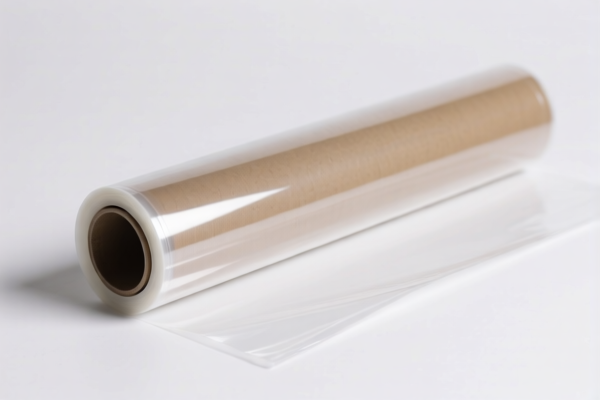
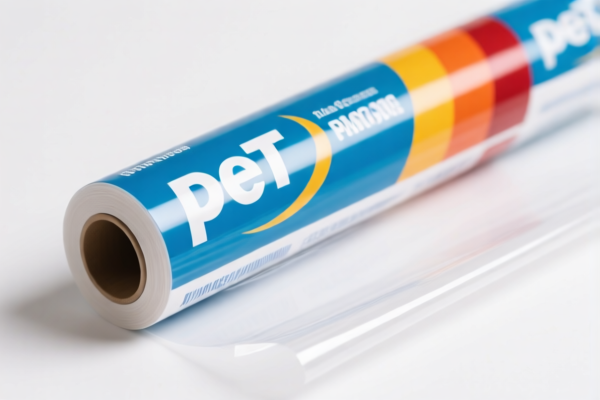
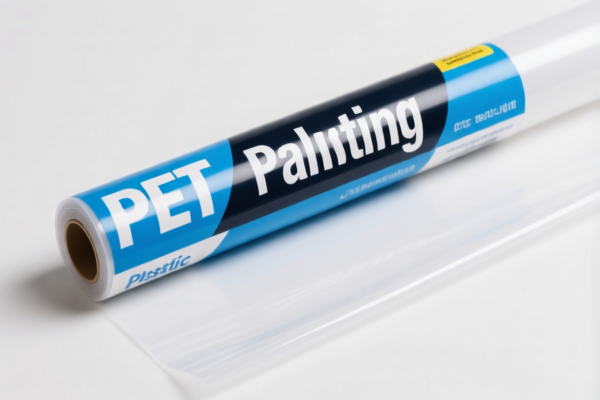
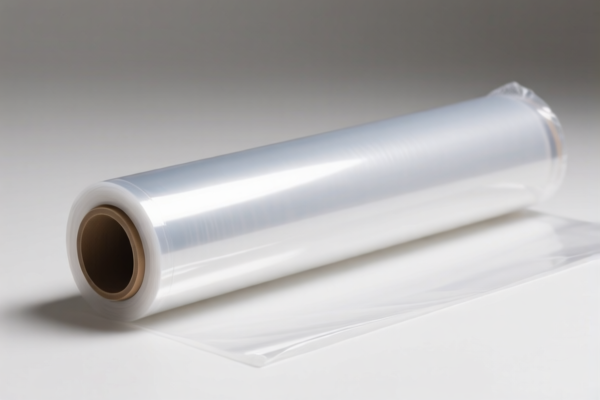
AI分析
📄 PET Plastic Lamination Material (Reinforced with Paper)
🌐 HS Code Reference & Clearance Guide | 2026 Latest Tariff Analysis | Professional Compliance Strategy
📌 I. Product Definition & Classification: What is "PET Lamination Material"?
PET (Polyethylene Terephthalate) plastic lamination material, when reinforced with paper, is a composite industrial product. It is not a standalone film or a standalone paper product, but a layered structure where plastic and paper are bonded together to enhance durability, surface quality, and printing suitability.
In international trade, this specific combination falls under Chapter 39 (Plastics and Articles Thereof), specifically heading 3921 (Other plates, sheets, film, foil and strip, of plastics).
⚠️ Critical Distinction:
- If the plastic is reinforced with paper (e.g., paper core, paper facing, or paper interlayer), it MUST be classified under Chapter 39, not Chapter 48 (Paper).
- If the product is not reinforced with paper (e.g., pure PET film or PET sheet), it falls under different subheadings (e.g., 3920.62).
- Key Identifier: Look for physical bonding of paper layers with PET resin. Common uses include decorative laminates for furniture, labels, and packaging substrates.
📦 II. HS Code Classification Details (2026 Latest Tariff Authority Comparison)
Based on the provided data, the product falls into two specific subcategories depending on its physical properties and application. Both are classified under Heading 3921.90 (Other plastics plates, sheets, film, foil and strip).
| HS Code | Product Description | Key Characteristics | Application Scenario |
|---|---|---|---|
3921.90.40.10 |
Flexible Reinforced with Paper | Flexible, pliable structure; paper reinforcement provides tensile strength; low rigidity. | Packaging films, flexible labels, wallpaper backing, soft packaging substrates. |
3921.90.50.10 |
Other High Pressure Paper Reinforced Decorative Laminates | Rigid or semi-rigid; created under high pressure/temperature; often used for surface decoration. | Furniture surfaces (e.g., melamine-faced boards), cabinet doors, interior wall panels, decorative tabletops. |
🔍 Important Note:
- The term "High Pressure" in3921.90.50.10typically refers to HPL (High-Pressure Laminate), which is a specific industrial process involving phenolic resins and decorative papers under >30 kg/cm² pressure.
- "Flexible" in3921.40.10refers to standard laminated films or sheets that do not undergo high-pressure curing, often used for adhesive applications or lightweight packaging.
💰 III. 2026 Latest Tariff Rate Details (Including Surtaxes)
✅ Applicable Country: United States (US)
✅ Origin: China (CN)
✅ Effective Date: 2025/2026 (Subject to current trade policies)
🎯 1. 3921.90.40.10 —— Flexible Reinforced with Paper
| Item | Detail |
|---|---|
| Base Tariff Rate | 4.2% (ad valorem) |
| Section 301 Surcharge | +25.0% |
| Total Tax Rate | 29.2% |
| Tax Calculation | CIF Value × 29.2% |
| De Minimis Eligibility | ❌ Not Eligible (Deny De Minimis) |
| Legal Basis | USITC: 3921.90.40.10 → Section 301 Footnote |
📌 Explanation:
- The 4.2% is the standard Most Favored Nation (MFN) duty rate for flexible plastic laminates.
- The 25% is the Section 301 tariff imposed on Chinese goods under Trade Act of 1974.
- Total Cost Impact: Nearly 30% of the CIF value is duty. This significantly affects profitability for low-margin flexible packaging products.
🎯 2. 3921.90.50.10 —— High Pressure Paper Reinforced Decorative Laminates
| Item | Detail |
|---|---|
| Base Tariff Rate | 4.8% (ad valorem) |
| Section 301 Surcharge | +25.0% |
| Total Tax Rate | 29.8% |
| Tax Calculation | CIF Value × 29.8% |
| De Minimis Eligibility | ❌ Not Eligible (Deny De Minimis) |
| Legal Basis | USITC: 3921.90.50.10 → Section 301 Footnote |
📌 Explanation:
- The 4.8% base rate is slightly higher due to the more specialized nature of "decorative laminates" and the high-pressure manufacturing process.
- The 25% surcharge applies equally as it is also a Chinese-origin product subject to Section 301.
- Total Cost Impact: 29.8% duty. This is a high-cost classification, requiring careful pricing strategies.
🛠️ IV. Clearance Practical Advice (Real-World Pitfall Avoidance)
✅ 1. Preparation Checklist (Mandatory Documents)
| Document | Required? | Description |
|---|---|---|
| ✅ Product Specification Sheet | ✔️ | Must explicitly state: "Plastic (PET) reinforced with paper." Include layer structure (e.g., PET/Paper/PET). |
| ✅ Process Description | ✔️ | Describe manufacturing: Is it High-Pressure Lamination (HPL)? Or Cold Lamination/Extrusion? This determines 3921.90.40.10 vs 3921.90.50.10. |
| ✅ Material Composition | ✔️ | Confirm % of paper vs. plastic by weight/volume. |
| ✅ Commercial Invoice | ✔️ | Clearly describe as "PET Plastic Lamination Sheet" or "Decorative Laminate." Avoid vague terms like "Plastic Sheet." |
| ✅ Certificate of Origin (CO) | ✔️ | Essential for determining origin-based duties. |
| ✅ Product Photos | ✔️ | Show cross-section if possible, to prove paper reinforcement. |
✅ 2. Declaration Tips (Key Mnemonic)
🔥 “Flexible vs. High Pressure, Choose Right to Save Costs!”
| Scenario | Correct HS Code | Risk of Misclassification |
|---|---|---|
| Rolls of flexible film used for labels or packaging | 3921.90.40.10 |
Misclassifying as rigid laminate may lead to overpayment or inspection delays. |
| Rigid sheets for furniture/cabinets (HPL) | 3921.90.50.10 |
Misclassifying as flexible may trigger fraud alerts (undervaluation of specialized goods). |
| Pure PET Film (No Paper) | ❌ Not 3921.90 | Would fall under 3920.62 (PET sheets) or 3920.63 (PET films). Do not declare as reinforced! |
| Paper-based Laminates (No Plastic Reinforcement) | ❌ Not 3921.90 | Would fall under Chapter 48 (Paper). |
📌 Key Advice:
- Be Precise in Naming: Use "PET Laminated Paper" or "Paper-Reinforced PET Sheet."
- Prove Reinforcement: Customs may require a physical sample or lab report to confirm the presence of paper. If no paper is found, the HS Code will be reassigned, potentially changing the duty rate and triggering penalties.
✅ 3. Special Situations
| Situation | Handling Suggestion |
|---|---|
| Mixed Containers | If mixing flexible and rigid laminates, declare separately. Mixing may cause valuation issues. |
| Sample Shipments | Even small samples are subject to the 29.2%/29.8% tax. No de minimis exemption. |
| Returns/Defects | Provide original invoices and proof of defect to apply for duty drawbacks if applicable. |
| Re-export | If the material is processed into final goods (e.g., furniture) and re-exported, consider In-Bond warehousing or FTZ (Foreign-Trade Zone) benefits. |
🌍 V. Global Market Clearance Comparison (2026 Latest)
| Country/Region | Recommended HS Code | Tariff (China Origin) | Certification Requirements | Notes |
|---|---|---|---|---|
| 🇺🇸 USA | 3921.90.40.10 / 3921.90.50.10 |
29.2% - 29.8% | None specific, but anti-dumping may apply | High tariff due to Section 301. |
| 🇪🇺 EU | 3921.90.39 / 3921.90.90 |
~6.5% (varies) | REACH, RoHS | Lower base duty, but VAT 19-27% applies. |
| 🇨🇳 China | 3921.90.90 |
5.0% - 7.0% | None | Import tax is lower than US. |
| 🇯🇵 Japan | 3921.90.00 |
6.0% | None | Stable tariff structure. |
| 🇲🇽 Mexico | 3921.90.99 |
~6.0% (under USMCA if qualified) | NOM certifications | Check USMCA eligibility for zero duty. |
📌 Conclusion:
- The US market is the most expensive for Chinese-origin PET laminates due to the 25% Section 301 surcharge.
- EU and Asia offer more competitive tariff structures, but non-tariff barriers (REACH, RoHS) are strict.
📌 VI. Common Errors & Pitfalls (Blood Lessons)
❌ Error 1: Classifying HPL (High-Pressure Laminate) as Flexible Film (3921.90.40.10)
👉 Consequence: Underpayment of duty (base rate 4.2% vs 4.8%). Customs will assess penalties and back taxes.
❌ Error 2: Claiming "Plastic Sheet" when it contains Paper Reinforcement
👉 Consequence: If customs determines paper content > threshold, they may shift classification to Chapter 48 (Paper), leading to reclassification fees and delays.
❌ Error 3: Ignoring Section 301 in cost calculations
👉 Consequence: Profit margins eroded by 25% hidden tax. Always include surtax in FOB/EXW pricing.
❌ Error 4: Vague Description: "Plastic Lamination"
👉 Consequence: Customs may request additional info, causing shipment delays (5-10 days).
✅ Correct Practice:
"PET Plastic Laminated Sheet, Reinforced with Paper, Flexible, for Packaging Use, Model XYZ, Chinese Origin"
or
"High-Pressure Decorative Laminate (HPL), Paper-Reinforced PET, for Furniture Surface, Model ABC, Chinese Origin"
🎯 VII. Conclusion: Professional Declaration, Cost Control, and Efficiency!
🎯 Remember the Mnemonic:
🔹 "Paper-Reinforced = Chapter 39, Not 48!"
🔹 "Flexible vs. High Pressure, Choose Wisely!"
🔹 "US Tariff = Base + 25%, Never Forget!"
📌 Pro Tip:
If your volume is high, consider Applying for an Advance Ruling from US Customs and Border Protection (CBP) to confirm the correct HS Code and avoid post-entry audits.
For flexible laminates, explore Exclusions from Section 301 if available (though rare for plastics).
📣 Immediate Action:
📞 Consult with a licensed customs broker.
📄 Provide detailed product structure diagrams.
💼 Calculate Landed Cost including 29.2-29.8% tax to ensure profitability.
✨ Professional Clearance Starts with Accurate Classification!
💼 Every Percent Counts in Global Trade!
用户评价
关于 HS 编码归类
协调制度(HS)是由世界海关组织(WCO)制定的国际贸易商品分类标准。全球 200 多个国家采用 HS 系统作为海关关税、贸易统计和进出口监管的基础。
每个 HS 编码遵循以下层级结构:
- 章(2 位)——商品大类(例如:第 84 章:机器和机械设备)
- 品目(4 位)——章内的更具体分类
- 子目(6 位)——国际通用细分,所有 WCO 成员国统一使用
- 本国细分(8-10 位)——各国自行扩展的细分编码,如美国 HTSUS 10 位编码
正确的 HS 编码归类对于顺利通关、准确缴纳关税和遵守贸易法规至关重要。错误归类可能导致海关延误、多缴关税或罚款。
从CN进口到US时,适用的关税税率可能包括:
- 最惠国(MFN)税率——适用于 WTO 成员国的标准关税税率
- 普通税率——适用于无贸易协定国家
- 贸易救济关税——附加关税,如 301 条款(反倾销)、232 条款(国家安全)或反补贴税
本页内容仅供参考。如需正式归类,请咨询当地海关或持牌报关代理。