PS Plastic Corner Scrap
CN → US| HS编码 | 关税税率 | 原产国 | 目的国 | 文档 |
|---|---|---|---|---|
| 3915200000 | 35.0% | CN | US | 官方文档 |
| 3915900090 | 35.0% | CN | US | 官方文档 |
| 3903190000 | 41.5% | CN | US | 官方文档 |
| 3903110000 | 41.5% | CN | US | 官方文档 |
商品图片
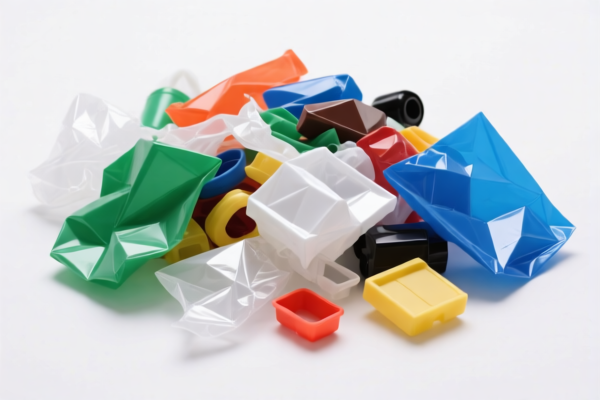

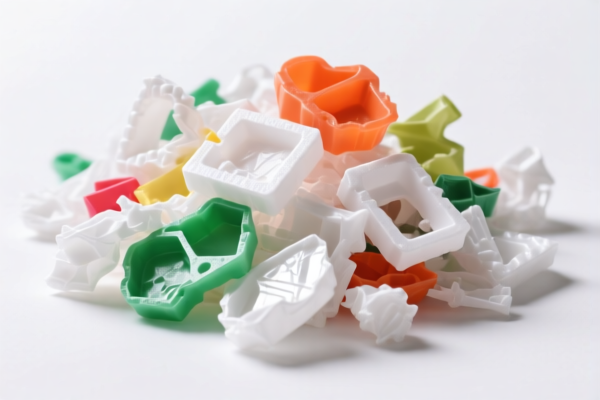
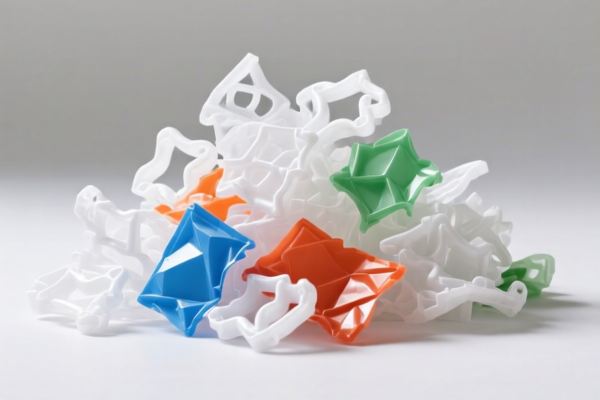
AI分析
🧱 PS Plastic Corner Scrap (Polystyrene Waste & Offcuts)
🌐 HS Code Reference & Customs Clearance Guide | 2026 Latest Tariff Analysis | Professional Clearance Strategy
📌 I. Product Definition & Classification: Do You Really Understand "PS Plastic Scrap"?
Polystyrene (PS) Plastic Corner Scrap refers to waste, fragments, or trimmings generated during the manufacturing process of PS products (such as packaging, disposable containers, or insulation boards). In international trade, these are strictly classified as plastic waste and scrap, not raw materials, unless they are specifically shaped for immediate reuse in a manner that constitutes "semi-finished goods" (which is rare for scrap).
The classification depends on the chemical composition and the physical state of the scrap: * Styrene Polymers: Specific waste derived from styrene-based polymers. * Other Plastics: If the exact polymer type is indeterminate or mixed, it falls under the general "other plastics" category.
⚠️ Key Distinction Point:
- If the scrap is pure PS (Polystyrene), it typically falls under Chapter 39, Heading 3915 (Waste, parings, and scrap, of plastics).
- If the scrap is mixed or unspecified, it falls under the residual category "Other plastics" (3915.90).
- CRITICAL WARNING: Do not classify as "Raw Granules" (3903) unless the scrap has been fully processed, cleaned, and reggranulated into a commercial feedstock form that meets the definition of "primary shapes." Raw scraps, even if clean, are generally waste.
📦 II. HS Code Classification Details (2026 Latest Tariff Authority Comparison)
Based on the provided data for PS Plastic Corner Scrap, here are the applicable HS Codes and their specific tax implications:
| HS Code | Product Description | Application Scenario | Tax Rate (Total) |
|---|---|---|---|
3915.20.00.00 |
Waste and scrap of styrene polymers (PS Plastic Scrap corresponds to styrene polymer waste) |
Pure PS trimmings, edge trims, defective PS parts | 35.0% |
3915.90.00.90 |
Waste and scrap of other plastics (PS Plastic Scrap corresponds to other plastic waste/fragments) |
Mixed plastic scrap, or PS where styrene content is not explicitly declared/pure | 35.0% |
3903.19.00.00 |
Other styrene polymers in primary forms (PS Plastic Scrap corresponds to other categories of styrene polymers) |
RISKY: Only if classified as processed PS resin/granules, not waste | 41.5% |
3903.11.00.00 |
Polystyrene in primary forms, in blocks, plates, sheets, etc. (PS Plastic Scrap corresponds to PS in granular/powder form) |
RISKY: Only if the material has been regranulated and sold as raw material, not scrap | 41.5% |
🔍 Important Note:
- The term "Scrap" (切边料/废料) strongly points to Heading 3915 (Waste/Scrap).
- Classification under Heading 3903 (Primary Shapes) is high-risk for actual scrap. If you import "scrap" but declare it as "granules" (3903) to avoid high tariffs, you face severe penalties for misdeclaration if customs verifies the physical state.
- However, if the "corner scrap" has been processed into uniform granules and marketed as "reggranulated PS," it might be argued as a primary shape (3903). But based on the provided data, the explicit link for "Scrap" is to 3915.
💰 III. 2026 Latest Tariff Rate Details (Including Surcharges & Policy Add-ons)
✅ Applicable Country: USA (US)
✅ Origin: China (CN)
✅ Effective Time: 2025年11月10日起 (From Nov 10, 2025)
🎯 1. 3915.20.00.00 & 3915.90.00.90 —— Plastic Waste & Scrap (The Standard "Scrap" Classification)
| Item | Content |
|---|---|
| Base Tariff | 0.0% |
| Section 301 Surcharge (USITC) | +25.0% |
| IEEPA Section 122 Surcharge | +10.0% |
| Total Tariff Rate | 35.0% |
| Tax Calculation | CIF Value × 35% |
| De Minimis Exemption | ❌ Not Applicable (High tariff goods are excluded) |
| Legal Basis Path | USITC:3915.20.00.00 → FOOTNOTE:301_Section_3 → IEEPA:9903.12.24 |
📌 Explanation:
- Base Rate (0%): Plastic waste typically has a low base duty.
- Section 301 (25%): Applies to most Chinese-origin plastics and plastic wastes.
- IEEPA 10%: Additional tariff under Section 122 (or similar emergency powers) targeting Chinese plastic waste.
- Total 35%: This is a significant cost. Importers must calculate this into the landed cost of recycled PS pellets if they are buying scrap for recycling.
🎯 2. 3903.19.00.00 & 3903.11.00.00 —— Polystyrene Primary Forms (The "Processed Material" Risk)
| Item | Content |
|---|---|
| Base Tariff | 6.5% |
| Section 301 Surcharge (USITC) | +25.0% |
| IEEPA Section 122 Surcharge | +10.0% |
| Total Tariff Rate | 41.5% |
| Tax Calculation | CIF Value × 41.5% |
| De Minimis Exemption | ❌ Not Applicable |
| Legal Basis Path | USITC:3903.11.00.00 → FOOTNOTE:301_Section_3 → IEEPA:9903.12.24 |
📌 Explanation:
- If you manage to get customs to accept the declaration as Primary Shapes (granules/resin) instead of scrap, the base tariff is higher (6.5% vs 0%).
- However, the surcharges remain the same (25% + 10%).
- Result: The total tariff jumps from 35% to 41.5%.
- Strategic Insight: Declaring scrap as primary shape increases your tax burden in this specific dataset. Therefore, accurate classification as 3915 (Scrap) is cost-optimal compared to misdeclaring as 3903, provided you have the documentation to prove it is waste/scrap and not commercial resin.
🛠️ IV. Customs Clearance Practical Advice (Real-World Pitfall Avoidance)
✅ 1. Required Documentation Checklist
| Document | Must Provide? | Description |
|---|---|---|
| ✅ Commercial Invoice | ✔️ | Clearly state "Plastic Waste/Scrap" or "Trim Scraps," not "PS Granules." |
| ✅ Packing List | ✔️ | Detail weight, volume, and material composition. |
| ✅ Certificate of Origin | ✔️ | Required for calculating Section 301 and IEEPA applicability. |
| ✅ Product Photos | ✔️ | Must show the material is in scrap, fragment, or trim form, not uniform pellets. |
| ✅ Processing Statement | ✔️ | If claiming 3915, confirm no further processing was done (just cutting/trimming). |
✅ 2. Declaration Tips (Key Mantra)
🔥 “Scrap is 3915, Granules are 3903. Misclassification leads to 41.5% Tax!”
| Situation | Correct Declaration | Wrong Practice |
|---|---|---|
| Pure PS trimmings/edges | 3915.20.00.00 |
Declaring as "PS Resin" → 41.5% + Penalties |
| Mixed plastic fragments | 3915.90.00.90 |
Declaring as specific polymer → 35% + Penalties |
| Recycled PS Pellets (Processed) | 3903.11.00.00 |
Declaring as "Scrap" → Potential Customs Query if quality is too high |
📌 Warning:
- Do not mix "scrap" with "new goods" in the same shipment if declared separately.
- Ensure the product description explicitly mentions "Waste," "Scrap," "Offcuts," or "Trimmings" to align with HS 3915.
✅ 3. Special Case Handling
| Situation | Handling Advice |
|---|---|
| OEM Recycled Pellets | If the scrap has been cleaned and pelletized for resale as raw material, declare under 3903. Be prepared to provide quality reports. |
| Mixed Plastic Waste | Must declare under 3915.90.00.90. Ensure no hazardous materials are present (e.g., food residue, chemicals) which could trigger EPA/USDA inspections. |
| Import for Recycling | If the ultimate destination is recycling, ensure the "Scrap" classification is supported by the nature of the goods. Customs may require proof that the material is indeed waste. |
🌍 V. Global Market Comparison (2026 Latest)
| Country/Region | Recommended HS Code | Tariff (China Origin) | Certification | Remarks |
|---|---|---|---|---|
| 🇺🇸 USA | 3915.20.00.00 |
35.0% | No specific | High tariffs due to 301 & IEEPA |
| 🇨🇳 China | 3915.20.00.00 |
0-5% (Varies) | N/A | Import duty may be low, but VAT applies |
| 🇪🇺 EU | 3915.20.00.00 |
0% | RoHS/REACH | No Section 301 equivalent, but REACH compliance needed |
| 🇦🇺 Australia | 3915.20.00.00 |
5% | N/A | Lower tariffs, stable policy |
| 🇯🇵 Japan | 3915.20.00.00 |
0-3% | N/A | Competitive market, low tariffs |
📌 Conclusion:
- The USA imposes a heavy burden (35%) on PS plastic scrap from China.
- EU and Asia are significantly more cost-effective for importing PS scrap.
- Consider supply chain diversification if importing large volumes of PS scrap into the US.
📌 VI. Common Errors & Pitfalls (Lessons Learned)
❌ Error 1: Declaring "PS Scrap" as "PS Granules" (3903)
👉 Consequence: If caught, 41.5% tax + fines. If accepted, you pay more tax unnecessarily.
Note: In this specific data set, 3903 is MORE expensive than 3915.
❌ Error 2: Mixing PS with other plastics without clear declaration
👉 Consequence: Customs may reclassify as "Mixed Plastic Waste" (3915.90), which still attracts 35%, but delays cargo.
❌ Error 3: Ignoring IEEPA Section 122 (10%)
👉 Consequence: Underestimating landed cost. Many importers only budget for 25% (301) and forget the extra 10%.
❌ Error 4: Using vague descriptions like "Plastic Material"
👉 Consequence: Customs audit, potential seizure, or mandatory reclassification.
✅ Correct Approach:
"Polystyrene (PS) Plastic Edge Trims, Waste Form, Not Processed, For Recycling Only"
🎯 VII. Conclusion: Precision Classification Saves Money!
🎯 Remember the Mantra:
🔹 "Scrap is 3915 (35%), Granules are 3903 (41.5%). Don't pay more for being wrong!"
🔹 "301 adds 25%, IEEPA adds 10%. Total 35% for scrap is the minimum risk."
📌 Pro Tip:
If you are importing recycled PS pellets (processed from scrap), consult a customs broker to determine if the processing is sufficient to change the classification to 3903. While the tax is higher (41.5%), the product value might be higher, making it acceptable. However, for raw scraps, stick to 3915.
📣 Immediate Action:
📞 Engage a licensed customs broker + Provide detailed product photos + Verify HS Code pre-classification
🚀 Ensure your PS Plastic Scrap enters the US smoothly, avoiding the 41.5% trap and the 35% surprise!
✨ Professional Customs Clearance Starts with Accurate Classification!
💼 Every percentage point counts in your bottom line!
用户评价
关于 HS 编码归类
协调制度(HS)是由世界海关组织(WCO)制定的国际贸易商品分类标准。全球 200 多个国家采用 HS 系统作为海关关税、贸易统计和进出口监管的基础。
每个 HS 编码遵循以下层级结构:
- 章(2 位)——商品大类(例如:第 84 章:机器和机械设备)
- 品目(4 位)——章内的更具体分类
- 子目(6 位)——国际通用细分,所有 WCO 成员国统一使用
- 本国细分(8-10 位)——各国自行扩展的细分编码,如美国 HTSUS 10 位编码
正确的 HS 编码归类对于顺利通关、准确缴纳关税和遵守贸易法规至关重要。错误归类可能导致海关延误、多缴关税或罚款。
从CN进口到US时,适用的关税税率可能包括:
- 最惠国(MFN)税率——适用于 WTO 成员国的标准关税税率
- 普通税率——适用于无贸易协定国家
- 贸易救济关税——附加关税,如 301 条款(反倾销)、232 条款(国家安全)或反补贴税
本页内容仅供参考。如需正式归类,请咨询当地海关或持牌报关代理。